------------------------------------
World Cup’s hidden health operation: YLE behind the scenes
Katelyn Jetelina, May 20, 2026
"Every four years in ancient Greece, tens of thousands of people converged on Olympia for the Games. Athletes, merchants, politicians, and pilgrims came from across the Greek world, slept in makeshift camps, shared water from the same sources, and packed into the same dusty, sunbaked arena in the height of summer. There was no sanitation infrastructure and no concept of germ theory, so there were outbreaks of typhoid, dysentery, and salmonella, to name a few.
"There was also a massive fly problem. It was so severe that the Greeks made ritual sacrifices to a deity they called Zeus Apomyios (which meant Zeus Averter of Flies). Before the Games, they appealed to a god specifically designated to keep the insects away.
"The conditions were so notorious that ancient philosophers used them as a shorthand for human endurance. Epictetus asked his students: Are you not scorched? Are you not pressed by a crowd? Are you not without comfortable means of bathing? … Have you not abundance of noise, clamour, and other disagreeable things? But I suppose that setting all these things off against the magnificence of the spectacle, you bear and endure.
"The World Cup kicks off in less than a month. It will be a magnificent spectacle and, thankfully, we don’t have to sacrifice to Zeus, as public health has advanced enormously in the past century. But the underlying challenge hasn’t gone away.
"Here’s what’s happening in preparation and how you can get involved.
The world’s largest event
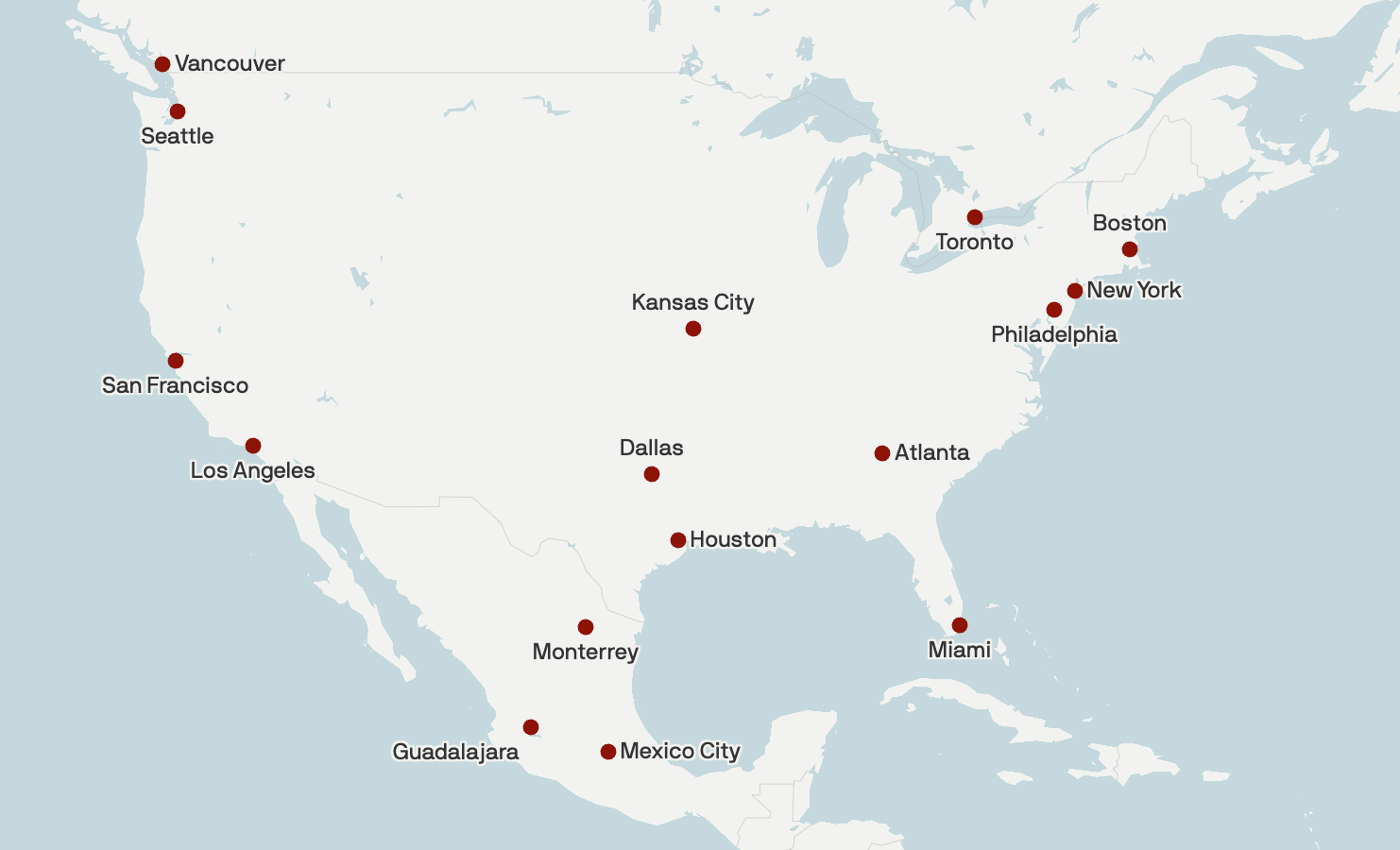
"More than 100 matches will be played across 16 cities in the U.S., Canada, and Mexico over 38 days. Travelers from more than 48 countries will be flying in to watch and celebrate, with an expected 1.5 million additional inbound trips to the country. People will fill stadiums, spill into surrounding neighborhoods, pack bars and parks, and use public transit.
"While this is a beautiful moment of celebration and the mixture of cultures, it brings enormous complexities to protecting the public’s health in two primary ways:
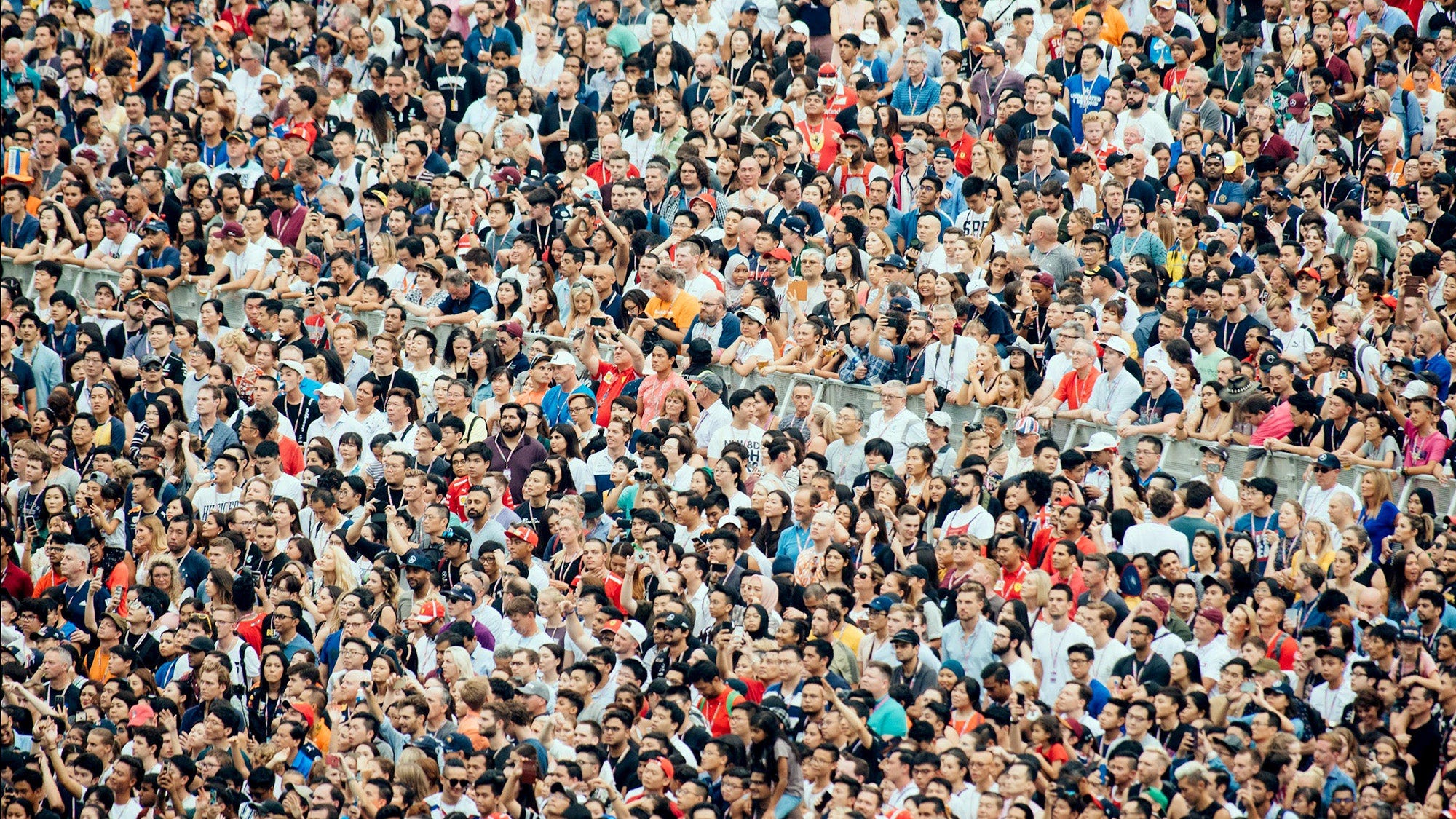
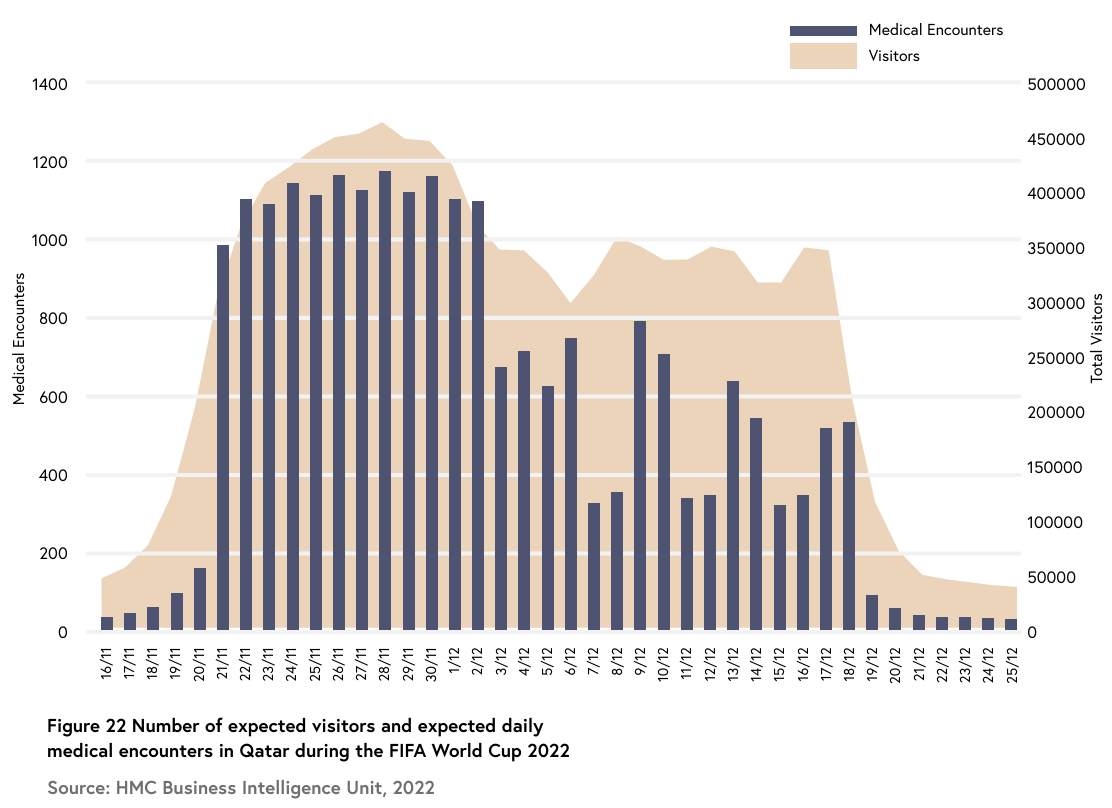
The sheer number of humans. High density = amplification of disease spread. Also, an influx provides added stress to health systems, like more broken bones, more heat-related illnesses, more (possibly violent) injuries, etc. For example, below are medical encounters before and during the 2022 World Cup in Qatar; they surged.
When people mix, diseases mix. New diseases could be introduced that we are not normally exposed to or immune to. A traveler from one region may carry a pathogen that’s routine back home but entirely novel to someone sitting next to them in the stands.
What are the diseases top of mind?
"Some disease modelers are hard at work examining more than 80 diseases, and only a few show excess risk. At the top of the watchlist this summer:
Measles. This is surging in many parts of the world, and all it takes is one person to find a tightly knit, unvaccinated pocket to start measles spreading like wildfire.
Dengue. The U.S. has mosquito populations capable of carrying the virus. We haven’t seen widespread domestic spread, but the combination of summer heat, outdoor crowds, and high travel volume creates conditions worth watching carefully, particularly in southern states like Florida, California, and Texas.
High-consequence diseases. Many systems are gearing up to detect Ebola, hantavirus, and other rare pathogens. But the public risk remains low, including for Ebola, simply because of how the virus spreads (through direct contact with bodily fluids). It's worth remembering that the 2014 World Cup in Brazil coincided with the largest Ebola outbreak in history, and there was no outbreak there.
"Beyond infectious diseases, heat-related illness may be the least dramatic item on the list, but it’s probably the most reliable risk. Crowds plus sun plus summer temperatures plus physical exertion plus alcohol is a combination that sends people to emergency rooms every year.
So what’s the plan?
"Local and state health departments have been preparing. Many have activated their Emergency Operations Centers, which are the same command structures they use for natural events like hurricanes. Data systems are being tuned and tested to catch unusual signals early, before a cluster becomes an outbreak. Hospital systems are coordinating on surge capacity. Rapid response teams are on standby. Weekly coordination calls have already started in many jurisdictions.
"This local preparation is essential as they know their communities best. But given movement across state and international borders, a national bird’s-eye view is also necessary to stitch together a broad picture of health around the World Cup.
"One national effort in which YLE is playing a central role is the Health Security Operations Center. This will be held in person in Washington, DC, led by Dr. Rebecca Katz at Georgetown University. In normal times, this would reside within the federal government. This is the first-ever non-governmental operations center that brings together academic researchers, technology companies (like Verily and Samsung), and public health departments under one roof.
"This will act as an intelligence fusion center pulling in data from wastewater monitoring, hospitals, contextual sources, and social listening. All of these data systems are built as underlying infrastructure, so they can turn on a dime for many diseases. (For example, wastewater monitoring for hantavirus is already turned on.) The goal is rapid detection of emerging health threats, with warnings shared across jurisdictions as early as possible, so people can take the necessary action.
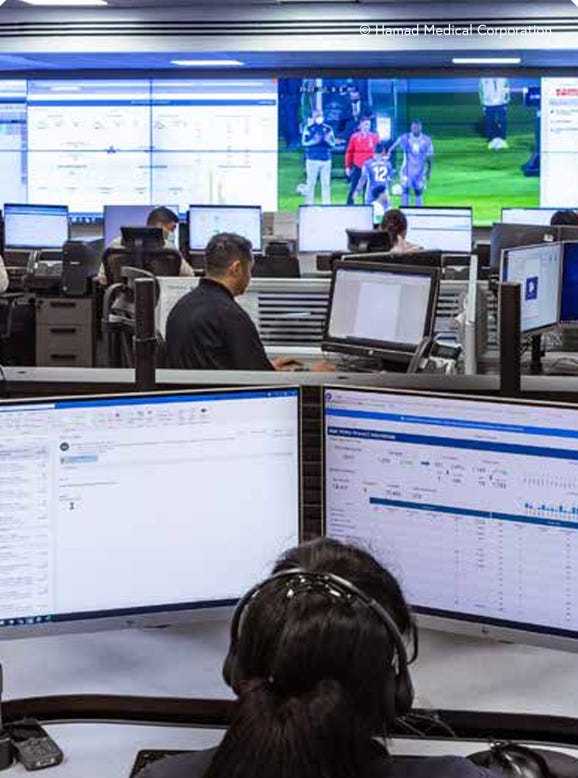
"YLE is charged with ensuring that the right information is delivered to the right people at the right time, so they can make the right decisions. This means leading information collection, social and media monitoring, “translation,” and dissemination.
What this means for you
"During the games, be aware of your surroundings, consider using DEET, drink plenty of water, and wear a seatbelt. A mask can help in very crowded indoor settings. I will be sure to bring you along for the ride with what we are seeing in the data and what it may mean for you.
"If you’re attending a game or live within 30 miles of a host city, we want to hear from you!
What you’d be doing: Taking a short weekly survey. It’s a few questions about what health topics are on your mind, what rumors or concerns you’re hearing, and what questions aren’t getting answered.
Why it matters: We will use your responses to directly address the questions and concerns most relevant to you in the Your Local Epidemiologist newsletter. We’ll also summarize the responses for our partners so that local health systems and governments can better address fan and community needs in real time.
Sign up here, and we’ll follow up with everything you need to get started.
Bottom line
"This summer, we will continue a tradition that has lasted for decades. Public health partners, and we will be watching the data carefully in the background so that millions of fans can be scorched, crowded, and thoroughly, joyfully present.
"Love, YLE"


.jpg)
No comments:
Post a Comment