----------------------------------------
COVID, Flu, and Health News, 2/15/26
Ruth Ann Crystal MD, Feb 15, 2026
I hope that you are enjoying the long weekend. Here are some updates on COVID, Flu and other topics.
According to the CDC, Influenza A activity is still high but is starting to decrease, while Influenza B cases are increasing, particularly in the Midwest. Wastewater levels for flu are especially high in Washington state, Oregon, and Kentucky as of 2/7/26. Outpatient visits for influenza-like illness (ILI) have plateaued although we may see another bump in cases. According to the CDC, children under 18 years have the highest peak weekly influenza-associated hospitalization rate observed since the 2010-2011 season. There were 6 more pediatric flu deaths reported this week which brings the total to 66. According to the CDC, “approximately 90% of reported pediatric deaths this season have occurred in children who were not fully vaccinated against influenza.”
Through 2/7/26, COVID levels in wastewater are VERY HIGH and HIGH in these states according to the CDC:
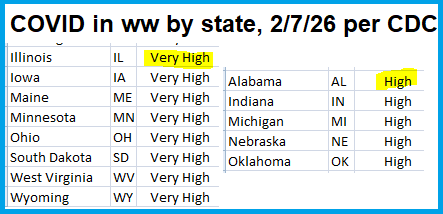
From: https://www.cdc.gov/nwss/rv/COVID19-national-data.html
From WastewaterSCAN (which omits 12 states), these are the highest levels of COVID in U.S. wastewater as of 2/14/26:
Bangor ME 2230 PMMoV
Lewiston ME 1527 PMMoV
Kinston NC 1095 PMMoV
Pinson AL 984 PMMoV
Portland ME 846 PMMoV
Birmingham AL 700 PMMoV
Montpellier VT 672 PMMoV
Warren MI 660 PMMoV
Some Olympic athletes, such as the U.S. women’s cross-country ski team, are wearing masks and are self quarantining to protect themselves against getting sick before their events in the 2026 Olympic games. This is in contrast to members of the Finnish women’s hockey team who went out to karaoke and ended up all getting the stomach flu, so their game against Canada had to be postponed.
Social and Advocacy
In advance of Long COVID Awareness Day on March 15th, four European Long COVID and COVID grassroots associations from France and Spain joined to create Long COVID Rise Up. “The Federation will bring together patient groups, allies and whistleblowers to demand urgent research, prevention, and an end to political neglect and inaction” for Long COVID.
In a pregnant hamster model of SARS-CoV-2 infection, maternal COVID infection caused significant placental inflammation leading to restricted fetal growth (IUGR) without direct infection of the fetus. Placental damage was marked by fibrin deposition, thrombosis, and elevated inflammatory markers. Vaccination and anticoagulant treatment protected the placenta and improved fetal outcomes.
Science magazine just put out an explainer article on the new NEJM article looking at the genetics and the mechanisms behind Vaccine-induced Immune Thrombocytopenia and Thrombosis (VITT). In people with a “double whammy” of both a genetic predisposition and a mutation in antibody-producing B cells, an adenovirus protein from either an adenovirus infection or from adenovirus-based vaccines like AstraZeneca and the Johnson & Johnson COVID vaccines, can rarely trigger “rogue” PF4 antibodies that attack platelets and cause both life-threatening blood clots and bleeding. This does not happen with mRNA vaccines.
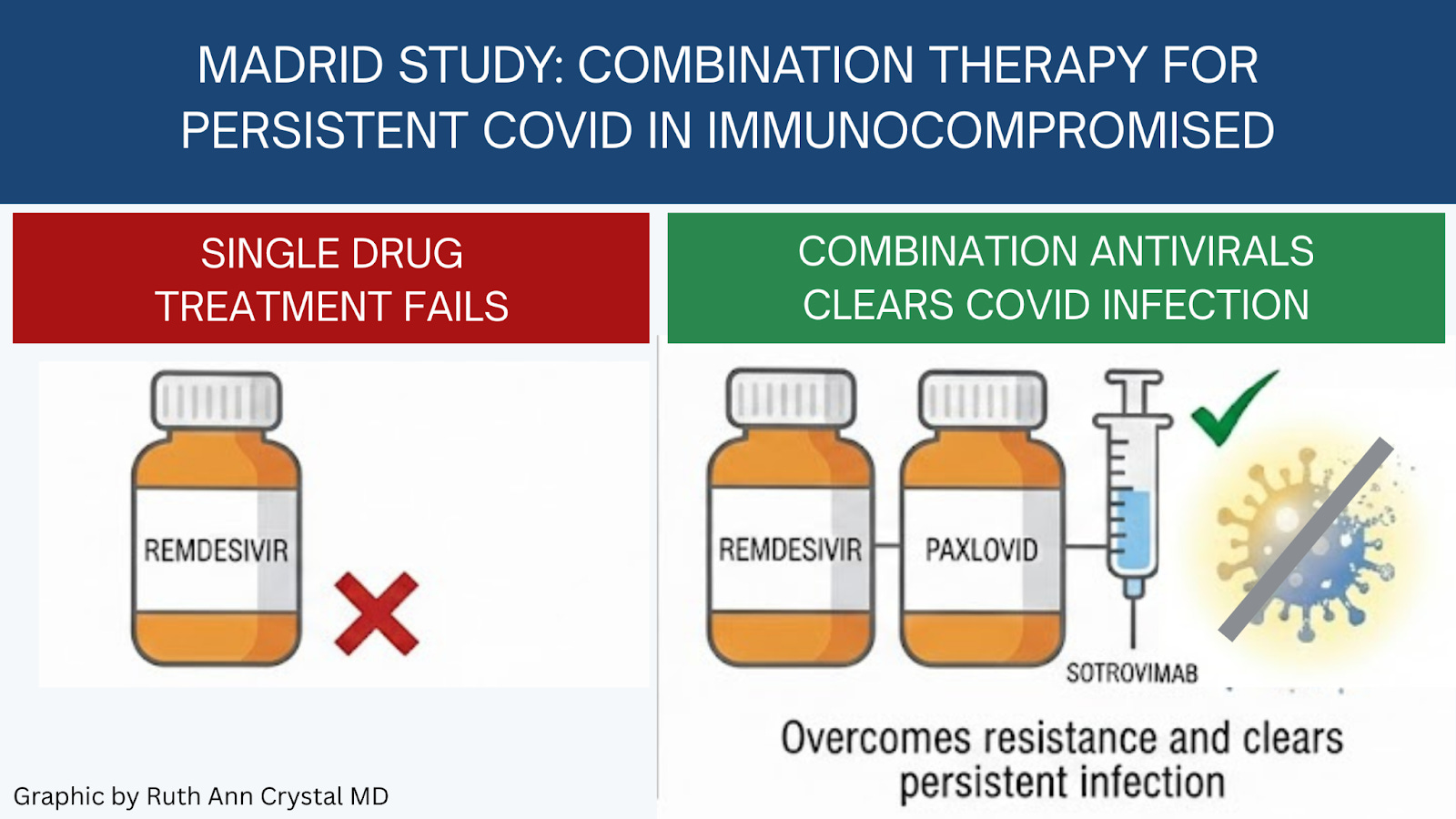
Researchers from Madrid found that combination antiviral therapy with Remdesivir plus Paxlovid (nirmatrelvir/ritonavir) and/or triple therapy with the addition of Sotrovimab monoclonal antibodies was important to completely treat persistent SARS-CoV-2 infection in 15 immunocompromised patients. “Early monotherapy treatment in these patients was associated with a high rate of clinical and microbiological failure, with sporadic documentation of resistance mutations that were overcome with combined antiviral therapy.”
In a small double blind randomized pilot trial in Taiwan involving 39 adults with Long COVID, 20 participants received probiotic treatment and 19 received placebo. Six weeks of the probiotic heat treated Lacticaseibacillus paracasei PS23 (HT-PS23) significantly lowered cortisol levels, improved breathing difficulty and appetite loss, and improved performance on executive function cognitive tests. This study adds to growing evidence that targeting the gut microbiome may help alleviate some Long COVID symptoms.
Researchers from Australia used high resolution fMRI comparing the brains of 19 adults with Long COVID to 16 healthy controls during cognitive tasks. People with Long COVID had abnormal brain network connectivity especially in focus and decision-making networks, and also had slower cognitive task performance. Disrupted brain communication appears to underlie cognitive dysfunction (brain fog) in Long COVID.
In an article from May 2025 that I had not previously seen, the European Academy of Neurology’s task force issued a position paper highlighting evidence that SARS-CoV-2 infection may trigger neurodegenerative disease, potentially increasing the future incidence of Alzheimer’s and Parkinson’s diseases. The paper synthesizes pathological data from global autopsies and registries, identifying microvascular damage, gliosis, demyelination, and neuronal and glial injury and cell death as primary drivers of long-term brain tissue decline. The authors advocate for systematic follow-up and surveillance programs to monitor these emerging neurological risks across the millions of individuals previously infected with COVID.
In a nested study of 228 adults (128 with Long COVID and 100 recovered controls), German researchers assessed circulating cell-free mitochondrial DNA (ccf-mtDNA) and other markers of mitochondrial damage. They found that mitochondrial damage and cellular stress appear to be linked with cognitive impairment in Long COVID, noting that “lower relative ccf-mtDNA in PASC [Long COVID] might indicate altered mitochondrial quality control, potentially leading to mitochondrial dysfunction, accumulation of damaged mitochondria, and increased inflammation.”
“Despite their therapeutic benefits, inflammatory demyelinating diseases of the central nervous system (CNS) have been reported in association with Janus kinase inhibitors (JAKis) treatment, most previously involving tofacitinib in patients with rheumatoid arthritis.” A new case report from Vanderbilt shows that a CNS inflammatory demyelinating disease may have been exacerbated by JAK inhibitor Baricitinib use. Stopping Baricitinib reduced vision loss and brain and spine lesions. This is important to know since the RECOVER trial is currently testing Baricitinib to treat Long COVID.
A group from the University of Washington investigated the effectiveness of a fully remote study of women from underrepresented, underserved, and underreported (U3) populations who were positive for COVID infection. Over 6 months, participants self-collected blood and nasal swabs at home and shipped them back to the lab for processing. Patient surveys were administered electronically. The study had a 98% retention rate and participants were very satisfied with the remote study design. Authors noted that the study topic, flexibility, and positive interactions with the study team were important factors for participant recruitment and retention of underserved populations.
A recent review in the American Heart Association’s journal Circulation suggested that exercise intolerance in Long COVID may partly reflect deconditioning and that exercise training can be beneficial. Rob Wüst and colleagues cautioned in a new article that in some Long COVID patients, post-exertional malaise and cardiac abnormalities such as preload failure and inflammation-related scarring can occur independently of cardiac deconditioning, and that any exercise recommendations for people with Long COVID should be made with caution. This makes sense since Rob Wust’s lab previously showed muscle atrophy and necrosis in 36% of Long COVID patients after exercise, with amyloid deposits, T cell, and macrophage infiltration noted in their skeletal muscles.
A new systematic review from Taiwan compiled evidence on audiovestibular symptoms in Long COVID, including hearing loss, tinnitus, vertigo, and balance problems, and explores potential mechanisms such as direct viral or immune-mediated effects on the inner ear and neural pathways. It also discusses diagnostic approaches (e.g., audiometry, vestibular testing) and management strategies ranging from corticosteroids to vestibular rehabilitation, highlighting that these manifestations may be underrecognized and can persist long after acute COVID infection.
As of February 12, 2026, 910 confirmed measles cases were reported in the United States in 2026, with 3% (30 of 910 cases) hospitalized according to the CDC. The outbreak in South Carolina continues to spread, with the South Carolina Department of Public Health reporting 933 measles cases centered around Spartanburg County as of Feb. 10, 2026.
A new measles outbreak has started in Shasta County, California and the California Department of Public Health asks residents to check their MMR vaccine status to see if they need a booster. “As of Feb. 10, 2026, local public health departments have identified measles cases in Los Angeles, Orange, San Bernardino, Riverside and Shasta counties. Nine cases were linked to exposure in Southern California, possibly at Disneyland in Anaheim and at Los Angeles International Airport (LAX) as people were traveling on Jan. 22 and 28.”
The New York Times reports “Dr. Mehmet Oz has urged Americans to get vaccinated against measles, one of the strongest endorsements of the vaccine yet from a top health official in the Trump administration, which has repeatedly undermined confidence in vaccine safety…The measles, mumps and rubella vaccine is considered very safe and about 97 percent effective in preventing infection.”
Despite previously approving Phase 3 testing of their mRNA flu vaccine, the FDA is now declining to review Moderna’s application for its mRNA flu vaccine despite positive study results. The study enrolled more than 40,000 adults ages 50 and older and showed that the mRNA Influenza vaccine was more effective in protecting against the flu than currently licensed influenza vaccines. Moderna’s CEO announced the company will no longer invest in new Phase 3 vaccine trials for infectious diseases, and sadly, mRNA vaccines for Epstein-Barr virus, herpes, and shingles have now been shelved.
The Trump administration terminated $600 million in CDC grants for HIV and STI prevention and surveillance in California, Colorado, Illinois and Minnesota “because they do not reflect agency priorities.” The four Democratic-led states filed a lawsuit on Wednesday to block the Trump administration’s cuts saying that they were being unlawfully subjected to “devastating funding cuts to basic public health infrastructure based on political animus and disagreements about unrelated topics such as federal immigration enforcement.”
Here are some more articles that may interest you:
2/12/26 NY Times: Eyeing the Midterms, Kennedy Pivots Toward Food and Away From Vaccines
2/11/26 The 19th: Without school vaccine mandates, many kids may never see a doctor
2/10/26 Nature: Dozens of researchers [from Columbia University] will move to France from US following high-profile bid to lure talent
2/10/26 Guardian: ‘I saw the writing on the wall’: Austria offers safe haven for US academics as Trump wages war on universities
2/12/26 NY Times: Trump Repeals Key Greenhouse Gas Finding, Erasing EPA’s Power to Fight Climate Change
Emory University researchers analyzed data from 114 adults with autism using AI and identified three biologically distinct autism subtypes. One subtype marked by high anxiety and social withdrawal showed brain changes that improved with oxytocin, pointing toward the possibility of personalized treatment approaches.
Dr. Eric Topol had two recent posts that were very interesting. First, Dr. Topol interviewed neurosurgeon Dr. Kevin Tracey discussing how vagus nerve stimulation can modulate immune system responses by dampening inflammatory signaling. A recent study showed that 1 minute of vagal nerve stimulation daily can help treat refractory Rheumatoid Arthritis.
Second, Dr. Topol wrote an article entitled Why All Mammograms Should Incorporate A.I. Using artificial intelligence to help read mammograms leads to more accurate breast cancer detection while reducing the workload for radiologists.
Another study, this time of 65,800 seniors from Kaiser Permanente showed that 2 doses of the recombinant shingles vaccine (RZV) were linked to a 51% lower risk of dementia.
Heads up: Health officials in Minnesota have reported an outbreak of a sexually transmitted form of ringworm infection. The infection is caused by Trichophyton mentagrophytes type VII (TMVII), a fungus that produces round, coin shaped red and irritated rashes on the genitals, arms, buttocks, trunk, and legs.
Nadieh Bremer just released an amazing data visualization site called Searching for Birds. It is an interactive exploration into what humans look for when inquiring about birds. I highly recommend trying it.
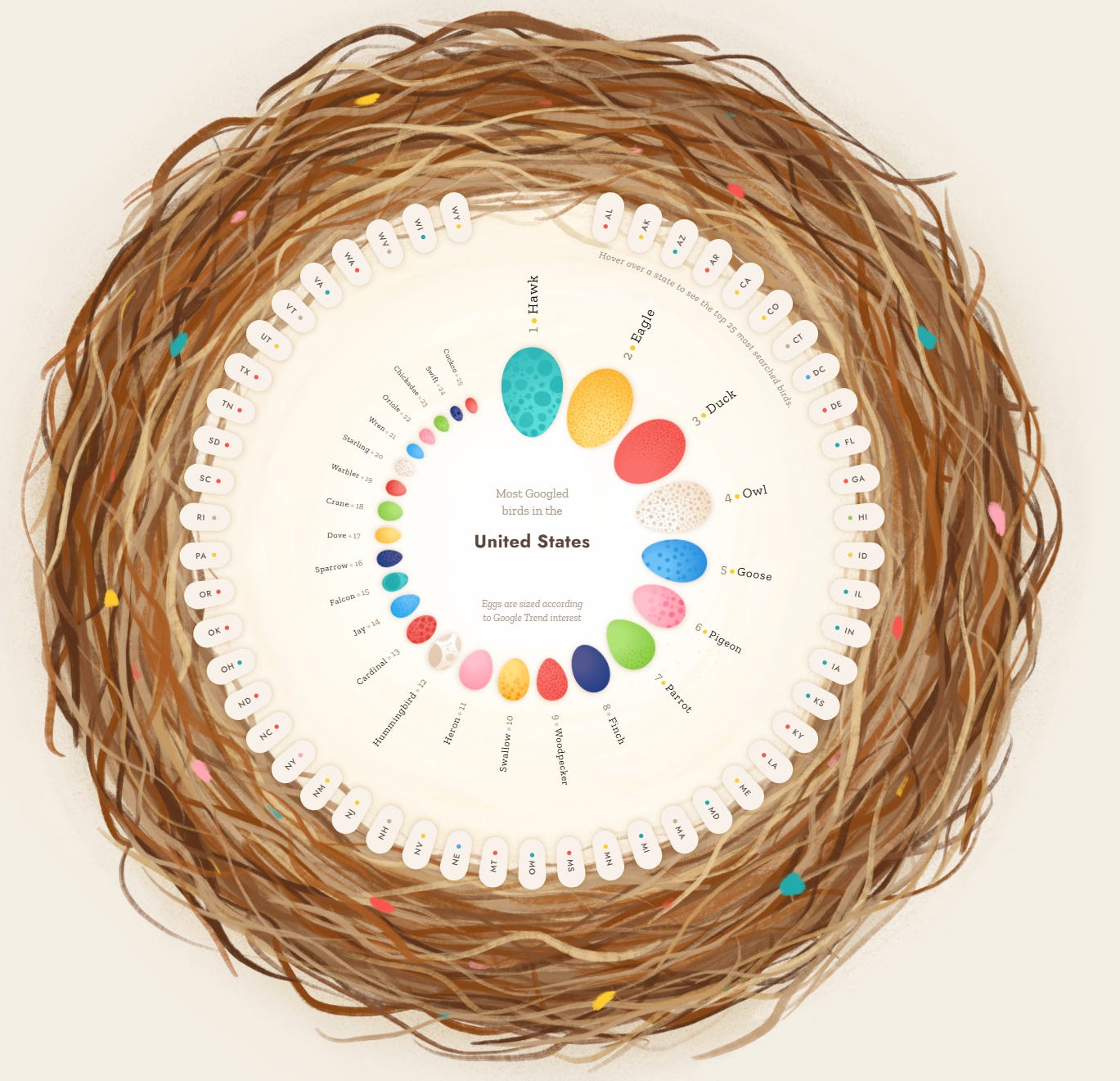
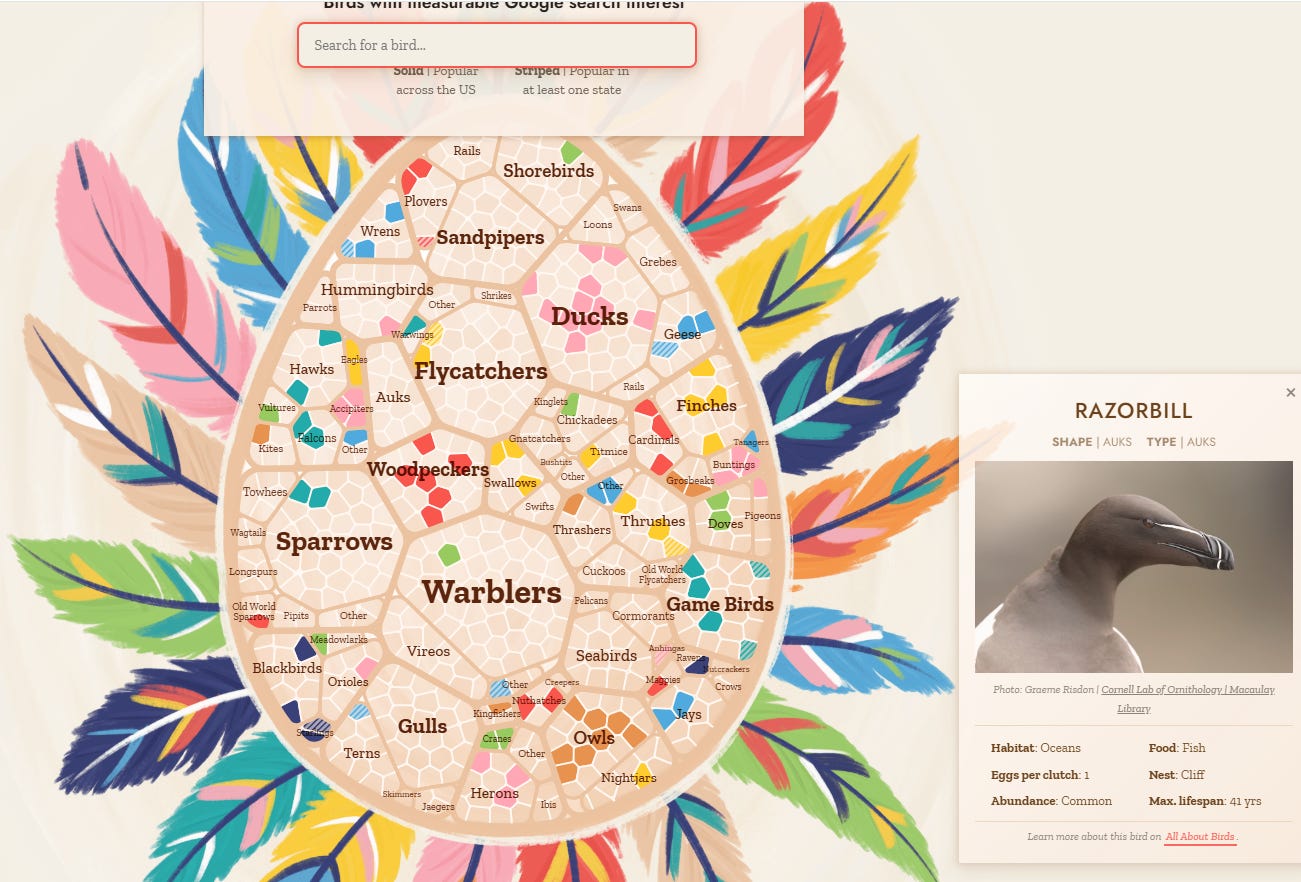
From: https://searchingforbirds.visualcinnamon.com/
Have a good week,
Ruth Ann Crystal MD


.jpg)
No comments:
Post a Comment