--------------------------------------------------------
The Dose (November 10), by Katelyn Jetelina
This week, a panel of experts is meeting behind closed doors to decide whether the U.S. has lost its measles elimination status. If we lose status (if I were a betting person, I would say we will), it will cause a lot of commotion. Below, I'll help you get ahead of it with what’s going on, what rumors to expect, and what’s next.
Also, fall viruses are doing what they always do: increasing on multiple fronts. That data shows that “sick season” is right around the corner. But where is the fall vaccination data?
Let’s dig in.
Health “weather” report
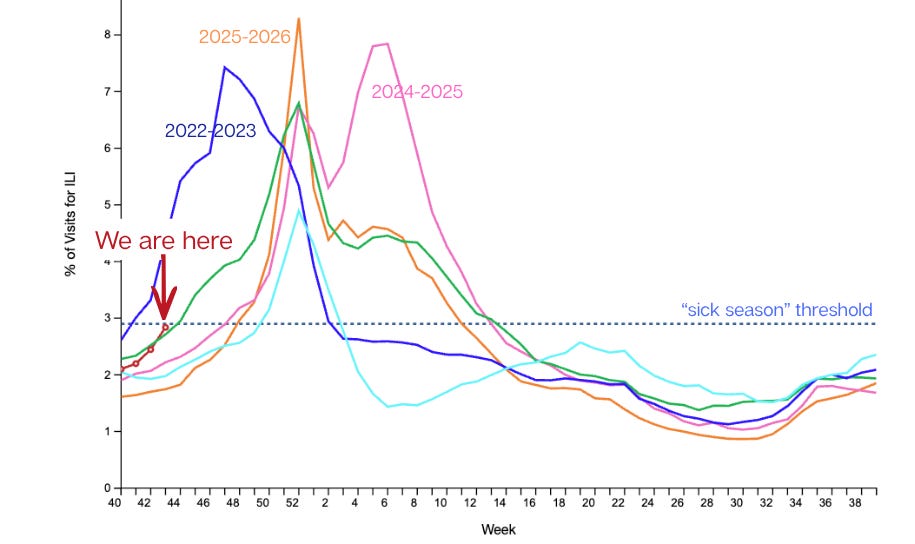
Each week, physicians tally how many people they see with a fever plus a cough or sore throat. It’s called ILI (influenza-like illness), and it’s a good way to gauge the health “climate” in the U.S.
Right now, the number of people sick is still relatively low but climbing. Nationally, the rate is 2.8%, just below the 2.9% baseline that marks the start of respiratory season. The South and West are already above it, at 3.3% each, and young kids are getting hit the hardest.
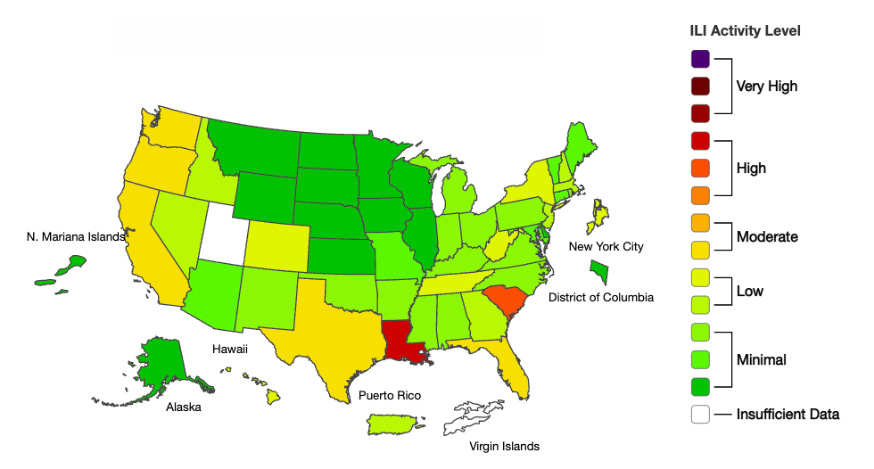
When we look at the specific viruses, like the “big three,” here’s where we are:
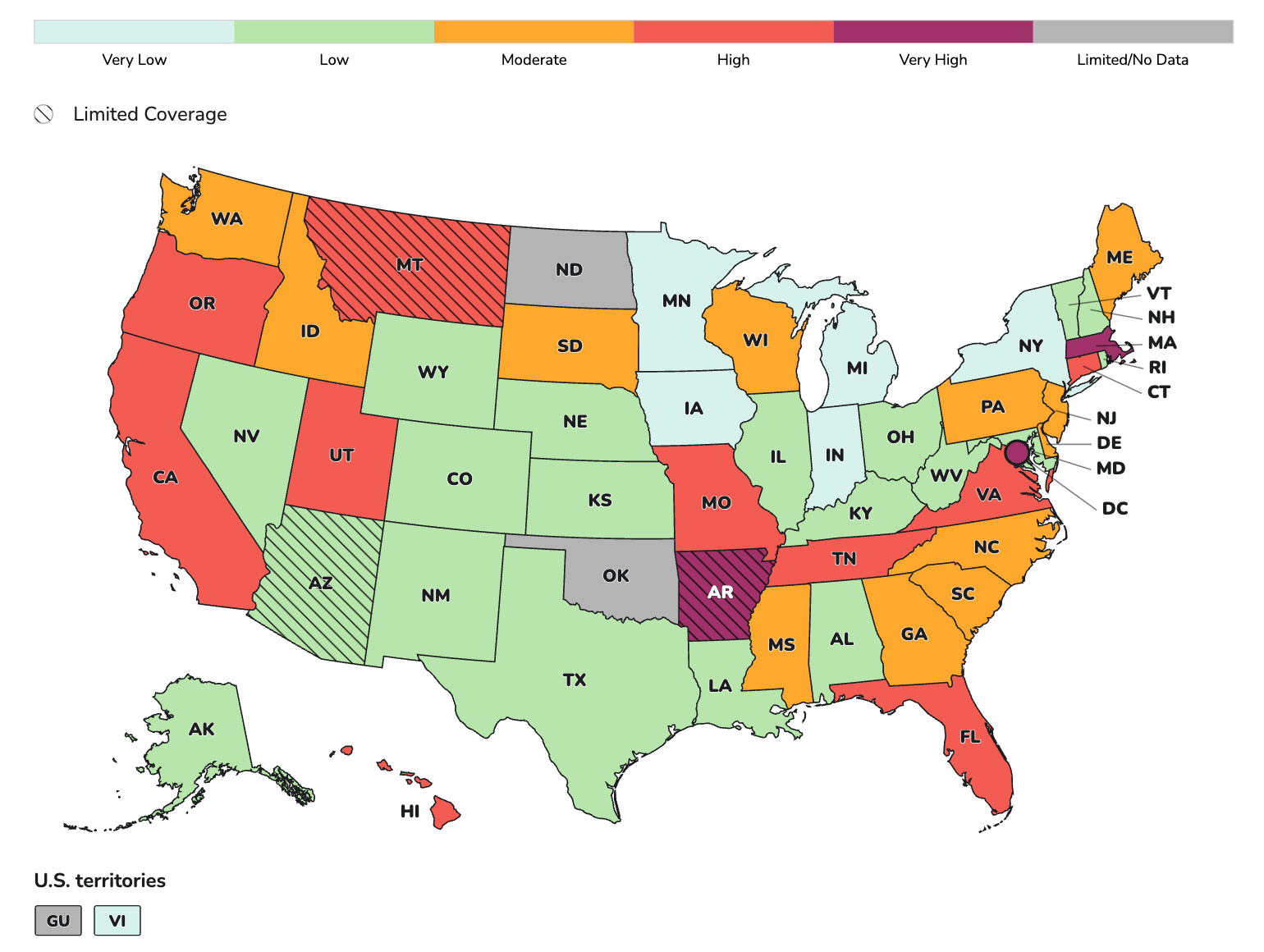
Flu is here. Nationally, about 9% of flu tests are coming back positive, and hospitalizations are climbing in every region but one. The West Coast and the South are seeing the most activity, and the Northeast is beginning to pick up. The CDC reported three flu-associated child deaths so far in the 2026-2027 season. This will reach ~200 kiddos by season's end.
Covid-19 is in a holding pattern. Wastewater levels are moderate but hovering nationally. This is very odd, as typically levels decrease after summer before increasing again in December or January. At the state level, rates are truly a mixed bag.
RSV is starting its usual winter climb. Hospitalizations are climbing, mostly in kids under 5, and the South is furthest along. This is typically where the RSV season begins before it spreads North and West.
Where is the vaccination rate data?
CDC has not yet published vaccination rates for this fall season, which is highly unusual, since this data typically appears on the website in September or October. Not having this data publicly available is unacceptable. It also raises questions about why.
This data matters for many reasons: Hospitals typically use it to anticipate surges, ER wait times, and stretched staff. Health departments can use it to spot which neighborhoods are falling behind, so they can increase outreach to reach the people who need it. It also holds leadership accountable for vaccine access, communication, and outreach.
I hope people start making noise about it.
What this means for you: This is the sweet spot for getting fall vaccines. Reaching the ILI threshold for “sick season” also means I start wearing a mask in crowded indoor areas, like the airport. I just don’t have time to get sick; you probably don’t either.
Spotlight: Measles elimination status is brewing behind closed doors
This week, an independent panel of eight experts meets to decide whether the U.S. loses its “elimination” status for measles, meaning the virus has spread continuously in the country for 12 months.
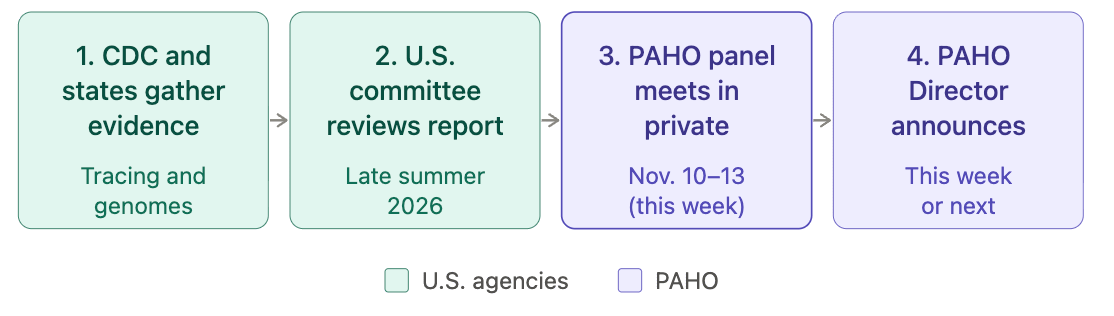
The clock began January 20, 2025, with the West Texas outbreak (February 1 in Mexico, which is also under review). The Pan American Health Organization (PAHO) pushed the review from April to November 2026 to allow time for genetic analysis. (It also falls after the midterms, and some suspect RFK Jr. or the administration influenced this.)
CDC and local health departments compiled the evidence, a U.S. expert committee reviewed it over the summer, and now the panel will advise the PAHO director, who makes the final call.
How are they making the decision?
The report is confidential, but PAHO reviews all the evidence together, and no single piece determines the outcome. The core question is whether the same strain of measles (same genotype and lineage) kept spreading for 12 months without a break.
Most of the evidence comes from two places:
Old-school detective work. Health departments interview sick people and trace who infected whom and where. This work is critical to understanding how illness spreads (and how to stop it). The challenge is that the trail often goes cold because people don’t want to be interviewed, they don’t remember, or they are impossible to contact. That is why #2 matters…
Whole-genome sequencing. Instead of relying only on interviews, this option looks at the virus’s genetic code in measles tests to see whether it has spread continuously for 12 months. Measles picks up a mutation every two to four transmissions between people, kind of like a typo copied (and added) every time a note gets passed along. By reading the virus’s entire genetic code, scientists can see its family tree and whether the Utah case is a “grandchild” of the Texas case (continuous spread) or a separate arrival from another country (a new introduction).
The panel also weighs other factors, including vaccination rates and the effectiveness of a country’s surveillance and outbreak response.
What will it mean?
Many, including me, expect the U.S. to lose elimination status. If that happens, it means measles is officially “endemic” again. The label is largely symbolic. It signals measles is spreading freely in unvaccinated pockets, and it means more preventable disease (more sick unvaccinated people, higher medical bills, and more kids missing school.)
It also means we need a plan to crawl back. I won’t hold my breath for RFK Jr.
What next?
We should know the decision within a week. Last year, PAHO announced Canada’s decision the Monday after the panel met. So I expect we’ll hear something next Monday, November 16. Brace for the headlines.
Also, brace for a fight over the social media narrative. This is where prebunking, learning a misleading argument before you see it, helps. You’re then much less likely to fall for it. It’s like a vaccine for misinformation: a small, weakened dose now builds resistance for later.
Here are a few misconceptions that I see coming:
“This was caused by illegal immigrants.” (Scapegoating and a red herring.) Most imported cases are U.S. residents returning from international travel. Also, this isn’t really the point. An endemic status depends on whether it kept spreading after it arrived. Here is a YLE deep dive.
“Canada lost it too.” (Whataboutism.) Yes, so did the UK. This isn’t just a U.S. centric problem, but it’s preventable, and that means we need to look inward, not just outward.
“The MMR vaccine doesn’t work.” (Nirvana fallacy and base rate neglect.) Vaccines aren’t perfect, but this one is impressively effective (97%). The vast majority of measles cases are among the unvaccinated.
“We all had measles as kids and it was fine.” (Survivorship bias.) The people saying this are the ones who survived. About one in five unvaccinated people who get measles are hospitalized, and people have died this year. This is preventable.
“Measles only killed eight people this year. Why not focus on opioids?” (Relative privation.) Less deadly doesn’t mean unimportant, and public health can and should work on both.
But expect to see them in the other extreme, too:
“We lost our status, so measles is everywhere.” (Hasty generalization.) Outbreaks are concentrated in communities with low vaccination rates. Not everyone faces the same risk, and raising the alarm when a community isn't at risk can do immense harm.
“It happened under the current administration, so they caused it.” This one needs nuance. Kindergarten MMR coverage has been sliding below 95% for years. But leadership does shape how we respond as a country, where resources go, how agencies communicate, and how quickly we restore our status.
What this means for you: When the news drops, we’ll explain what it means and what it doesn’t, and answer some of your top questions.
For now, expect a very loud conversation. We all play a role in the information ecosystem. Also remember, if you’re up to date on vaccinations, your risk remains very, very low.
For more information, this deep explainer on measles elimination from Common Health Coalition is fantastic.
Good news
Overdose deaths keep falling. CDC estimates nearly 68,000 overdose deaths in the year ending March 2026, about 9,500 fewer than the prior year. The nuance: among counties with enough data, deaths rose in 430.
Barbados eliminated mother-to-child HIV transmission. WHO certified the milestone, the result of years of sustained effort. This doesn’t mean HIV has been eliminated altogether in Barbados. It does mean, as UNICEF put it, that an HIV diagnosis during pregnancy in Barbados no longer has to mean transmission to a child. It worked because 98% of pregnant women got antenatal care, 98% were tested for HIV, and 98% of those with HIV received treatment.
RSV vaccines are working in nursing homes. A JAMA Internal Medicine study of nearly 600,000 Medicare nursing home residents found vaccinated residents were 73% less likely to be hospitalized with RSV during the vaccine’s first season. This is a high-risk group, so the real-world data is encouraging. Those who got the vaccine were also 56% less likely to die of RSV. Thanks to Force of Infection for flagging this win!
Bottom line
Public health moves slowly. Flu, RSV, and Covid-19 follow patterns we can prepare for before they peak. Measles took years of missteps to resurge, and returning to elimination will take persistence. But progress is also possible.
Love, YLE
Your Local Epidemiologist (YLE) comprises a team of experts, ranging from physicians to immunologists to epidemiologists to nutritionists, working together with one goal: to “translate” ever-evolving public health science so that people are well-equipped to make evidence-based decisions. The YLE suite of newsletters reaches over 475,000 people across more than 132 countries. This newsletter is free to everyone, thanks to the generous support of fellow YLE community members.


No comments:
Post a Comment