Sunday, April 06, 2025

Dr Ruth's COVID & Health News, 4/6/25

Wow! Look at all the impressive information in the latest edition of the COVID & Health News newsletter by Dr. Ruth Ann Crystal:

===================

According to the CDC, national respiratory virus levels are low for COVID, Flu A, and RSV with some regional variation. Influenza B is still high in the Northeast according to WastewaterSCAN.
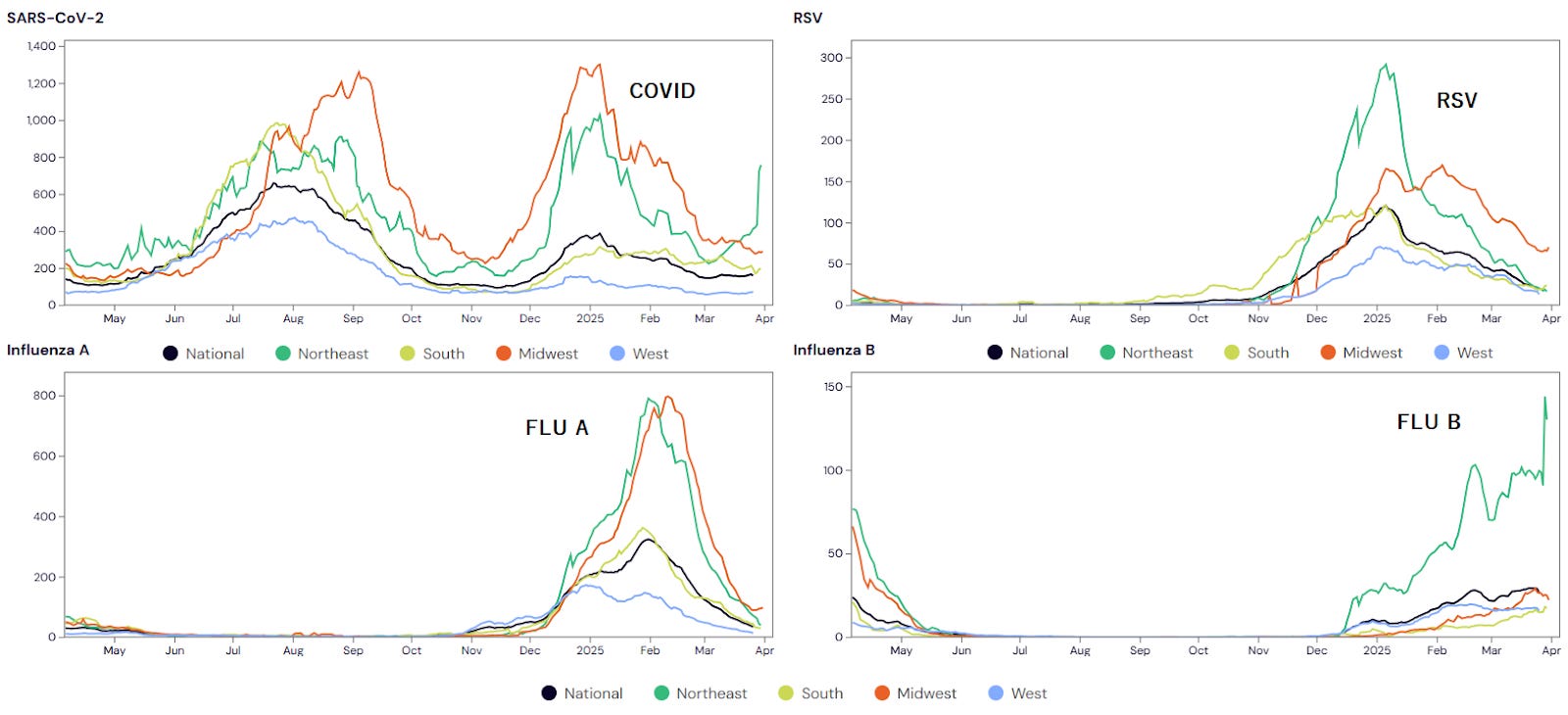
From WastewaterSCAN: https://data.wastewaterscan.org/

Emergency room visits for COVID are down across the United States, as are hospitalizations, and deaths from COVID have decreased as well according to the CDC. Moderate COVID wastewater levels persist in the South. In California, wastewater levels are low overall, but Riverside County (Indio) levels of SARS-CoV-2 levels in wastewater is high this week.

CDC SARS-CoV-2 in Wastewater through 3/29/25
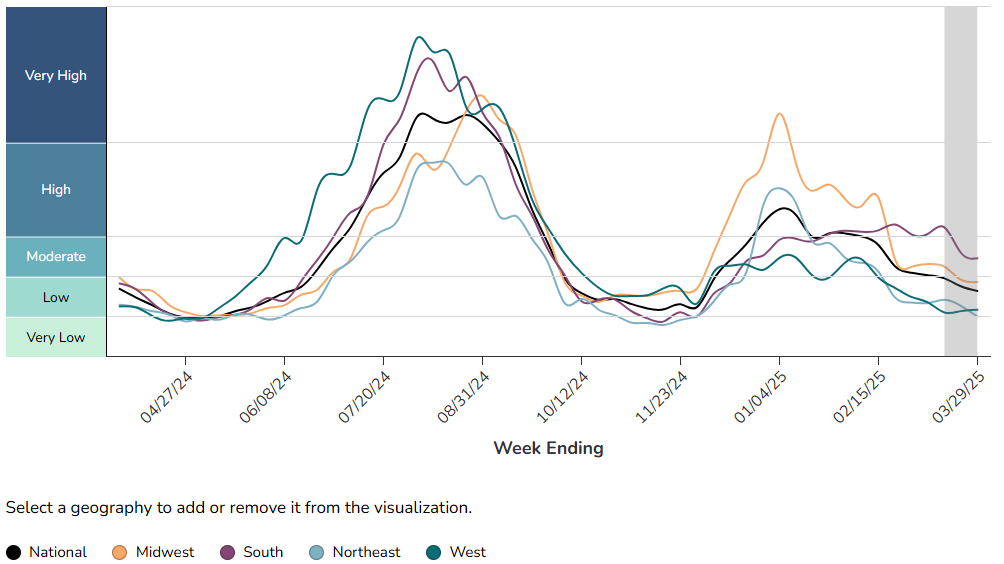
From: https://www.cdc.gov/nwss/rv/COVID19-nationaltrend.html

As of April 4, JP Weiland estimates about 260,000 new COVID infections daily in America, with 1 in 127 people currently infected. The LP.8.1 variant continues to slowly push out XEC and now makes up 55% of circulating SARS-CoV-2 infections.

According to the NHS, COVID hospitalizations in the UK are at their highest level this year.

Acute COVID Infections & General COVID Info

A new study of more than 230,000 U.S. veterans found that people who tested positive for COVID-19 had a higher risk of getting bacterial, viral, and fungal illnesses in the year after their initial infection, even if their initial COVID infection was mild. In fact, in the year after a COVID infection, those with mild to moderate COVID infections had higher rates of outpatient infections, hospitalizations, and sepsis. People who had been hospitalized for COVID had a greater risk than those hospitalized for seasonal flu, suggesting that SARS-CoV-2 infections may have a lasting impact on the immune system.

Viral persistence: A man who had recovered from COVID and tested negative on nasopharyngeal swab was found to have SARS-CoV-2 spike protein in his small intestine, especially in ulcerated areas. This was associated with increased Vascular Endothelial Growth Factor (VEGF) and Fibronectin expression, as well as structural changes in intercellular junctions between intestinal cells. SARS-CoV-2 can persist in the gut and cause long-term effects, inducing vascular and epithelial changes, even after it is no longer detected in the nose or throat.

A study from Johns Hopkins of 50 patients with prior B-cell depletion therapy who were hospitalized for COVID showed that prior B cell depletion did not increase 30 day COVID mortality, but it did prolong recovery and increased length of hospital stay by 2 days.

Pediatrics

The Post-COVID Kids Bavaria study showed that >80% of children and adolescents with Long COVID had fatigue, 73% lacked motivation, and 72% had concentration and memory deficits. More than half had psychiatric diagnoses, most commonly adjustment or attention disorders, suggesting that Long COVID in children often affects both body and mind.

Vaccines

The receptor-binding domain (RBD) of the SARS-CoV-2 spike protein often mutates to help it evade immunity. A modified COVID vaccine lacking the spike’s receptor-binding domain (RBD) showed strong lung protection in macaques, suggesting that vaccines targeting more stable regions of the virus may offer broader, longer-lasting protection.

Share

Antiviral Treatments

Australian researchers developed a new antiviral drug called WEHI-P8 that targets a coronavirus enzyme called PLpro and shows strong promise in treating both acute COVID and Long COVID in mice. Unlike Paxlovid, which targets a different viral enzyme and has limited use in Long COVID, WEHI-P8 reduced lung and brain damage and improved behavior and memory in infected mice. This study also introduced a new mouse model that closely mimics human Long COVID symptoms.

A group from Shanghai found that people age 60 and older with type 2 diabetes who were taking Metformin before getting COVID had better outcomes. Those on Metformin had reduced ICU admission rates, pneumonia, shorter hospital stays and lower inflammation. The benefits were not seen in patients under age 60, suggesting that Metformin’s anti-inflammatory effects may be especially helpful for older adults.

A large international study of 400+ antibodies mapped neutralization effectiveness across COVID variants. The results are publicly available and may help guide future antibody therapies and pandemic preparedness by showing which antibody features are most likely to predict real-world protection.

Scientists improved an existing antibody called AZD3152 which had lost effectiveness against new COVID variants due to viral mutations. By using advanced computer modeling and lab testing, they developed a new version, antibody 3152-1142, that works against a wide range of past, current, and predicted future variants including XBB.1.5+F456L.

Belgian researchers discovered a new antiviral drug called CIM-834 that blocks coronavirus assembly by locking the membrane (M) protein in an inactive state. CIM-834 stopped SARS-CoV-2 replication and prevented transmission in mice and hamsters.

Long COVID

​A study of over 675,000 patients in southeastern Spain found that being older, female (adjusted odds ratio [AOR] = 1.39), and experiencing symptoms like chest pain (AOR > 1.55) or loss of smell (AOR > 1.5) during the initial COVID infection increased the risk of developing Long COVID. Vaccination, particularly with mRNA vaccines, significantly reduced the risk of getting Long COVID by 90%.

A group from Virginia identified two distinct type 1 immune pathways driving restrictive lung disease in Long COVID patients.
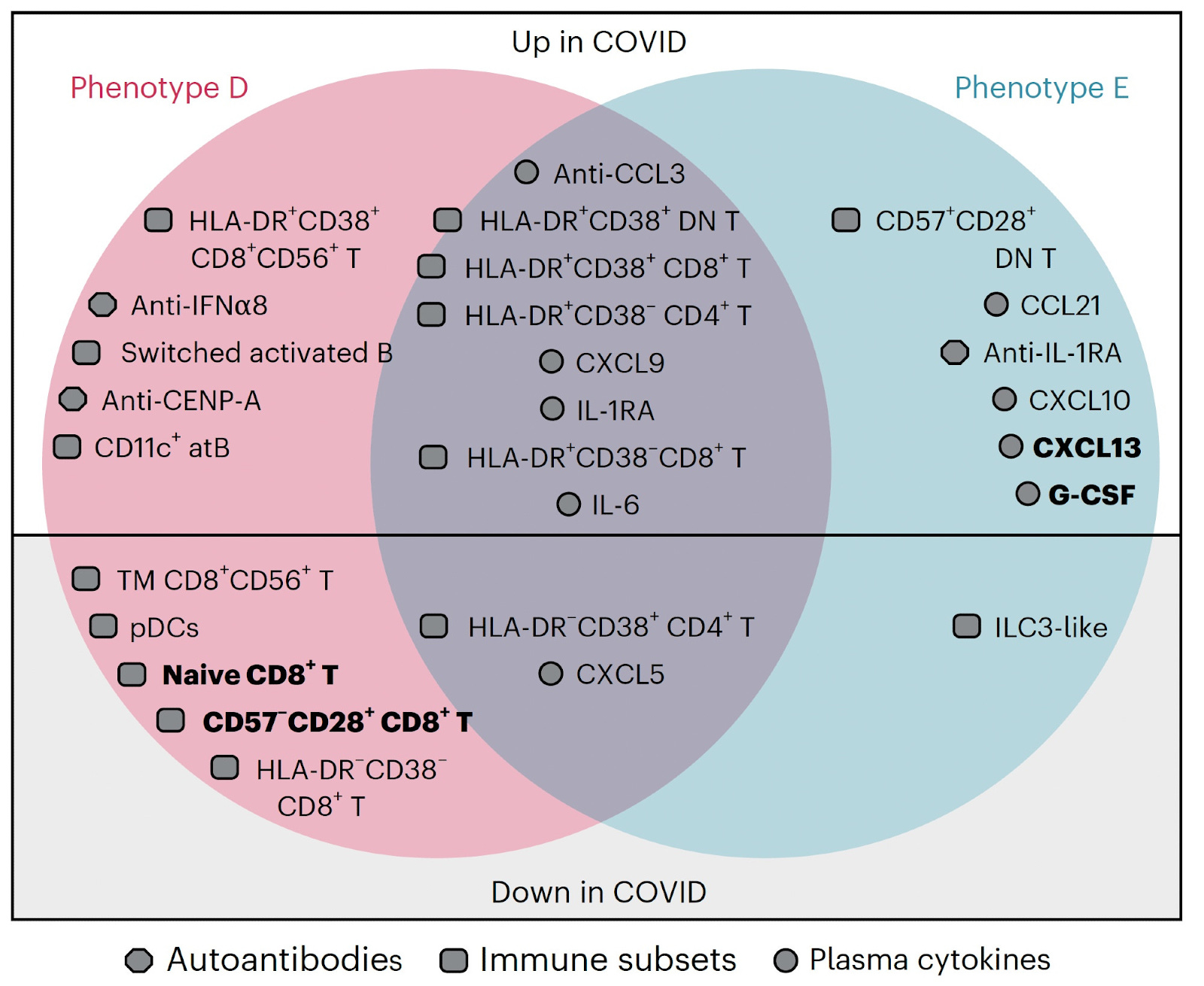
From: https://www.nature.com/articles/s41590-025-02110-0

Treatment with the monoclonal antibody Sotrovimab during the acute phase of COVID infection helped to treat the acute COVID infection and also led to an 8% reduction in Long COVID.

Canada also released its first formal guidelines for post-COVID care which can be found at https://can-pcc.recmap.org/.

COVID and the Brain

A group from Penn created a structured speech therapy protocol for people with post-COVID cognitive symptoms. The personalized, 3-visit program focused on managing mental fatigue and improving memory, attention, and communication, using tools like the spoon theory and cognitive rating scales. All 39 participants reported improved quality of life immediately after the program and again 90 days later.

Jason Gale wrote an excellent review in Bloomberg on the effects of COVID on the brain that is well worth a read. COVID infection has been linked to persistent cognitive issues, including brain fog, depression, and memory problems, raising concerns about a potential future surge in dementia cases. Research has shown that even mild infections can accelerate brain aging, with long-term neurological effects persisting for years, especially in older adults and those with severe cases. Studies indicate that COVID can elevate proteins associated with Alzheimer’s disease, trigger neuroinflammation, and disrupt the immune system, potentially leading to long-term cognitive decline. The economic burden of Long COVID is significant, with analysts estimating an annual cost of up to $1.04 trillion in developed nations due to lost productivity and ongoing disability.
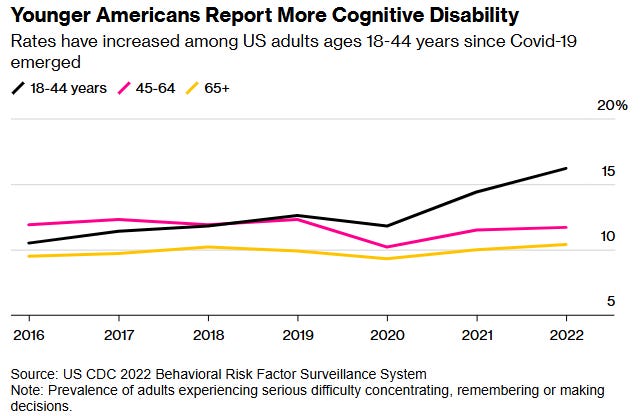
From: https://www.bloomberg.com/explainers/does-covid-lead-to-dementia-how-the-coronavirus-affects-your-brain

A review of 16 studies found that people who had COVID have smaller brain volumes than controls on scans taken more than 6 weeks after infection and that more severe COVID infections were associated with the most difference in brain volume. Neuroinflammation and hypoxia may be a mechanism for brain volume loss after COVID infection.

Researchers used immunoPET imaging with a radiolabeled monoclonal antibody to track SARS-CoV-2's spread in non-human primates. They found that three months after infection, the virus still remained in the lungs and brain. This technique also detected the virus in various organs during the initial infection phase, offering a non-invasive way to study Long COVID’s pathophysiology.

Share

H5N1

​This week, Mexico reported its first confirmed human case of H5N1 avian influenza in a three-year-old girl from Durango, who is currently hospitalized in serious condition. Health authorities are investigating the source of infection and have indicated no evidence of human-to-human transmission.

In the United States, the Department of Agriculture confirmed additional H5N1 infections in domestic cats across multiple states, highlighting the virus's continued spread among mammals. Concurrently, the FDA suspended a program aimed at improving bird flu testing in milk, cheese, and pet food due to significant staff cuts, potentially impacting efforts to monitor and control the virus's spread.

U.S. House Democrats initiated an investigation into Health Secretary Robert Kennedy Jr.'s management of the federal response to the bird flu outbreak, expressing concerns over his opposition to poultry vaccination and the potential public health implications.

At least 56 poultry farms in the US have been infected twice by H5N1 bird flu, 17 more farms have been infected three times and 6 more poultry farms in South Dakota have been infected four times by H5N1 bird flu. Experts recommend prevention measures against H5N1 including vaccination of livestock and reducing the density of animals on the farms.

Measles

2025 U.S. Measles case tally as of 4/3/25:

  • 607 Measles cases

  • 97% unvaccinated

  • 12% of cases hospitalized (74 of 607)

  • 2 deaths —> 3 deaths as of 4/6/25

This morning, it was reported that another child has died of Measles in the Texas outbreak. The first Texas measles death was in a 6-year-old girl and Thursday’s death was an 8-year-old girl. Both children died from Measles pneumonia.

As of Friday 4/4/25, the U.S. has reported 607 measles cases in 2025, with almost 500 in Texas with spread in New Mexico, Kansas and Oklahoma. Other states are reporting outbreaks as well. Actual case numbers are probably 4 to 5x what is being reported.

Michael Mina of Harvard wrote an op ed in the NY Times this week entitled “I Study Measles. I’m Terrified We’re Headed for an Epidemic.” He emphasized the importance of vaccination in preventing Measles outbreaks and critiqued public health policies that contributed to declining vaccination rates.

Pediatrician Dr. Tom Nguyen recommends HealthtrackRx to get fast results on measles tests.

Some unvaccinated children in Texas were given high levels of Vitamin A that resulted in liver damage following RFK Jr.’s promotion of it as a cure. “Many of those patients had been in the hospital for a severe measles infection; doctors discovered the liver damage only after routine lab work.” Vitamin A does not protect against the measles, but two doses of the MMR vaccine are 97% effective in preventing the measles.

According to ProPublica, the CDC withheld a report indicating high measles risk in areas with low vaccination rates and shifted its messaging to frame vaccination as a personal choice, aligning with HHS Secretary Robert F. Kennedy Jr.'s known anti-vaccine stance.

The Washington Post reported that “RFK Jr. forced out Peter Marks, FDA’s top vaccine scientist”. A well respected scientist, Dr. Marks was told to resign or be fired from the FDA. He wrote in his resignation letter:

"it has become clear that truth and transparency are not desired by the Secretary [RFK Jr regarding vaccines], but rather he wishes subservient confirmation of his misinformation and lies."

The Department of Health and Human Services (HHS) has appointed David Geier, a vaccine skeptic with a history of promoting false links between vaccines and autism, to lead a federal study on the subject. David Geier has no medical degree and was disciplined by Maryland regulators more than a decade ago for practicing medicine without a license. Mountains of research studies over decades have already shown that there is no no connection between vaccines and autism.

Dr. Titanji posted four helpful alternative sites to get trusted health and vaccine information:

  1. https://www.who.int/

  2. https://www.gov.uk/government/organisations/public-health-england

  3. https://www.canada.ca/en/public-health.html

  4. https://www.ecdc.europa.eu/en

Whooping Cough (Pertussis)

Two infants in Louisiana have died from Whooping Cough amid falling vaccination rates. The Louisiana Department of Health recently stopped promoting vaccination to the public. It is important for pregnant individuals and other family members taking care of young infants to be vaccinated against Pertussis to protect the baby.

Department of Health and Human Services (HHS)

The Trump administration cut $11 billion in federal grants to state health departments across the United States to track, prevent and control infectious diseases like H5N1 and Measles. A US judge has temporarily blocked the cuts, but the money is in limbo for now while several states sue the federal government.

This week, significant layoffs impacted the NIH, CDC, and FDA as part of a sweeping restructuring by the U.S. Department of Health and Human Services. 10,000 people were laid off and another 10,000 retired or resigned. Robert Kennedy Jr. claimed that HHS would rehire 20% of the employees recently laid off, but it was later revealed that no such plan existed.

The NIH saw 1,200 positions cut, including key staff from infectious disease and allergy research.

The CDC faced the elimination of 2,400 roles, notably affecting programs on asthma, air pollution, smoking, gun violence, reproductive health, and climate change. Entire offices focusing on public health areas such as HIV prevention and environmental health were eliminated. The National Institute for Occupational Safety and Health (NIOSH) had over 1,000 positions cut.

The FDA also slashed its workforce by 3,500 employees, raising concerns about its ability to manage drug approvals and public health initiatives effectively.

Funding for COVID and Long COVID research was revoked and then RECOVER Long COVID pathobiology grants were restored.

The Agency for Healthcare Research and Quality (AHRQ) , which helped to improve health care safety, was effectively dissolved on Tuesday.

Yesterday, 5 million Americans across all 50 states protested against Trump, Musk and DOGE in "Hands Off rallies. See more photos here.

From: KHOU

Other News

23 and Me went bankrupt and its assets will be sold off including people's genetic data. The California Attorney General sent out this notice on how to have your genetic saliva sample destroyed and how to delete your 23andMe account. I would recommend deleting things in this order because once you delete your account, you can't go back to have your saliva sample destroyed.

1. Start by destroying your DNA sample under "Preferences".

2. Then revoke permission for research under "Research and Product Consents".

3. Then DELETE your account.

A study from Wales found that getting the shingles (herpes zoster) vaccine reduces the risk of dementia by 20% over 7 years. The findings suggest the vaccine may help prevent or delay dementia, especially in women, possibly by reducing inflammation or reactivation of the chicken pox (herpes zoster) virus. Dr. Eric Topol reviewed all of the data on shingles vaccination and the reduction of dementia here.

Stanford researchers showed that an AI tool can help doctors safely and quickly provide the correct intravenous nutrition to premature babies by using data from medical records to predict the right mix of nutrients. Trained on nearly 80,000 past prescriptions, the algorithm recommends one of 15 ready-made formulas, reducing errors, saving time, and making care more accessible—especially in low-resource settings. Congratulations to Dr. Nima Aghaeepour, Dr. Joe T. Phongpreecha and colleagues on this important work!

A Lupus autoantibody called 4H2 was found to be cytotoxic to brain, lung, and breast cancer cells in culture, but not to normal breast epithelial cells. 4H2 also targeted glioblastoma brain cancers in mice and may work as a cancer treatment in the future.

It turns out that HPV may be bad for your heart. “Human papillomavirus (HPV) is most often associated with causing different types of cancer, but a meta-analysis being presented on March 31 at the American College of Cardiology’s (ACC's) Annual Scientific Session in Chicago suggests that it also poses a significant risk of cardiovascular disease.” This is another reason why HPV vaccination is important.

Researchers followed 4501 college students for 7 years and found that those with low IL-5 and IL-13, plus gastrointestinal issues before they got mononucleosis (glandular fever) caused by the Epstein Barr Virus (EBV) had an 80% chance of developing Myalgic Encephalomyelitis/ Chronic Fatigue Syndrome (ME/CFS).

Sanofi will soon commence a Phase I/II trial of an mRNA vaccine against Chlamydia. Chlamydia is resistant to some antibiotics, so having a vaccine to prevent it could be amazing.

Good news! A new antibiotic Lariocidin works against resistant bacteria, is not toxic to human cells and shows promise in resistant infections in mouse studies. Lariocidin is a lasso peptide and acts on a different mechanism (stops bacterial ribosomes from making proteins).

A cat named Sylvester wandered into a Guide Dog training kennel and now works there to test guide dogs for what trainers call "cat distraction". He routinely strolls in or jumps onto obstacle courses which tests the dogs ability to concentrate on commands.

From: Leamington's guide dog training centre

Have a good week,

Ruth Ann Crystal MD

Thanks for reading Dr. Ruth’s Newsletter©!

No Wonder Dem Protesters Are So Angry

Thanks to the likes of Biden, "Border Czar" Harris, and the useless Mayorkas, they've been subsidizing illegal aliens all this time in their zeal to add them to the voting rolls, and they are about to be exposed. Only American citizens should receive Medicaid, and only under certain circumstances. And only American citizens who worked all their lives and paid into Medicare should receive Medicare, which we don't get for free.

Do the right thing. Cut off all entitlements to illegal aliens.

============================

DOGE's border expert reveals terrifying number of illegals on Medicaid: 'It's just ramping up'

"Illegal immigrants are claiming billions of dollars worth of Medicaid and other US benefits, according to data uncovered by the head of DOGE's border team.

"Antonio Gracias said around 1.3 million non-citizens are currently claiming Medicaid, at an estimated cost of around $6.5 billion.

"The stark revelation came after Gracias and his team began probing the huge uptick in non-citizens who were assigned Social Security numbers last year.

"The figure leapt from 400,000 in 2021, to more than two million in 2024.  Among those are people who have entered the US legally on visas and green cards and who pay into the US tax system.

"But a large proportion are undocumented migrants who are benefitting from 'maximum pay' and 'minimum collection,' Gracias said.

"'The defaults in the system, from Social Security to all benefit programs, have been set to maximum inclusion, maximum pay for these people, and minimum collection,' he told the All-In podcast.

"'Already, we found 1.3 million of them on Medicaid as an example,' he continued. 'And we found people in this population registered to vote.'

"According to Medicaid.gov, the average annual cost per Medicaid enrollee is between $4,000 and $7,000, meaning the cost for all non-citizen beneficiaries tops out at $6.5 billion."

Another Preventable Measles Death

There's no excuse for not vaccinating children, and it can be a matter of life and death.

While RFK Jr. is at this poor child's funeral, he ought to use the occasion to stress the importance of vaccines!

========================

By Pooja Salhotra at Texas Tribune, April 6, 2025

A second Texas child has died from measles; RFK Jr. will reportedly visit state; About 500 Texans, mostly young unvaccinated children, have contracted the disease. The U.S. health secretary is expected to come to Texas.  

Stop Protecting The Jew-Haters

Also, bring in the National Guard to protect and escort Jewish students being blocked from going to their college classes. Does anyone remember the black students escorted to school by the National Guard in 1950s Arkansas while a hostile white mob threatened them? Imagine the immediate response if that were happening to blacks today. Instead, it's happening to Jews.

========================

By Michael Kuenne at The Times of Israel 4/3/25:

Deport the Jew-Haters: America Must Draw the Line  

"The United States is at a crossroads. Antisemitism, a venomous hatred that has plagued the Jewish people for centuries, is rearing its ugly head again, this time on American campuses, cloaked as “pro-Palestinian” activism. As someone who recently spoke with top officials at the Department of Homeland Security (DHS) and U.S. Customs and Border Protection (CBP), I can confirm what every Jewish reader of The Times of Israel knows in their bones: this isn’t about free speech. It’s about protecting America’s values, its Jewish community, and its unbreakable alliance with Israel from those who spread Jew-hatred and cheer for Hamas. These agitators must be deported, and the Trump administration is finally doing what’s right.

"I reached out to DHS and CBP to understand how they’re tackling this crisis, and their resolve is unshakable.

"Assistant Secretary Tricia McLaughlin of DHS told me directly: “The Trump administration is enforcing immigration laws, something the previous administration failed to do. Those who violate these laws will be processed, detained, and removed as required.”

"This isn’t rhetoric, it’s action. People like Mahmoud Khalil, Leqaa Kordia, and Ranjani Srinivasan, who’ve turned campuses into breeding grounds for antisemitism, are feeling the heat. Khalil led protests accused of glorifying Hamas. Good riddance. America can’t afford to coddle those who excuse the murder of Jews.

"Assistant Commissioner Hilton Beckham of CBP laid it out just as clearly when I spoke with her: “Under the leadership of the Trump Administration, we have seen a sharp decline in illegal immigration. This reduction has allowed our law enforcement personnel to get back to doing law enforcement work, like conducting thorough vetting and interviews. Lawful travelers have nothing to fear from these measures, which are designed to protect our nation’s security. However, those intending to enter the U.S. with fraudulent purposes or malicious intent don’t even try.”

"She stressed that visas are “a privilege, not a right,” reserved for those who respect America’s laws. When I asked about their process, Beckham explained, “Any traveler entering the U.S. is subject to CBP inspection. Visa holders found inadmissible upon inspection at a U.S. port of entry may be subject to immediate removal. If an alien that is found inadmissible is unable to return to their country of origin, CBP may coordinate with ICE for detention and removal, as appropriate.”

"This is a system built to root out threats, and it’s working.

"Antisemitism is a cancer, not a debate. Every Jewish student in America has the right to walk across campus without fear of being hunted for their identity. The Jewish people need protection, not platitudes.

"Let’s not mince words: antisemitism isn’t a “viewpoint” to debate. It’s a cancer. Since Hamas’s barbaric October 7, 2023, attack on Israel, these so-called activists have flooded American universities with rallies that parrot Hamas’s genocidal playbook. Jewish students have been harassed, spat on, and forced to hide their identities, all while administrators wring their hands. Columbia, Cornell, Georgetown, these aren’t isolated incidents; they’re a coordinated assault on Jewish safety. The Trump administration’s executive order to deport non-citizen students linked to these protests is a lifeline, not a crackdown. It’s about time someone stood up and said, “Enough!”

"American soil must never become fertile ground for chants of “Intifada” and glorification of terror. If your activism celebrates the slaughter of Jews, you don’t deserve a U.S. visa; you deserve a one-way ticket home.

"When I learned CBP uses “strict policies and directives” for searches, including electronic media, to catch terrorism and visa fraud, I felt a surge of hope. Beckham assured me, “These searches are rare, highly regulated, and have been used in identifying and combating serious crimes, including terrorism.” Claims of “political targeting” are nonsense; this is about protecting Jews, not silencing dissent. Every deportee is a victory for every Jewish child who deserves to walk to class without fear.

"Israel is under siege, and America must be its shield. Hamas and its apologists want nothing less than the annihilation of Jews. Deporting these foreign agitators isn’t just policy; it’s a moral clarion call.

"As Beckham told me, “Only those who respect our laws and follow the proper procedures will be welcomed.”

"If you back Hamas, if you spread antisemitism, you don’t belong on their soil, period. Secretary Marco Rubio is wielding that power to defend Jews and Israel, and I salute him.

"America must be a sanctuary for Jews, not a stage for their tormentors. Deporting these hate-mongers isn’t enough; it’s the bare minimum. Defending Jews must become America’s moral baseline, today, tomorrow, always."

Saturday, April 05, 2025

Antisemitism Without Accountability

Whichever Jew-hater is responsible for this disgusting propaganda should be caught, named, shamed, and fired ASAP. This is not an "oversight". It's happening at many schools, with none of the culprits ever held accountable, and an apology from the Schools Chancellor is too little, too late. The Department of Education has become the Department of Indoctrination. We don't need more politically correct language or DEI to try to explain it; what we need is to remove and punish the haters.

======================

April 4, 2025 New York Post:

NYC public schools accused of ‘abhorrent’ antisemitism after anti-Israel ‘Stop Gaza Genocide Toolkit’ is included in newsletter 

"The head of New York City public schools was forced to apologize for linking a “Stop Gaza Genocide Toolkit” in a newsletter this month — sparking outrage in the Jewish community.

"The Office of Student Pathways Newsletter, which is blasted out monthly to select teachers and parents across the nation’s largest public school system, included a bullet point titled “Guidelines for teaching about genocide” — which linked to a Google doc titled “STOP GAZA GENOCIDE TOOLKIT.”

"The 17-page document contains radicalized messaging that encourages readers to “Stop arming Israel and free Palestine!”

"The “toolkit” breaks down how to mobilize pro-Palestine campaigns on social media, how to boycott and encourage divestment from pro-Israel organizations and encourages readers to print out Palestine yard signs — among other calls to action.

"Schools Chancellor Melissa Aviles-Ramos admitted to what she called a “troubling oversight” in a statement on Thursday night that condemned the toolkit as hateful and antisemitic. 

“This language is hurtful to many in our Jewish community, and we deeply apologize,” Aviles-Ramos said in the statement posted to social media, which stopped short of addressing who was responsible for the email blast.

“Once leadership became aware of this link, we immediately ordered its removal and have already begun conducting a thorough investigation as to how this was added to @NYCschools communication,” the chancellor said.

"The DOE also refused to comment on who was behind the email.

"A version of the “toolkit” appears to have also been linked to in the October-November 2024 newsletter. The document, which has since been updated, called on readers to participate in “rage week” and “resist genocide” by mobilizing on the Sat. Oct. 5 “day of action” ahead of the anniversary of Hamas’ Oct. 7, 2023, terror attack on Israel.

"Some parents and teachers said it was a sign of deep-rooted antisemitism at the city Department of Education.

“It’s the systemic rot,” said Karen Feldman, an educator of over 26 years who resigned in November and co-founded the NYC Public School Alliance with teachers and parents to combat antisemitism and indoctrination at the DOE.

“Tons of teachers, parents and students are navigating these sites and coming across these very hateful problematic resources that are literally indoctrinating — filled with misleading information, propaganda and influencing our children’s minds. Maybe even their parents,” added Feldman, who said she has been investigating incidents like this since 2023.

"Many applauded the chancellor’s quick response to the troubling toolkit — but most also echoed Feldman’s sentiment that this was part of an ongoing systemic issue in the school system.

“I commend the chancellor’s swift response, but this is not an isolated incident,” said parent Yael Denbo, co-founder of the group Parents Against Antisemitism.

“The antisemitism that continues to surface in classrooms, curricula, and official communications is a symptom of a deeper, systemic issue within the New York City Department of Education—one that demands urgent attention and meaningful reform,” Denbo said.

"Another parent, who asked to remain anonymous, was more blunt, seething: “Bunch of f—king clowns.”

"Big Apple teachers have previously pushed an anti-Israel agenda before. Last year, educators from New York and New Jersey joined in a virtual seminar that taught students about the “Israeli occupation” and “ongoing genocide in Gaza,” while the group Teachers Unite helped organize a massive student walkout in protest of what they called the Oct. 7 “genocide.”

"The City Council’s Jewish Caucus held a one-hour phone call with the chancellor on Friday afternoon, and called for consequences and guardrails to ensure such an incident doesn’t happen again, sources said.

“Sending this document out was unconscionable,” the caucus wrote in a letter to the schools’ leader.

"Councilwoman Julie Menin, who reps parts of Manhattan and Roosevelt Island and is part of the Jewish Caucus, called for an immediate investigation on the matter, ripping the oversight as “abhorrent and shameful.”

“What should be sanctuaries of learning and tolerance become the exact opposite when the agency charged with educating our students sends out this truly offensive and hateful screed. DOE must launch an immediate investigation,” Menin said.

"Bronx Councilman Eric Dinowitz, also part of the caucus, added: “It is unacceptable that the DOE sent out a link to such an egregious and harmful document.”

“The chancellor rightfully had it immediately taken down and apologized for the damage it has caused,” he said.

"The advocacy group #EndJewHatred, which raised awareness about the newsletter link to the toolkit on social media, said it was thankful that the chancellor “heeded our concerns and appears to be taking this issue seriously.”

“This incident speaks to the need to root out the deep seeded, systemic Jew-hatred within the New York City Public Schools (NYCPS) system. For years, #EndJewHatred has raised this issue before, and while today’s announcement is a positive step, more must be done to protect the civil rights of Jewish students,” a rep for the group said in a statement.

“If NYCPS is truly committed to ensuring that Jewish students and families feel safe and supported, it will be completely transparent about how this happened, share who is responsible, and implement consequences – which must be meaningful, such as termination – that will be imposed on the perpetrator,” it added. “This can be a learning experience to move the city forward.”

'When asked for comment on allegations of systemic antisemitism infiltrating the school system, the DOE referred The Post to Aviles-Ramos’ original statement.

“Today, a troubling oversight was brought to my attention, in which an offensive political toolkit was hyperlinked in one of our published newsletters,” she wrote.

“The inclusion of this toolkit violates our policies on political neutrality and uses hateful, antisemitic language.”

Friday, April 04, 2025

"The Dancing Nana"!

She's a member of The Greatest Generation, and they don't make 'em like this anymore!  I had lively grandparents myself and heard stories about my larger-than-life great-grandmothers, so I really loved this story. Visit the link to see the videos.

===============

At 102, she loves to dance the Tush Push, do yoga, eat chocolate every day; Meet Shirley Goodman, known as “The Dancing Nana,” who is a hit on the dance floor.

By A. Pawlowski

"At 102, Shirley Goodman is having a great time as “The Dancing Nana.”

"Her family posts videos on Instagram of the great-grandmother tap dancing, shimmying, doing the floss dance and otherwise enjoying herself at parties and family gatherings. She's a "true believer in the power of dance," they say.

"Goodman went viral in 2019 when she performed the Tush Push, a line dance with twirls and kicks, at the age of 96 at her nephew’s wedding, as other, much younger guests barely kept up with the routine. 

"The video made her an Instagram star.

"Goodman turned 102 on March 14 and attributes her longevity to tap dancing, a positive attitude and milk chocolate, she told TODAY's Al Roker in an interview that aired on April 4.

"She even gave him a tap dancing lesson — "It's not as easy as it looks, keeping up with The Dancing Nana," Roker said — with both later performing in front of an audience. He then surprised her with jars of Smucker's jam with her picture on them.

"The centenarian even shared a "raunchy" poem about aging, that ended with the line "The golden years can kiss my a--."

"She said she feels about 40 years old.

“I feel great — (age) is just a number to me,” Goodman, who lives independently in Sarasota, Florida, told TODAY.com when she turned 100 in 2023.

“I would advise people, if they like music at all, to keep it in their lives and don’t just sit home in a rocking chair.”

"How did Goodman achieve such healthy longevity? Many people may be surprised she doesn’t eat healthy food and is an energetic 102-year-old despite obstacles such as heart disease and other health problems.

"Here is her longevity advice:

Keep moving

"Goodman, who was born in 1923 in Troy, New York, started dancing when she was 8 years old. Her dad, “a vaudeville man,” taught her how to tap dance and she opened her own dancing school at 17, where she taught ballet and ballroom dancing.

"She closed the school when she got married a few years later, but has continued to enjoy dancing all her life. Studies have found that besides providing enjoyable physical activity, dancing can be beneficial for brain health and reduce the risk of becoming physically disabled.

"Goodman played tennis until she was 90 and also took up golf, “but I wasn’t crazy about that,” she says. Goodman is also not a fan of walking: “I only walk as far as my mailbox, which is about five minutes.”

"She does yoga via FaceTime with her daughter, Joan, who lives in Albany, New York.

Life comes with setbacks. Stay resilient

"Goodman has survived many crises in her life, but always tried to stay positive.

'Soon after she got married in 1943, her husband, a pilot, left to fight in World War II. He was shot down the next year and was a prisoner of war until 1945. When he came home, the couple had four children and were married until his death in 1995.

"Goodman has had two open-heart surgeries, including a bypass surgery to fix clogged arteries, and has a pacemaker and a stent. She also deals with vision and hearing problems, but continues to keep dancing.

“My legs are still working,” she says. “I’m an optimist. I try to do positive thinking all the time. That’s very important. I have a bracelet that says ‘Positivity’ on it. I wear it every day and I try to stay positive.”

"She advises others to try to be happy with their thoughts and their families.

Enjoy what you’re eating

"Longevity experts previously told TODAY.com that many people who live long healthy lives don’t exactly focus on yogurt and vitamins, and Goodman might be an example of that.

“I don’t eat healthy food,” she says. “My kids would holler at me… but when I hit 90, they stopped bothering me.”

“We figured she was going to outlive us,” Goodman’s daughter Joan, 73, tells TODAY.com. “(But) you would not want to write a cookbook based on her nutritional recommendations. I think the secret is to enjoy what you’re eating.”

"Goodman says she loves fried foods like shrimp — “anything that’s cooked in batter” — plus chocolate and any kind of sweets. She likes to have at least one piece of chocolate after each meal, including a chocolate chip cookie with breakfast. The centenarian doesn’t like the healthier dark chocolate — her favorite is milk chocolate with nuts. She also doesn’t eat a lot of vegetables or home cooked meals.

“I say ‘cook’ is a four letter word, so I don’t cook very much,” Goodman says. “I eat very small portions, but I eat everything and anything I like.”

"But the centenarian doesn’t drink alcohol — she doesn’t like the taste. She also never smoked.

Seek the warmth of family

'Goodman has four children, 10 grandchildren and eight great grandchildren. She’s been teaching some of them how to do the Tush Push.

“I attribute (my longevity) mostly to two things. One is my family — I have a wonderful, devoted family. And the jazz, the music down here in Sarasota, and my tap dancing, that’s what keeps me going.”

Stay Safe: COVID Variant LP.8.1 Is Already Here

I hope (but doubt) that everyone is paying attention to this here in America, as we don't need more Covid Complacency:

-----------------------------------------------

What to know about the new Covid strain affecting three in five UK patients; The variant is becoming more and more dominant

Thomas Jeffries, The Independent (London), Thursday 03 April 2025   

"More than five years since COVID was declared a pandemic, we’re still facing the regular emergence of new variants of the virus, SARS-CoV-2.

"The latest variant on the rise is LP.8.1. It’s increasing in Australia, making up close to one in five COVID cases in New South Wales. Elsewhere it’s become even more dominant, comprising at least three in five cases in the United Kingdom, for example.

"So what is LP.8.1? And is it cause for concern? Let’s look at what we know so far.

An offshoot of Omicron

"LP.8.1 was first detected in July 2024. It’s a descendant of Omicron, specifically of KP.1.1.3, which is descended from JN.1, a subvariant that caused large waves of COVID infections around the world in late 2023 and early 2024.

"The World Health Organization (WHO) designated LP.8.1 as a variant under monitoring in January. This was in response to its significant growth globally, and reflects that it has genetic changes which may allow the virus to spread more easily and pose a greater risk to human health.

"Specifically, LP.8.1 has mutations at six locations in its spike protein, the protein which allows SARS-CoV-2 to attach to our cells. One of these mutations, V445R, is thought to allow this variant to spread more easily relative to other circulating variants. V445R has been shown to increase binding to human lung cells in laboratory studies.

"Notably, the symptoms of LP.8.1 don’t appear to be any more severe than other circulating strains. And the WHO has evaluated the additional public health risk LP.8.1 poses at a global level to be low. What’s more, LP.8.1 remains a variant under monitoring, rather than a variant of interest or a variant of concern.

"In other words, these changes to the virus with LP.8.1 are small, and not likely to make a big difference to the trajectory of the pandemic.

That doesn’t mean cases won’t rise

"COVID as a whole is still a major national and international health concern. So far this year there have been close to 45,000 new cases recorded in Australia, while around 260 people are currently in hospital with the virus.

"Because many people are no longer testing or reporting their infections, the real number of cases is probably far higher.

"In Australia, LP.8.1 has become the third most dominant strain in NSW (behind XEC and KP.3).

"It has been growing over the past couple of months and this trend looks set to continue.

"This is not to say it’s not growing similarly in other states and territories, however NSW Health publishes weekly respiratory surveillance with a breakdown of different COVID variants in the state.

"Sequences of LP.8.1 in the GISAID database, used to track the prevalence of variants around the world, increased from around 3 per cent at the end of 2024 to 38 per cent of global sequences as of mid March.

"In some countries it’s climbed particularly high. In the United States LP.8.1 is responsible for 55 per cent of cases. In the UK, where LP.8.1 is making up at least 60 per cent of cases, scientists fear it may be driving a new wave.

Will COVID vaccines work against LP.8.1?

"Current COVID vaccines, including the most recently available JN.1 shots, are still expected to offer good protection against symptomatic and severe disease with LP.8.1.

"Nonetheless, due to its designation as a variant under monitoring, WHO member countries will continue to study the behaviour of the LP.8.1 variant, including any potential capacity to evade our immunity.

"While there’s no cause for panic due to LP.8.1 variant at this stage, COVID can still be a severe disease for some. Continued vigilance and vaccination, particularly for medically vulnerable groups, is essential in minimising the impact of the disease."

Thursday, April 03, 2025

Your 60 Minutes Is Up: Lesley Stahl, Hamas Apologist

How anyone like Lesley Stahl can make such ridiculous excuses for Hamas continues to amaze me. She knows full well about the 10/7 atrocities like we do, and she saw the emaciated condition of the released hostages, just like we did. Hamas must be thrilled every time some willfully blind American or British media source makes remarks like this, and you can bet it makes good propaganda in their favor (Poor Hamas is starving, like the poor Gazans!)

Lesley, please retire from CBS ASAP.

======================

‘60 Minutes’ host slammed for asking Hamas hostage if he was starved because terrorists ran out of food 

"Several prominent pro-Israel social media accounts have accused “60 Minutes” host Lesley Stahl of being sympathetic to Hamas terrorists following a Sunday night interview she conducted with a hostage recently released by the militant group.

"Stahl asked Hamas hostage Keith Siegel whether his captors starved him on purpose or because they didn’t have enough food to give him.

"During the CBS News program, she spoke to several hostages who had recently been freed from the terror group’s clutches and returned to their families. Stahl spoke to Siegel, along with Tal Shalom and Yarden Bibas — the man whose wife and two young children were murdered while in captivity — learning details about their horrific experiences living in Hamas-controlled tunnels in Gaza.

"While Siegel discussed how his captors treated him, he stated that after his wife, Aviva, was released from captivity, Hamas became “very mean and very cruel and violent.”

“They were beating me and starving me,” Siegel said. Stahl followed by asking, “Do you think they starved you because or they just didn’t have food?”

"Siegel denied that his torturers didn’t have enough food, recounting, “No, I think they starved me, and they would often eat in front of me and not offer me food.” 

People Who've Never Had COVID

I've never had it, and I'm immunocompromised. But I've gotten every COVID shot, faithfully worn a mask, avoided crowds, and done everything I can to avoid additional risk. I'm keeping my fingers crossed that my luck continues.

================

From Futility.org, posted by Boston University, 4/2/25:

What can scientists learn from people who’ve never had COVID?

Five years after the world shut down in response to the rapid spread of a mysterious disease, the total number of reported cases of COVID-19 worldwide is approaching 800 million. That’s roughly the equivalent of the entire population of Europe. Approximately 10,000 new cases are still reported every day worldwide.

And, yet, somehow in our midst are Novids, or so-called “super-dodgers”—people who have never had COVID-19.

BU Today first wrote about this phenomenon in January 2023, speaking to Boston University clinician and researcher Sabrina Assoumou. That story became one of the most-read in the publication’s history—and one of the most-commented-on, as people shared their own tales of being exposed to the virus but never testing positive.

“Never had Covid. No vaccine. 4 out of 6 people in my household have had it twice or more. 3 of them were vaccinated with boosters. I’m confused as to why I’ve never gotten it,” one woman writes.

Scientists are curious, too, because if they can determine whether Novids have some sort of genetic code, antibody, or cell makeup that is helping to ward off COVID, they might be able to use that information to design stronger treatments or more effective vaccines.

Here, two years later, Assoumou digs into what scientists have learned about COVID and people who’ve never gotten it:

Q It’s hard to believe there are still people out there, five years later, who still have never had COVID. Does that surprise you?

A I think a lot of those individuals are people who are trying very hard not to get it. They are probably still masking and avoiding large crowds, especially indoors. I still get weekly emails from people who saw our first article, and they write to tell me, I found your article, I don’t think I’ve had COVID. And they are asking if there are studies they could join to answer important questions related to this topic.
 
Q So that’s a good thing, I suppose, right?

A It’s fascinating on many levels. As a scientist, it’s great to know there is goodwill out there, and that people want to help us find answers. People do want to help science, they care about what’s potentially happening.
 
Q As a scientist, what do you tell people?

A The best way to limit the risk of getting COVID and its complications is to get vaccinated. Vaccination doesn’t prevent all infections, but it prevents some. Most importantly, vaccination decreases the risk for severe disease, hospitalization, and death. We also know that masking works. It is especially helpful in crowded indoor settings with poor ventilation. Testing is also helpful to prevent spreading infections. We also know that Paxlovid is helpful for individuals at risk for developing severe complications such as older people or individuals with underlying conditions.
 
Q What else have scientists learned?

A Age is important. We know that children are at a lower risk than older adults for getting severe complications from COVID.
 
Q Let’s talk about the human immune system. What has COVID taught us about our immune systems?

A Let’s start with some background on the immune system. There are two arms of the immune system, the innate immune system and the adaptive immune system. The innate immune system provides us with a more general response to infections. The adaptive immune system is more specific and involves antibodies, T-cells, and B-cells. In the adaptive immune system, your body targets an infectious agent with a response that is specific to that infection. Information that we have learned with COVID is that children appear to have a more robust innate immune response to this infection and they therefore have less severe symptoms if they are infected.
 
Q How did our immune systems react to COVID?

A COVID was interesting. If you look at it today, it’s mostly people 75 and older who are dying from COVID. Age is such an important determining factor for death. Children were doing better than you would expect. We think this occurs because their innate immune response seems to address the infection earlier than adults. This is interesting because when we compare what we are seeing with COVID to other respiratory infections such as influenza, the story is a little different. For influenza, we see that younger and older individuals are most impacted. This is in contrast to COVID, where children seem to have milder disease.
 
Q There was a time when we all thought masks might just be a permanent part of our future. But that seems to have passed now and the vast majority of people stopped masking. Why do you think masks didn’t stick?

A If you go to Asia today, you see more people wearing masks than in the US. Some have noted that changes that occurred after Asia experienced SARS [severe acute respiratory syndrome caused by SARS-coV1] in the early 2000s might explain these differences. The SARS outbreak involved 29 countries and likely contributed to a more cautious approach to respiratory infections. So, masking is probably more common there because of past experiences and also some cultural factors. There seems to be a general attitude that masking is what you do when you have a cold or to protect others. We didn’t have the same experience with SARS-CoV1 so perceptions about masking are a little different than what we see in Asia.
 
Q Can you talk about what kind of research and studies have been done or are being done with Novids?

A A team of investigators in collaboration with the NIH are trying to specifically answer some key questions. The project is called the COVID Human Genetic Effort and they are still recruiting patients who appear to be resistant to COVID.

If you go to their main mission page, they are trying to understand why certain people get more severe infection and why some people might not develop COVID despite being exposed.

Q From your research, how likely do you think it is that genetics play a role in whether someone is more or less susceptible to getting COVID?

A Genes that prevent SARS-CoV -2 infections altogether have not yet been identified, but we have some information about individuals who get infected but do not develop any symptoms because of their genetic makeup. For example, a study discovered that some individuals have a variation in genes coding for HLA (human leukocyte antigens), and they are therefore less likely to develop symptoms after an infection.

Information about people who are less susceptible to COVID is important because these individuals might provide data to help us develop better vaccines and treatments for SARS-CoV-2. If we understand what is happening at a biological level, you can better develop approaches to prevent it.

Q Is that how Paxlovid was developed?

A Paxlovid works by interfering with a protein that contributes to helping the virus grow and spread. It is indicated for people who are at high risk for developing severe complications from COVID. It is given early after infection to decrease disease severity. It is notable that Paxlovid was also studied to see if it could prevent individuals who were exposed to SARS-CoV2 from developing the infection. Unfortunately, in those cases it didn’t work to prevent infections. So, in summary, Paxlovid needs to be taken early after infection and it works best for individuals who are at risk for severe disease such as older individuals or individuals with underlying conditions.
 
Q Lastly, I have to ask about the political climate right now, especially around vaccines. How concerned are you?

A What’s concerning for me as an infectious diseases physician is that COVID is a preventable illness. All the current deaths are preventable. Last month, we had approximately 900 people dying per week from COVID. That’s a lot of people in 2025. It is notable that the current recommendation from the CDC says that individuals who are 65 or older should get a vaccine in the fall and then a second one around February.

The CDC recommendation was developed to address the deaths that we are seeing, but unfortunately we are not observing vaccination levels that would be helpful to address all preventable deaths. So right now, in terms of vaccination I am more focused on individuals 65 and older. Every single one of those deaths, as we sit here today, was preventable, with vaccines. We succeeded in creating vaccines that work very well for severe disease, hospitalization, and deaths, but unfortunately there isn’t enough vaccination occurring.

Q For many people, you would think the possibility of getting long COVID might scare them into getting the vaccine.

A Vaccination has been shown to decrease your chances of getting long COVID. It is true that long COVID isn’t as common as it used to be earlier in the pandemic. It used to be estimated that 20 to 30 percent of individuals who were infected would get long COVID. Now the proportion has come down, but it is still approximately 7%. That’s still a lot of people.
 
Q Do you wonder how long you’ll be getting emails about COVID?

A The best part of getting emails about NOVIDs is that what I am reading is different from the headlines on the news. We know that there has unfortunately been a decrease in the trust of science; however, these emails remind me that there are still many people who want to contribute to science. Many of the people who write to me are altruistic, they want to help science. This gives me hope about creating a better future for everyone. That’s the part that warms my heart.

Tuesday, April 01, 2025

Mask-Wearing In America

Wearing a mask is part of my daily routine. It always makes me feel better to see others in masks in supermarkets and doctors' waiting rooms -- especially when they're coughing! Masks and good manners - they've both disappeared.

---------------------------------

Yahoo!Life 3/10/25:

5 years after the pandemic started, COVID-19 is still around. Masks? Not so much. A look at where Americans stand when it comes to masking now.

"Has your COVID-era mask been a constant companion or is it collecting dust? Americans’ relationship with masking has been fraught (and politicized) since the beginning of the pandemic, a time when many balked at mandates to wear them while others wouldn’t leave their home without that level of protection.

"Five years on, have we moved closer to a happy compromise? Mask requirements have largely ceased, and deciding whether to wear one is up to the individual. And some people do make that choice, particularly during cold and flu season, though polling suggests that masks are both less commonplace and a bit less polarizing these days. Here’s how we got here — and what to know about the current state of masking in the U.S.

Mask culture has actually been around for a while — just not in the U.S.

"Before the COVID-19 pandemic, you’d rarely see any Americans outside of an operating room wearing surgical masks — and you would probably raise a lot of eyebrows if you wore one in public. But Dr. David Wohl, a professor of infectious diseases at the University of North Carolina, tells Yahoo Life that in parts of Asia it was fairly common to mask up, especially when the wearer had a respiratory illness they didn’t want to spread.

"As Voice of America (VOA) reports, people in countries such as China and Japan have been wearing masks for decades for many reasons — from blocking out air pollution to putting up a “social firewall” to avoid awkward interactions on public transit. But masking became especially prevalent during the SARS outbreak in 2002; after that, it was normal for people, especially in congested cities, to wear a mask in public as a courtesy to others if they were feeling under the weather.

"Wohl says regular outbreaks of respiratory viruses in that part of the world likely led many people to incorporate mask-wearing into everyday life, along with “a sense of responsibility to not pass an infection on to others.” In this way, masking became a common courtesy, almost like covering your mouth when you sneeze or cough — making surgical mask-wearing more of an altruistic act than one of self-preservation.

“I suppose wearing a mask, especially when I occasionally cough due to giving a lesson after some consecutive hours, makes others feel safe,” one Taipei middle school teacher told VOA at the beginning of the COVID pandemic. “It’s not just for myself, but a way to decrease the fear of people around me.”

"But here in the U.S., we don’t have “that same type of social consciousness,” Wohl says. “We are more likely to wear masks to avoid infection rather than to prevent forward transmission of a germ to others.”

Five years later, are Americans still masking?

"Even at the peak of the pandemic, how much people masked depended a lot on where they lived, and that’s likely still the case today. Dr. Jessica Justman, a professor of medicine and epidemiology at Columbia University, says it may be different elsewhere, but in New York City, where she works, it has become common to see some people masking up in public.

"Dr. Rachel Amdur, an assistant professor of medicine at Northwestern University, tells Yahoo Life that while the U.S. is likely not at the same level of comfort with wearing masks in public as countries in Asia, it’s more common now to see people wearing masks in public here than it was before COVID arrived on the scene.

"And Dr. Dean Winslow, a professor of medicine at Stanford University, tells Yahoo Life that he still wears a mask when he’s somewhere that’s crowded and indoors. Masking up in more health care settings — not just inside an operating room — is also less of an anomaly, he adds.

“As health care providers we are still asked to wear a mask with face-to-face encounters with our patients to avoid, potentially, causing infection in our patients — many of whom are immunocompromised,” Winslow says.

"Wohl says he’s “heartened” when he sees people of all ages wearing masks in public places, like on airplanes and at supermarkets, and speculates that some of these maskers may have weaker immune systems, “while others just are not in the mood to get sick.”

"And in California and areas affected by wildfire smoke, masking also saw a recent boost as health experts encouraged tight-fitting N95 masks to protect against dangerous particulates in the air.

"Still, recent polling from the Pew Research Center reveals that while mask-wearers are still out there, they are few and far between — and their numbers have plummeted since the beginning of the pandemic. According to Pew, 80% of Americans say they rarely or never wear a mask in stores or businesses. Four years ago, those numbers were reversed, with 88% of Americans saying they had worn a mask or face covering in stores all or most of the time in the past month.

"And while most Americans (74%) say they think it’s extremely or very important for people who are sick to avoid contact with vulnerable people, they’re less enthusiastic about taking action to protect others; 43% of Americans feel it’s extremely or very important to wear a mask in crowded settings when you have cold-like symptoms.

"In fact, Pew found that masks are now so underutilized that even the divide between Republicans and Democrats has narrowed. Once highly politicized, frequent mask-wearing has now almost equally been discarded by both parties, with just 6% of Democrats and 2% of Republicans saying they frequently wore one in the past month. (The partisan differences were less stark, however, when asked if they had worn a mask at all recently — with 76% of Republicans and 47% of Democrats saying they had never masked up in the past month.)

When masks work (and when they don’t)

"Our knowledge about masks — and what works and what doesn’t — has evolved a lot over the past five years. Some of the cynicism about masks and whether they actually stem the spread of infection, Wohl says, was likely rooted in resistance to the mitigation measures that were enforced during the height of the pandemic — but that doesn’t detract from their effectiveness.

“The reality is we may not like wearing masks, but they do protect us from getting and giving COVID-19 and other respiratory infections,” Wohl says.

"Of course, not all masks are created equal. Whereas pre-COVID, most of us not working in health care had never thought about the merits of an N95 versus a surgical mask, today, laypeople are much more informed. Wohl points out that any middle schooler could tell you that while a cloth bandana is no match for someone coughing in close quarters, and N95 respirators are the gold standard for protection, surgical masks are a good middle ground — striking a decent balance between cost, ease and effectiveness.

"Winslow says that when properly fitted, N95 masks provide excellent protection to both the wearer and those around them. “However, N95 masks are uncomfortable to wear for long periods of time, need to be fitted and are quite expensive,” Winslow explains. “In contrast, surgical procedure masks are inexpensive and comfortable to wear.”

"But while surgical masks do provide some protection to the wearer, Winslow says, they’re most effective at preventing the wearer from spreading viruses to others.

"Still, Amdur says we “have a long way to go” with understanding how masks work to prevent respiratory illness. In the meantime, she says it’s probably a good idea to wear a mask in public if you have symptoms of an upper respiratory virus — such as nasal congestion, sore throat or fever — or if you’re immunocompromised and in a crowded public space. Justman also suggests masking up when RSV, flu and COVID cases in your area are high."