--------------------------------------------------------------
Ebola, chemical plants and health, hantavirus, common colds, heat and more
Katelyn Jetelina, The Dose: May 27
As they say, bugs have ears. Public health has had a relentless May. Chemical plant (near) explosions, Ebola, hantavirus, and that's before you even get to the usual suspects: common colds, heat, and ticks.
Here’s an attempt to keep you up to speed and, more importantly, what it means for you and your community.
But first, an announcement: World Cup
The World Cup starts in 15 days (not like anyone is counting down), and we are hanging TVs in the Health Security Operations Center. It’s going to be a gorgeous, chaotic celebration of basically every culture on earth. And it’s going to take a team effort—from communities to individuals, from public health to health care—to keep people healthy.
That’s where you come in.
If you’re going to the games or live within 30 miles of a stadium, we would love to hear from you. Sign up for a weekly survey here. Thanks to the more than 1,280 people who have already signed up…you will be hearing from us soon!!
Global disease “weather report”
Hantavirus: Two more cases
The global count of cruise ship passengers with hantavirus has now increased to 13 cases (11 confirmed), with three deaths. The two new cases are overseas and among people who were already quarantining:
A crew member in the Netherlands.
A Spanish national passenger who was quarantining at home tested positive through daily monitoring. They are now in a biocontainment unit.
In the U.S., everyone remains negative.
There may be more cases, given that the incubation period of hantavirus (the time from exposure to infection) is 45 days. But this week, we will reach a major milestone: the median incubation window is 18 days, and that will pass on May 29.
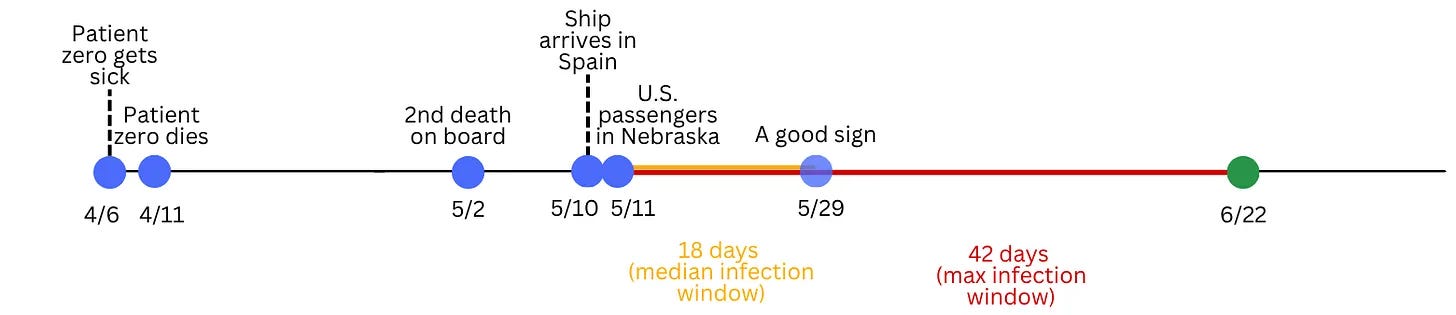
What this means for you: Your risk from this cruise ship outbreak remains essentially nil at this point.
Ebola rages on in Central Africa
Big thanks to Dr. Craig Spencer, a humanitarian physician who has treated and survived Ebola, for jumping in to provide the YLE community with an update. Craig, take it from here…
The combined confirmed and suspected Ebola cases in DRC are now more than 1,000. All signs are pointing to a very long and catastrophic outbreak in Central Africa:
This is a vast undercount. We know this because the test positivity rate is hovering around 50%, only 20% of contacts are being traced (and in some areas, no contacts at all), and more cases keep popping up with no known connection. This all points to widespread and undetected community transmission.
This is in only a week of detection. Compared to previous outbreaks, the growth is very fast, as the huge West Africa outbreak in 2016 was first detected at 49 cases and rose to 208 cases a month later. It took four months for that outbreak to reach the size of the current one in the DR Congo.
The cases are spread out across 16 health zones. There are now multiple epicenters, making containment very difficult.
Next door in Uganda, the case count is seven. While this number is low compared to DRC, a concerning development is that two health care workers recently tested positive with uncertain exposure histories. If they weren’t treating known Ebola cases, this means it’s spreading undetected in Uganda as well.
On the ground, backlash, including the burning of health centers, has emerged, a pattern seen in nearly every outbreak and rooted in deep community distrust. It often stems from outside actors working in communities without fully understanding or addressing local priorities. Affected populations may recognize the severity of Ebola while still holding other concerns as more pressing, such as where their loved ones are buried. Community trust is essential to an effective response, but difficult to build during an active emergency. It is best established long before a crisis begins.
U.S. priorities are made clear, and may backfire. The U.S. Administration has shown that its first priority is keeping Ebola out, with helping end the outbreak in the DRC a secondary concern. That's meant travel restrictions broader than anything we've imposed before — covering travelers from across the region, and reportedly some green card holders and permanent residents as well.
For example, just these past two days, news broke that high-risk American travelers will be subject to a mandatory quarantine in Kenya before they are allowed to return. If an American is infected, the U.S. government plans to send them to a hospital it is standing up from scratch in Kenya. (Currently, Americans who were in the area are allowed to return but are diverted to three airports—Houston, Atlanta, and DC—for further screening.) Past administrations have used travel notices and stepped-up screening; this goes much further.
At first blush, these strict precautions may sound prudent. But this approach could backfire in three ways:
Restrictions this blunt give people every reason to hide where they’ve been and whom they’ve been near — making the people we most need to find harder to track, not easier.
They also breed a false sense that this is someone else’s problem. But diseases are humbling. They find the small cracks in even the most impenetrable-seeming defenses.
Lives lost. There is no treatment for this Ebola strain, which means survival depends heavily on the quality of the health system. We have that system in the States, but we are choosing not to use it for infected Americans.
This is unbelievable and infuriating. (See a deeper dive from me here.)
The only real way to lower the risk to Americans — and everyone else — is to end the outbreak in the DRC and across the region.
What this means for you: If you have travel plans to this region, it’s time to cancel them. This is a high-risk situation in Central Africa, and CDC released a Level 4 Travel Advisory. There is also great uncertainty if and when the Administration will let you back in.
To the general public in the U.S., your risk remains very, very low right now.
U.S. disease “weather report”
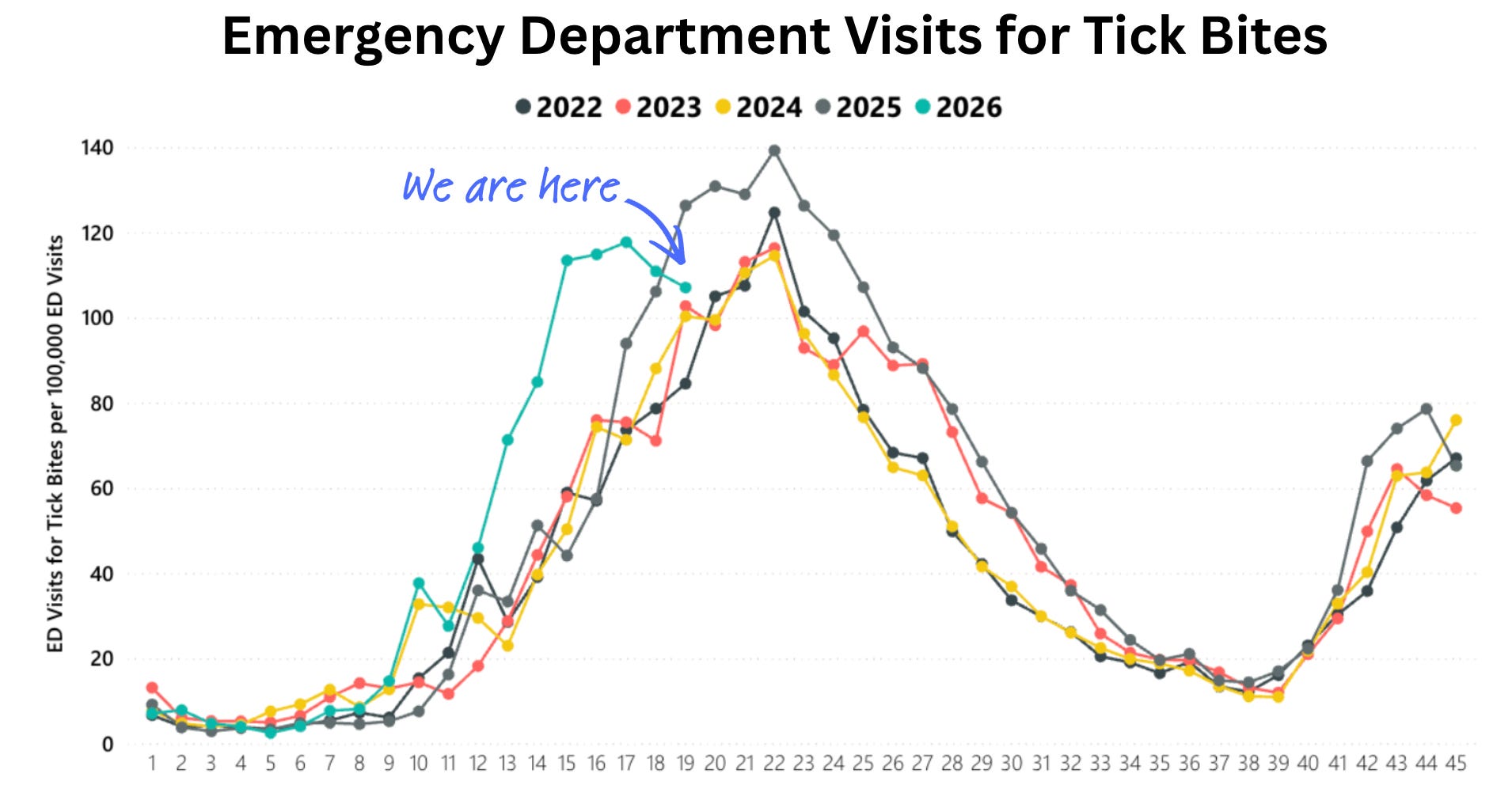
Ticks: past peak season?
Good news, especially for people in the Northeast and Midwest: tick numbers continue to decline. Though we are at the peak of the season, this unusually early year is trending favorably.
Heat-related illnesses in the North
Heat risk is certainly not blanketing the entire country yet, but this week it will be moderate in the Midwest and the Southeast.
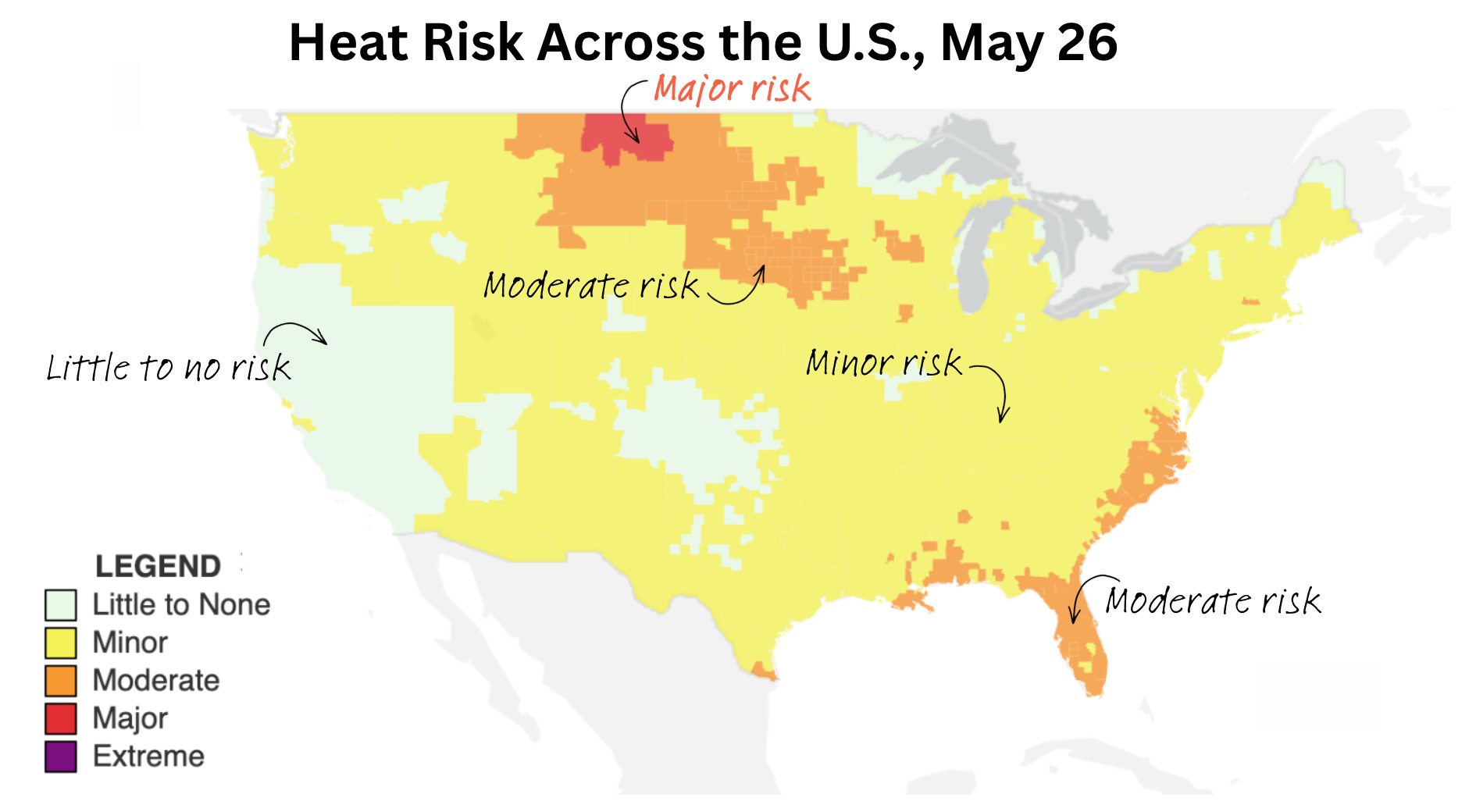
What this means for you: Be sure to check the CDC HeatRisk tool. A red day isn’t the best day for that soccer game for a kid with asthma, and a stretch of orange days is a great time to check on your elderly neighbor.
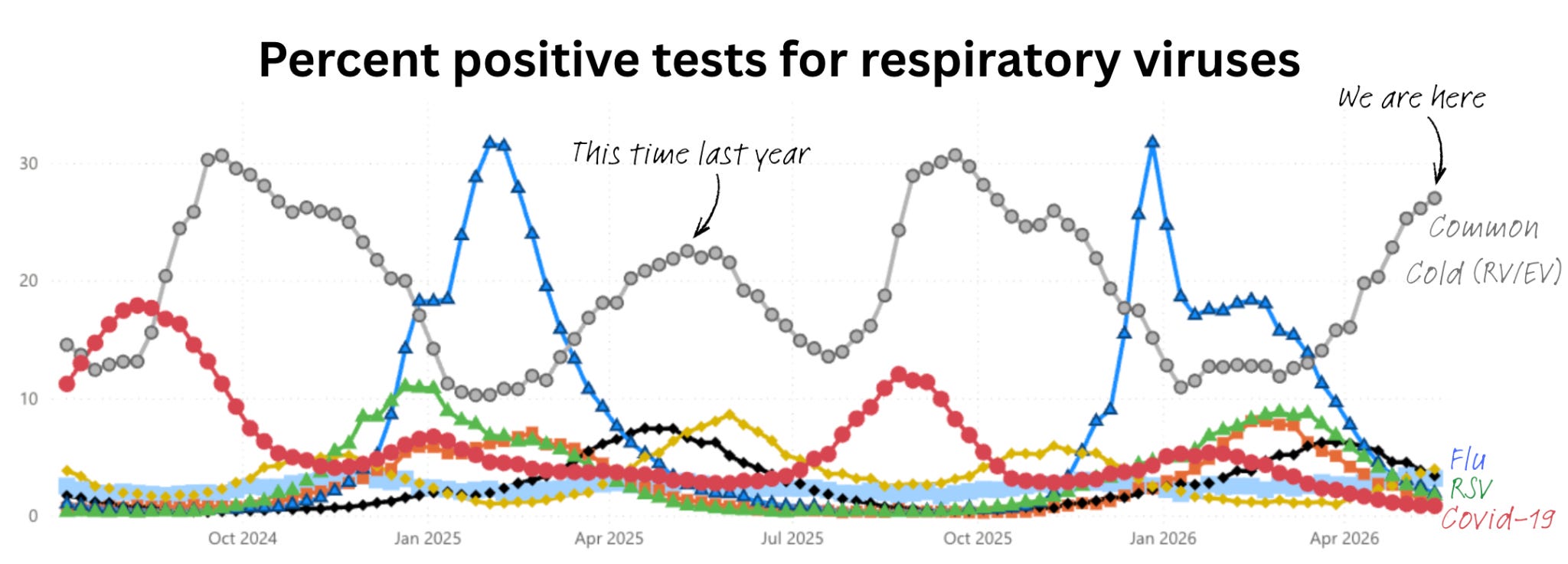
Common colds surging
As far as respiratory viruses go, the only thing really going around right now is the common cold. It is higher this year than last year, but should peak very soon before returning this fall.
Spotlight: Chemical plants
Over the weekend, YLE California covered the serious situation that unfolded around a chemical plant in Orange County, California. Thankfully, the worst-case scenario (a chemical explosion) was mitigated, but only through luck. The health implications in a densely populated area could have been catastrophic.
As the situation was winding down, another chemical explosion struck Washington State. This one was fatal. Health officials say the risk to surrounding residents from chemicals in the air and ground remains low, though the community deserves far greater clarity.
Clean air and clean water consistently rank as Americans’ top public health concerns — yet when chemical disasters strike, communities are too often met with reassurances rather than transparency and accountability. Residents near the 2023 East Palestine, Ohio train derailment, for example, are still waiting to understand the long-term impact on their health, with few clear answers.
What this means for you: Many are wondering if facilities processing potentially dangerous materials are in their neighborhoods. This interactive map allows you to enter your ZIP code and see all facilities monitored by the EPA, including any violations.
Good news
Ebola vaccines and treatment for the Bundibugyo species are in development. Two vaccine platforms are being explored, at least one of which may be deployable in as little as 2 months. One vaccine is being developed by Oxford, and the other uses the same biotechnology as the FDA-approved Zaire species of Ebola. (It may provide cross-protection, but it’s unclear at this point.) On the treatment side, two promising monoclonal antibody cocktails are likely to be deployed, though doses are limited and logistical hurdles remain significant challenges. Anni over at The Biotech Tea had a great explainer about the Ebola vaccine gap, if you want to read more.
Polycystic ovary syndrome (PCOS) has been officially renamed polyendocrine metabolic ovarian syndrome (PMOS), following more than a decade of debate and input from roughly 22,000 clinicians, researchers, and patients worldwide. This is good because the old name was medically misleading, leading to patients without visible cysts being dismissed or overlooked entirely. The WHO estimates that 70% of people with the condition remain undiagnosed. A more accurate name should improve recognition, reduce stigma, and ultimately help the millions of people living with this condition get diagnosed and treated sooner.
Public health situations are everywhere right now. Staying healthy takes public health professionals and systems working tirelessly behind the scenes and each of us showing up for our neighbors and communities.
Love, YLE
Big thanks to Ed Nirenberg for staying on top of the Ebola vaccines, Hannah Totte for all the figures, Dr. Craig Spencer for the Ebola insight, and Dr. Matt Willis for covering the chemical situation in CA.
Your Local Epidemiologist (YLE) comprises a team of experts, ranging from physicians to immunologists to epidemiologists to nutritionists, working together with one goal: to “Translate” ever-evolving public health science so that people are well-equipped to make evidence-based decisions.


.jpg)
No comments:
Post a Comment