------------------------------------------------
COVID levels are mostly remaining very low according to WastewaterSCAN. The CDC did not post an update this week because of the Juneteenth holiday, but they should post new data tomorrow.
In other news: In the last 2 weeks, the Utah measles outbreak appears to be slowing down, while measles is now spreading in Virginia and in Pennsylvania. Ebola cases in the DRC are up almost 40% in one week. Midjourney and Butterfly are making an rapid total body ultrasound scanner. The U.S. government hid information on COVID and Shingles vaccine benefits, but 3 reports in JAMA this week show the benefits of the COVID booster vaccine. Tattoo ink in lymph nodes can masquerade as endometriosis. And much more.
COVID Variants
Yunlong Cao’s lab from Peking University has two recent articles: one shows how immune imprinting shapes which SARS-CoV-2 variants will succeed and the other introduces DeepCoV which can predict emerging SARS-CoV-2 variants before they take over.
Lack of ancestral SARS-CoV-2 imprinting promotes BA.3.2.2 infection in children | BioRxiV (Y. Cao lab) 6/9/26
Yunlong Cao’s lab found that the BA.3.2.2 variant disproportionately infects young children globally because they lack exposure from prior infection or vaccination to the ancestral Wuhan SARS-CoV-2 strain. The BA.3.2.2 variant evades Omicron specific antibodies dominating young immune repertoires, while mRNA imprinted adults retain cross reactive neutralizing antibodies. Ancestral immune memory paradoxically protects against this variant. We may need to rethink pediatric COVID vaccination for young children to include the ancestral Wuhan SARS-CoV-2 strain.
A deep mutational scanning-informed protein language model predicts SARS-CoV-2 evolution dynamics with spatiotemporal resolution | Nature Microbiology 5/27/26
Yunlong Cao’s lab also introduced DeepCoV, an AI model which can accurately forecast dominant SARS-CoV-2 variants a month ahead with 90% fewer false discoveries. DeepCoV’s framework combines mutation scanning, viral evolution, and surveillance data to track immune evasion and regional spread patterns in real time.
Acute COVID infections, General COVID info
Bilingualism predicts executive function resilience after COVID-19 in aging | PNAS 6/1/26
A study of 312 adults aged 18 to 80 found that being bilingual early in life may protect aging brains from COVID-related cognitive decline. Among older adults, task switching ability dropped more after COVID infection in those who learned a second language later in life, while early bilinguals showed minimal decline, suggesting bilingualism builds cognitive reserve to COVID.
Characterization of IgG N-glycan patterns in COVID-19, sepsis and healthy subjects
Researchers at the Université libre de Bruxelles in Belgium studied 86 participants and found that severe COVID infection was associated with measurable changes in the sugar structures attached to IgG antibodies. Fatal COVID cases specifically showed reduced galactosylation on those antibodies, a pattern linked to more pro-inflammatory immune signaling compared to non-fatal and healthy subjects.
Efferocytosis of apoptotic bodies drives SARS-CoV-2 infection and macrophage inflammation | Nature Communications 6/15/26
Researchers at La Trobe University and WEHI found that SARS-CoV-2 hijacks a normal cleanup process called efferocytosis to infect macrophages. Infected cells release apoptotic bodies that carry live SARS-CoV-2. Macrophages engulf these, which triggers inflammasome and NF-κB inflammation. Blocking T-type calcium channels prevented this, reducing viral spread and lung inflammation in models, pointing to a possible new drug target.
Pediatrics
A controlled longitudinal study clarifies the contours of pediatric long COVID | Pediatric Research 6/19/26
University of Pittsburgh pediatrician Thomas Hooven, commented on the PECOS study which tracked 852 children over 12 months, comparing 705 who had confirmed SARS-CoV-2 infections against 147 uninfected controls. Children who had been infected with COVID showed meaningfully higher rates of fatigue, post-exertional malaise, gastrointestinal symptoms, headaches, and cough compared to controls at the one year mark.
Chronic absenteeism in Canadian kindergarten classes, pre- and post-COVID-19, and its association with concurrent developmental vulnerability | PLOS One 6/15/26
McMaster University analyzed 513,159 Canadian kindergarteners and found chronic absenteeism more than doubled post-COVID (17.7% to 41.3%). The link between frequent absences and developmental vulnerability weakened, reflecting a broader and more socioeconomically diverse cohort of absent children.
Vaccines
There are 3 new articles in JAMA showing that the 2024-2025 COVID vaccine boosters led to a reduction in major cardiovascular events, while being highly effective in older adults, and protection offering against emergency department visits and hospitalization for severe infection.
2024-2025 COVID-19 Vaccine and Major Adverse Cardiovascular Events Among US Veterans | JAMA Internal Medicine 6/15/26
The Al-Aly lab from the St. Louis Veterans Administration analyzed more than 1 million veterans and found that receiving the 2024 to 2025 COVID vaccine was linked to a 37.7% reduction in the risk of major cardiovascular events connected to COVID over an eight month follow up period. The protective effect was most pronounced in veterans over the age of 75.
COVID-19 Vaccine Effectiveness Among Older Adults | JAMA Open 6/15/26
A European multisite study of 2,046 older adults found 2024-2025 COVID vaccines provided 59% protection against symptomatic medically attended infection within 2 months of vaccination. Effectiveness ranged from 64% at 14-41 days to 52% at 42-83 days, though only 6% uptake was observed.
Estimated Effectiveness of 2024-2025 COVID-19 Vaccines in Adults | JAMA Internal Medicine 6/15/26
CDC analyzed 333,262 US emergency department/urgent care visits and 97,663 hospitalizations. The 2024-2025 vaccine showed 26% effectiveness against ED/UC visits, 35% against hospitalization, and 41% against critical illness across 7 to 299 days post-vaccination. Protection waned over time.
Long COVID
Central sensitization in long COVID: Associations with autonomic symptom burden, cerebral hypoperfusion, and neuroinflammation | J of Neurological Sciences 9/15/26 (posted online 6/17/26)
Researchers at Mass General Brigham examined 169 Long COVID patients and found that 81% met diagnostic criteria for central sensitization, a state in which the nervous system amplifies pain and sensory signals. Those who met this threshold also showed greater reductions in cerebral blood flow upon standing and elevated IL-6 levels, implicating both vascular dysfunction and systemic inflammation as contributors to the condition.
Post-coronavirus inflammatory cerebral peduncle lesion presenting as painful tonic spasms | BMJ Case Reports 6/16/26
Stanford University researchers describe a case report of a patient who began experiencing severe painful tonic spasms approximately two weeks following a COVID infection, with MRI imaging revealing an inflammatory lesion in the cerebral peduncle, a critical motor pathway in the brain. Corticosteroid treatment resolved the spasms and the lesion showed gradual improvement over a two year follow up period.
A novel model demonstrating that human immune cells promote multiorgan SARS-CoV-2 dissemination and human T cells limit anti-viral innate immunity | BioRxiV 6/19/26
Columbia University researchers developed a human immune system mouse model showing how human immune cells promote multiorgan SARS-CoV-2 dissemination and persistence. Dysfunctional T cells paradoxically suppressed antiviral interferon responses, permitting chronic viral persistence and recapitulating features of Long COVID.
Muscle fatigue in patients with severe long COVID: A 2‐year follow‐up study | PM&R 6/16/26
University of Brasília researchers studied 40 individuals who had survived severe COVID infection and followed them for two years. Despite retaining normal muscle mass, these patients continued to show greater fatigue, reduced physical function, and slower force production compared to healthy controls, pointing toward persistent neuromuscular dysfunction rather than structural deficit.
Persistent Muscle Dysfunction and Symptom Burden in Post-COVID Syndrome: A Prospective Longitudinal Study | BMC Journal of Translational Medicine Preprint 6/15/26
Munich scientists studied 204 participants and found that Long COVID patients showed measurably weaker grip strength and greater muscle fatigability compared to fully recovered individuals, with these deficits remaining detectable across a six month follow up period. Notably, worse baseline muscle function served as a predictor of subsequent fatigue severity and overall symptom burden in those with post COVID syndrome.
Identification of Altered Potassium Channels for Drug Repurposing in Long COVID Patients | BioRxiv 6/19/26
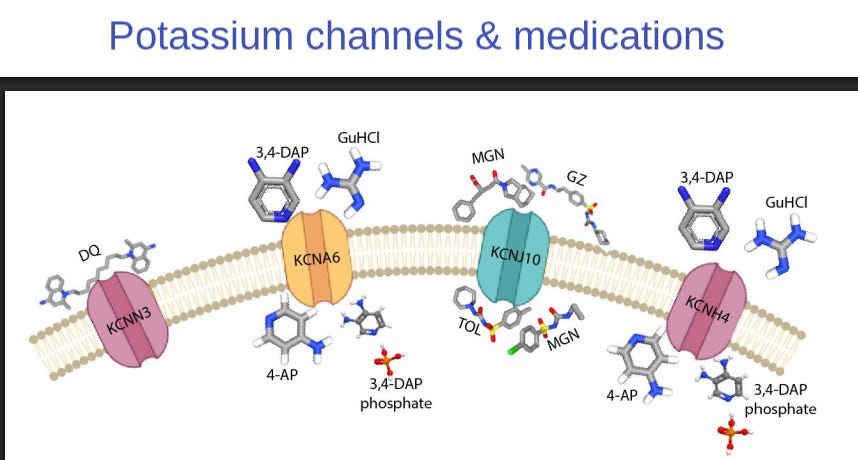
Analysis of gene expression datasets from Long COVID patients identified 715 dysregulated genes, including seven altered potassium channels. Four of the potassium channels (KCNA6, KCNJ10, KCNN3, KCNH4) are targets of several FDA approved drugs, offering potential drug repurposing candidates for Long COVID. The data was studied in silico, thus animal and/or human trials are needed.
Figure 6: Human potassium channels and medications that affect them.
KCNN3 was observed to interact with dequalinium.
KCNJ10 interacted with mitiglinide, glipizide, tolazamide, and chlorpropamide.
KCNA6 and KCNH4 were found to interact with amifampridine, guanidine hydrochloride, dalfampridine, and amifampridine phosphate.
From: https://www.biorxiv.org/content/10.64898/2026.06.18.733062v1.full.pdf
Systems neuroendocrinology in ME/CFS and long COVID: a chronobiological framework for hormone-based research | Frontiers in Neuroendocrinology 6/19/26
A new review from the University of Melbourne discusses that decades of inconsistent hormone findings in ME/CFS and Long COVID stem from static, single timepoint sampling rather than absent biology. Researchers propose a chronobiological framework tracking circadian, menstrual, and stress-responsive hormone rhythms together, since timing and coordination across the hypothalamic-pituitary axes (HPA, HPG, HPT, HPS/GH) may matter more than hormone concentration alone.
What COVID is teaching doctors about the relationship between viruses and cancer | LA Times 6/15/26 https://archive.is/Gq2jB
Viral infections such as COVID and Influenza may reactivate dormant cancer cells as seen by recent mouse and human studies.
ME/CFS
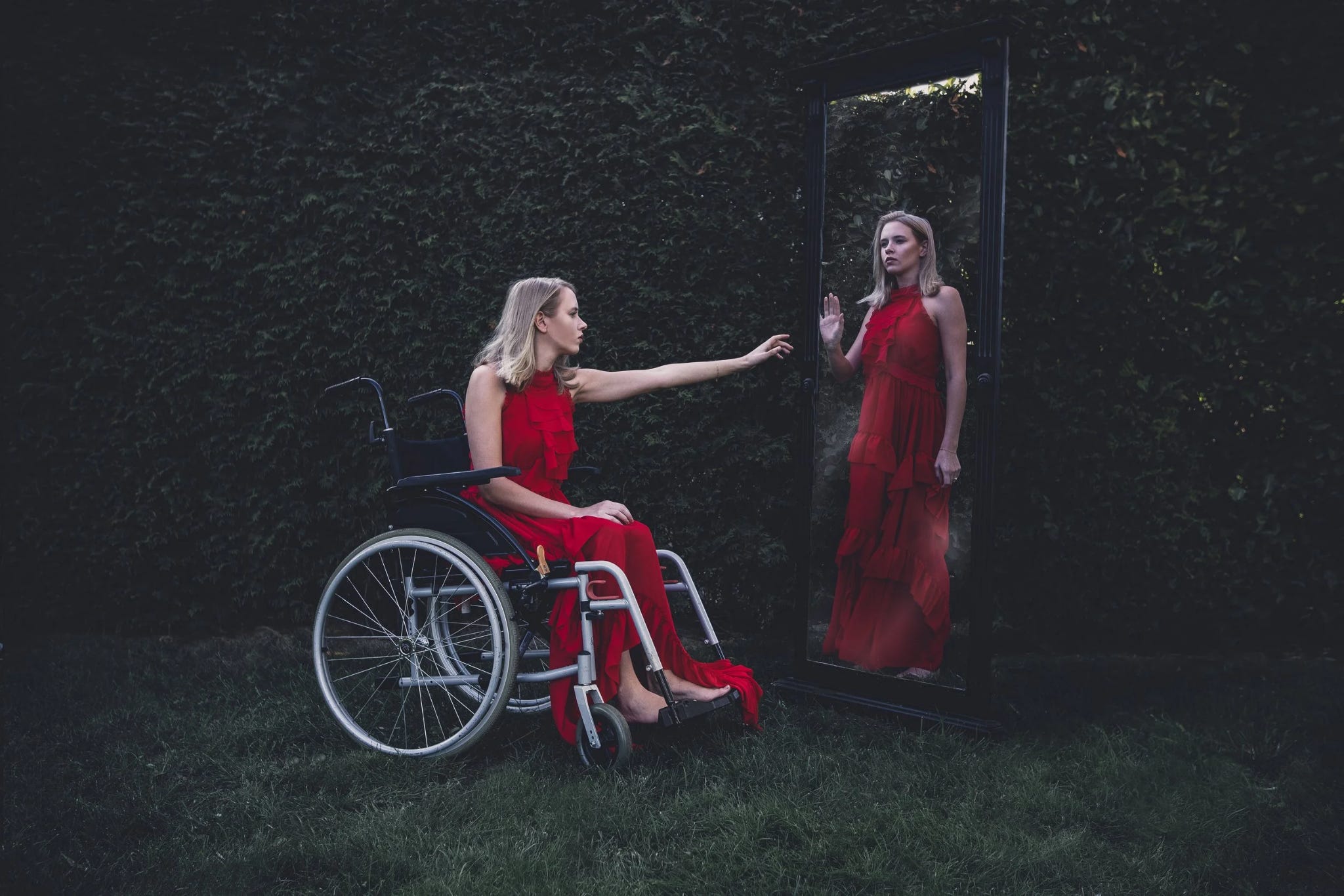
I recently came across A Quiet Storm, a collection of art and poems on ME/CFS like these from Mirthe van den Berg .

From: Mirthe van den Berg
Measles
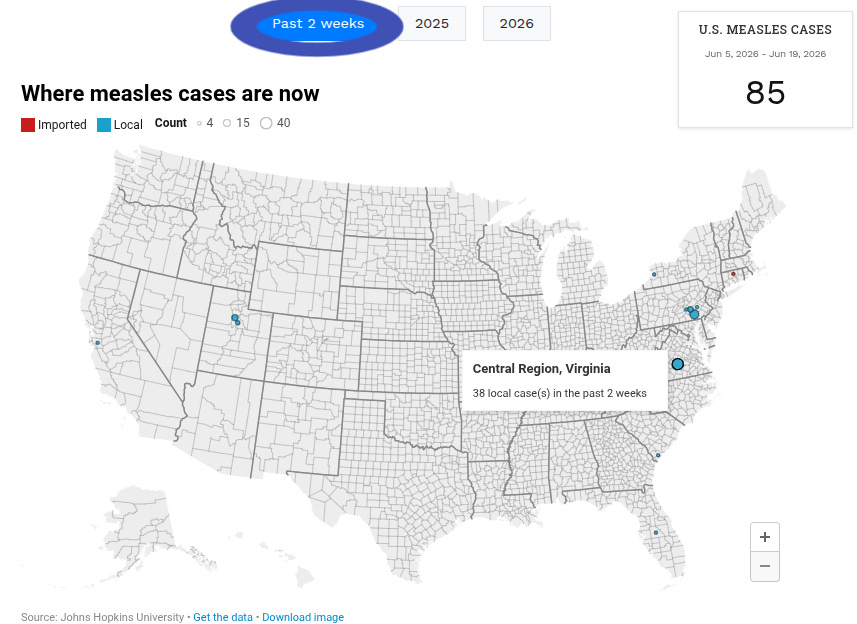
As of June 18, 2026, 2,104 confirmed measles cases were reported in the United States in 2026.
In the last 2 weeks, the Utah measles outbreak appears to be slowing down, while measles is now spreading in Virginia and in Pennsylvania.
From: https://publichealth.jhu.edu/ivac/resources/us-measles-tracker
Ebola in Democratic Republic of Congo (DRC)
Ebola outbreak zone cases up almost 40 percent in a week | The Hill 6/18/26
Africa CDC reported Thursday that confirmed Ebola cases in the Democratic Republic of Congo (DRC) rose 38% in one week, reaching 894 confirmed Ebola cases across 32 health zones. More than 200 have died in the outbreak’s first month, three times worse at this stage than Uganda’s 2000 epidemic, with just 84 of 540 needed healthcare personnel deployed.
Ebola cases near 900 as officials say less than 10% of donations have made it to affected nations | CIDRAP 6/18/26
Less than 10% of the over $900 million pledged internationally has reached DRC and Uganda. The US CDC has committed $107 million in emergency funding as the Bundibugyo virus outbreak continues to expand.
Host–virus determinants of Ebola virus persistence in a human cerebral organoid model | Nature Microbiology 6/12/26
Researchers at the University of the Bundeswehr Munich used human brain organoids showing that the Ebola virus can sustain active infection for at least 120 days by infecting neurons, astrocytes, and microglia, and spreading directly from cell to cell. This prolonged viral presence triggered localized neuroinflammation.
Direct Relief Sending Over a Quarter Million Pieces of Protective Gear to DRC to Fight Ebola | 6/15/26 Direct Relief
Some good news: NGO Direct Relief is distributing over 263,000 N95 respirators donated by 3M to protect health workers battling Ebola in the DRC’s Ituri province. The largest announced N95 shipment to date in response to the outbreak also includes eye protection, coveralls, and essential medicines to support primary care during the crisis.
Government Health News
The OMB and the Politicization of Science | NEJM 6/15/26
NEJM editors warn that a White House Office of Management and Budget (OMB) proposal would let political appointees to override the NIH peer review system that has guided federal grant funding for 70 years. “Political appointees would be able to make funding decisions and could ignore the advice of independent scientists. They could also stop funding midway through the promised grant period. And they would institute new rules, including rules severely limiting foreign interactions.”
The editors state that “the OMB proposal is currently open for public comment, and we urge our readers to express their concerns. When science becomes politicized, everyone loses.”
The OMB proposal is available for public comment at https://www.regulations.gov/document/OMB-2026-0034-0001/comment.
Nearly 160 sick with flu at US air force base after Hegseth ends mandatory vaccines | Guardian 6/18/26
Less than 2 months after Defense Secretary Pete Hegseth made the Flu vaccine no longer mandatory for military personnel, an influenza outbreak has sickened at least 159 trainees at Lackland Air Force Base in Texas.
F.D.A. Blocked Publication of Research Finding Covid and Shingles Vaccines Were Safe | NY Times 5/5/26
“Officials at the Food and Drug Administration have blocked publication of several studies supporting the safety of widely used vaccines against Covid-19 and Shingles in recent months, a spokesman for the Department of Health and Human Services confirmed.” The studies cost millions in U.S. public funds and “is the latest step by the administration to try to limit access to vaccines.”
US to end Pepfar funding of South Africa’s HIV programmes | BBC 6/19/26
The US is withdrawing Pepfar funding for South Africa’s HIV programs for political reasons. The Trump administration cited South Africa’s policies on Black Economic Empowerment and its stance on Israel and Iran as reasons for the phased drawdown. This will significantly reduce support for efforts against a virus affecting over 8 million South Africans and their families.
FDA approves Colorado’s plan to import cheaper drugs from Canada | STAT News 6/15/26
Florida became the first state to receive approval, in 2024, but has yet to start importing drugs.
Other news
Cervical cancer mortality trends following HPV vaccination in England, 2001 to 2024: an analysis of population based mortality data | Lancet 6/17/26
London researchers analyzed national cervical cancer mortality data from England, 2001 to 2024. Women vaccinated against HPV at ages 12 to 13 had no recorded deaths between ages 20 and 24 from 2020 to 2024, versus 23.1 expected, and vaccination overall prevented roughly 200 cervical cancer deaths nationwide.
Nearly half of adults struggled to afford healthcare last year, survey finds | Stateline 6/11/26
In a December 2025 survey of 10,000 working age adults, the Urban Institute found 46% reported trouble affording healthcare last year, with uninsured adults hitting 60%. Adults with disabilities (69%), stroke survivors (over 70%), and Black and Hispanic adults were hit hardest, while 35% said a family member skipped needed care due to cost.
AI lab Midjourney investing over $74M to launch whole-body ultrasound screening business | Radiology Business 6/19/26
AI image company Midjourney Medical announced “Ultrasonic CT,” a full-body ultrasound scanner licensed from Butterfly Network. The device images the entire body in 60 seconds using ultrasound instead of radiation, magnets or iv contrast. While they do not have FDA diagnostic approval yet, the company aims for 50,000 scanners globally by 2031, with the first San Francisco location opening late 2027.
Epstein–Barr virus might protect against type 1 diabetes mellitus | Nature Reviews Endocrinology 6/19/26
The Epstein–Barr virus (EBV) has been linked to the development of autoimmune diseases such as multiple sclerosis (MS), lupus, and rheumatoid arthritis, and to cancers such as lymphoma. Surprisingly, a new study from the Université de Lille found that Epstein–Barr virus (EBV) may actually help to guard against Type 1 Diabetes by suppressing the autoreactive T cells responsible for destroying insulin-producing beta cells. In human participants, EBV infection was associated with slower disease progression and greater residual insulin output following anti-CD3 immunotherapy treatment.
Paternal cytokine administration alters sperm small ncRNAs and offspring brain and behavior | Molecular Psychiatry 6/19/26
Scientists from the Florey Institute in Australia studied 40 male mice and found that a single dose of the cytokine IL-1β before conception reprogrammed small noncoding RNAs in sperm and altered how offspring managed stress responses and fasting. A separate experiment using TNF-α before conception produced increased anxiety-like behavior in the offspring, suggesting that paternal immune signaling from cytokines before conception can shape the neurobehavioral development of the next generation.
Stem cells banish severe autoimmune disease for 15 years | Nature 6/19/26
Two patients with severe neuromyelitis optica, a condition that attacks the spinal cord and optic nerves, achieved full remission lasting more than 15 years following donor stem cell transplantation. The procedure worked by completely rebuilding each patient’s immune system and eliminating the disease associated antibodies responsible for driving the condition.
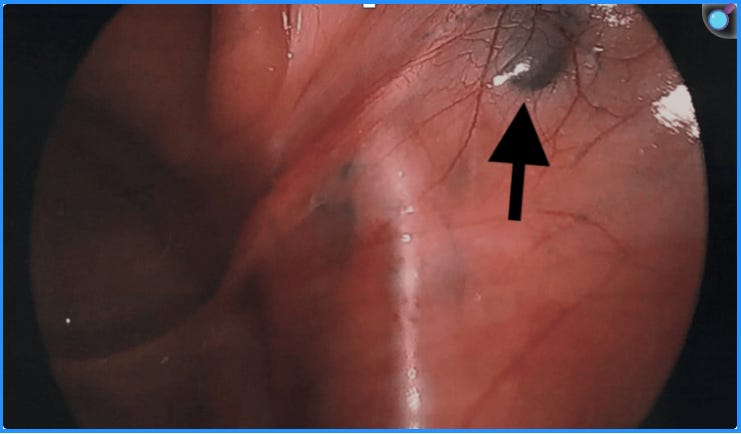
Cutaneous Tattoo Ink as a Mimicker of Endometriosis-Like Lesions on Diagnostic Laparoscopy | Cureus 2024
I recently learned in a forum that people with tattoos may have lesions on laparoscopy that look like endometriosis, but are actually lymph nodes filled with tattoo pigment. Here is one such case.
From: https://pmc.ncbi.nlm.nih.gov/articles/PMC11131970/
The 25-Year Evolution of Lithium as a Disease-Modifying Agent in Dementia: A Narrative Review | JAMA Psychiatry 6/10/26
A narrative review drawing on more than 75 years of accumulated evidence examined lithium‘s potential to protect brain cells through mechanisms involving mitochondrial support, the neurotrophic protein BDNF, the survival protein Bcl-2, and reduction of toxic tau signaling. The authors conclude that clinical trials using low doses of lithium in patients with mild cognitive impairment (MCI) and early stage Alzheimer disease (AD) are now scientifically justified.
In 1975, a Cat Co-Authored a Physics Paper | Atlas Obscura
In 1975, Michigan State University physicist Jack Hetherington, unwilling to retype an entire paper to remove plural pronouns required for sole authorship, added his Siamese cat Chester as co-author under the name F.D.C. Willard. The “F.D.C.” stood for “Felix Domesticus, Chester” after the scientific name for the house cat (Felis domesticus) and Willard had been the name of Chester the cat’s father.
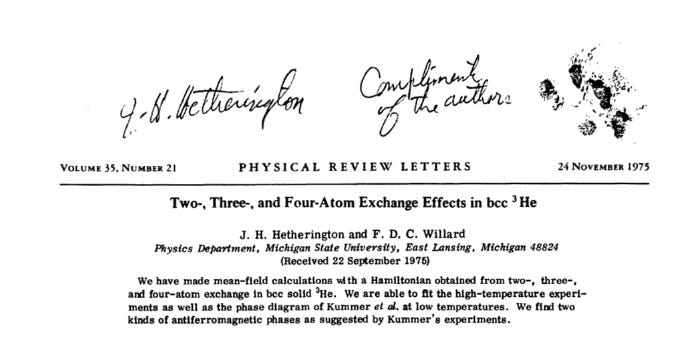
The article, signed by the 2 authors.
Have a great week,
Ruth Ann Crystal MD


.jpg)
No comments:
Post a Comment