--------------------------------------------------
Dr. Ruth Report, 6/7/26
Hi all,
Before you scroll past, please check out the Government News and Other News sections at the end of this issue of the newsletter. There is a Friday night executive order you may have missed, diabetes researchers removed by police at the ADA medical conference, a personalized melanoma vaccine with striking five-year results, and an Alzheimer’s case report that is surprising.
COVID, RSV, Influenza A, and Influenza B remain low in wastewater across the country. In fact, COVID wastewater levels are their lowest in 5 years.
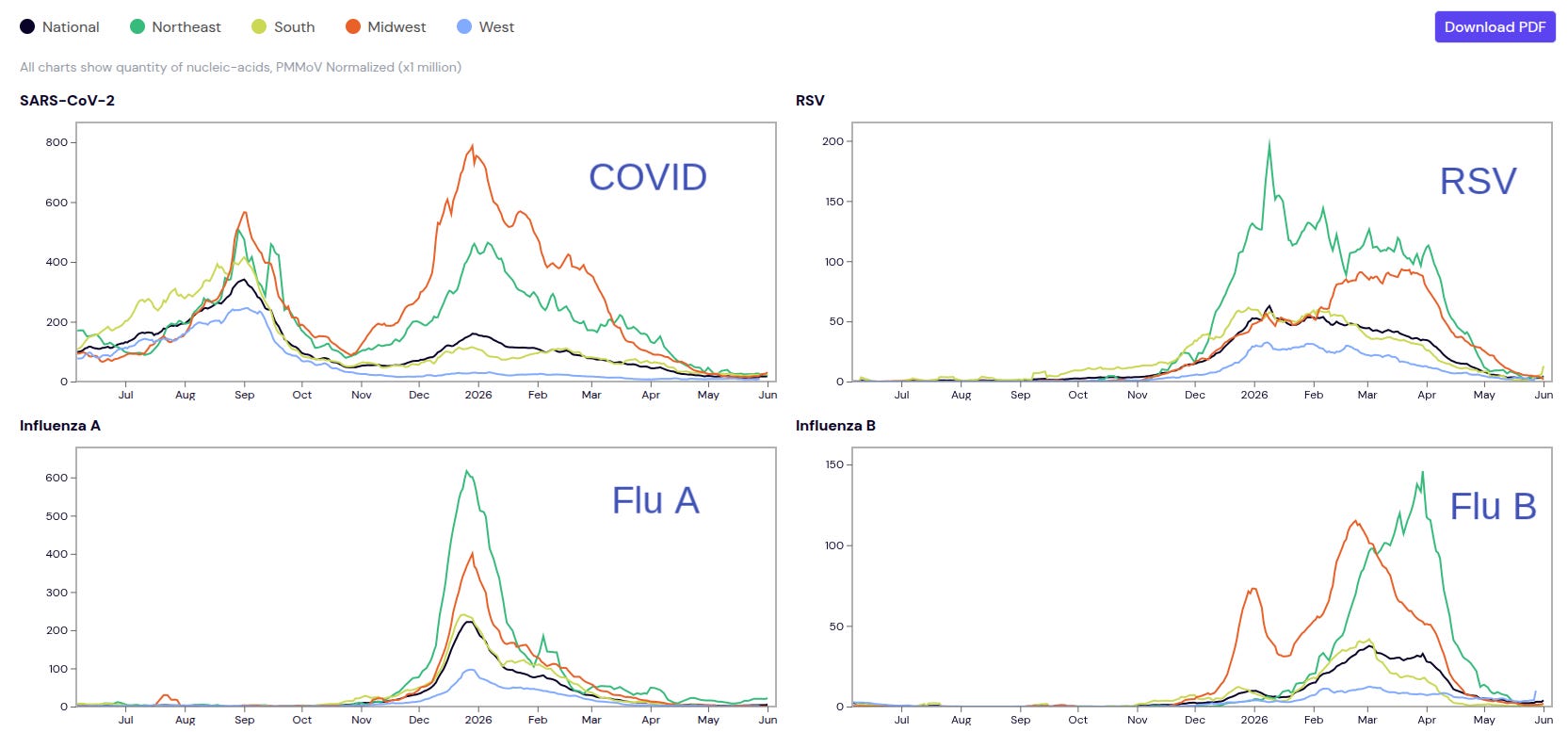
From: WastewaterSCAN
COVID data through 5/23/26 from Mike Hoerger:
1 in 277 Americans are currently infected with COVID which equals to about 177,000 new daily COVID infections in the U.S., and 1.2 Million new COVID infections per week.
SARS-CoV-2 transmission remains at its lowest levels nationwide since mid-July 2021.
6/3/26 Newsweek: Worrying COVID ‘cicada’ variant spreads as US maps go dark https://buff.ly/Dq65XAn
Newly proposed federal budget cuts would slash CDC wastewater surveillance funding from $125 million to $25 million annually, threatening the national early warning system experts say detects outbreaks weeks before clinical cases emerge.
6/4/26 MedRxiV: Shared epigenetic regulation acting on neuroimmune pathways contributes to the comorbidity between generalized anxiety disorder and COVID-19
Yale researchers analyzed genes from 893 participants and found that “generalized anxiety disorder (GAD) and COVID-19 share epigenetic and genetic architecture involving pathways related to vascular integrity, immune function, and cellular adaptation, highlighting a potential neuroimmune basis for their co-occurrence.” They found 60 overlapping genetic loci between GAD and COVID and brain-specific analyses flagged HLA and MICB genes.
6/2/26 Nature Sci Reports: A 19-layer convolutional neural network for accurate COVID-19 detection in chest X-ray images: comparative analysis with pretrained networks
Using a new 19-layer convolutional neural network to evaluate 25,679 chest X-rays, Singaporean researchers found that the model was 98.4% and 97.5% accurate for diagnosing COVID infection. The model outperformed several established pretrained networks in image classification performance, but whether this translates to measurable improvements in real world patient outcomes would require clinical trials.
6/3/26 Nature Scientific Reports: Retinal microvascular alterations consistent with endothelial dysregulation in paediatric post-COVID-19 syndrome: A prospective matched-cohort study
German scientists examined the eyes of 74 pediatric patients with Long COVID and found measurable retinal microvascular abnormalities. These vascular changes, detectable through noninvasive eye imaging, point to disrupted endothelial cell function and abnormal blood flow patterns and may reflect microvascular issues in other organs in children with Long COVID.
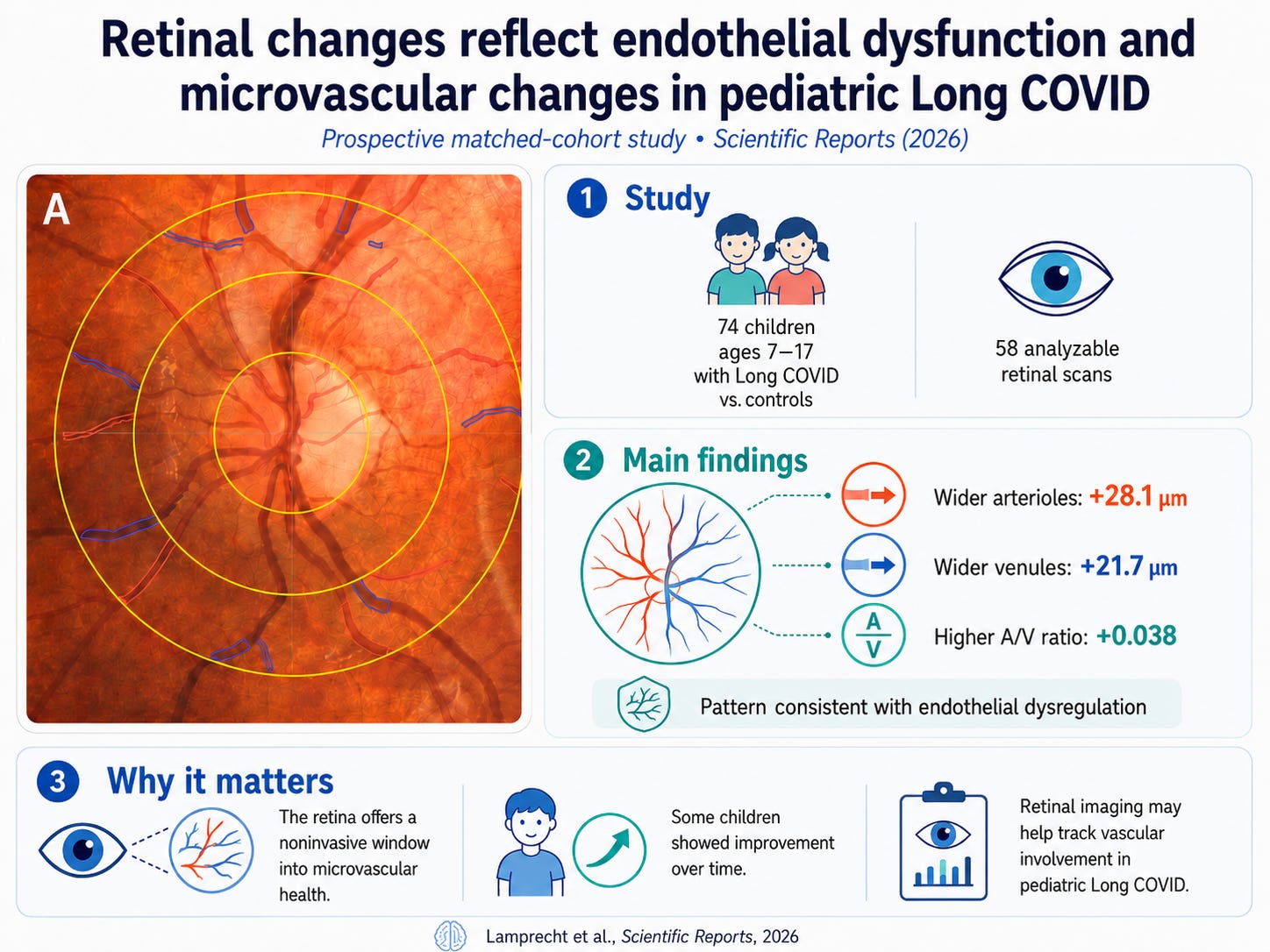
Made with ChatGPT
6/3/26 BioRxiV: SARS-CoV-2 BA.3.2.2 is more evasive of neutralization by sera from young children
BA.3.2 is a fairly new COVID variant that appears to infect children more than adults. Columbia University researchers found that young children produced substantially weaker neutralizing antibody responses to the BA.3.2.2 variant compared to adults, while antibody responses to the XFG and NB.1.8.1 variants were broadly comparable across all age groups. Prior infection and vaccination histories, which differ considerably between children and adults, may be driving differences in immune protection against specific emerging variants.
The FDA approved Ensitrelvir (XOCOVA) this week, making it the first oral medication indicated for preventing COVID following known exposure to the virus. In a Phase 3 clinical trial, the drug reduced the incidence of symptomatic COVID-19 by 67%, functioning by suppressing viral replication before symptoms have a chance to develop.

Made with ChatGPT
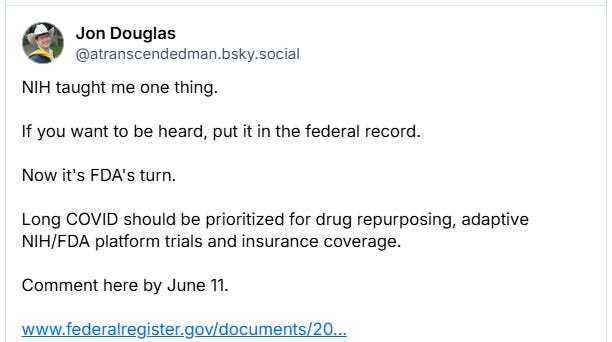
Comment here by June 11:
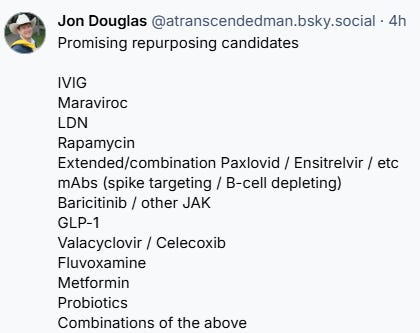
PolyBio posted summaries of presentations and links to the talks from their recent PolyBio Spring 2026 Symposium
https://2026-spring-symposium-polybio.netlify.app/
“Twenty-eight research presentations on Long COVID, ME/CFS, and related infection-associated chronic illness. Each card opens to a full technical summary.”
PolyBio topics discussed:

6/2/26 Applied Psychopharmacology: The expanding potential of low-dose naltrexone in clinical practice with a focus on long COVID
Researchers at the VA Northeast Ohio Healthcare System conducted a review of existing small-scale studies examining low-dose naltrexone (LDN) as a potential treatment for Long COVID. The findings suggested an association between LDN and reductions in fatigue, post-exertional malaise, disrupted sleep, and cognitive impairment, with researchers pointing to the suppression of neuroinflammation as a likely underlying mechanism. Evidence remains preliminary, however.
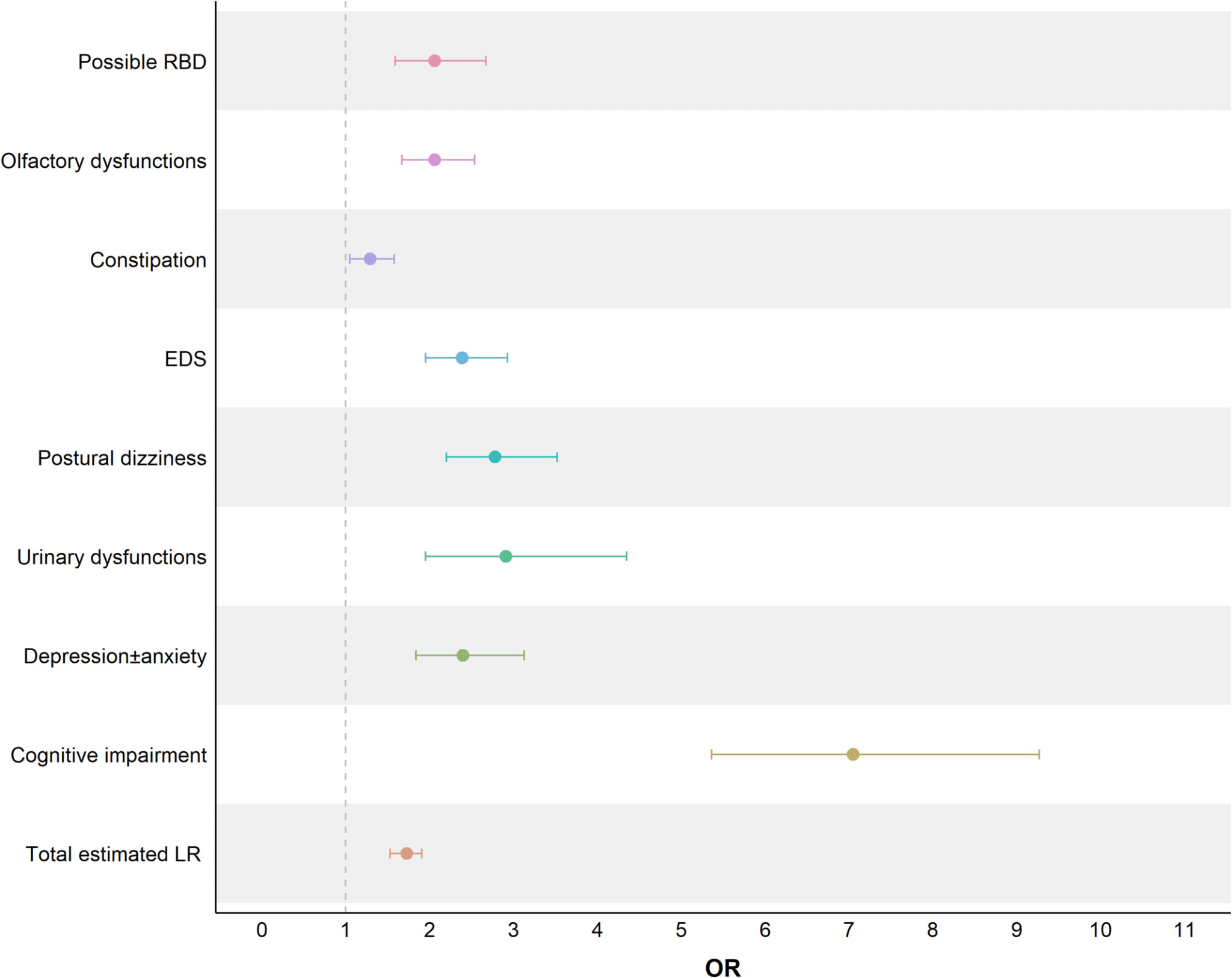
5/31/26 Journal of Sleep Research: Association of Prodromal Parkinson’s Disease-Like Features in Long COVID With Dream-Enactment Behaviours
Dream enactment behaviors (DEBs) are when someone physically acts out their dreams with movements or vocalizations during sleep. A large multinational study found that Long COVID patients show significantly elevated rates of prodromal Parkinson’s disease features including loss of smell, constipation, excessive daytime sleepiness, and cognitive difficulties. People with Long COVID who also developed or worsened DEBs had the highest risk. Because frequent DEBs can be an early marker of neurodegeneration including Parkinson’s and Lewy body dementia, the authors call for long term neurological monitoring of Long COVID patients.
Figure 2: Forest plot of adjusted odds ratios for potential prodromal PD-like features in participants with Long COVID (weighted sample).
From: https://onlinelibrary.wiley.com/doi/10.1111/jsr.70371
6/4/26 BioRxiV (UCSF): No objective evidence of neuropsychological deficits in people with subjective cognitive changes following COVID-19 infection
UCSF scientists studied 86 people and found that individuals who reported brain fog following COVID infection did not have measurable cognitive deficits on standardized tests, yet they demonstrated elevated levels of the inflammation marker sCD14 along with greater rates of anxiety, depression, and the APOE ε4 genetic variant. These findings suggest that the subjective experience of post COVID cognitive impairment may reflect underlying neuroinflammatory and psychological processes that standard cognitive assessments are not designed to detect.
5/29/26 BMC Public Health: Bidirectional relationship between depression and long COVID symptoms: findings from the Sulcovid-19 longitudinal survey
Researchers studying 2,919 Brazilian adults with prior COVID infection found that depression and Long COVID symptoms mutually amplify one another, creating a reinforcing cycle. A history of depression increased the likelihood of neurological Long COVID symptoms, and experiencing Long COVID raised the odds of a subsequent depression diagnosis by 65%.
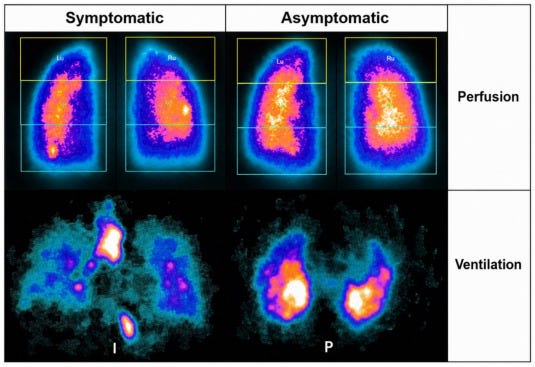
5/30/26 Respiratory Medicine: Inspiratory Muscle Fatigue and Pulmonary Deposition–Perfusion Imaging Predict Sleep Dysfunction in Long COVID: Evidence From MTC Scintigraphy and FIT Performance Metrics
Brazilian scientists studied 33 Long COVID patients and found that weakened inspiratory muscles corresponded with reduced aerosol deposition and abnormal perfusion patterns on scintigraphy, alongside disrupted sleep. Inspiratory muscle fatigue was a strong predictor of impaired lung ventilation, pointing to a mechanistic link between breathing muscle dysfunction and broader respiratory and sleep impairments in Long COVID.
Figure 4 Representative ventilation and perfusion scintigraphy images comparing symptomatic and asymptomatic post-COVID-19 individuals.
From: https://www.resmedjournal.com/article/S0954-6111(26)00288-X/fulltext
Here is a helpful explainer video from Tokyo on the basics of Long COVID:
6/3/26 Infectious Diseases and Therapy: Prior SGLT2 Inhibitor and Metformin Use and Risk of Long COVID in Type 2 Diabetes: A Nationwide Population-Based Cohort Study
Researchers from Singapore analyzed 71,698 adults with Type 2 Diabetes and found that those who had previously taken SGLT2 inhibitors or metformin faced a meaningfully lower risk of developing Long COVID, with SGLT2 inhibitors showing a particularly notable association with reduced neurological complications. As this was an observational cohort study, it cannot establish that either medication directly protects against Long COVID, so more studies are needed.
6/4/26 Military Medicine: Lung Function in Young, Active Duty U.S. Marines After SARS-CoV-2 Infection
The Naval Medical Research Command evaluated lung function in 889 Marines (mean age 19 years). Among those infected with COVID-19, nearly 25% reported Long COVID (PASC). Marines with PASC had reduced peak expiratory flow compared with recovered peers, suggesting subtle airway dysfunction that standard spirometry may miss, even in young, physically fit adults.
6/1/26 Wired by Alan Levinovitz: The Painful Truth About Long Covid https://buff.ly/bAYh0iE
This week, Alan Levinovitz wrote an article in Wired magazine that received sharp criticism from the Long COVID community. He wrote about people recovering from Long COVID by doing “brain retraining”, but patients and researchers pointed out on Twitter and Instagram that the article was biased with cherry picked data that did not represent the experiences of most Long COVID patients.
6/4/26 Diagnosis Journal: Progress in mast cell activation syndrome: the global consensus-2 diagnostic criteria at six years https://buff.ly/5DcTlYg
Six years after consensus-2 diagnostic criteria were introduced for Mast Cell Activation Syndrome (MCAS), fears of overdiagnosis have not materialized, according to a new review. Appropriate treatment can dramatically improve quality of life for patients who often spent decades undiagnosed. MCAS frequently co-occurs with dysautonomia and EDS, with POTS as its most common comorbidity.
CDC Measles update (Wednesdays):
As of June 4, 2026, 2,030 confirmed measles cases were reported in the United States in 2026 so far.
South Carolina’s measles outbreak is over after 997 cases.
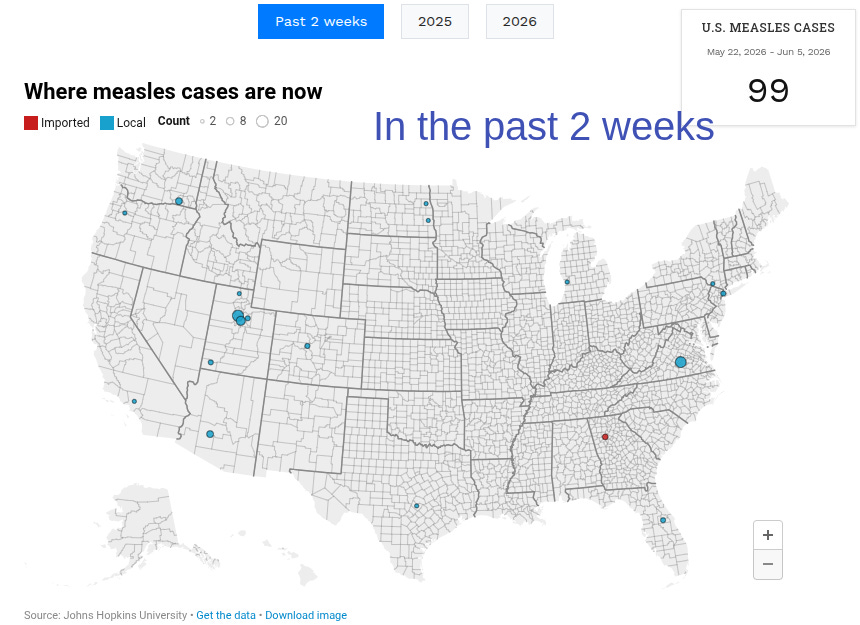
John Hopkins US Measles Tracker
In the past 2 weeks:
Central Virginia has had 17 measles cases in the last 2 weeks.
Utah has had 34 measles cases in the last 2 weeks.
6/4/26 CIDRAP: Texas reports New World screwworm in 3-week-old calf
Texas reports New World screwworm in a 3-week-old calf. This is the first detection of larva of the parasitic fly in the U.S. in 60 years. The screwworm poses a significant threat to livestock and pets, but it rarely infects humans.
6/1/26 NBC: As Ebola spreads, the institute Fauci once led (NIAID) stays on the sidelines without a leader https://buff.ly/QXMdlbQ
6/5/26 CIDRAP: WHO, Africa CDC announce joint Ebola response plan https://buff.ly/bfHwd4o
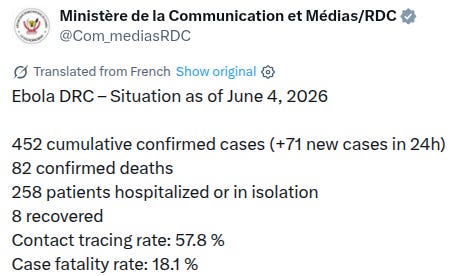
June 4 update from the government of DRC:
6/1/26 Melanie Matheu PhD (Lil Science): The President’s Friday Night Executive Order He Didn’t Want You To See: Elimination of Recommendations for 6 Childhood Vaccines
On May 29, 2026, President Trump signed an executive order removing six childhood vaccines from the CDC recommended schedule, including Influenza, COVID-19, Rotavirus, Hepatitis A, Hepatitis B birth dose, and Meningococcal vaccines. A court previously blocked the RFK Jr. appointed ACIP committee from making these same changes. Many states are now following the guidance of the American Academy of Pediatrics (AAP) instead of the CDC.
6/1/26 NY Times: Trump Administration Announces Stricter Rules for Medicaid Work Requirement
“A new rule by the Trump administration could make it even harder for millions of sick Americans to obtain or stay on Medicaid after work requirements start next year.” Adults on Medicaid will be required to work 80 hours per month. It is hard to work when you are sick with cancer or HIV.
6/2/26 NY Times: New Proposal Would Allow Administration to Block Grants if They Don’t Support Trump’s Agenda
“A new proposal would allow the administration to block grants if they do not satisfy President Trump’s agenda or support what it calls “anti-American” values... The proposal was only the latest attempt by the Office of Management and Budget, led by Russell T. Vought, to exert power over federal funding.”
6/5/26 MedPage Today: Video: Police Tussle With Diabetes Experts at ADA Meeting
At the American Diabetes Association‘s annual meeting in New Orleans, police escorted out senior researchers, including the Editor in Chief of the ADA’s journal Diabetes Care, for distributing copies of an editorial the journal had published criticizing Trump administration cuts to biomedical research. The editorial warned that NIH funding reductions threaten diabetes research and outcomes.
Here is the article that the doctors were passing out to their colleagues:
4/29/26 Diabetes Care:

From: Medpage Today
6/4/26 Wash Po: House bill rolls back food aid for pregnant women, children
“Millions of WIC recipients would have less money for fruits and vegetables under the legislation.”
6/2/26 Nature Medicine: Medically tailored meals receipt and healthcare utilization and costs in Massachusetts’ Medicaid demonstration
A new study shows that if you give people healthy meals, they have fewer hospitalizations, fewer emergency department visits, and lower healthcare costs. Ironically, the House voted to remove funding for pregnant women and children to have fresh fruits and vegetables this week.
6/5/26 NPR: South Africa rolls out game-changing HIV shot amid funding shortfalls
Lenacapavir is a new medication that can be given by injection once every 6 months to prevent HIV infections. South Africa is rolling out a program to provide Lenacapavir to reduce HIV infection rates, but cuts to USAID mean that access will be limited.
6/6/26 Journal of the American Heart Association: Glucagon‐Like Peptide‐1 Receptor Agonists and Cardiovascular Events in Adults With Obesity and Autoimmune Disease: A Target Trial Emulation
In a propensity-matched analysis of more than 26,000 adults with both obesity and autoimmune disease, GLP-1 receptor agonists were linked to reduced mortality, stroke, pulmonary embolism, and emergency room visits.
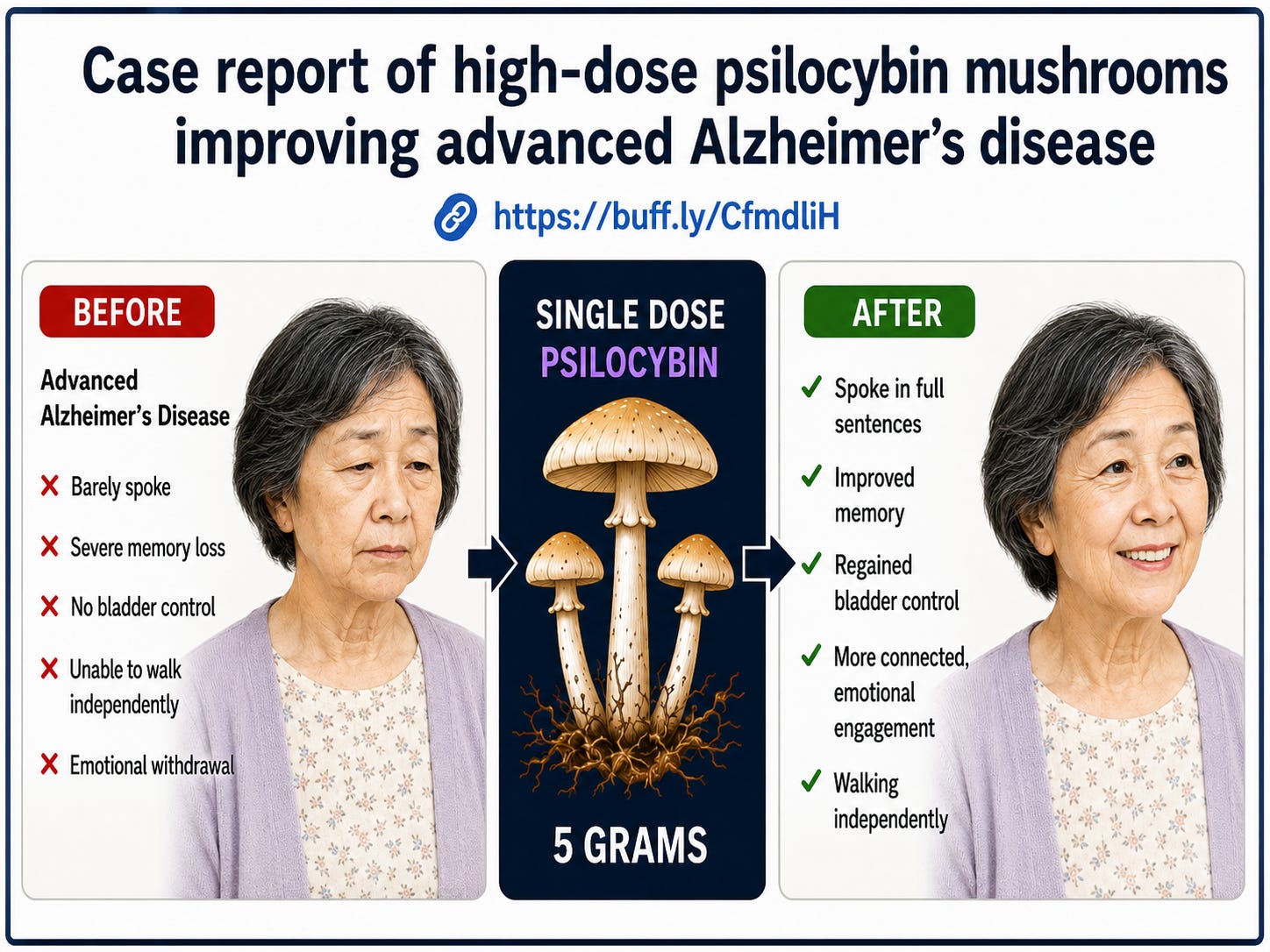
5/27/26 Frontiers in Neuroscience: Transient multidomain functional improvement in advanced Alzheimer’s disease following high-dose psilocybin-containing mushroom administration: a case report
A woman in her 80s with advanced Alzheimer’s disease could barely speak, had a flat affect, was incontinent, and could not walk. After taking a high dose of psilocybin mushrooms, she initially went into a sleep-like state and then woke up 19 hours later able to speak in full sentences, sharing detailed memories. Over the next few days, her family reported improved memory, ability to walk, emotional connection, and regained bladder control. This is a single case report, but the results are promising.
Made with ChatGPT
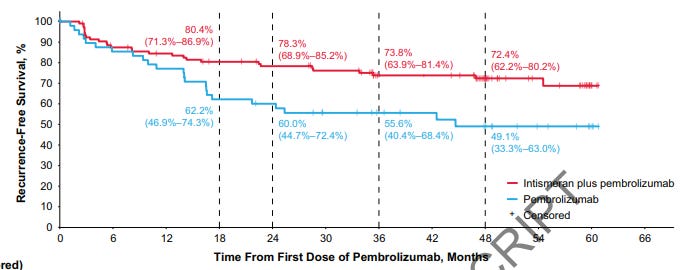
6/1/26 Journal of Clinical Oncology: Intismeran Autogene Plus Pembrolizumab Versus Pembrolizumab Alone in High-Risk Resected Melanoma: 5-Year Update of the Randomized Phase 2b KEYNOTE-942 Study
Wow! Five-year follow-up of a randomized trial finds that adding a personalized mRNA neoantigen vaccine called Intismeran autogene to Keytruda (pembrolizumab) cut metastatic melanoma recurrence and death by 49% compared to Keytruda alone. At five years, 69% of vaccine recipients were cancer-free versus 49% in the Keytruda-only group, with overall survival of 92% versus 71%. Distant metastasis of melanoma was also reduced by 59% with the addition of the personalized vaccine.
Figure 1. Kaplan-Meier estimates of Relapse-Free Survival (RFS). RFS was defined as time from first pembrolizumab dose to first recurrence (local, regional, or distant metastasis) by investigator assessment, new primary melanoma, or death from any cause.
From: https://ascopubs.org/doi/10.1200/JCO-26-00835
6/4/26 Cell: Plasma signals of lung tumor promotion for molecular cancer prevention
Researchers identified a 14-protein plasma signature that predicts lung cancer more than five years before diagnosis, validated across eight cohorts. The signature, discovered using machine learning, also identifies patients likely to benefit from anti-IL-1β preventive therapy, pointing toward a molecular early warning system for the disease.
Yesterday was D-Day, when the allied forces invaded Normandy. Historian Dr. Helen Fry shared the story of Gustav the carrier pigeon who flew 150 miles to Britain to relay news of D-Day success.

6/4/26 Space.com: Meteorite found in Sahara desert may be 1st evidence of lost solar system world
A one pound meteorite found in the Sahara desert in 2019 may be the first physical evidence of a lost planet. Researchers at the University of Colorado Boulder identified it as an angrite, one of the oldest volcanic rock types in the solar system, with a chemical makeup distinct from Earth and Mars. Mineral crystals inside formed under pressures requiring a parent body at least the size of Earth’s moon, suggesting the rock originated from a now-destroyed protoplanet that existed 4.5 billion years ago.

John Kashuba, CU Boulder
6/21/26 NY Times: ‘La La Land’ Orchestral Performance Saved by Keyboardist in the Audience
When the keyboardist fell ill mid-performance at a Sydney orchestral showing of La La Land, composer Justin Hurwitz asked the 2,000-person audience for a sight reader. 21-year-old University of Sydney student Sterling Nasa stepped up, delivered a solo on “Start a Fire,” and walked away considering music as his new career.

Photo: Lindsay Harapa, via Storyful
Have a good week,
Ruth Ann Crystal MD


.jpg)
No comments:
Post a Comment