Wednesday, June 26, 2024

A Non-Response Response to Bird Flu

This time, nobody will be able to blame Trump or Dr Fauci:

A special report at STAT News: Three months into bird flu outbreak in U.S. dairy cows, experts see deep-rooted problems in response

By Andrew Joseph, Rachel Cohrs Zhang, Helen Branswell, and Megan Molteni

"Three months since an outbreak of avian influenza in U.S. dairy cattle was declared, the country is failing to take the necessary steps to get in front of the virus and possibly contain its spread among cows, according to interviews with more than a dozen experts and current and former government officials.

"The country still does not have a sufficient testing infrastructure in place, nor a full understanding of how the virus is moving within herds and to new herds, experts say. Government officials also have not secured the cooperation from farmers and dairy workers that would be required to rein in the outbreak.

"The U.S. Department of Agriculture has stated that its goal is to eliminate the virus, known as H5N1, from cattle. But that messaging has left scientists scratching their heads about how exactly officials plan to stop further transmission given that the impediments persist. It’s also not clear whether the virus could burn out, or if cows are vulnerable to reinfection.

“If that was the goal, we should have been doing a lot of other things from the beginning,” said Seema Lakdawala, an influenza expert at Emory University. “We could have been working toward that for the last three months, rather than trying to play catch-up now.”

"Other countries are taking notice. Last month, a committee of scientific advisers alerted the French government to the “unprecedented situation” happening 4,000 miles away, saying that while the start of the virus’s spread among cows had not yet increased the threat to people, it was concerning enough that the government needed to take its own measures.

“The situation is serious,” Bruno Lina, a virologist and member of the committee, told STAT, noting that European countries were already expanding their surveillance systems to include cows. “It has to be taken seriously in the U.S., and that is what we expect from the U.S.”

"But by just about all accounts, not enough is being done.

"USDA maintained that its scientists, veterinarians, and animal health experts “have been working at all hours, day in and day out” to respond to the virus. The agency also said as it continues to increase outreach to raise awareness of the programs USDA has started, the agency expects testing to increase in the weeks ahead.

“The actions we have taken to limit movements, improve biosecurity and encourage testing are expected to establish the foundation for eliminating this virus from the dairy herd,” the agency said in a written statement provided to STAT.

"The USDA said the agency is “taking animal health and human health concerns seriously through a whole-of-government response.”

"Agency officials first announced the virus had infected dairy herds on March 25, though it’s perhaps been seven months since the outbreak actually started.

"To gauge the risk of the situation and assess the response, STAT spoke with a range of experts both in the U.S. and internationally. What emerges is a portrait of a threat that is steadily rolling along, yet also settling into what feels like a routine. Nearly every day, a few new herds are found to have infections, entrenching the virus deeper into the cattle population and expanding its footprint across more states. As of Wednesday, 129 herds in 12 states have reported infections, although those figures are widely assumed to be underestimates because many farmers are refusing to test. Three farmworkers, in Texas and Michigan, are known to have developed mild cases of H5N1, presumably from close contact with cows.

"But if the dynamics of the outbreak haven’t changed, neither, experts say, has the forcefulness of the response.

"While the situation presents both scientific and logistical challenges, a chief concern is that neither the government nor outside scientists know just how far and wide the virus has spread because critical data have either not been collected or transparently relayed. The government still does not have an adequate surveillance system in place to keep up with the outbreak, scientists say.

"Agricultural authorities are still releasing only partial data from the genetic sequences of the viruses they’ve sampled. There is not widespread testing of cows or of workers on dairy farms, leading to fears of missed infections, both bovine and human. Broad serology studies of either cows or people — which could detect antibodies to H5N1 in blood and provide an estimate of the true scope of infections — have yet to release results, though at least one is underway in Michigan.

"These are all complaints that experts have been lodging for weeks, if not longer. The failure to address them, they say, is hamstringing efforts to track the virus, to contain its spread in cattle, and to see if it’s adapting in ways that could make it more likely to jump to people.

“If you still can’t determine the scale of the outbreak, and which states, what farms, what herds, are actually being affected, I don’t see how you can possibly think that it’s containable,” said Angela Rasmussen, a virologist at the Vaccine and Infectious Disease Organization at the University of Saskatchewan.

"USDA said that the agency provided sequencing data immediately to the Centers for Disease Control and Prevention and has made information publicly available. The agency also said it has sent epidemiological strike teams to Michigan and Iowa at the states’ requests.

"Even if the outbreak seems to be following a pattern, that might not always be the case. Scientists note that H5N1 bird flu has forced regular rewrites to flu dogma since it emerged as a risk to people nearly three decades ago.

“It doesn’t appear that the overall animal outbreak is changing in character, as of yet, but it’s difficult to know because we have so little data,” said Tom Inglesby, the director of the Johns Hopkins Center for Health Security, who, like several experts, argued that if this outbreak were playing out in another country, U.S. officials would be calling the response unacceptable.

Limited measures, reluctant farmers

"Over the past few months, authorities have rolled out a number of interventions, trying, for example, to bolster protections for dairy workers and incentivize farms to expand surveillance. They’ve put up some money for farms to improve biosecurity measures and widen testing, though only a fraction of farms, including those with infected herds, have taken the government up on its offer. States are trying to give away personal protective equipment that could be worn in milking parlors, but again, few farms have expressed interest. Within a month of the identification of the outbreak, federal authorities started requiring testing of lactating dairy cows, though only when they crossed state lines, and even then, only a limited number per shipment, chosen by the farmer.

"Agencies are trying to widen their approach. The CDC has started publicly tracking influenza A viruses — the family to which H5N1 belongs — in wastewater samples. And states are taking their own steps beyond quarantining infected herds. In Iowa, for example, agricultural authorities have started requiring testing of dairy cows around infected poultry flocks. Several states are requiring lactating cows to be tested for flu before they can be brought to fairs.

"But the government’s own data indicate the efforts have holes large enough for the virus to run through. In one USDA survey, 60% of farms acknowledged moving cows within a state even after the animals had started showing symptoms of infection. Federal officials have acknowledged they’re not getting much cooperation from dairy producers and workers.

“The more we learn about H5N1, the more we understand that good biosecurity is a critically important path to containing the virus,” Agriculture Secretary Tom Vilsack wrote last week in an op-ed in the media outlet Agri-Pulse, calling on farmers to step up the use of PPE, limit traffic onto their farms, and increase cleaning and disinfection practices in their barns and milking parlors.

"H5N1 has been on scientists’ radars as a threat since the late 1990s, and over the years, it has managed to spill from wild birds into different mammalian species, causing infections that seemed more like one-offs. But an H5N1 strain that emerged a few years ago seemed to change the game. It has been carried by migratory birds to just about every corner of the world, decimating poultry flocks along the way and infecting more and more mammals. This version of the virus is the one that is transmitting among dairy cows.

"The ongoing spread among cows raises particular concerns, not limited to the economic toll the virus could take on farmers by depleting cows’ milk or by preventing them from selling product. As the virus has spread, so too have fears that it could become an endemic pathogen in a species that has considerable contact with people, creating a lasting risk to dairy workers. Underlying it all is the grave concern that the virus could one day evolve in ways that make it better at spreading to and among people.

"The virus is not there yet, and scientists say it would likely need to change in a number of ways for that to happen. But they believe the nature of the current spread could conceivably lay the groundwork for the next pandemic. Historically, the virus has had an alarmingly high fatality rate when it has caused human infections, though all three documented human cases that have emerged from the cattle outbreak have been mild.

“It’s not [being] managed as a zoonotic disease that is a potential dynamic threat,” said Marion Koopmans, chief of viroscience at Erasmus Medical Center in the Netherlands. “It may well not become a pandemic. But I think it’s playing with fire.”

Familiar hurdles

"In some ways, experts say, the bird flu outbreak is exposing the same systemic obstacles that hobbled the U.S. performance during the Covid-19 pandemic. The response is falling on various local, state, and federal agencies with limited authorities and disparate, sometimes competing, agendas. In this case, it’s a balkanization compounded by the need for public health officials to collaborate with agricultural agencies, which are often tilted to supporting industry instead of prioritizing reining in threats to human health. State agricultural agencies are also underfunded and understaffed; meanwhile, some portion of the public is resistant to measures to track and control the virus.

There seems to be a lot of issues between the agencies, the federal government, the states, the farmers,” said Florian Krammer, a flu virologist at Mount Sinai’s Icahn School of Medicine in New York. “It’s not looking like everybody’s on the same side trying to get rid of the problem.”

"Many scientists acknowledge the tightrope that government officials are treading. Fearful of overstepping, agencies are reluctant to use the full extent of their legal authority to demand testing on farms — something that could lead to a political backlash in an election year. Such a response would be perhaps all the more likely in a post-Covid pandemic world, and would impede whatever receptiveness farmers are showing.

"Beyond the mistrust of government agencies some farmers harbor, dairy producers, working with slim margins to begin with, have real economic concerns. If they report an infected herd, they can’t sell milk or move cattle, which are frequently transported for breeding and grazing. Veterinarians who have been working with farmers told STAT that while some infected herds have been cleared to return to milk production, farmers still fear what a positive test means for them. Given the risks, it’s easier not to test.

“Even though I’m disappointed by some of the things the federal government is doing, I understand the constraints they’re working under,” said Andrew Pavia, the chief of pediatric infectious diseases at the University of Utah, who also works on public health preparedness. “And even though I’m disappointed by some of the barriers that farm associations and farmers are throwing up, I understand where they’re coming from. I think we need to work together to figure it out.”

"Thorny challenges stand in the way of looking for human cases as well. Private farms might not give public health agencies access, and even if they do, dairy workers might dodge testing. A positive test could mean missing work and lost income. Many farmworkers do not speak English, and may not have health insurance. A portion are presumed to be in the country illegally, aspects that discourage cooperation with health investigations.

"Public health officials have made clear they’ve run into these problems. A study of the first human case tied to the outbreak — a Texas dairy worker who developed conjunctivitis — reported that the man and his contacts refused to have their blood drawn for serology tests, which could have shown whether others were infected.

"As of mid-June, just over 50 people had been tested for novel influenza strains, which would include H5N1, according to the CDC’s most recent figures.

“Do they get time off when they’re sick? If not, will they be willing to come forward to declare themselves feeling ill?” Laszlo Madaras, the chief medical officer of the Migrant Clinicians Network, said during a webinar last week for rural providers, whom he stressed could be trusted sources of information for dairy workers.

Possible ways forward

"Such dynamics give rise to the question of what an effective response should look like — one that coaxes greater participation from farms, improves surveillance, and fits with what agencies are empowered to do.

"Several experts said state and federal agencies, as well as rural doctors and veterinarians, need to conduct education campaigns, both to outline steps that dairy workers can take to prevent infections, and to explain to farmers how being transparent can help protect herds and the safety of the milk supply. Whatever steps are being proposed, they said, producers have to get on board if they’re to succeed.

“Unless you’ve got 80% of the industry in a position to support you, you don’t have the manpower, or the dollars, to dictate what you’re going to do,” said John Korslund, who worked as a USDA veterinarian for two decades. “So it’s very much a cooperative effort. And if you’re not in a position where you can get cooperation from the industry with what you’re proposing to do, you can’t do it.”

"USDA said the agency is working with the food and agriculture sector and “hand in glove” with state health officials to raise awareness about available resources. The agency has been hosting regular meetings to share updates and hear concerns, a spokesperson said.

"The trust gap with farmers has continued even though some federal officials are well-connected to the dairy industry. Vilsack, for example, used to be a top-paid executive at Dairy Management, a trade association that promotes milk and dairy products.

“He’s shown time and again that he’s on the side of farmers, and, you know, particularly dairy farmers, right?” said Brian Ronholm, Consumer Reports’ director of food policy and a former USDA food safety official. “So if anyone can kind of reach that divide, it is someone like him.”

"Other ideas that experts called for included bulk testing of milk, which could narrow geographically where new outbreaks are occurring. So far, that is only being done voluntarily, by a tiny number of farms. Many said there needs to be testing of asymptomatic cows, as well as those showing signs of illness. Some scientists are arguing for vaccinating cows, though that is still a point of debate.

"A USDA spokesperson said that the bulk milk testing is in its “initial pilot phase” and that six states are enrolled as of Tuesday: Kansas, Nebraska, New Mexico, Texas, Ohio, and North Carolina. The agency is conducting outreach to provide more information about the program, the spokesperson said.

"Some experts pointed to measures other countries are taking — even though no other country has documented a cattle infection — as steps that could help the U.S. get ahead of the virus.

"Thijs Kuiken, a pathologist at Erasmus Medical Center, noted that Canada has made it mandatory to report suspected H5N1 cases in cows; in the U.S., only positive tests have to be reported to federal authorities. (Some states have also said suspected cases need to be reported.) Researchers in Germany have made public early results from serology studies in cows.

"It’s also a matter of money, many experts said. The government might simply need to pony up more resources both as a way to get access to farms for testing and to cover farmers’ losses if they have an infected herd and can’t sell milk. Experts noted that the government pays poultry farmers for birds that need to be culled to contain H5N1 outbreaks in domestic flocks.

"A program to cover some portion of lost milk production has been announced, but authorities are still ironing out the details. The program will be retroactive to the date herds were confirmed positive, the USDA said.

“USDA anticipates that its forthcoming rule will specify that farmers will receive payments at 90 percent of lost production per cow,” an agency spokesperson said.

"Ultimately, though, there are constraints on the incentives agencies can offer. The Biden administration isn’t likely to get any additional funding from a Congress split between Democrats and Republicans. Multiple senators said in brief interviews with STAT that administration officials haven’t asked for more resources.

"John Auerbach, a former CDC official during the Obama and Biden administrations who is now a public health consultant at the firm ICF, said the administration’s reticence to ask for more money is not surprising, given the difficulty that Congress has had simply keeping the government open.

“I understand why the Democrats would be reluctant to open that can of worms up again,” Auerbach said.

"The USDA reiterated that the agency has approved a transfer of $824 million from a separate funding stream to support response efforts. The secretary of agriculture can authorize additional funding to address emergency outbreaks, like a previous $1.3 billion tranche approved to increase detection of avian influenza in wild birds and poultry.

A unified approach

"Fundamentally, experts said, the U.S. needs a more coordinated response instead of the piecemeal approach it’s seen so far.

“It only takes one state to be doing a really bad job or to be covering up or something for it to then be getting into further states, and the outbreak carries on,” said Thomas Peacock, an influenza virologist at the Pirbright Institute, a British organization that focuses on controlling viral illnesses in animals.

"For all the political and economic challenges, scientists have plenty of questions to answer as well.

"For one, there is still not a comprehensive understanding of the way, or ways, the virus is spreading. The repeated use of milking equipment from cow to cow seems to be a key route, but scientists think there have to be other, undiscovered viral pathways that haven’t been specified beyond the movement of equipment, cows, and people from farm to farm.

"The scientific specifics of this outbreak are also complicating the response. Many of the world’s top flu scientists have acknowledged they didn’t think cows could get H5N1, a blind spot that delayed pinpointing the virus as the culprit behind a decline in milk production among cows in the Texas Panhandle. And while other mammals, with a few exceptions, haven’t spread H5N1 to others of their species, it seems the virus is moving quite efficiently from cow to cow, though likely with human help, via milking equipment.

"The challenges go on. Cows, generally, aren’t getting that sick. The three related human cases have all been mild. It’s easy for those types of incidents to be ignored or missed, giving the virus a chance to spread silently.

"Scientists credited the government with policy changes that haven’t earned many headlines but that they say are helpful. A tweak in how the USDA classifies H5N1 has allowed additional researchers to study the virus, Emory’s Lakdawala said. (They still need a USDA permit and must conduct the work in a high-containment lab.) More scientists are now trying to crack open some of the basics of the virus — how it spreads, how it’s evolving, the quality and durability of immunity — and it’s made it more feasible to do wastewater monitoring for the virus.

"The CDC is also flagging to health care providers the possibility of human cases. The agency has encouraged clinicians to test people for flu even though in the summer the usual human flu strains transmit at very low levels.

“It’s really important when you’re seeing a patient that might have acute respiratory illness or conjunctivitis, whether or not they have a fever, even if they appear to have clinically mild illness, you should ask them what they do,” Tim Uyeki, the chief medical officer of the CDC’s influenza division, said on the webinar for rural clinicians. “What kind of work do they do? Do they have potential occupational exposure to an infected animal?”

"To some scientists, the situation on dairy farms is not some new threat, but rather an extension of one that’s been building as H5N1 has swept around the world. While the outbreak stoked particular concerns — such as cows’ close contact with people, and the risk to the milk supply — they argued that the latest event has only highlighted how important it is for the world to give more attention to the virus broadly.

“Arguably, the global spread of this virus over the last four years — the fact that it has been jumping from species to species quite happily — to me, that already felt like a big enough call to arms,” said Colin Russell, an evolutionary biologist at Amsterdam University Medical Center and chair of a European network of influenza experts. “We have to be very careful in the presentation of this, not as, ‘Oh it’s in cattle, now there’s going to be a pandemic,’ but more that this is just a further illustration of the potential of this virus and the fact that we need to be taking the whole H5 situation seriously, globally,” he said.

Tuesday, June 25, 2024

A Good Column by Rabbi Michael Barclay

"Imagine…

"Imagine if the KKK went into South Central Los Angeles and tried to block parishioners from going into the First A.M.E. Church and then got violent. How fast would the police be there to arrest the agitators? How long would it be before cities across the nation were protesting and marching to demand police protection and the arrest of all KKK supporters? How many demonstrations would happen nationwide to empower (justifiably) black churches and demand their protection?

"In Los Angeles, we don’t need to imagine it, for on Sunday afternoon, it happened. But there haven’t been loud voices protesting nationwide; the LAPD was ordered to stand down rather than respond forcibly, and the mainstream news is reporting it as just another protest that got a little out of hand.

"Why the silence? Because it wasn’t a black church; it was a Jewish synagogue. The violent agitators weren’t the KKK; they were the same pro-Palestinian terrorists who created the illegal encampment at UCLA.

"As in many large cities, Los Angeles has a high density of Orthodox Jews called the Pico-Robertson area. Pro-Hamas demonstrators blocked off access to a synagogue there and then started their Jew-hating chants. They physically stopped people from going into the temple, threatened violence, and then acted on those threats. Police were called, but Mayor Karen Bass’ office reportedly told them that they should treat both the Jewish congregants and the pro-Hamas activists the same way and ordered officers to stand down unless absolutely necessary.

"After they were finally dispersed, these violent demonstrators (the same individuals who previously terrorized the UCLA campus) started going through Pico-Robertson, physically attacking any Jew they found, including young families with children. Can you even conceive of Bass and the LAPD remaining stoic if white supremacists were attacking a Black church and neighborhood? 

"Of course not. But the far-left “progressive” Democrats like Bass (read “Marxist”) hate Jews with such a passion that Los Angeles experienced its first pogrom, a bona fide physical attack on synagogues and individuals, for one reason: they are Jews. What makes Bass’ actions even more despicable is that the synagogue had heard about the planned riot and, for almost a week, had been petitioning the mayor’s office to have a police presence and stop the violent demonstrators before it started. But since it was Jews asking, Bass ignored the requests.

"But the time of Jews cowering from bullies is over. Never again really is now. Over 80% of observant Jewish families now own firearms, and more and more secular Jews are following suit. A volunteer organization called Magen Am (Shield of the People) has been training Jews in firearms and self-defense, and it was this group that stopped the riot from getting too far out of hand. These volunteers came in full riot gear and with licensed firearms to protect Jewish gatherings, and at a moment’s notice, they came to the synagogue. And this defense group is growing exponentially.

"This past week, the Los Angeles Jewish Film Festival opened with a screening of my friend Sal Litvak’s new film “Guns and Moses.” It is about a rabbi who becomes a “gunslinger” after his community is attacked. The liberal Jewish community would never have embraced this movie even a few years ago, but now, many people relate to the need to protect themselves. Never again really is now for the Jewish people.

"Jews are finally understanding that the root of many of the antisemitic acts is the policies and attitudes of the Democratic Party. They are leaving the Democratic party in droves as even the most liberal Jews are awakening to the Jew hatred that is permeating our culture from the political left. It may have taken a lot, but they are finally starting to realize that this antisemitism is institutional in the Democratic party. Even traditionally large donors like billionaire film producer Haim Saban are pulling their money away from the Democrats.

"This riot in Los Angeles is horrifying, and this type of disgusting behavior has been happening all around the world, usually ignored by the left-wing mainstream media. But this incident showed something different: Jews are now protecting themselves and will not cower ever again. Thanks to Magen Am, as well as synagogues that are offering self-defense classes, the Jewish people will no longer just trust local politicians like Karen Bass. Thanks to President Trump's including antisemitism in Title VI, lawsuits are being filed daily. The Jewish people will never allow this type of pogrom to decimate lives.

"But why should this be so important for all non-Jews as well? Why must all Americans take a stand against the increasing Jew hatred?

"It has been said that Jews are “the canary in the coal mine." Whether it was Iran 50 years ago, Germany in the last century, or Spain 500 years ago, history has shown that when Jew hatred becomes prevalent in a nation, the nation will soon destroy itself from the inside out. Jews may be the first persecuted, but they are never the last. As Americans, we all need to stop this hatred. Now. Not just because it is ethically wrong, but for the preservation of our nation.

"I pray that all Americans will stand up and act so that the fascism we saw in Germany is not repeated here.

"Never again is now. For all of us, Jew and non-Jew alike."

Your Local Epidemiologist State of Affairs, June 25

Here's the latest Your Local Epidemiologist - State of Affairs newsletter from Dr Katelyn Jetelina.

Summer brings a different State of Affairs, as we face a plethora of health annoyances and potential threats. Let’s jump in!

Covid-19: Rising

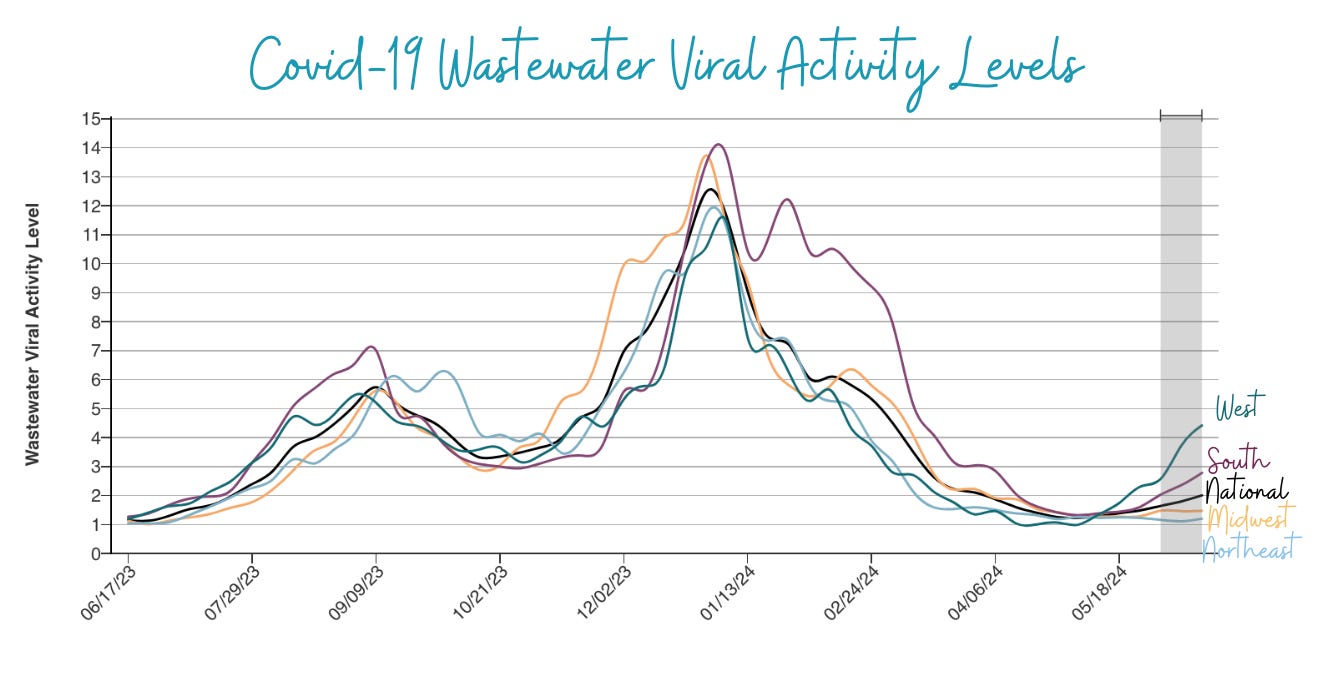
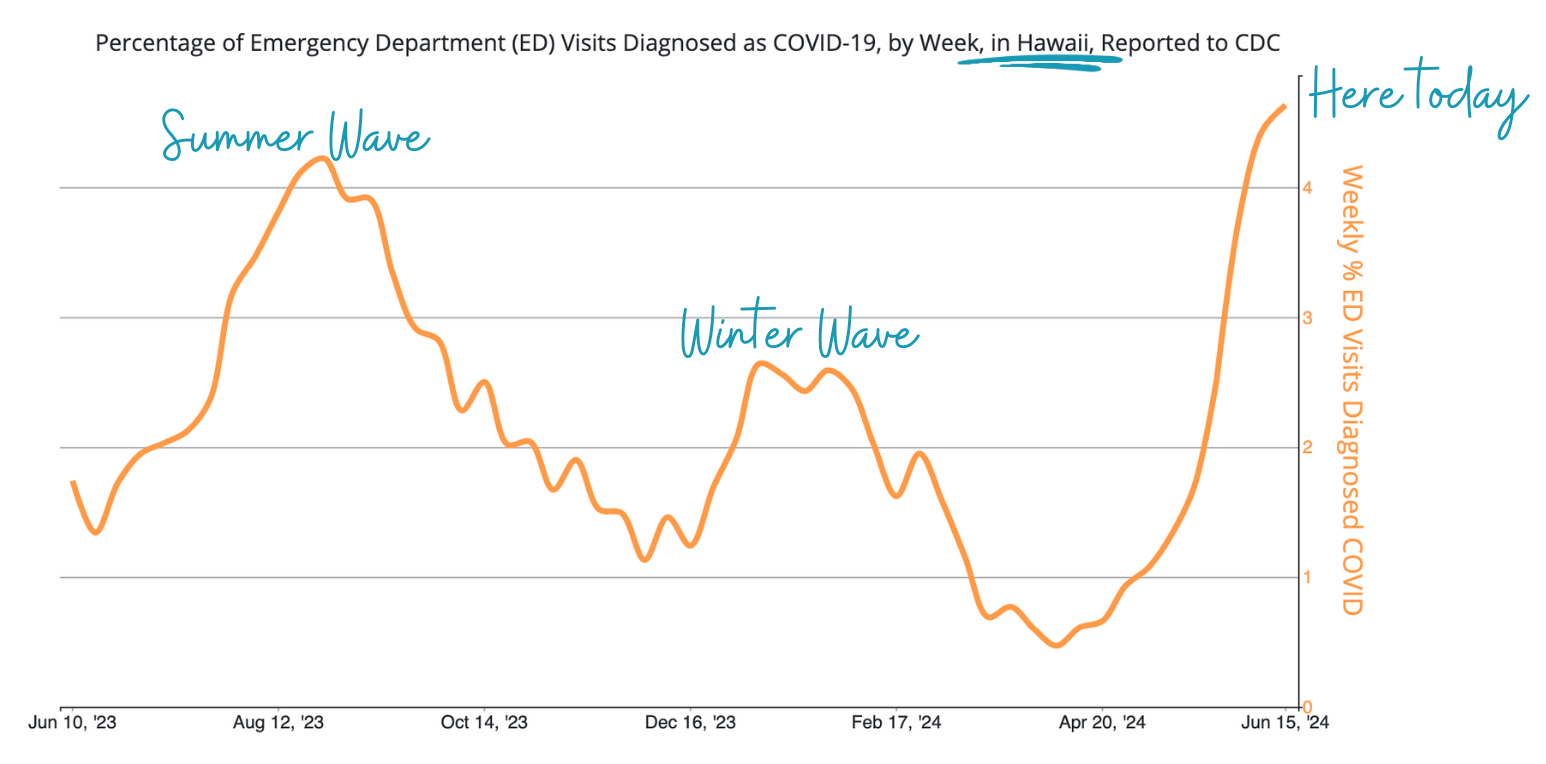
Wastewater activity—a good proxy for SARS-CoV-2 infections—remains “low” nationwide but is slowly increasing, with the most pronounced increase in the West (considered at “Moderate” levels). Hawaii has “very high” levels of Covid-19.

(Source: CDC; Annotations by YLE)

This summer wave is largely driven by two things:

  1. New subvariants. Covid-19, specifically Omicron, continues to mutate with small incremental changes to the spike protein, which allows the virus to cause more infections.

  2. Behavior. With the heat, people move inside for AC. Viruses spread much more effectively inside than outside. (Get that indoor air moving!)

And, in the case of Hawaii,

  1. Limited winter immunity. Hawaii had a very small Covid-19 wave this past winter, which means less immunity this summer and a big surge in wastewater levels and emergency department visits. I’ve noticed that Hawaii's trends are more similar to Australia or New Zealand than the mainland of the U.S., which I find fascinating.

Source: CDC; Annotated by YLE

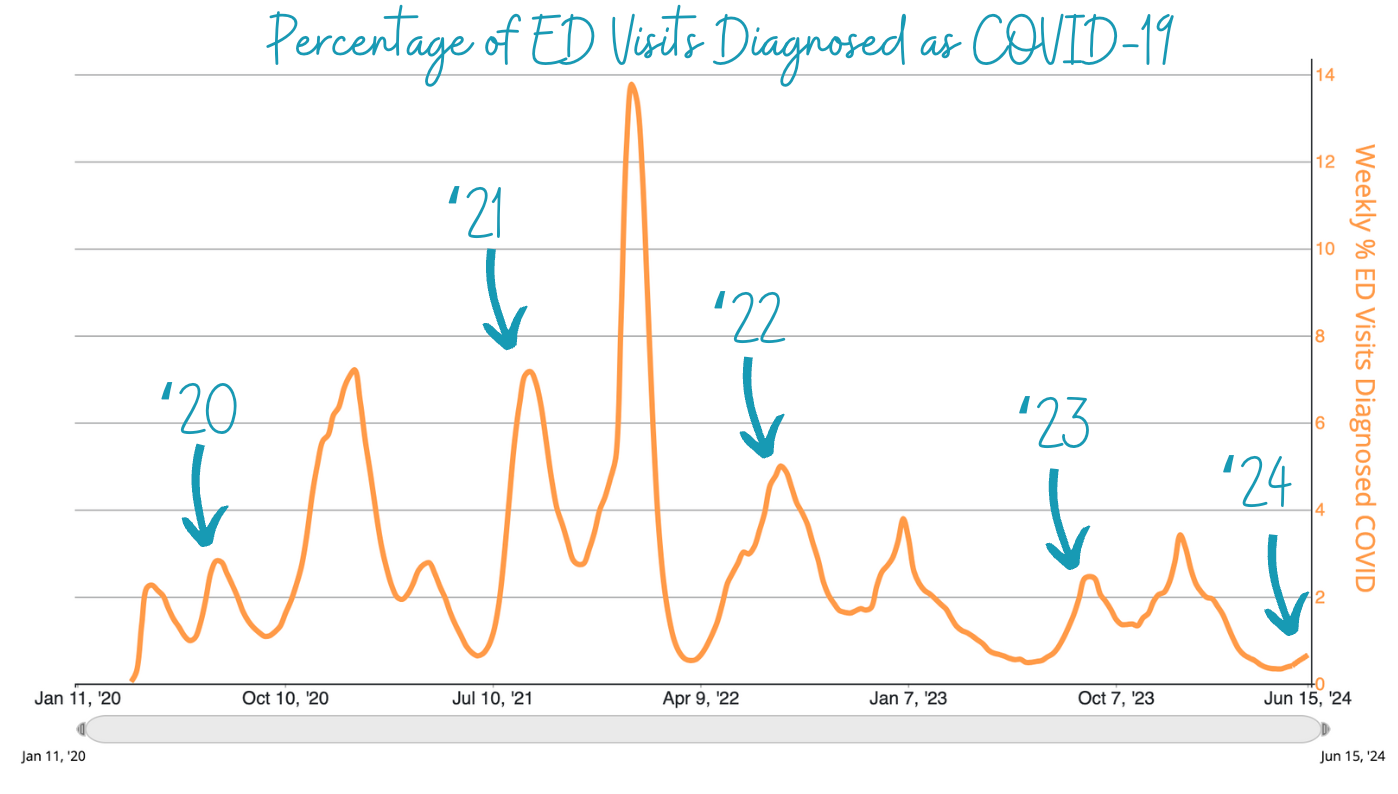
How high will the national wave be? We don’t know, but summer waves on the mainland seem to be becoming less pronounced over time. Many epidemiologists expect Covid-19 virus will eventually become a winter respiratory virus, like its relatives. Thanks to hybrid immunity (vaccines + infections) proving longer immunity, smaller stepwise waves occur yearly.

(Source: CDC; Annotations by YLE)

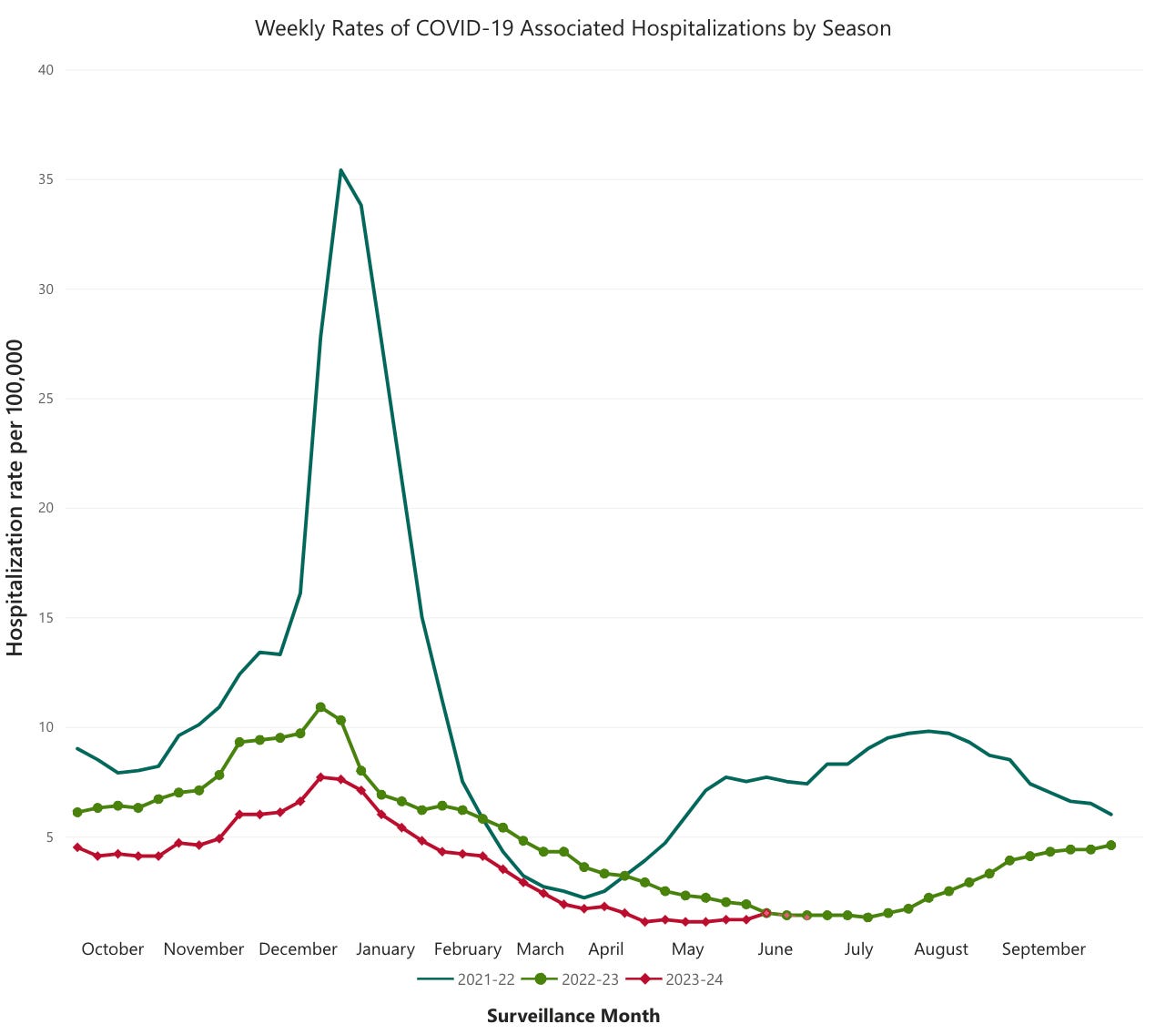
With a slight increase in infections comes a slight increase in hospitalizations nationwide. Thankfully, hospitalizations are starting at a very low level. In fact, this year's hospitalizations have been lower than any previous year.

Source: CDC

Unfortunately, as of May 1st, hospitals are no longer required to report Covid-19 data to U.S. Health and Human Services. It’s now purely voluntary, and only 38% of hospitals continue to do so (compared to more than 90% of hospitals during the emergency). This provides a biased view, but we must work with it for now.

What’s the fall plan for vaccines? FDA recommended an updated vaccine formula to target KP.3 if possible. This likely means Novavax will have a slightly “older” formula because they can’t update their protein vaccine as quickly as their mRNA vaccine counterparts. (Read this previous post if you have no idea what I’m talking about.) Deciding which Covid-19 vaccine to get this fall will be challenging as there are tradeoffs (I’ll let you know how I think about it closer to the fall.) This week, the CDC advisory group—ACIP—is meeting to discuss who is eligible for a Covid-19 vaccine this fall. 

Other viruses: Some unusual patterns

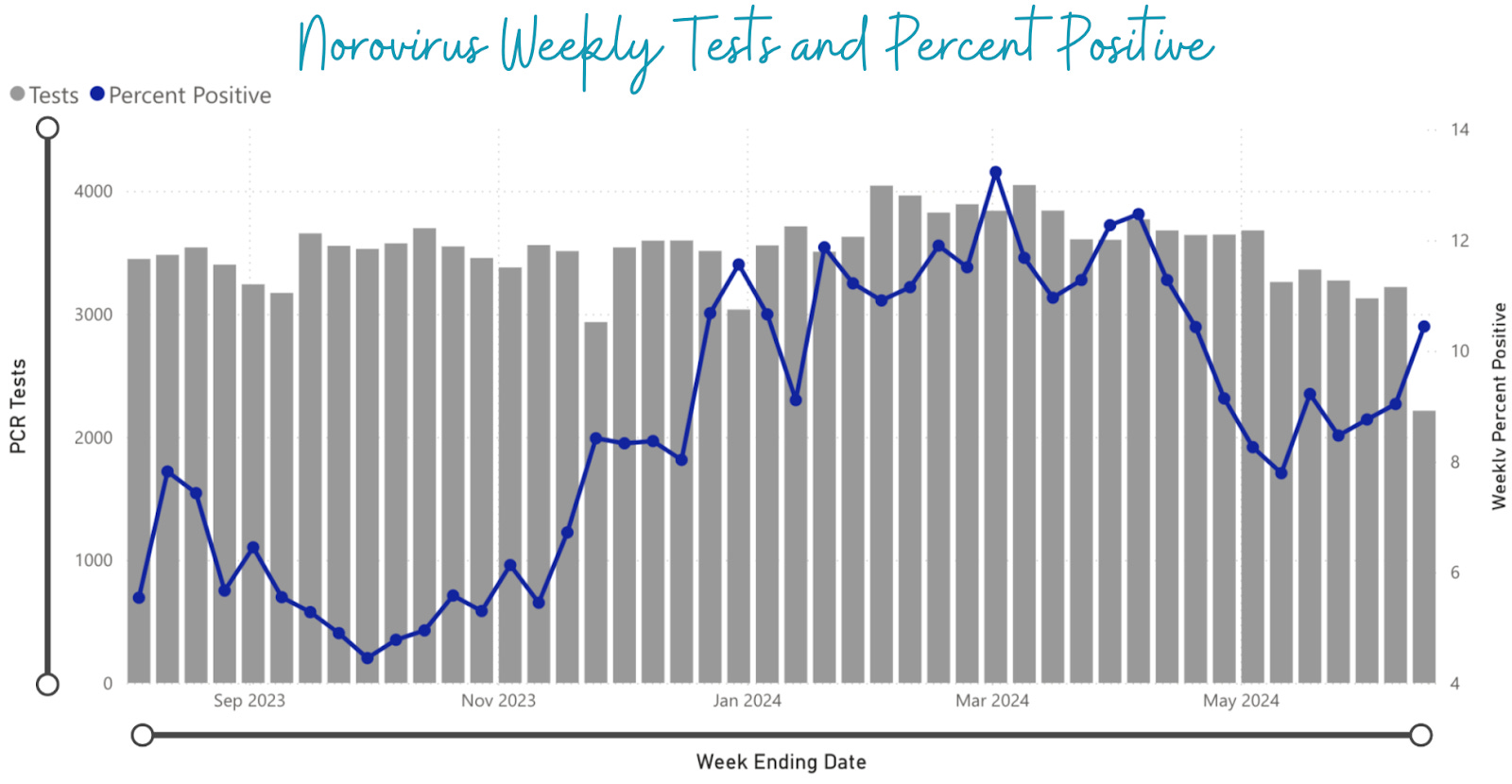
Norovirus—think nausea and diarrhea—is increasing, which is unusual for summer but not impossible. In 2014, an outbreak in Oregon affected 70 individuals who swam in a lake— they were 2.3 times more likely to get norovirus than those who visited the park but did not go in the water.

Why are we seeing an uptick now? Epidemiologists don’t know for sure, but we have a few guesses:

  1. The emergence of a new strain. This caused other summer upticks, like one in 2002.

  2. Change in testing behaviors. This may be a blip, given fewer tests.

  3. Unknown unknowns. Norovirus seasonality is complex, but some studies have shown that higher temperatures may be associated with norovirus transmission.

Wash those hands. Soap works, but hand sanitizer doesn’t. (And don’t swim if you have diarrhea.)

(Source: CDC; Annotations by YLE)

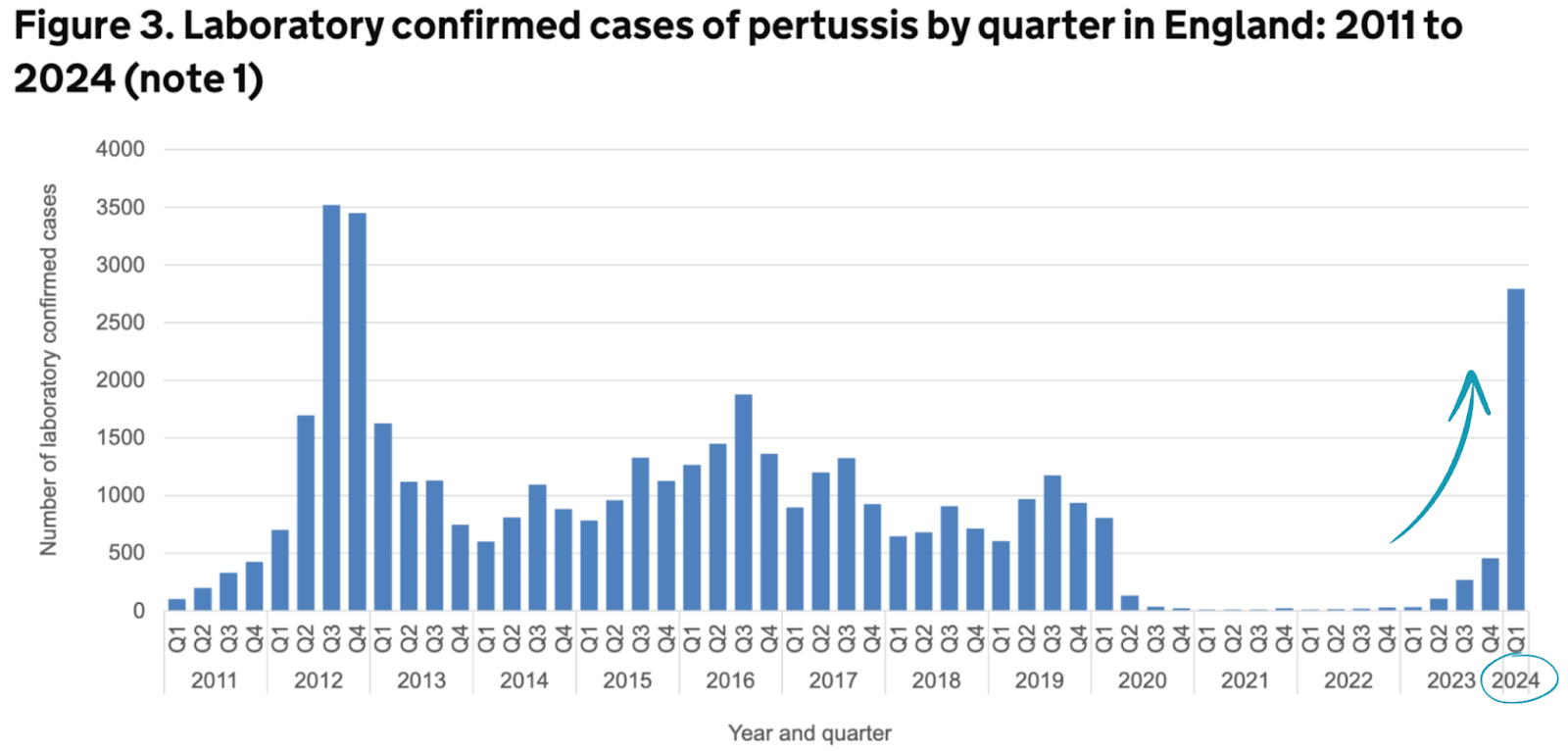
Pertussis—whooping cough—is increasing in some pockets of the United States, like Delaware and Kentucky (hat tip to Dr. Caitlin Rivers for bringing this to attention).

This follows an increase in the UK, where the number of cases in Q1 reached a record-breaking level. Whooping cough—which can be prevented by the routine Tdap vaccine—is another example of vaccine-preventable amnesia. Be sure to get your vaccine every 10 years (and every pregnancy, if applicable).

(Source: GOV.UK; Annotations by YLE)

Heat-related illnesses: Up, up and away

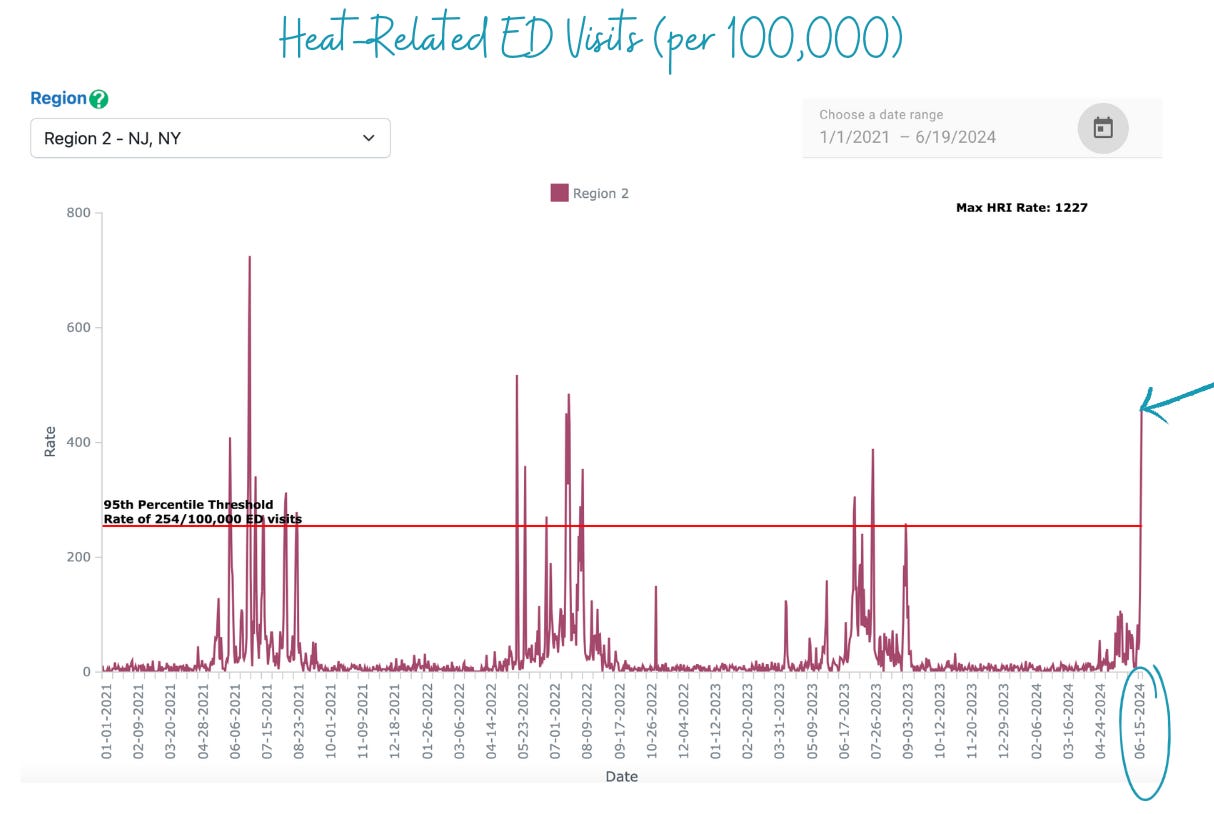
A heat dome blanketed much of the Northeast last week. Temperature and other factors, such as humidity, can harm health; we saw this in healthcare data last week. Below, we see a huge jump in New York emergency room visits.

Source: CDC

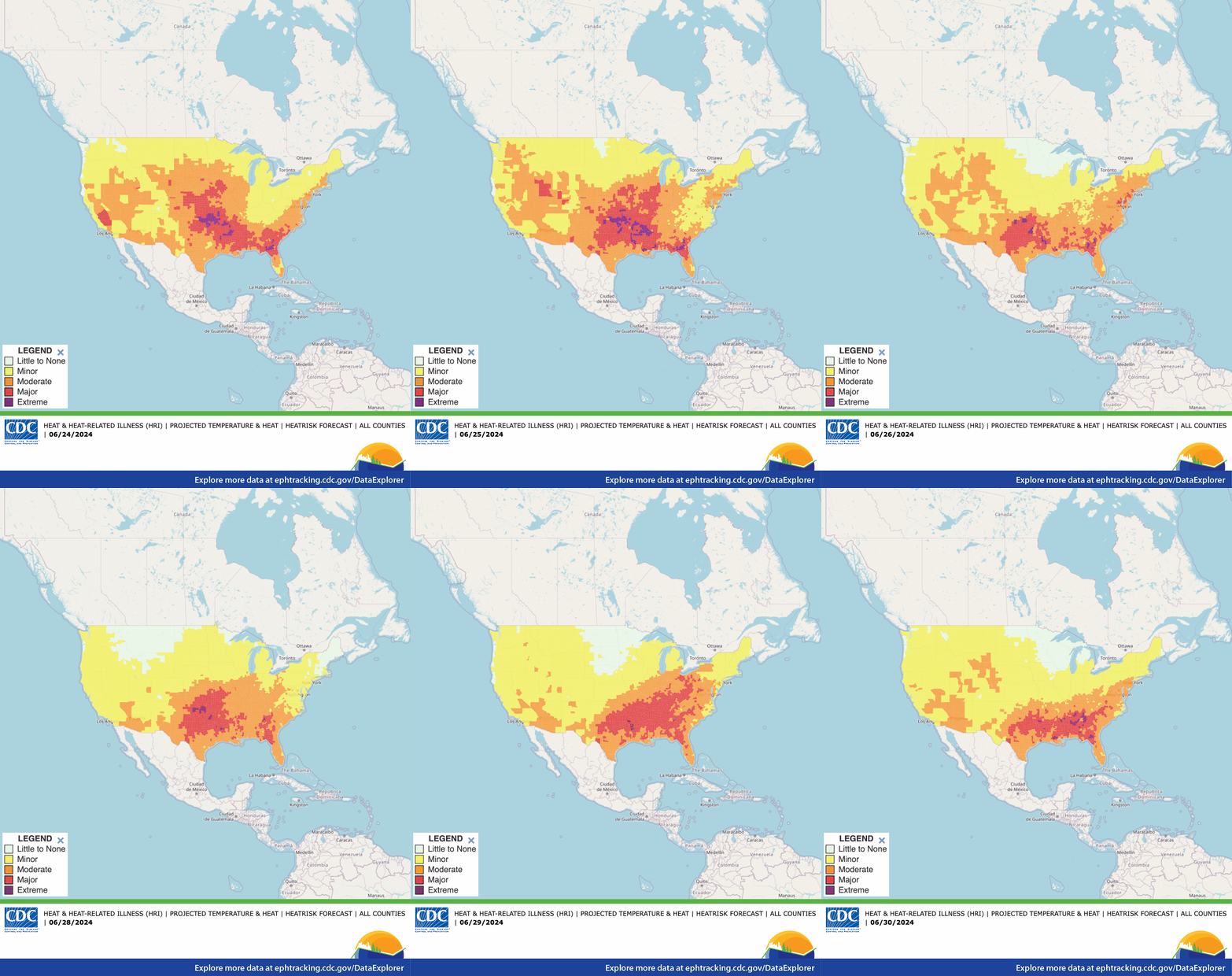
This week, the heat risk is shifting to the South. The good news is that there is a lot we can do—especially when the risk is “red” (major) or “extreme” (magenta). Enter your zip code here to learn more.

Source: CDC

Ticks: Peaked and decreasing

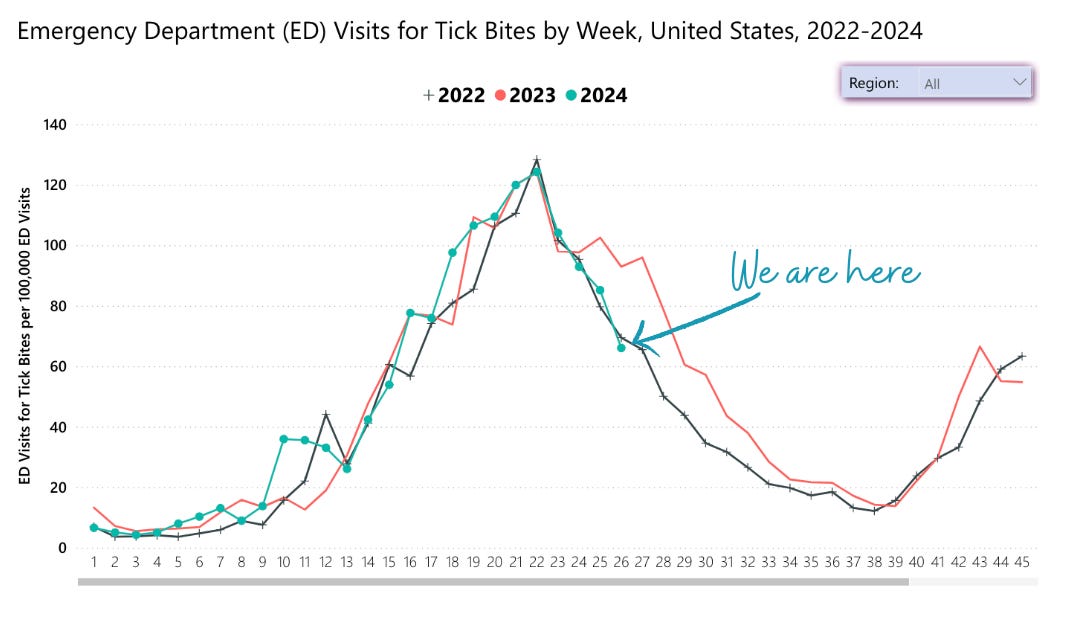
Emergency room department visits for tick bites have already peaked and are moving downwards. Relief is coming soon.

Ticks can carry pathogens that cause over a dozen diseases, including Lyme disease. Lyme disease often causes flu-like symptoms and, if left untreated, can lead to more serious complications such as neurological and cardiac issues. While this is a middle-of-the-road season compared to other years, by the end of the year, more than 500,000 people will be diagnosed and treated for Lyme disease alone. 

(Source: CDC; Annotated by YLE)

Mpox (Monkeypox): Circulating

In the Democratic Republic of the Congo, Clade I (the more severe strain) remains a significant concern, with over 20,000 suspected cases and 1,000 deaths. The majority of deaths are among kids.

Mpox continues circulating in the U.S., but exclusively with less severe strain (Clade II). Los Angeles County has seen a rise, reporting 10 new cases in the past two weeks. New York City's cases are four times higher than last year but lower than 2022. If the severe strain comes to the U.S., modeling suggests a much smaller outbreak due to existing immunity and behavior change.

Bottom Line

Enjoy your summer travel! Please stay cool out there and remember to wash your hands. If you’re at high risk for Covid-19, it may be time to wear a mask on the West Coast, especially in Hawaii.

Love, YLE

Monday, June 24, 2024

Stamp of Approval for Alex Trebek

Now here's a stamp I can't wait to use:

Clue: Former game show host honored with Forever Stamp

"June 23 (UPI) -- The answer: Which former game show host from Canada is being honored with a Forever Stamp in the United States.

"Question: Alex Trebek.  

"On Friday's episode of Jeopardy! new host Ken Jennings announced that the U.S. Postal Service will issue a Forever stamp honoring the former host concurrent with the show's 60th Diamond Celebration launched earlier this year. Presales for this special stamp began Friday at usps.com.

"An event occurred at Sony Pictures Studios in Culver City, Calif., with Jennings; Jean Trebek, who is his wife; and Michael Elston, secretary of the Board of Governors of USPS

"Trebek, a naturalized U.S. citizen from Canada, died in 2020 after a 37-year run as host of the syndicated show.

"The grid of 20 identical stamps resembles the array of video monitors that form the game board.

"On the stamp is written the prompt, "THIS NATURALIZED U.S. CITIZEN HOSTED THE QUIZ SHOW 'JEOPARDY!' FOR 37 SEASONS" and underneath, upside down, is the correct response: "Who is Alex Trebek?"

"On the stamp pane, relevant category headers appear at the top of each column of stamps, and to the left is a photograph of Trebek with a portion of the Jeopardy! set behind him. 

"Antonio Alcalá, an art director for USPS, designed the stamps using photos provided by Sony Pictures Entertainment and hand lettering by Marti Davila.

"The Alex Trebek stamp will be issued in panes of 20.

"Forever stamps will always be equal in value to the current First-Class Mail one-ounce price. The cost of one stamp in July will rise by 5 cents to 73.

"Customers may purchase stamps and other philatelic products through the Postal Store at usps.com/shopstamps, by calling 844-737-7826, by mail through USA Philatelic or at Post Office locations nationwide."

Anti-Jewish Attacks Led by Terrorists, Not "Protesters"

There were a few outrageous news items over the weekend that made my blood boil. As usual, any attack on Jews leads immediately to a link with "Islamophobia". And to refer to terrorist animals who attack Jews as mere "protesters" is downplaying and normalizing Jew-hatred.  

What next in 2024 America? Pogroms? Yellow stars? Jewish ghettos?

Jews Fight Back Against Antisemitic Mob Attacking Jewish LA Store

“Dozens of Jewish Americans rush to protect a Jewish store in Pico-Robertson in LA after an antisemitic mob began attacking Jews outside,” Oli London tweeted on Sunday.

"The Beverly Hills Bagel Co. at 8947 West Pico in LA, is owned by Mendel Goldman, who “brought his 35 years of experience in the restaurant and catering company to create the first bagel shop offering New York style mezonot bagels, now allowing the Los Angeles community to quickly grab their bagel sandwiches with ease.”

"Mike Netter tweeted: In just a single weekend, this weekend, in Los Angeles alone, a synagogue was blocked (Pro-Hamas Rioters Clash with Jews at LA’s Adas Torah Synagogue), Jews physically restrained from entering it, and an antisemitic mob began attacking Jews outside a Jewish store in the Pico-Robertson district of town.

“This is not about a relatively minor conflict happening halfway around the world,” Netter continued. “These people have nothing to do with that. This is about normalizing racist attacks against one particular race. What is most surprising is the deafening silence coming from everywhere. Be honest, if this were happening to black people, would you be speaking up right about now?”

 -------------------------------------

I've always said the same thing. You know that if this had happened to blacks, there'd be riots in the streets, worldwide condemnation, and an immediate TV speech by Biden in response.

-------------------------------------

From Honest Reporting: Media ‘Both Sides’ Anti-Israel Mob Attack on Los Angeles Synagogue
The footage is as clear as day: a mob of anti-Israel protesters, some with keffiyehs and black masks wrapped around their faces, assaulting visibly observant Jews and clashing with riot police. 

"The footage is as clear as day: a mob of anti-Israel protesters, some with keffiyehs and black masks wrapped around their faces, assaulting visibly observant Jews and clashing with riot police.

"In one clip posted on the social media site X (formerly known as Twitter), a visibly observant Jew is attacked, and in another, several men in skullcaps try to pull one of the rioters away from an ultra-Orthodox man.

"A journalist on the scene described Jews being sprayed with pepper spray, and another recounted seeing “Jews being pushed down and beaten bloody in the street.”

"Armed with sticks and waving PLO flags, the group massed outside the Adas Torah synagogue in Los Angeles for their anti-Israel rally on Sunday.

"Reports suggest the location was chosen because it was hosting an Israeli real estate fair. But it’s clear most of the mob was there because it was a synagogue—evident when the keffiyeh-clad crew linked arms around the building to prevent synagogue attendees from entering.

"California Governor Gavin Newsom condemned the disturbing scenes. “The violent clashes outside the Adas Torah synagogue in Los Angeles are appalling. There is no excuse for targeting a house of worship,” he posted on X, adding: “Such antisemitic hatred has no place in California.”

"California Congressman Ted Lieu also commented, describing the incident as antisemitic and calling for the prosecution of those who targeted the synagogue.

"Yet, for reasons unknown, much of the media was quick to “both sides” the attack, characterizing the incident as anything but exactly what it was: an antisemitic attack by a baying anti-Israel mob.

"The Los Angeles Times, for example, described what occurred as a “violent clash” in a headline that reported the presence of one protester carrying a “spiked flag,” while CNN said “violent scuffles” had erupted without stating which group was responsible for the violence.

"CBS News had the gall to claim that the counterprotesters, who had assembled to protect the synagogue and its congregants from the attack, were taking part in the “dueling protests.”

"The same report also attempted to imply the antisemitic rioters were the victims in the incident, with a CBS journalist saying that one side was simply “demanding a ceasefire and decrying Israeli policies towards Palestinians as pro-Israel groups countered them verbally and physically.”

"The facts are these: Jews were attacked at a synagogue. They were attacked by antisemitic thugs because they are Jews. This wasn’t about Israel, and it wasn’t about the Palestinians

"There are no two sides to this story. Shame on the media for pretending there is. "

-----------

Great article. And it proves once again that every crime against the Jewish people is excused and shrugged off, because antisemitism isn't politically incorrect enough.

Sunday, June 23, 2024

Dr Ruth's COVID news & more newsletter, 6/22/24

Here's Dr Ruth Ann Crystal's COVID news & more newsletter for 6/22/24.  I always look forward to her important facts and figures.

Note: to see her charts at the original size, go to her website here.

--------------

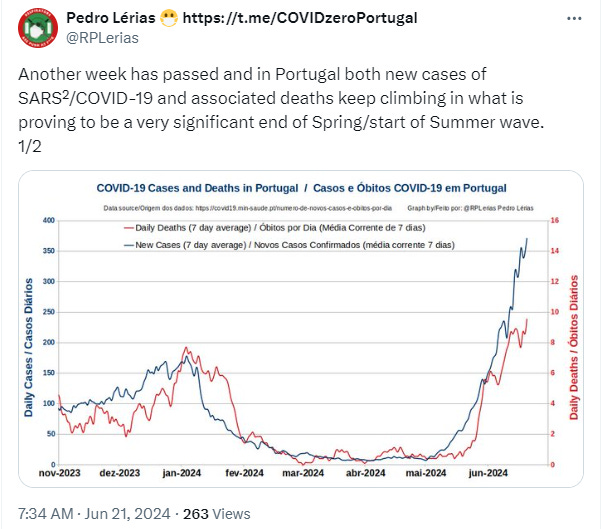
KP.3 and its subvariant KP.3.1.1 are causing increases in COVID in the western American states, as they also are causing waves in Spain, Portugal, Australia and other countries.

Portugal

From Pedro Lerias

In France, “figures from health authority Santé publique France show a 52% increase week-on-week in hospital emergency visits for Covid-related issues, and 51% more consultations with SOS Médecins (1,507 between June 3 and 10) - although numbers remain very low compared to during the pandemic.” The Paris Olympics will start on July 26th.

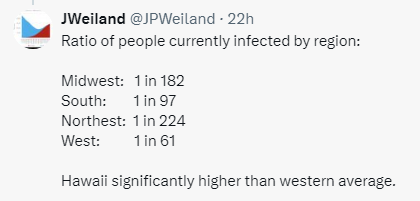
Across the United States, KP.3 cases increased from 16.9% to 25.9% to 33.1% over the last 3 weeks reported, while LB.1 went from 8.8% to 13.5% to 17.5%. According to JP Weiland, there are about 250,000 new COVID infections daily in the entire U.S. and approximately 1 in every 134 people is currently infected overall. But, there are large differences in different U.S. regions:

From https://x.com/JPWeiland/status/1804269671593411001

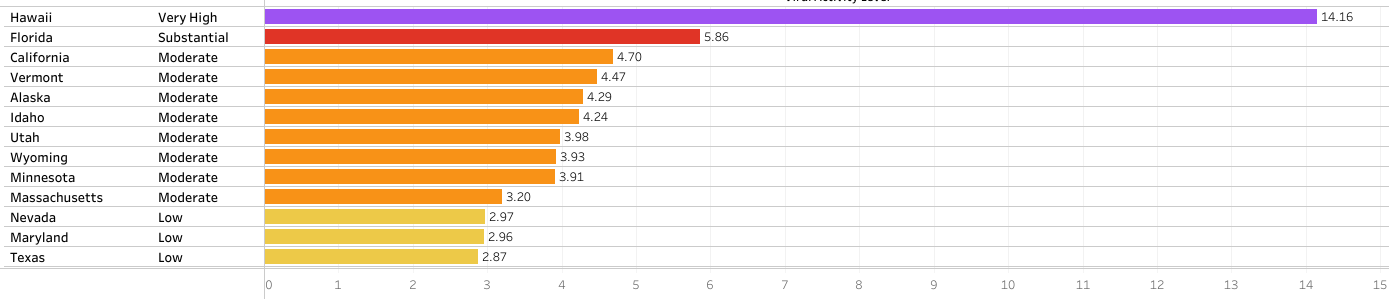
Hawaii is at its highest COVID case load since the Summer 2022 (BA.5 variant) as seen by emergency department visits and from SARS-CoV-2 wastewater levels. Hawaii had a smaller JN.1 wave last December and January. As of June 1, 2024, Hawaii wastewater levels of SARS-CoV-2 are still very high, followed by Florida, California and Vermont.

From: https://public.tableau.com/app/profile/sara.anne.willette/viz/USCompositeWastewaterData/NWSSData

Nationally, highest SARS-CoV-2 in wastewater in PMMoV is Ithaca NY (3455)!!!, followed by Honolulu (1741-2349), Harrison, AR (1257), South Parker, CO (1137), Sausalito (1076), New Orleans, LA (1048), Concord NH (1009), Orange County, FL (956), Key Biscayne FL (851), Oceanside San Francisco, CA (830.6), Bridgewater NJ (755), and Novato CA (653). I have never seen as high a wastewater virus level as Ithaca has now according to Wastewater SCAN.

In California, the top-third highest SARS-CoV-2 virus levels in PMMoV are in Sausalito (1076 PMMoV), Oceanside San Francisco (830), San Rafael (784), Novato (653), Half Moon Bay (639), Southeast San Francisco (592), Santa Cruz (561), Union City (556), Laguna Niguel (507), San Mateo (499), Redwood City (387). San Jose (336) and Palo Alto (264) are considered high for Santa Clara county, but they are in the middle-third of SARS-CoV-2 wastewater levels in the state. Marin county reports medium levels, but the wastewater is trending up in almost all places. Los Angeles County is at a very low level of SARS-CoV-2 in wastewater between only 43 to 64 PMMoV, but cases and COVID positive hospitalizations are just starting to trend up according to the Los Angeles Times.

Variants 

This week, Ben Murrell posted a graph of variants that have a growth advantage over others. The subvariant with the highest growth advantage is KP.3.1.1 which has an added S31 deletion to KP.3. According to Ryan Hisner, adding the S31 deletion adds a glycan to the spike protein which confers it its growth advantage. All of the latest variants include the F456L mutation, so it is good that the FDA approved KP.2 [JN.1 + F456L] for the fall 2024 vaccine. 

Graph from Ben Murrell, annotated by Ryan Hisner showing key mutations

Pediatrics

A review came out in Nature this week on the relationship between Type 1 diabetes mellitus (T1DM) and SARS-CoV-2 infection. Sweden reported a 62% increase in type 1 diabetes in 2022 as compared to 2018 before the COVID pandemic. Viral infections often precede a new diagnosis of type 1 diabetes which is an autoimmune disease that attacks the pancreas. Sweden did not enforce lockdowns early in the pandemic which allowed many people, including children, to be infected by COVID. Now, they will study if giving young children and babies COVID vaccinations can reduce the amount of Type I diabetes in children.

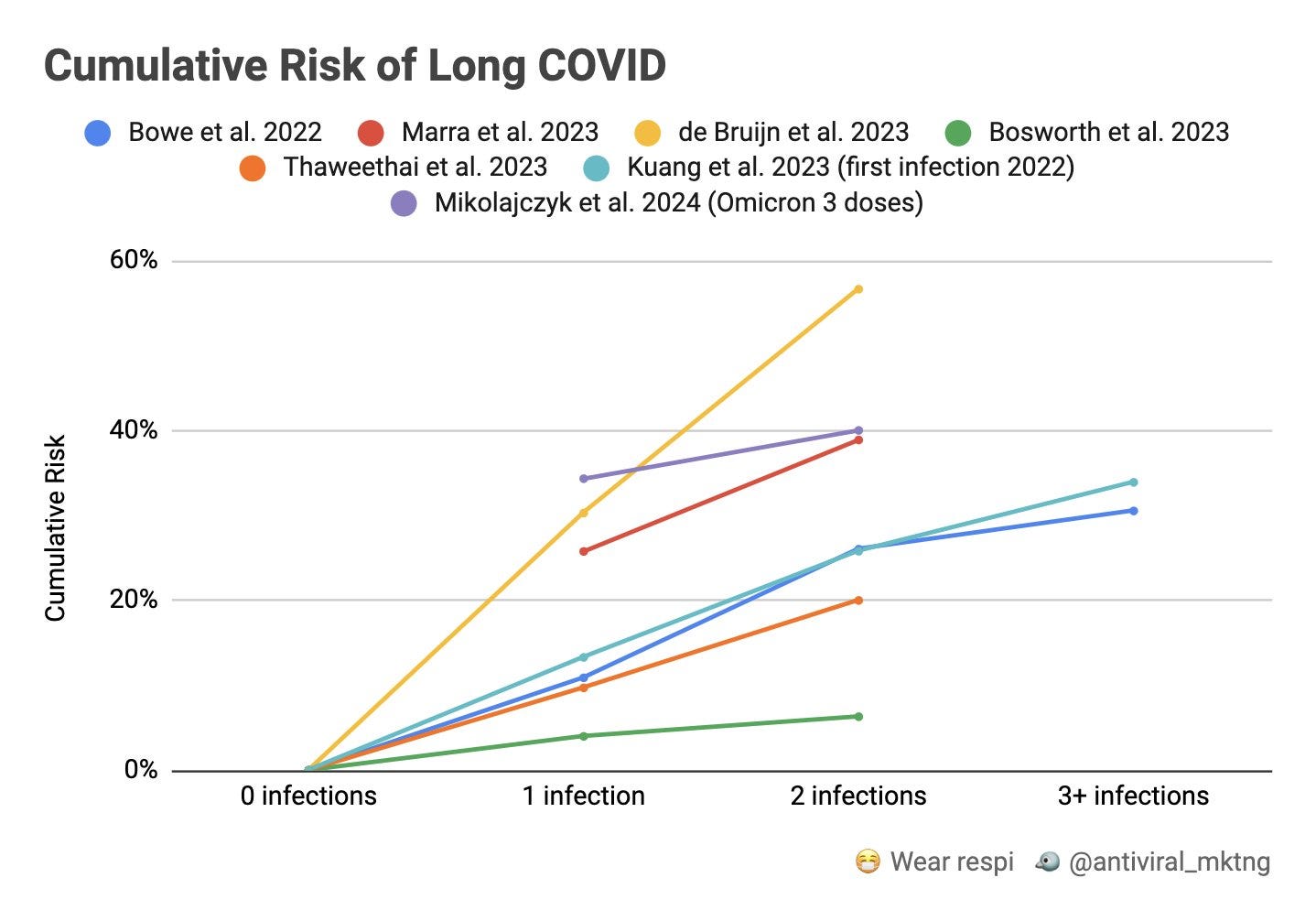
Two different articles in the lay press this week looked at children with Long COVID discussing the myth that a COVID infection is “harmless” for kids. They showed how families are being gaslit by the medical profession and how parents are sometimes blamed for their child’s Long COVID symptoms. The Guardian article looked at a 12 year old boy named Toby. For him, Long COVID brings pain, exhaustion and sadness as well as months away from school because he is so ill. Dr. Putrino from Mount Sinai in New York was interviewed. He said, "We looked at the acute phase and said, 'This doesn't seem so bad for kids', and we forgot about the cumulative risks over time." It doesn't matter how mild your acute COVID infection is, he says: "You have the same risk of developing long COVID. And I say 'cumulative' because the latest data shows us that with every reinfection, your risk of long COVID increases." 

Long COVID

Someone with the handle of Antiviral Mktng on Twitter made a chart of different studies that all show an increased cumulative risk of Long COVID from COVID reinfections

Autoantibodies in Long COVID

This week, a study from Dr. Putrino of Mount Sinai and Dr. Iwasaki of Yale showed that the passive transfer of autoantibodies from people with Long COVID into mice causes the mice to get the same symptoms as the Long COVID patients. This study confirms findings from the den Durren lab a few weeks ago that also showed that injecting mice with IgG antibodies from people with Long COVID caused them to get the same symptoms. 

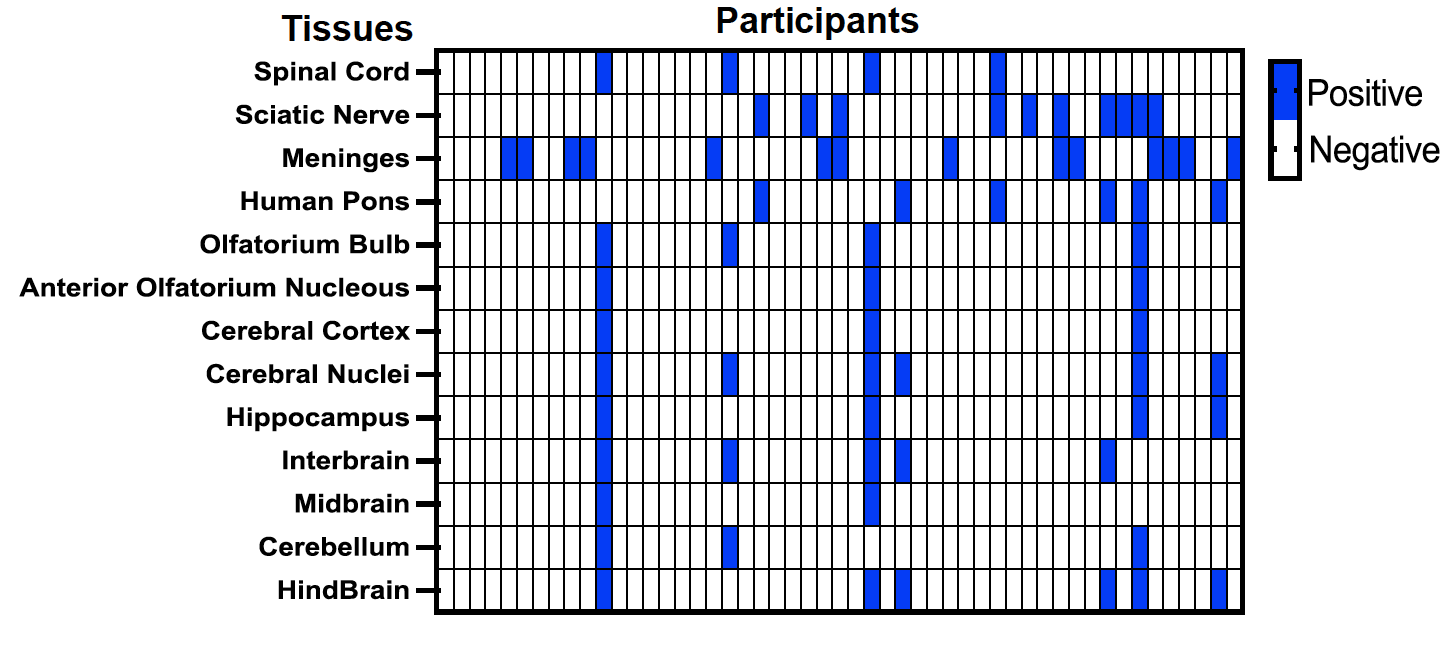
In the Mount Sinai-Yale study, they used a 21,000 protein array to identify which autoantibodies in people with Long COVID were related to their symptoms. Long COVID patients with cognitive impairment and neurologic symptoms were found to have autoantibodies to proteins in the nervous system including human pons tissue and to murine sciatic nerves, meninges and cerebellum. The pons is part of the brainstem that is important for balance and equilibrium, sleep, respiration, swallowing and facial sensation and movement. Patients with headache and disorientation were found to have autoantibodies to the sciatic nerves and to the meninges. The meninges are a triple layer of membranes that cushion and protect the brain and spinal cord.

Several Long COVID patients in this study were found to have autoantibodies that affected multiple areas throughout the central nervous system including the brain. Some Long COVID patients also had autoantibodies consistent with known autoimmune diseases.

From https://www.medrxiv.org/content/10.1101/2024.06.18.24309100v1

IgG antibodies from people with Long COVID associated with new pain syndromes (pins and needles, burning pain, and weakness) caused the mice to become very sensitive to pain as well. The mice showed a rapid reduction of intraepidermal nerve fibers (IENF) which is a marker for Small Fiber Neuropathy. Small Fiber Neuropathy (SFN) is a condition that affects the small sensory nerves in the skin and can cause “pins and needles” sensations and a burning type of pain that often starts in the feet. SFN may affect both sensory and autonomic fibers, leading to sensory changes, autonomic dysfunction, or a combination of symptoms. General symptoms of SFN include fatigue, cognitive disturbances, headache, and widespread musculoskeletal pain.

Tatiana Prowell brought up a good point about the findings in these studies. Medications used to treat autoimmunity often suppress the entire immune system. If Long COVID patients also have virus persisting somewhere in their bodies, it will be important to treat the persistent virus with antiviral medications and possibly monoclonal antibodies against SARS-CoV-2 before starting them on immunosuppressant medication for autoantibodies.

In a multisite prospective cohort study of 4708 people followed from April 2020 to February 2023, the median recovery time from a SARS-CoV-2 infection was 20 days, with more than 1 in 5 of adults not recovering by 90 days. With reinfections, median recovery time was longer at 27 days. “Recovery within 3 months was less likely in women and those with preexisting cardiovascular disease and more likely in those with COVID-19 vaccination or infection during the Omicron variant wave.”

Argenx announced this week that its Phase 2 clinical trial of Efgartigimod (VYVGART) in Long COVID POTS showed no significant improvement

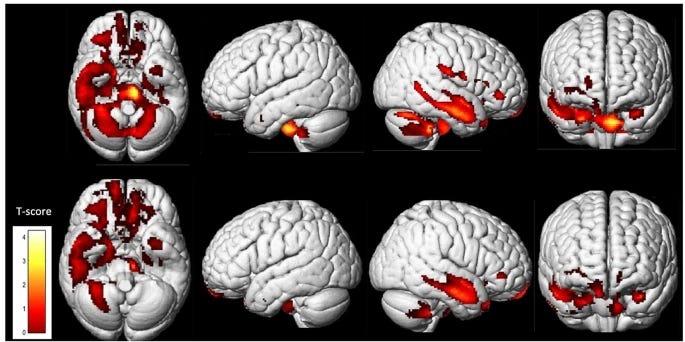
A group from Marseille studied Long COVID patients with persistent symptoms “related to a brain impairment (dyspnoea, hyposmia/anosmia, dysgeusia/ageusia, memory/cognitive impairment, insomnia, pain).” Using [18F]fluorodeoxyglucose (FDG)-PET scans of the brain, they found that Long COVID patients have reduced brain metabolism in the bilateral limbic areas, as well as in the brainstem, and cerebellum. The hypometabolism pattern remained stable and did not improve or worsen over 9 months time in patients who continued to have symptoms.

From https://link.springer.com/article/10.1007/s00259-024-06775-x

A poll from the Harvard T.H. Chan School of Public Health and the de Beaumont Foundation shows that although news coverage showed a deeply divided America regarding COVID mitigation strategies such as masking and healthcare worker vaccinations, 70% of Americans overall felt that these were a good idea. The poll did show some differences by race and by political party on the four main pandemic policies however.

This week, many people in the Long COVID community posted about an article that interviewed Dr. Phillip Alvelda, a strong critic of how the pandemic has been handled by both presidents and by government bodies like the CDC and the WHO. But, the interview brought up several important points. He discussed the increased risk of Long COVID and disability with each COVID reinfection. He also talked about the importance of assuring the best indoor air quality for schools, hospitals and businesses. In addition, Dr. Alveda spoke about an increase in traffic accidents and traffic fatalities since the pandemic began which brings up the question, "Is the increase in car accidents related to COVID's long term effects on cognition and motor function, or is it being caused by something else?”

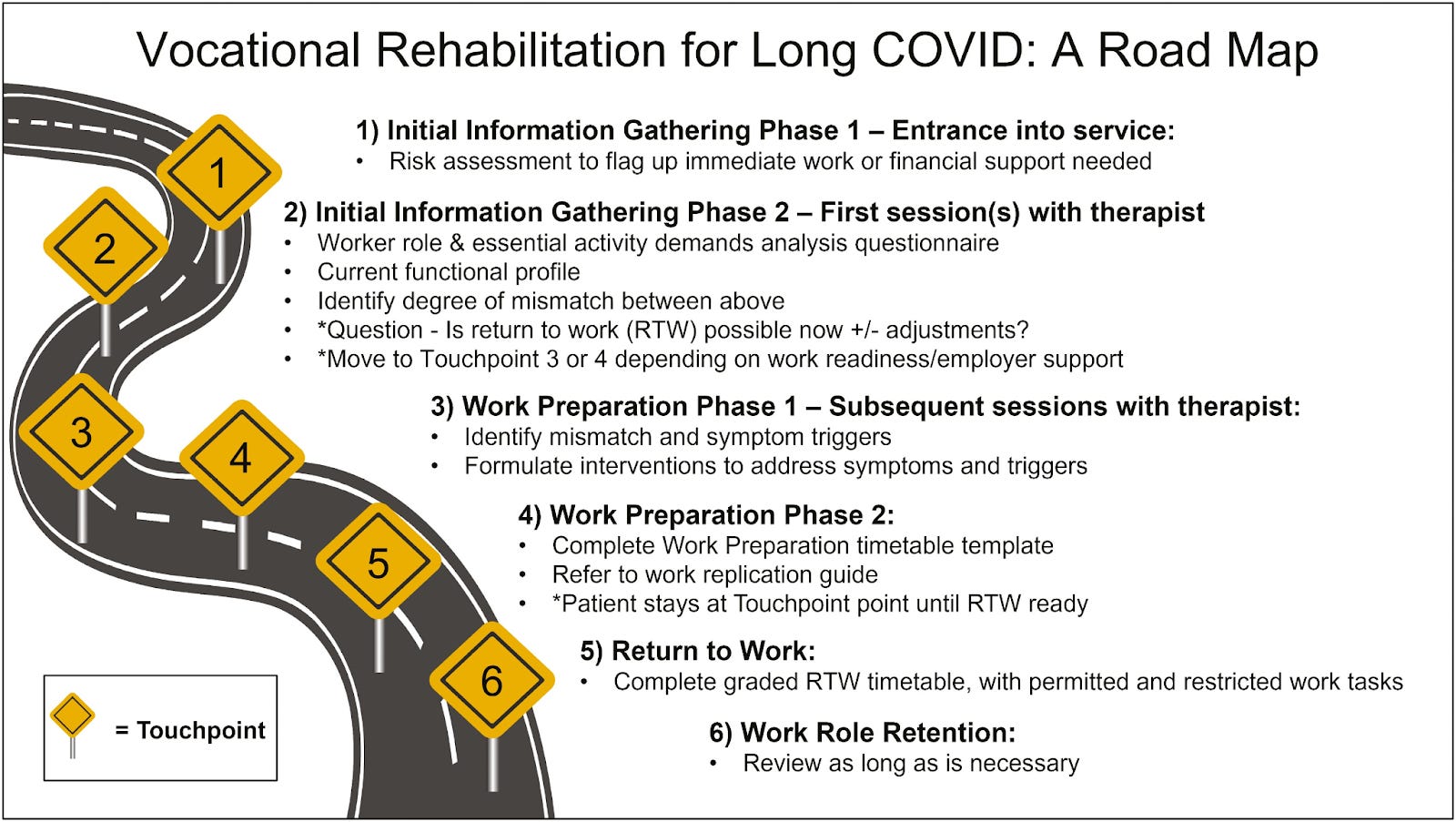
A group in the UK designed a stepwise plan of vocational rehabilitation to help people with Long COVID return to work. They said that this "roadmap resource has been developed to address many people’s experience of multiple poorly planned return-to-work attempts and inadequate adjustments."

From https://buff.ly/3z5zfo0

Other news

In a study of adolescent girls and young women in South Africa and Uganda, twice yearly Lenacapavir was found to be safe and highly effective for Pre-Exposure Prophylaxis ( PrEP) against HIV. No HIV infections were found in trial participants who received the Lenacapavir injections. 

This week, the Lancet presented six articles and a video on Gestational Diabetes which is “the most common medical pregnancy complication worldwide, affecting one in seven pregnancies.”

"The U.S. surgeon general, Dr. Vivek Murthy, announced on Monday that he would push for a warning label on social media platforms advising parents that using the platforms might damage adolescents’ mental health." 

Using functional MRI, symptoms, computerized testing and response to therapies, researchers at Stanford identified six biotypes of depression and anxiety. They hope that this will help “advance precision clinical care in psychiatry”.

The Epstein-Barr virus (EBV) causes mononucleosis, but it also is associated with several types of cancers including Burkitt lymphoma, gastric cancer, and nasopharyngeal carcinoma. A team from the University of Pittsburgh used CRISPR/dCas9-mediated EBV reactivation (CMER) in combination with antiviral ganciclovir to treat EBV-associated cancers in vitro with excellent results.

Virginia “Ginger” Hislop received a bachelor’s in education from Stanford in 1940, but World War II kept her from completing her master’s degree. After 80 years working in education, she finally received her master’s degree diploma in education from Stanford at the age of 105. Congratulations!

Photo: Charles Russo

Have a great rest of your weekend,

Ruth Ann Crystal MD