-------------------------------------------------------
Matt Willis, Aug 13, 2026
Covid-19 hospitalizations are climbing ahead of a murky vaccine rollout, West Nile virus is posting its worst numbers in 20 years, and California is holding the line on vaccine access while the White House backslides even further. We’ll start with Covid-19.
Covid-19 illnesses are ramping up
After
watching Covid-19 activity rise in wastewater through July, we’re
seeing impacts in emergency departments and hospitals. In the last week
of July, an average of 33 people were hospitalized with Covid-19
per day statewide. Hospitalizations have been steadily increasing, and
are projected to reach over 70 daily Covid-19 admissions by the end of
the month.
Virus levels in California have been upgraded from low to moderate in the national wastewater surveillance system (NWSS).
Covid-19 wastewater levels: California, August 2025 to now
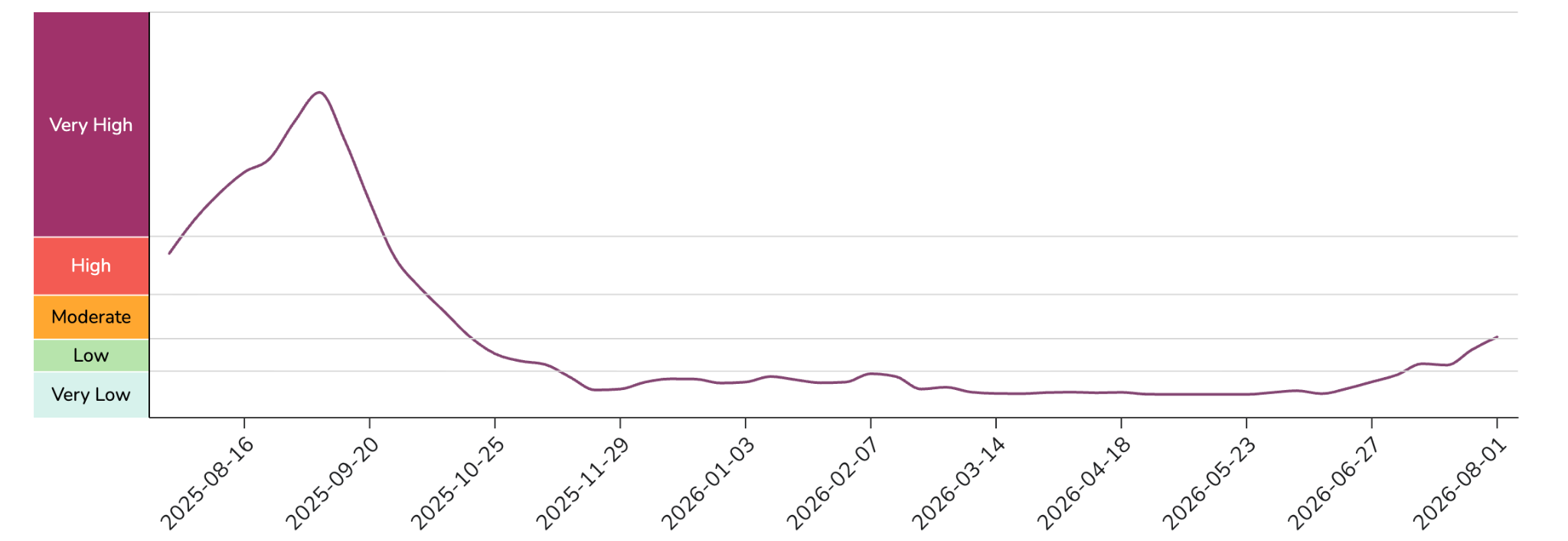
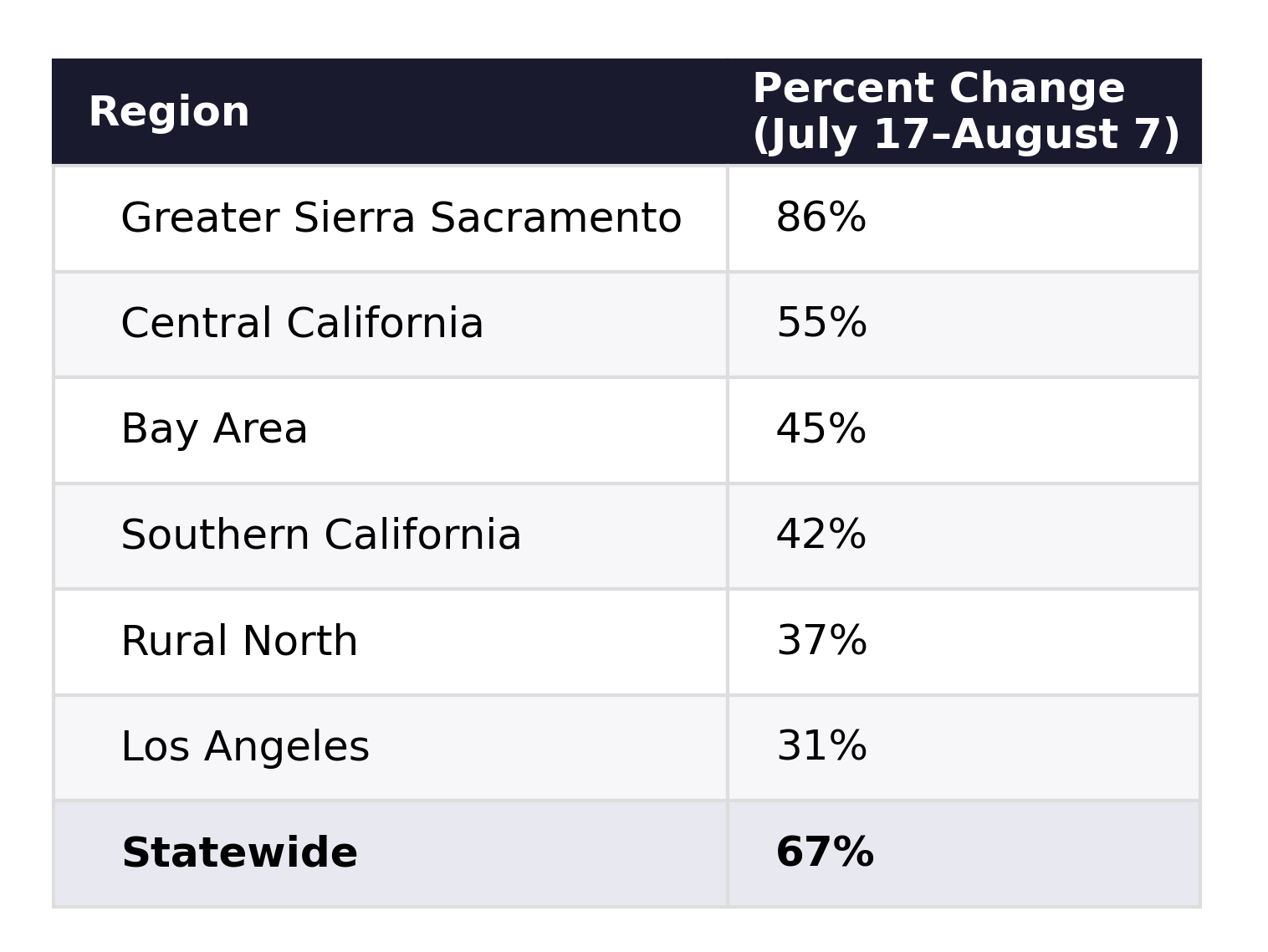
All California regions are seeing surges in virus activity, with the greatest rise in the central part of the state.
Where are the 2026-2027 fall Covid-19 vaccines? I’ve been looking for any sign of when the new vaccine will hit the market, and it’s been crickets.
This silence may be related to the uncertainty manufacturers feel this year. ACIP, the body that turns FDA approval into an actual recommendation, hasn’t met since December. ACIP was sued based on a lack of scientific basis for their changes to the childhood vaccine schedule, and won’t meet again until October 21–23.
The August 10
presidential executive order reinforced that the Covid-19 vaccine was
dropped from the universal recommendation list for kids and pregnant
women, and legal pushback is expected. So it’s kind of a mess at the
federal level, and that has a chilling effect on vaccine roll outs. I
expect we’ll know more by the end of the month.
Should you get vaccinated now?
I recommend that if you’re at risk for more serious illness, go with
the bird in hand and get the current vaccine. The likelihood of being
exposed when you’re out and about is rising daily. You can find a shot
near where you live in California at MyTurn.
Masks: We’re going to see more people using masks out there, and that’s a good thing. These days mask choices are about personal protection, and a well fitted N-95 type mask is highly protective against infection.
For
anyone at higher risk for serious disease, or if you’re really focused
on not getting Covid-19, its a good time to brush off the mask and
consider wearing it in indoor public spaces when the virus is
circulating at high levels. For me, we’re not there yet, but I’ll
continue to provide updates on virus activity to guide your decisions.
West Nile virus update
West Nile virus numbers are rising fast, and California has now recorded its first deaths of the season.
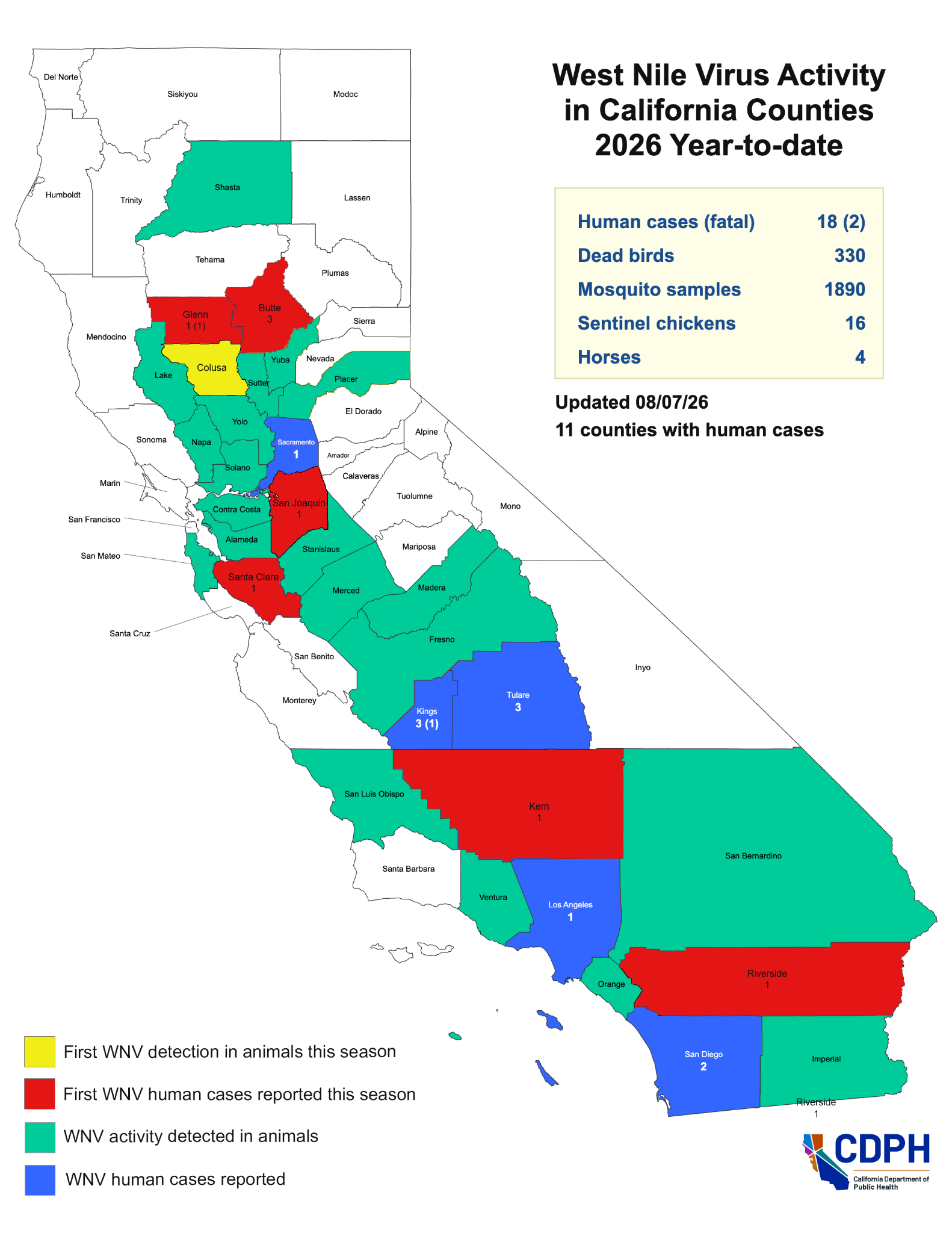
Here’s how the numbers have changes since my last WNV post. Since July 26:
Human cases: 5 → 18 (11 counties) — including two deaths, in King and Glenn counties. This was Glenn county’s first WNV death ever. New first cases for this season were reported in Glenn, Kern, Riverside, and San Joaquin counties.
Dead birds: 251 → 330 (20 counties).
Mosquito samples: 1,001 → 1,890 (27 counties)
Sentinel chickens: 2 → 16 (6 counties), including a first detection in Colusa County.
Horses: 1 → 4 (4 counties), including a first case in Merced County.
This map shows WNV activity in California, calling out the counties where first detections in humans or animals happened between July 26 and October 7.
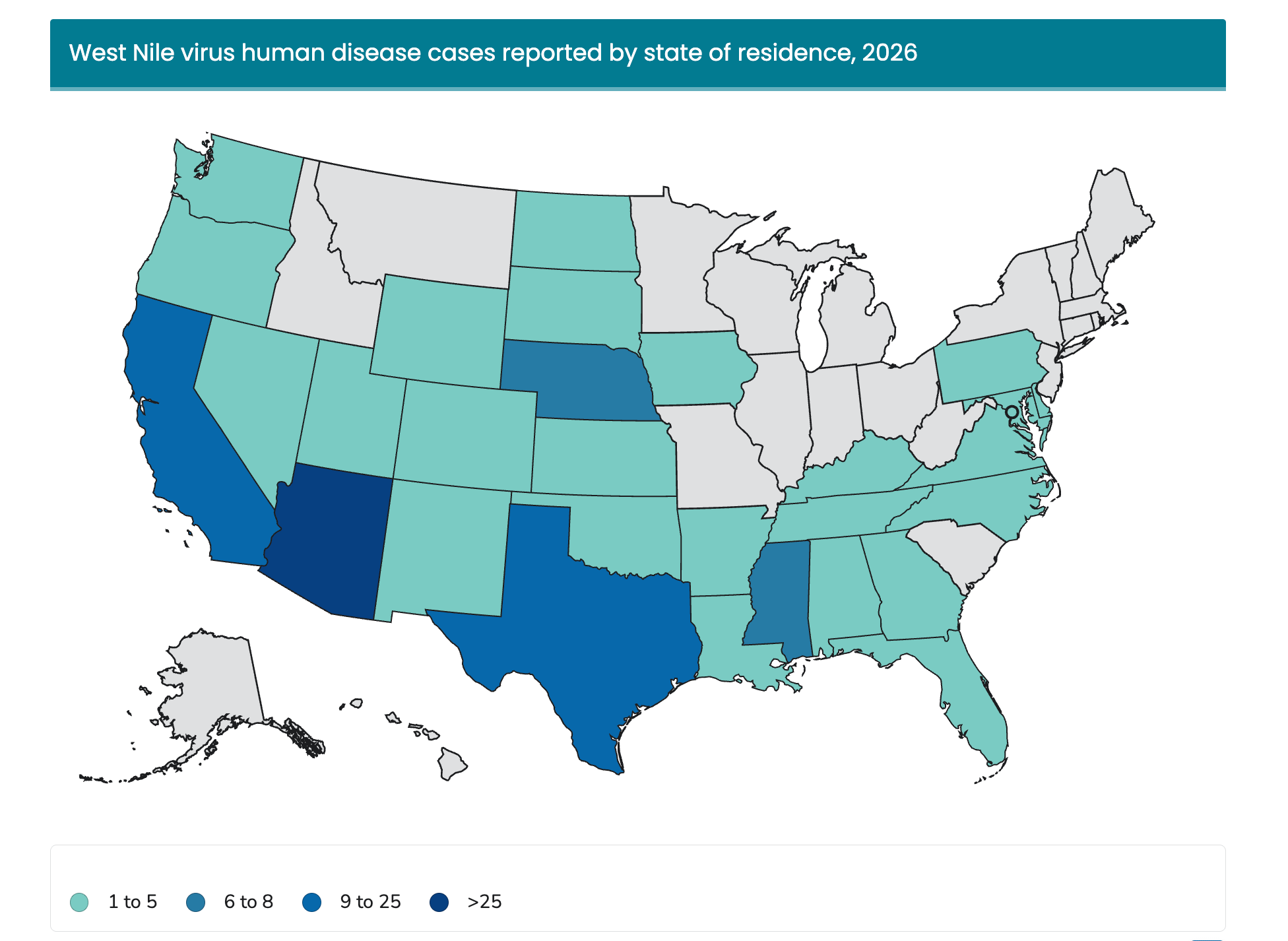
18 WNV cases is more than twice the average for this time of year in California—peak season is still ahead of us. The national case count has climbed from 91 (July 21) to 181 (August 11), the highest in 20 years.
California is one of five states with elevated WNV activity.
Why is this a severe year for WNV? There’s no formula for predicting year to year variability in West Nile burden. But temperature plays a major role.
This past winter and spring in California were among the hottest on record. Normally, in colder winter months, a fraction of mosquito populations die off. This year more made it through the warmer winter—and into a record hot spring. Higher temperatures accelerate reproduction for both mosquitoes and West Nile virus. The warming climate contributes to the burden of West Nile virus in California.
Sentinel chickens. In the last two weeks, WNV detection in sentinel chickens jumped from 2 to 16. It’s worth describing what a sentinel chicken actually is. I see them as unsung surveillance heroes. They’re out there right now, stationed in coops strategically placed around the state, getting bitten by whatever mosquitoes happens by. They’re naturally immune to WNV, and build antibodies after being infected. Local vector control workers draw a bit of chicken blood every week or two to see what’s shown up. They’re an inexpensive, low tech and critical part of our infectious disease intelligence system.
What you can do:
Report dead birds. Call 1-877-WNV-BIRD (1-877-968-2473)—they’ll decide whether to send someone to retrieve and test the bird.
Prevent bites. Dump standing water around your home at least weekly (flowerpots, pet bowls, old tires, anything that collects rain or hose runoff), make sure screens are intact, and use an EPA-registered repellent during dawn and dusk, when Culex mosquitoes—the species that carries WNV—are most active. There’s no vaccine and no treatment for WNV, so avoiding the bite is the best protection.
California’s vaccine firewall
On
Monday, President Trump signed an executive order that recommends
immunizations for 11 diseases, down from the 18 the CDC recommended in
2024. Vaccines against RSV and hepatitis A and B would shift from
universal recommendation to something offered only to higher-risk kids,
and the order calls for the combined MMR shot to be split into three
separate injections given at separate visits.
Does the presidential EO matter? I’d
love to ignore it, because these presidential guest appearances into
the world of science are predictably unscientific, designed to get
attention, and carry less practical relevance for us in California (more
on that later). And an executive order isn’t even the legal mechanism
to impact vaccine policy in the U.S.—this one is already being
challenged. But it’s not benign.
Once again, this roils the national vaccine waters and leaves people feeling confused about what it all means— just as we’re preparing to get our kids back to school. So here’s what to know about this week’s executive order.
First, this is not new rhetoric. The president is just putting more ink behind the changes RFK Jr announced months ago — disruptions that are intended to unravel the U.S. childhood vaccine schedule. Those changes were challenged by the American Academy of Pediatrics, and have not gone into effect as the lawsuit unfolds. The EO does not change that.
Second, the EO is not feasible, even
if it were good science. (It isn’t.) The divided MMR vaccine doesn’t
exist in the U.S.—it wasn’t manufactured and distributed in the U.S.
because it makes too much sense, practically, economically, and
scientifically to be protected against three terrible diseases with one
shot.
Third, the EO does not change California’s immunization recommendations or school and child care vaccination requirements.
Last, and most important, California saw this coming and built protections.
Last
year, when it became clear the federal science steering wheel was in
reckless hands, California moved fast to get some distance.
In
September the governor signed AB 144, a bill to insulate us from
eroding federal health standards. AB 144 locks in, as a floor, the
preventive-care and immunization recommendations that were in effect on
January 1, 2025—before RFK Jr.’s vaccine overhaul.
Health plans in California must keep covering vaccines, without any new disruptions—no cost-sharing, and no extra paper work or permissions. That extends to Medi-Cal, which can cover childhood vaccines outside the federal Vaccines for Children program for lower income families.
Regional support. California also joined the West Coast Health Alliance, with Oregon, Washington, and Hawaii, to hold solid, science-based regional standards. Across the West Coast, instead of being stuck with federal recommendations, our vaccine access is tied to the guidance of the American Academy of Pediatrics, the American College of Obstetricians and Gynecologists, and the American Academy of Family Physicians. All of which reliably stick to the science, and focus on what’s best for their patients.
So what does a California family need to know before school starts?
Nothing has changed. The same vaccines, in the same formulations, on the same schedule, are still recommended for California kids. Access hasn’t budged—not through your pediatrician, not through your insurance, not through Medi-Cal. Because AB 144 already grounds us in a pre-RFK Jr. baseline, and in the professional societies’ evidence-based guidance.
We’re benefiting from state public health and elected leaders who read the moment a year ago. While the federal vaccine conversation lurches from lawsuit to lawsuit, California families can tune it out and get the shots they need.
Bottom line
That’s it for this week! Next week we’ll focus on getting kids safely back in school.
Love,
Matt
Dr.
Matt Willis is the author of Your Local Epidemiologist in California. A
California native, he’s served as a primary care physician, CDC
epidemiologist, and public health officer for Marin County, where he
guided the pandemic response. He lives in Marin with his family and
their dogs Teddy and Ramona.
A special thanks to
Emely Bonilla, Masters in Public Health candidate at UC Berkeley and
summer intern at YLE, for her contributions to today’s edition.


.jpg)
No comments:
Post a Comment