As always, Dr. Ruth Ann Crystal has compiled an amazing amount of information and statistics to help us navigate COVID and other diseases.
-----------------------
Dr. Ruth Report, 9/20/26
COVID in the air of 98% of airport samples, Gut dysbiosis tracks Long COVID onset, Bezisterim helps Long COVID subgroup in Phase II, Kennedy renews vaccine attacks, HHS delays kids' COVID shots.
The current COVID wave may have peaked. Mike Hoerger estimates that 1 in 92 people in the United States is currently infected with COVID. However, in many places, the risk is much higher. For example, in Texas 1 in 25 people is infected, in California 1 in 27 people, and in Nevada and Mississippi 1 in 17 people is infected with COVID as of September 5. On the interactive PMC19 map, you can look up wastewater levels for SARS-CoV-2 by county. If a county is in burgundy, it means that >1 in 30 people are infected with COVID.
The updated COVID vaccines are available in pharmacies. Being physically inactive or having asthma qualifies a person for the vaccine. See the Vaccines section below for more information. It is important to layer protection against COVID (and other viruses) especially during periods of high levels in wastewater. Using KN95 or N95 masks, air filters, and testing, as well as staying home when you are sick can protect you and others from COVID and other viruses.
Acute COVID infections, General COVID info
Airport air sampling captures COVID, influenza viruses | CIDRAP 9/17/26
“Air sampling at four US airports in 2023 and 2024 detected SARS-CoV-2, the virus that causes COVID-19, in over 98% of samples and influenza A in over 17%.” Influenza levels were found during flu season, but COVID was noted year round.
Original study: Multimodal genomic surveillance for respiratory pathogens at four U.S. international airports: A comparison of air, wastewater, clinical, and national surveillance data | PLOS Global Public Health 9/9/26
Progressive Post-Acute Gut Microbiome Disruption Following SARS‑CoV‑2 Infection in Mice | bioRxiv 9/19/26
“This study demonstrates that SARS-CoV-2 infection produces a series of long-lasting alterations across the gut microbiome, extending beyond the period of acute viral replication in the lung. Microbial and functional pathway analyses across multiple time points revealed a trajectory of progressive dysbiosis over a period that coincides with the development of PCC [Long COVID] symptoms… Microbiome-targeted interventions, such as prebiotics and probiotics, may thus aid in recovery from COVID-19, mitigating the risk of PCC and improve immune resilience.”
Secreted ORF8 reprograms macrophages to enhance SARS-CoV-2 infection of lung epithelial cells | Science Advances 9/18/26
Scientists from the Gladstone Institutes discovered that the SARS-CoV-2 protein ORF8 triggers macrophages to upregulate ACE2 expression, effectively turning these immune cells into additional targets for viral infection. In mouse models, disrupting ORF8 signaling lowered viral loads while also decreasing both lung inflammation and fibrosis, suggesting this protein may be a viable therapeutic target. “Blocking the interaction between ORF8 and IL-17RA stops the cycle of macrophage infection, death, and inflammation that is at the root of this problem.”
Explainer article: How a Single Viral Protein [ORF8] Hijacks Immune Cells to Supercharge COVID-19 Infection | Gladstone Institutes 9/19/26
Pediatrics
Post-acute symptom persistence following SARS-CoV-2, RSV, and influenza in children | OVID 9/11/26
A retrospective cohort study shows that more than 1 in 5 children experience post-viral illness after infections with RSV, SARS-CoV-2, and influenza. “While overall post-acute prevalence was comparable [21 to 24%] across the 3 viruses, symptom profiles differed markedly: RSV-related post-acute morbidity was dominated by respiratory and feeding difficulties in young infants; SARS-CoV-2 predominantly produced neurocognitive and systemic complaints in school-aged children; and influenza was characterized by sustained systemic symptoms.”
Immunocompromised
Convalescent plasma for persistent symptomatic COVID-19 infection in immune-suppressed patients – a case series | Infectious Medicine 9/2026
A study of 23 immunosuppressed patients with prolonged symptomatic COVID infection found that combining convalescent plasma with antiviral therapy led to clinical improvement in 22 of those patients. Improvements were observed across multiple measures of disease severity including fever, supplemental oxygen requirements, and markers of systemic inflammation.
Vaccines
A New COVID Vaccine Is Here (Without Much Fanfare). When Should You Get It? | KQED 9/15/26
“In the absence of any federal guidelines, the California Department of Public Health issued its own recommendations on Friday about who should absolutely seek out the new COVID-19 shot. State health officials’ strongest recommendations are for everyone age 65 and older, those with risk factors that increase their chances of getting severe COVID-19, pregnant people, children age 6 to 23 months and healthcare workers.” The updated vaccine protects against the main variant circulating now.
Covid-19 vaccines delayed for about half of US children as access through federal program stalls | CNN 9/17/26
Three weeks after the FDA approved updated COVID vaccines, the CDC has yet to open ordering through Vaccines for Children, a program covering about half of US kids. HHS says procurement decisions are being finalized, leaving states and families waiting.
New NIH research center on vaccine harms takes shape | Science 9/15/26
The National Institutes of Health (NIH), under RFK Jr, is establishing a research initiative called MOSAIC to investigate persistent symptoms that some individuals experience following vaccination, drawing on both clinical records and genomic data. “Clinical researchers will probe complications that can arise after immunization, but some worry about political influence.”
Effectiveness of 2025 bi-annual COVID-19 vaccination campaigns against hospitalisation in England | medRxiv 9/18/26
The UK Health Security Agency analyzed over 41,000 spring and 35,000 autumn hospital tests and found that 2025 COVID vaccines delivered peak protection against hospitalization at 5 to 9 weeks post vaccination. The JN.1 spring vaccine reduced hospitalization risk by 55% and the KP.2 autumn vaccine by 48% at that peak window, with effectiveness declining thereafter.
Association of mRNA SARS-CoV-2 vaccination with fatigue and functional recovery in patients with post-acute sequelae of COVID-19 (PASC) | Expert Review of Vaccines 9/18/26
Hannover Medical School in Germany conducted a retrospective study of 174 Long COVID patients, finding that among 148 matched participants, mRNA COVID vaccination showed no association with greater fatigue or reduced exercise capacity across a 3 to 6 month follow up period. Vaccinated and unvaccinated patients alike demonstrated measurable improvement in outcomes over time.
Antiviral treatments
Structural basis of diverse antibody recognition of conserved coronavirus spike S2 epitopes that contribute to protective immunity | bioRxiv 9/16/26
Researchers isolated the S2 antibody ch.007 from a 71 participant cohort of COVID convalescent donors and found that despite minimal neutralization of SARS-CoV-2 in laboratory cell cultures, mice treated with ch.007 survived COVID infection with no detectable live virus remaining in the lungs. When the antibody was modified to eliminate its binding to Fc receptors, the protective effect was completely abolished, indicating that immune cell engagement rather than direct viral neutralization drives the observed protection.
Long COVID
BioVie Announces Topline Results from Phase 2 ADDRESS‑LC Trial Evaluating Bezisterim for the Treatment of Neurological Symptoms Associated with Long COVID | BioVie Press Release 9/15/26
Finally, some hopeful news. Bezisterim is an oral, small molecule that can cross the blood-brain barrier and acts as an anti-inflammatory insulin sensitizer by binding extracellular signal-regulated kinase (ERK). According to BioVie, it selectively inhibits inflammation driven by ERK, NF-κB, and TNF-α without disrupting their homeostatic functions. It is being tested in Alzheimer’s disease, Parkinson’s disease, and Long COVID brain fog and fatigue.
This week, BioVie reported that in a 203-participant Phase 2 trial, bezisterim did not outperform placebo in the entire Long COVID population. However, pre-specified Long COVID subgroups with elevated fatigue, post-exertional malaise, and/or cognitive impairment showed statistically significant improvements on multiple outcome measures with bezisterim. These benefits will be tested in a Phase 3 trial before conclusions about clinical benefit for Long COVID can be made.
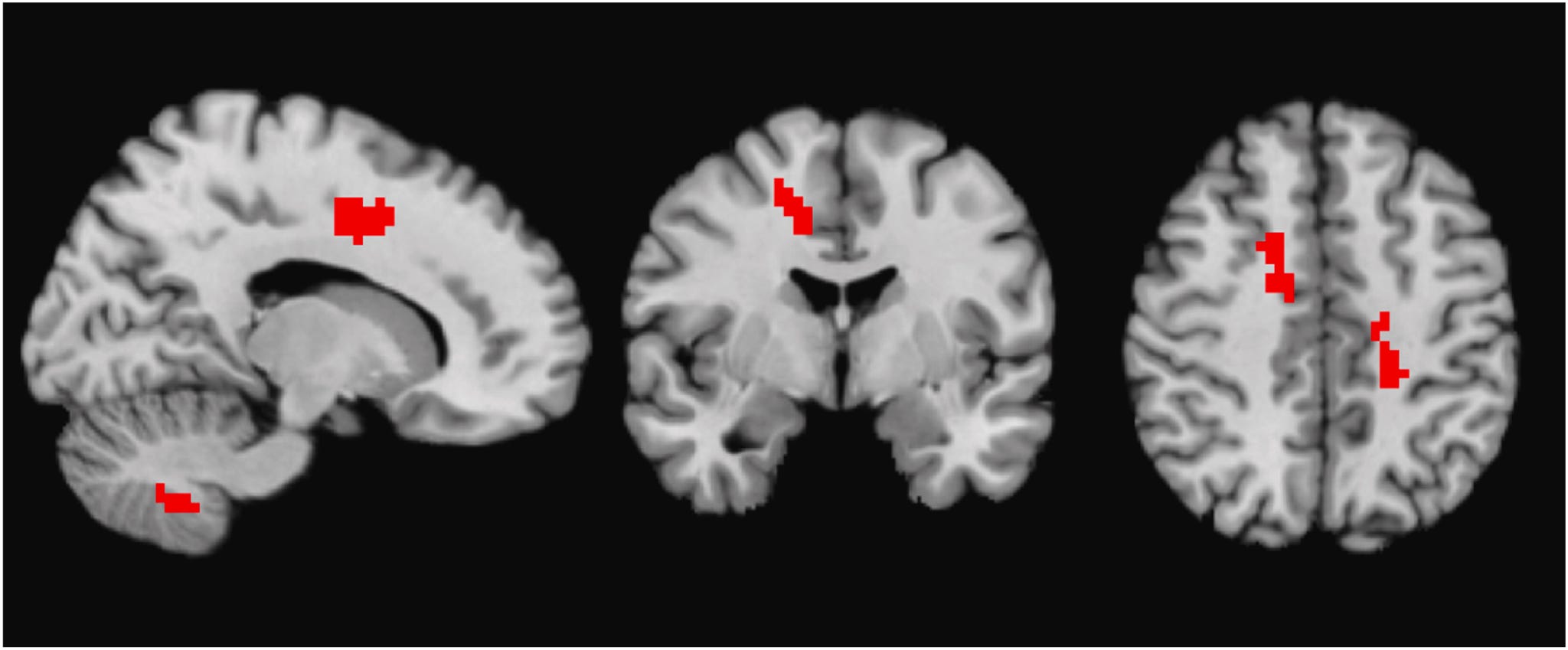
🧠 Cognitive fatigue is related to reduced cerebral perfusion and sustained attention in patients with post COVID-19 condition: An fMRI study | NeuroImage: Reports Dec 2026 (9/12/26)
A team from the Karolinska Institutet in Sweden scanned 22 adults with Long COVID and 19 matched controls using fMRI during a 20 minute vigilance task. Those with Long COVID had lower overall brain blood flow, with significantly lower blood flow in brain regions including the right inferior occipital gyrus, left postcentral gyrus, and the right middle cingulate cortex. Long COVID patients had slower and more variable reaction times, and a significant increase in self reported fatigue (p = 0.004).
Fig. 3. Group differences in cerebral blood flow (CBF) between Long COVID patients and controls
Haptoglobin Phenotypes Stratify Post-Exertional Cognitive Dysfunction Associated with Altered Cerebral Oxygenation and Metabolic Signatures in Long COVID | Int J Molec Sci 8/4/26
Haptoglobin genotype may help stratify Long COVID patients. In a study of 44 people with Long COVID versus 20 recovered controls, Hp2 carriers showed worse fatigue, physical function, and post-exertional symptoms than Hp1-1 individuals. Hp1-1 carriers showed higher post-exertional cerebral oxygen extraction in the right hemisphere, while Hp2 carriers had distinct metabolic shifts, including lower citric acid, isethionate, and glucosamine, linked to weaker cognitive performance.
Long COVID’s brain fog finally has a biological explanation: Dopamine loss | Fortune 9/14/26
Fortune magazine reported on this Canadian study from July 2026 showing evidence of dopamine system injury in the brains of people with Long COVID.
Fatigue Among Adults Age 18 and Older: United States, 2024 | CDC National Health Statistics Reports 9/3/26
The CDC National Center for Health Statistics, drawing on data from 31,917 American adults, found that the share of people experiencing frequent fatigue increased from 13.5% in 2022 to 16.6% in 2024. Among those affected, more than half reported difficulties across three or more areas of daily functioning and 36% faced limitations in their ability to work. It sounds like these people could have Long COVID, even if they don’t realize it.
A Systems Microbiology Framework for Reproducible Multi-Dataset Omics Integration with Application to Long COVID | Frontiers in Systems Biology 9/19/26
Researchers from the Netherlands examined 394 samples across 5 datasets and identified a reproducible 7 gene signature associated with Long COVID. “ The value of this result lies not in the novelty of individual genes, but in the reproducible emergence of a coordinated immune–metabolic expression pattern across datasets. Dysregulation of IL6R, SOCS3, and ARG1 is consistent with sustained cytokine signaling and compensatory immune suppression, while reduced ECHS1 expression points to altered mitochondrial fatty acid oxidation, a feature reported in post-viral fatigue and inflammatory syndromes.”
Functional plasticity of the olfactory network following functional septorhinoplasty in persistent COVID-19-related olfactory dysfunction: an fMRI study | medRxiv 9/17/26
Researchers at University College London found that 8 patients with persistent COVID related smell loss showed measurable brain network plasticity following nasal surgery. Patients who gained greater nasal airflow after the procedure demonstrated increased activity specifically in the orbitofrontal cortex and frontal olfactory regions, suggesting the brain can reorganize its smell processing circuits when sensory input is restored.
Measles
As of September 17, 2026, 3,471 confirmed measles cases were reported in the United States in 2026.
Four unvaccinated people have died of measles in Pennsylvania (2 babies died in August, and a teen and an adult died in September), but the CDC still has not posted any measles deaths to their website for 2026.
According to Reuters, the CDC “is reevaluating” how it classifies measles deaths.
Pennsylvania Department of Health Measles Dashboard
767 measles cases with 93 new cases in the last 7 days
20% hospitalization
4 measles deaths
California health department notifies of measles exposure from unvaccinated Amtrak passenger | KTVU 9/19/26
The California Department of Public Health (CDPH) notified the public after an unvaccinated Amtrak passenger who is now hospitalized with measles, exposed riders to measles while traveling by train and bus across the United States and through six California counties between September 12 and 14. Health officials urge anyone who may have been exposed to check their MMR vaccination status and watch for fever or rash through 21 days after exposure.
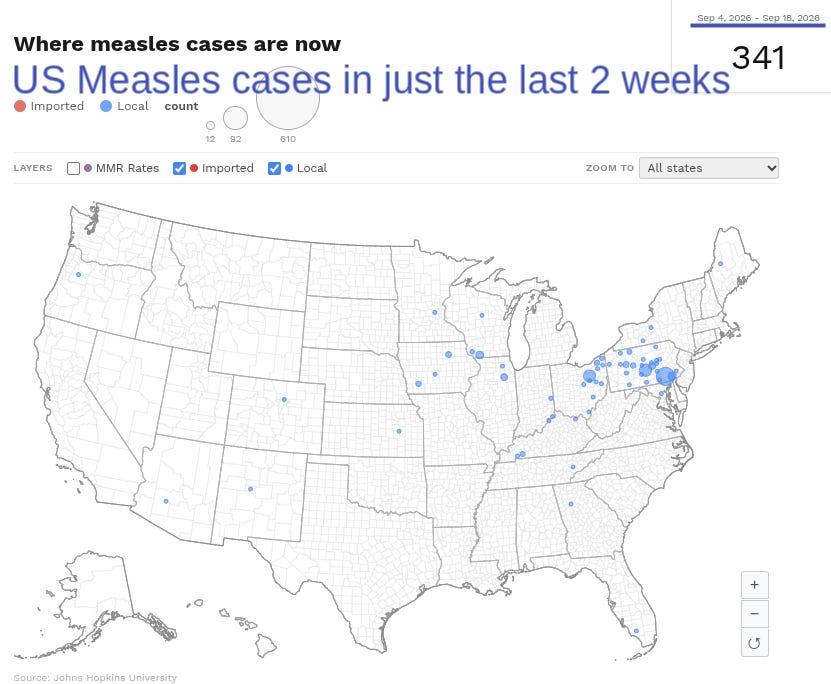
Johns Hopkins US Measles Tracker:
There have been 3,568 measles cases in the United States in 2026, including 341 new cases in the last 2 weeks.
Ebola in Democratic Republic of Congo (DRC)
Sept 18, 2026 DRC Ebola Update:
The tally reports 7,614 confirmed Ebola cases, including 1,864 recoveries and 3,676 deaths. 909 patients are in isolation or hospitalized, and contact tracing has reached 87.8%.
Government Health News
RFK Jr. headlines sold-out anti-vaccine conference alongside Andrew Wakefield | Ars Technica 9/14/26
Health and Human Services Secretary Robert F. Kennedy Jr. delivered a keynote address at a conference hosted by Children’s Health Defense, the anti-vaccine group he once led. He appeared alongside Andrew Wakefield, the doctor stripped of his medical license after a fraudulent, retracted study falsely linking the MMR vaccine to autism. Kennedy cast doubt on vaccine safety and suggesting, without evidence, that vaccines underlie chronic illness, and told the group he will “stay in this fight.” The appearance came amid the worst U.S. measles outbreak in decades, one driven largely by unvaccinated people.
White House Moves to Take Control of N.I.H. Grants | NY Times 9/20/26
White House officials are drafting an executive order that would let an outside panel veto NIH grants conflicting with Trump’s political agenda, escalating tension between OMB director Russell Vought and NIH director Jay Bhattacharya. The move follows Trump’s frustration over stalled pressure on Harvard and comes amid ongoing lawsuits over NIH grant terminations and free speech.
In a waste of money, the Pentagon announced mandatory low-testosterone screenings for male troops age 30 and older.
Other news
EBV reactivation priming of the peripheral immune system in Multiple Sclerosis relapse | Nature Medicine 9/17/26
Researchers at Brigham and Women’s Hospital studied 135 participants and found that B cells displayed elevated Epstein Barr virus LMP1 RNA, increased gp350 positive cells, and expansion of CD11c positive age associated B cells weeks to months before a multiple sclerosis (MS) relapse occurred. These findings establish that EBV reactivation within B cells precedes clinical MS attacks, connecting viral activity and genetic susceptibility as upstream drivers of disease flares.
An adult proteomic signature associated with very low birth weight and chronic disease risk | Med (Aghaeepour lab) 9/16/26
People born at very low birth weight (VLBW, <1.5 kg) have elevated risks of chronic disease as adults. A new study from Stanford used machine learning to identify a proteomic signature for VLBW which outperformed birth weight at predicting 370 adult diseases. The signature also tracked adult diseases in people born at normal birth weight, showing that it may have a much broader relevance, but further studies and external validation are needed.
Liquid biopsy for early detection of pancreatic ductal adenocarcinoma | Nature Medicine 9/16/26
In a prospective study, the PANXEON exosome-based biomarker, a blood test combining a 10-miRNA signature with CA19-9, was tested in 1,785 people across four countries. “When combined with carbohydrate antigen 19-9 levels, this blood assay demonstrated a sensitivity of 86.8% for stage I–II PDAC, false-positive rates of 3.2% in low-risk controls and 15.6% in high-risk controls in the testing cohort.”
‘Stomach bugs’ send protective immune cells rushing from gut to brain | Nature 9/17/26
University of Cambridge researchers discovered that intestinal infections in mice triggered CD4+ T cells to migrate from the gut to the borders of the brain, where the cells established durable immunological memory. Upon reexposure to the same pathogen, these resident immune cells mounted a rapid defensive response, suggesting the gut and brain share a coordinated long term protective mechanism.
Anti-seizure drug fights aggressive childhood brain tumors, Stanford Medicine-led study shows | Stanford Medicine 9/17/26
Levetiracetam (Keppra), an existing anti-seizure drug, slowed diffuse midline glioma (DMG) tumor growth in mice by cutting the tumors’ electrical connections to healthy neurons. Children with these tumors who received Levetiracetam also lived longer per retrospective review of medical records. The team is planning clinical trials.
Original study in Nature:
Levetiracetam therapeutically targets GABAergic synapses in diffuse midline glioma | Nature Medicine (Monje lab) 9/17/26
Levetiracetam blocked GABAergic synaptic signals from neurons to diffuse midline glioma (DMG) cells, slowing tumor growth in mice. The effect was tumor-specific and does not act through the drug’s seizure-control mechanism. Hemispheric gliomas like glioblastoma did not respond to the medication.
Surgeon draws cartoons on kids’ bandages to make the experience less scary | CNN 1/18/20
Pediatric surgeon Dr. Robert Parry hand-draws original illustrations on his young patients’ bandages after procedures. Disney characters and sports logos are the most popular requests, and parents say the gesture really eases some of the stress for kids around surgery.
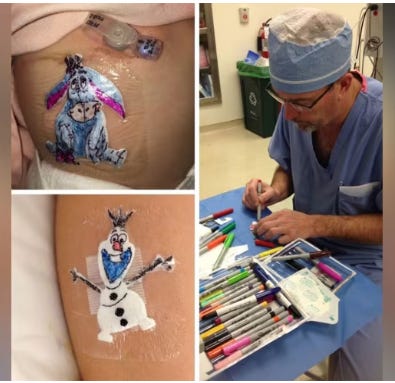
Photo: Akron Children’s Hospital
Have a great week,
Ruth Ann Crystal MD


No comments:
Post a Comment