Here's the latest issue of The Dose newsletter from Your Local Epidemiologist, Katelyn Jetelina:
------------------------------------------------
Respiratory increasing, while Covid-19 peaking? Also, the air after 9/11 killed more than the actual attack
The Dose (Sept 15)
Katelyn Jetelina, Sep 15, 2026
I’ll be honest: everything feels small next to the massive conversation that has unfolded in the past week about AI potentially wiping out humanity. It’s terrifying on so many levels. (I’ll be back soon with a deep dive into where public health and AI intersect.)
But I wrote this post anyway. And I did it not because these topics are the most urgent to all of humanity, but because they’re actionable and predictable in a moment that feels increasingly unpredictable. I hope it helps you feel a little more in control, at least of your health and the health of those around you. There are things we can do, even if they feel small.
Let’s dig in.
Disease “weather” report Respiratory viruses are increasing right on schedule
If you or your child is feeling crappy, you aren’t alone. Bugs are starting to take hold because of weather changes and social factors. (Hello, schools!)
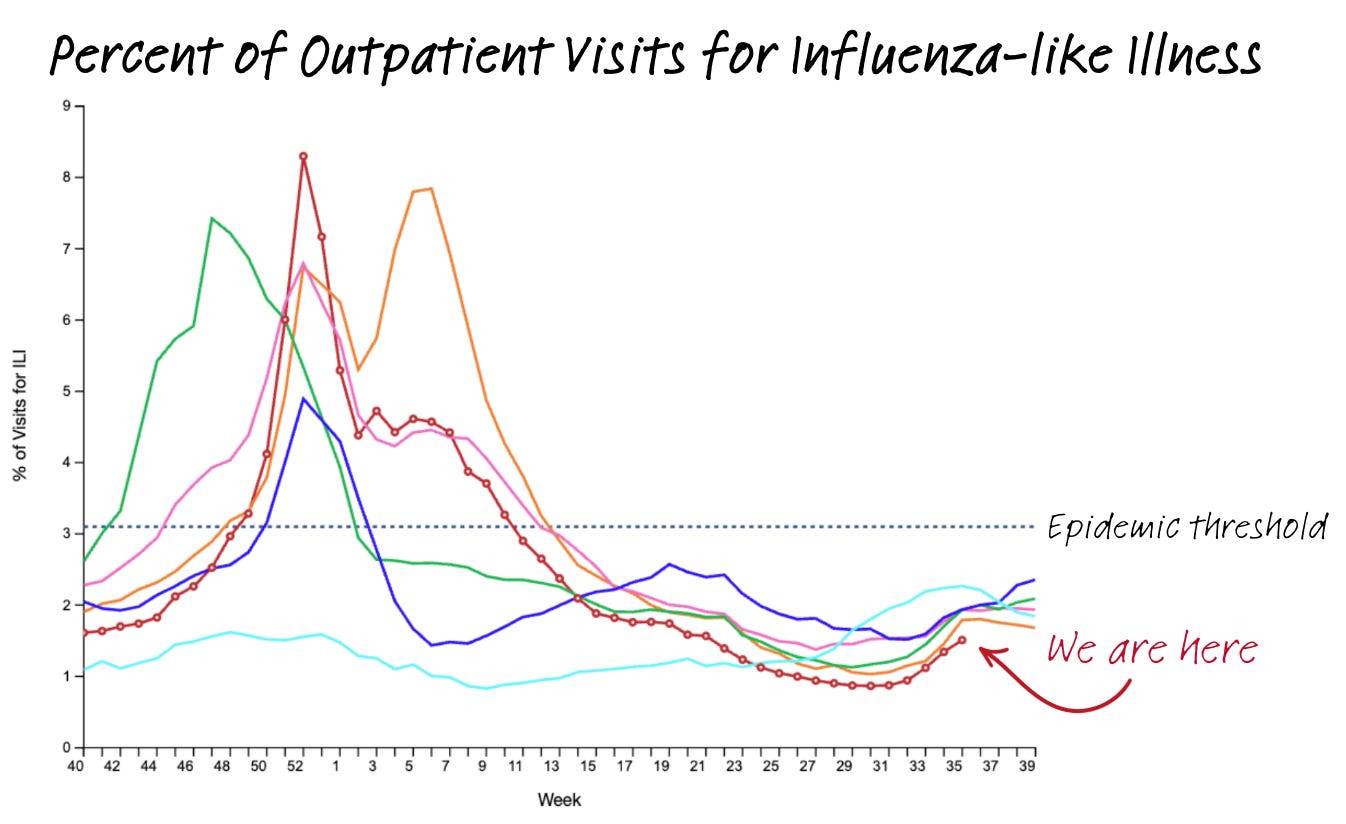
One way to track respiratory illnesses is by monitoring “influenza-like illness” (ILI). Each week, clinicians report the number of patients they have seen with symptoms such as fever, cough, or sore throat. The resulting data gives communities a snapshot of how much illness is spreading. I’ll be keeping a close eye on this throughout the next few months.
Right now, ILI is ticking up, but it’s still well below the epidemic threshold that marks the start of “respiratory season,” which typically hits in October.
If we look at what tests clinicians are ordering and what’s turning up positive, there are two main classes of viruses driving sickness right now:
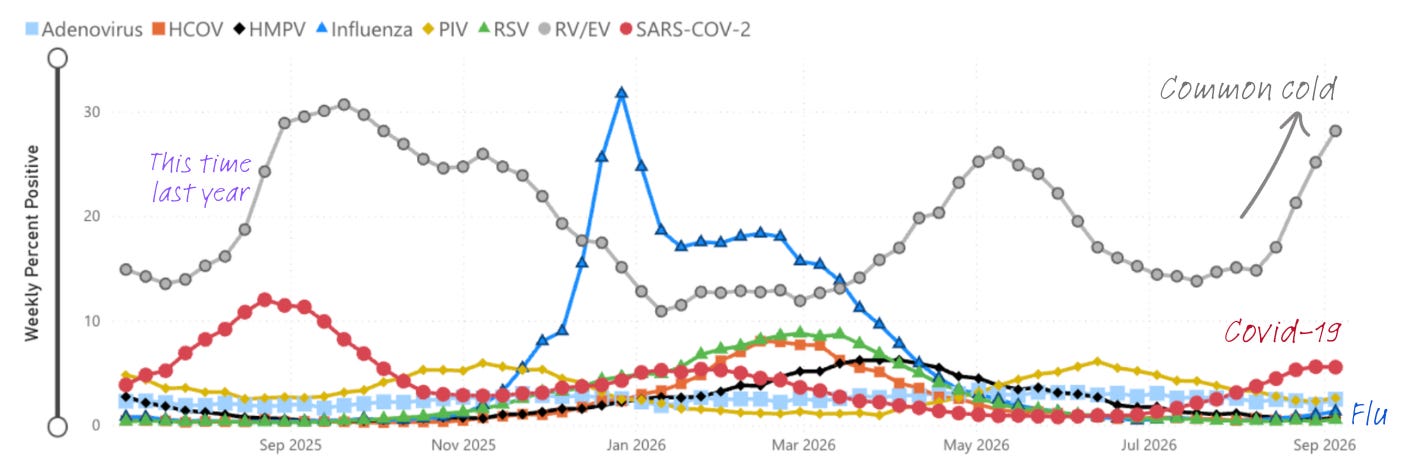
The common cold is surging
It’s rising at a much higher rate than anything else. (See graph below.) That’s typical for this time of year as kids head back to school and our little petri dishes start mixing again.
Covid-19 may now be peaking
You will also notice in the graph above that Covid-19 is the second-highest respiratory virus. We are clearly in a wave, but there are early signs it’s starting to peak. For example, wastewater levels in three regions (the South, Midwest, and Northeast) all appear to be now turning downward.
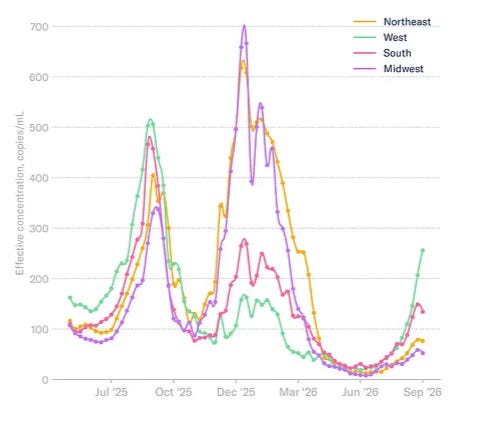
What’s really interesting is that the West is not peaking, yet it was the first to start increasing. This highlights an interesting regional pattern we have seen emerge over the past few years:
The West, like California and Hawaii, has bigger waves in summer than in winter. This also happens in other coastal countries, like Australia and New Zealand.
Northeast states have by far bigger waves in winter than in summer.
It’s not clear why. Typically, respiratory viruses peak in winter due to humidity, weather, and human behavior. Clearly, something else is happening with Covid-19. It's still a new virus, so it may still be finding its footing.
What this means for you: Updated Covid-19 vaccines are now licensed by the FDA and should be available—if not now, then very soon.
Here is the YLE guide to fall vaccines and, most importantly, the ideal timing for each.
Measles keeps spreading, leading to another death
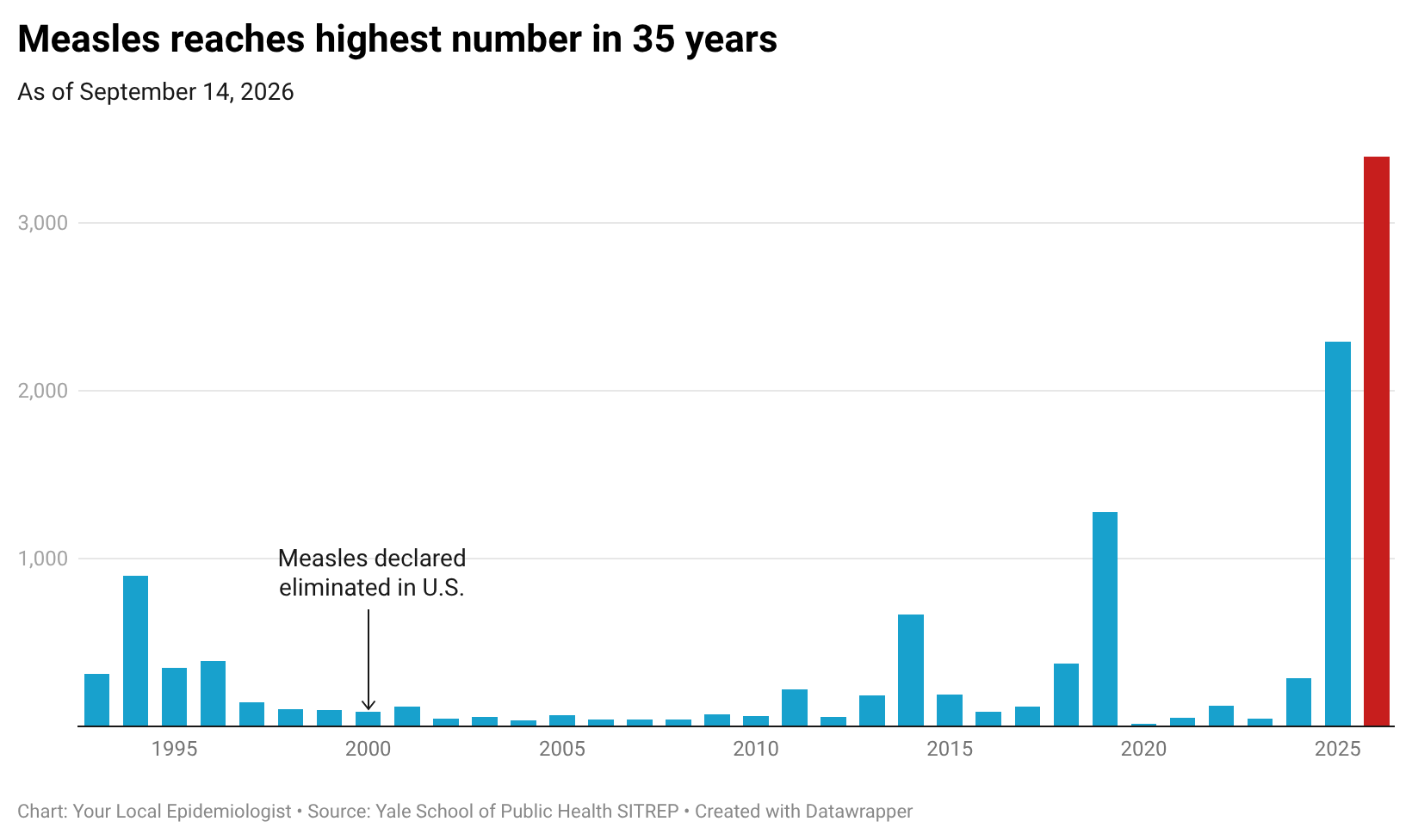
Measles usually peaks in winter and early spring, so it’s odd to be having a surge in summer, but here we are. Nationally, the U.S. is now at ~3,300 confirmed cases in 2026, already well above the total for all of 2025.
Pennsylvania is racking up cases fast, with 676 total as of about mid-September and over 100 new cases in a single week. The third measles-associated death also occurred in this state this year: a 40-year-old unvaccinated woman in Jefferson County. This followed two deaths associated with measles in Lancaster County in late August. CDC has yet to update its website on deaths, which is just atrocious. (ICYMI: see my recent post on measles deaths.)
Ohio has a state total of 133 cases for the year
Wisconsin has grown from 61 cases on August 25 to over 160.
What this means for you: If you’re fully vaccinated, you’re very well protected. Infants in and around outbreak areas can receive the vaccine as young as 6 months. Talk to your doctor.
Spotlight: 9/11 is a reminder that health extends beyond the initial disaster
Marya packed up her violin, took the subway, and set up in the shadow of a crane at Ground Zero to play music. She was part of Music Givers, a group of volunteer musicians who performed for exhausted first responders months after September 11, 2001. What she didn’t know was that breathing in that air, day in and day out, was slowly penetrating her lungs. She was eventually diagnosed with lung cancer. She died in October 2019.
If you’re like me, you’ve been completely engaged with 9/11 documentaries, stories, and conversations this past week. The horrific event shaped our lives, culture, and international relations—and for more than 400,000 people, it affected health.
How do we know it impacted health? Unfortunately, we didn’t learn it from the officials on the ground at the time. That’s clear from the over 170,000 pages of internal 9/11 air-quality records, which show that officials knew the air was dangerous.
Thankfully, a little-known public health program was put together: the federal World Trade Center Health Program.
What does the program do?
The WTC Health Program provides health monitoring and treatment for people impacted by 9/11, and had enrolled 104,223 members by 2020. This breaks down to 76,543 responders (people involved in rescue, response, recovery, cleanup, and related support activities after the attacks) and 27,680 survivors (people present in the dust or dust cloud on 9/11 or who worked, lived, or attended school, child care centers, or adult day care centers in the NYC disaster areas).
When a member receives certification from the WTC Health Program, it means the program has officially determined that the member’s condition is likely connected to 9/11 exposure. Once a condition is certified, the member can then get program health benefits. It doesn’t mean 9/11 exposure was the only cause of that person’s illness, just that it was likely a significant factor. Over time, this program has also funded more than 300 peer-reviewed publications on post-9/11 health effects.
What have we learned?
In the last batch of data from the program (2012-2020), CDC found:
About 1 in 2 people had a health condition certified by the WTC program, and the rate increased over time.
On average, certified members held about 2.7 condition certifications each.
1 in 8 had a cancer certification. The most common cancers were skin, male genital, breast, and digestive system cancers.
1 in 5 had a noncancer certification, like reflux disorder, obstructive airway disease, and PTSD.
What this means for you: When there is a disaster, it’s important to take long-term effects as seriously as the initial event.
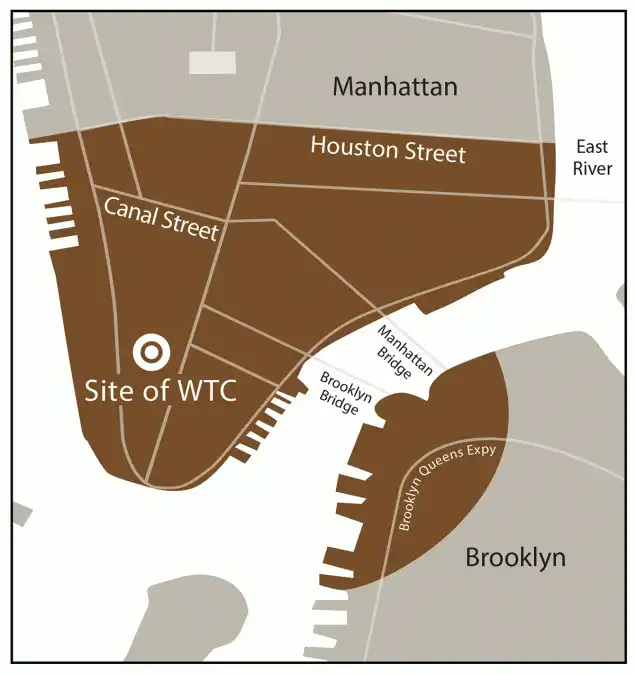
For 9/11, specifically, many, many people don’t know they’re eligible for the WTC Health Program. Eligibility includes:
360,000 building occupants and others in the area
91,000 rescue/recovery workers and volunteers
57,00 residents south of Canal Street
15,000 children and staff in schools south of Canal Street
Check here to see if you qualify and register.
Good news
Medical societies close the vaccine guidance gap left by federal dysfunction. With ACIP sidelined in legal limbo, the Vaccine Integrity Project and the AMA ran an independent evidence review of 69 flu, 155 Covid, and 75 RSV studies, publishing the findings in JAMA and finding no new safety concerns. Four major societies (AAFP, AAP, ACOG, IDSA) then released aligned fall guidance on a coordinated schedule, all posted together on a new AMA site, SpreadTheFacts.org. Getting that many medical organizations to move in lockstep is incredibly hard, so the coordination itself is noteworthy. It’s one clear message instead of fractured signals, right when federal guidance has been anything but clear.
A pig kidney bought a man nine months of life without dialysis. He then received a human donor kidney, which took hold immediately and has functioned well since, with no sign that the pig kidney made the second transplant any harder. It’s the clearest proof that pig organs could serve as a “bridge” for patients stuck waiting years for a human kidney, at a time when demand for organs badly outstrips supply.
Bottom line
A lot of things feel out of control lately, but there are things we can do as individuals to improve our health and help things feel less heavy. I hope this helps. Will be back with more soon!
Love, YLE


.jpg)
No comments:
Post a Comment