It seems whenever there is a gathering like a birthday party or even a funeral, there's often a mass shooting. What is wrong with these psychopaths? There needs to be harsher penalties, and I don't mean taking guns away. Treat these shootings as terrorist attacks, because that's what they are, and treat the shooters like the terrorists they are. No fake mental illness excuses should be accepted. And anyone who kills children, as in this case, should get an automatic death sentence.
Happy occasions like birthday parties shouldn't have to end with funerals.
"Four people were killed and 11
others were hospitalized following a shooting at a California banquet
hall where a family was hosting a celebration Saturday night,
authorities said.
"Gunfire
erupted shortly before 6 p.m. at the location on the 1900 block of
Lucile Avenue in the city of Stockton, San Joaquin County Sheriff’s
Office spokesperson Heather Brent said at the scene.
"Brent characterized the event as a family celebration. Jason Lee, vice mayor of Stockton, said in a statement that the violence erupted at a children’s birthday party.
"Brent
said the victims included children and adults. Those who were killed
were ages 8, 9, 14 and 21, the sheriff's office said Sunday.
“It’s unfathomable that there were young children that were harmed,” she said.
"The
exact conditions, ages and genders of those who were injured were
unavailable, and sheriff’s investigators were working on identifying the
gunman, the sheriff’s spokesperson said.
“This may be a targeted incident,” Brent said. “Our No. 1 priority right now is identifying the suspect in this incident.”
"It
was unclear whether the gunfire originated inside or outside the
banquet hall, she said. The FBI, Stockton police and other law
enforcement agencies were assisting with the investigation, Brent said.
"San
Joaquin County District Attorney Ron Freitas vowed that the community
will have "the full force of my office’s resources" in holding the
personal responsible accountable.
"Let
this ring perfectly clear, in San Joaquin County, violence of this
nature has absolutely no place at any time, shape or form and children
should not be harmed by gun or gang violence," Freitas said.
"The office of California Gov. Gavin Newsom said on X that he’s been briefed
on the “horrific shooting” and that the Governor’s Office of Emergency
Services is coordinating with law enforcement as it monitors the
situation."
"December 1-5, 2025 is National Influenza Vaccination Week (NIVW),
an important reminder that as long as flu viruses are circulating, it
is not too late to get vaccinated. Even when flu vaccination does not
prevent infection completely, it can help protect against serious
flu-related complications, including hospitalization and death.
"The National Foundation for Infectious Diseases (NFID) has compiled
resources from NFID and partner organizations that can be used during
NIVW and throughout the season to help raise awareness about the
importance of flu prevention and treatment:
Wild to Mild
"Flu vaccination is the best defense against the worst symptoms of flu. NFID is proud to offer the popular Wild to Mild
sharable graphics and animations (in English and Spanish) to encourage
everyone age 6 months and older to get an annual flu vaccine, especially
pregnant women, young children, and others at higher risk. The more
people vaccinated against flu, the more people are protected from flu.
Antivirals Can Help You Feel Better Faster
"Even with immunization, breakthrough infections can occur—and that’s
where antiviral medications can play an essential role. Share these graphics and videos on your social media channels to help raise awareness about the importance of treating flu with antivirals.
The Flu Is Serious
"Are you that person? The one who goes out in public with flu? These animated videos (in English and Spanish)
focus on flu symptoms and the importance of prevention and timely
treatment, reminding viewers to get an annual flu vaccine and stay home
when sick to help protect themselves and those around them.
#GiftOfHealth Holiday Memes
"Share these NFID holiday memes
(in English and Spanish) and sample social media posts to encourage
followers to share holiday cheer, not flu, during the holidays.
Flu and Chronic Health Conditions
"Flu is not a game,
especially for those with chronic health conditions—including heart
disease, lung disease, diabetes, and kidney disease—which put them at
higher risk of serious flu-related complications. Share these NFID videos to help spread awareness, not disease!
Partner Resources
"The American Lung Association’s #FightFlu social media toolkit
provides sample social media posts, graphics, and hashtags to raise
awareness about flu and the benefits of vaccination during NIVW and
throughout respiratory season.
"Families Fighting Flu is turning NIVW into National
Influenza Vaccination WEEKS (NIVWs). Join them in spreading the message
on the importance of flu vaccination during the first 2 weeks of
December. Download their social media graphics, add your organization’s logo, and share throughout NIVWs! And check out their Kaden Blaze resources, inspired by the true story of a courageous boy who survived a serious flu infection.
"Immunize.org offers an influenza toolkit
with clinical resources for healthcare professionals and educational
materials for vaccine recipients to remind everyone that getting an
annual flu vaccine is a critical step toward protecting your health this
winter.
"Winter is coming. The Vaccinate Your Family#RootedInProtection Campaign toolkit offers easily sharable information to answer questions about flu and other respiratory viruses that spread this time of year.
"We The People Vax offers tools and resources to raise awareness about the patriotism of vaccination. Download their winter holidays social media campaign to remind everyone to vaccinate before you celebrate!
Leading By Example
"Now more than ever, it is vital that the public health community
speaks with ‘one strong voice’ on the importance of infectious disease
prevention. Organizations can join the NFID Leading By Example initiative, and individuals can download #FightFlu paddles and share photos/videos on social media to encourage everyone age 6 months or older to get an annual flu vaccine.
"Know of other valuable tools and resources focused on raising awareness about the importance of annual flu vaccination? Share updates so we can help spread the word …
"To join the conversation and get the latest news on infectious diseases:
I wasn't at all surprised when I read that "Dr." Vinay Prasad is the one who has come up with this new protocol and is spreading misinformation about vaccine deaths. He's making sure that vaccines are more difficult to get. So much for public health!
"The leading vaccine regulator at the Food and
Drug Administration (FDA) has announced a far stricter course for
federal vaccine approvals, following claims from his team that Covid
vaccines were linked to the deaths of at least 10 children.
"Experts suggest the announcement will make the vaccine approval process significantly more difficult.
"Dr Vinay Prasad, whose vaccine policy direction has been supported by the US health secretary, Robert F Kennedy Jr,
told FDA staff that the agency would rethink its approach to
vaccination programs, according to an internal agency email circulated
on Friday and later obtained by several media outlets.
"Prasad
said the agency plans to re-examine annual flu-shot policies, consider
limits on simultaneous vaccinations, and require more robust safety and
efficacy data from pharmaceutical manufacturers before approval.
"The internal memo reportedly stated that a recent
review determined at least 10 children had died “after and because of”
receiving a Covid vaccine. Prasad noted that these deaths appeared tied
to myocarditis, or inflammation of the heart muscle.
“This
is a profound revelation,” Prasad wrote in the memo to staff members.
“For the first time, the US FDA will acknowledge that Covid-19 vaccines
have killed American children.”
"He also wrote
that new rules would impose tight restrictions on vaccines for pregnant
women, marking another significant change in the agency’s approval
framework.
“I remain open to vigorous
discussions and debate,” Prasad wrote, reportedly adding that staff who
did not agree with the core principles of his new approach should submit
their resignations.
"A PBS NewsHour correspondent first reported on the memo’s contents in a post on X. The New York Times
noted that the document did not include identifying details such as the
children’s ages, any existing health conditions, or how the causal
relationship between vaccination and death was determined. The vaccine
manufacturers involved were also not named.
"Dr
Paul Offit of Children’s Hospital of Philadelphia, who reviewed the
memo, told MedPage Today that it’s a “dangerous and irresponsible thing
to do”.
“[Prasad] says he has evidence that
this vaccine killed 10 children, but that’s not the way it works,” Offit
said. “If you think you have an extraordinary claim, you should back it
up with extraordinary evidence. He should have submitted it to an
excellent journal where it can be reviewed by subject matter experts who
can say ‘Yes, this is clear evidence,’ then it can be published. That’s
the way it works.”
"Prasad’s predecessor, Dr Peter Marks, who led the FDA division throughout the pandemic, told the New York Times that
he was taken aback by the “clearly political tone of the communication”
and noted that the case reports of child deaths needed to be further
investigated.
“I would not be surprised if the
attributions turn out to be debatable, as these cases are often quite
complex,” Marks told the Times after reading the memo.
"Current
and former FDA staff, as well as outside public health specialists,
said the new plan could dramatically slow the vaccine pipeline,
according to the Washington Post.
Requiring far larger studies before granting approvals, they said,
could delay product launches and make companies more cautious about
developing or expanding vaccines and may discourage innovation in
vaccine research.
"Additionally, Prasad’s
insistence on re-evaluating whether multiple vaccines should be given
together could upend years of established federal guidance. The
immunization schedule of the Centers for Disease Control and Prevention
(CDC) currently recommends giving multiple childhood vaccines at the
same medical visit. It also encourages adults to receive several shots
for respiratory viruses, including the flu, Covid and RSV, during a
single appointment for convenience.
"Dr Kathryn
Edwards, a vaccine expert and professor emeritus at Vanderbilt
University in Nashville, Tennessee, told MedPage Today that the
“determination of the cause of death in cases that are temporally
related to vaccine administration is a very difficult task”.
“Saying
definitively that a vaccine caused a death requires careful assessment,
best done with an autopsy examination, and ruling out other causes of
death,” she said. “That Covid vaccine might have caused a death related
to myocarditis may indeed be the case. But [we] would need to see the
details.”
"Edwards added that such details would “best be presented in a peer reviewed manuscript where experts could review the details”.
“We
also need to remember that Covid disease caused deaths [in kids], many
more than 10,” she said. “I spent the entire pandemic reviewing cases of
adverse events, I would be delighted to review these cases and assess
the evidence that they have to say that they are vaccine caused.”
"Prasad’s
new framework reflects several themes long advanced by Kennedy and
members of the anti-vaccine movement, who have pressed for additional
proof of vaccine safety and effectiveness. In August, the FDA placed new restrictions on who can get Covid vaccines.
"The
agency authorized Covid vaccines for people 65 and older, who are known
to be more at risk from serious illnesses from Covid infections.
Younger people, though, were only considered to be eligible if they had
an underlying medical condition that makes them particularly vulnerable.
"In September, Kennedy’s vaccine panel that advises the CDC voted against
recommending that people obtain a prescription for a Covid-19 vaccine,
but added that coronavirus immunizations should be based on
“individual-based decision making”.
"Last week,
it was reported that Ralph Abraham, a top Louisiana health official who
stopped promoting mass vaccination policies and once described Covid-19
vaccines as “dangerous”, had been appointed as the new deputy director of the CDC.
"Previous
FDA leaders and independent scientists have emphasized that Covid-19
vaccines underwent extensive testing, including pediatric studies, and
have been proven safe and effective. They argue that the benefits of vaccination far exceed the risks, which remain rare."
Picture a typical family gathering today. Most people have moved on
from masking: kids run around freely, aunts and uncles chat over snacks,
and only a couple of family members still choose to wear well-fitted
masks. Soon, the questions start rolling in: “Isn’t the pandemic over?”
“Aren’t you done with masks yet?” “But you’re not high-risk!” This
Q&A provides evidence-based responses to these and other common
objections, offering insight into why we still mask, filter the air, and
open windows—knowledge we’ve gained and continue to put into practice.
1. “Isn’t the pandemic over? Isn’t it just a cold now?”
Short Answer: The WHO declared the emergency phase
over, not the pandemic. COVID isn’t “just a cold”: it’s a vascular,
multi-system infection that still causes substantial illness and deaths,
and a significant share develop Long COVID; with each reinfection, risk
accumulates.
Detailed Explanation:
In
May 2023, the WHO announced that COVID-19 was no longer a “Public
Health Emergency of International Concern,” which characterizes the
initial phase of a pandemic. However, the WHO has never ended the
pandemic, and has repeatedly cautioned not to speak of COVID-19 in the
past tense.
New variants continue to emerge, and the virus is
still causing significant illness and death around the world, even if
hospitalizations aren’t at the peak they were before.
Long COVID
(also called post-COVID-19 condition) remains a material risk: it can
follow infections of any severity, including mild or asymptomatic cases,
and may lead to prolonged, multisystem health problems. The more times
you catch COVID, the more damage can accumulate, with the risks of
long-COVID symptoms and other health issues adding up over time.
Deciding whether to wear a well-fitted respirator
mask (N95/FFP2 or better) indoors is about limiting the spread of a
virus that hasn’t vanished. Just because the “emergency phase” has
passed doesn’t mean the risk is gone.
2. “I thought masks don’t work?”
Short
Answer: They do, but only when used correctly, and not all “masks” are
created equal. The physics is clear: well-fitted respirators (N95/FFP2
or better) cut what you breathe out and what you breathe in. Confusion
often comes from studies that used loose surgical/medical masks, allowed
people to take masks off while exposed, or mixed very different mask
types and fits, conditions that blur the true benefit.
Detailed Explanation:
Masks
capture particles even though “holes look bigger than the virus.” They
do not just work like a mechanical sieve. One other mechanism is that
the fibers of the mask carry an electric charge that attracts tiny
virus-laden aerosol particles like a magnet. This electrostatic effect
weakens if the mask gets wet, so change your mask if it becomes damp!
Dose
matters. Infection risk rises with the dose you inhale; cutting that
dose (even partially) lowers risk. When both people mask, the reduction
compounds, dropping exposure much more than one person masking alone.
Fit
is crucial. Respirators are designed to seal and maintain high
filtration across a range of particle sizes. Loose surgical/medical
masks mainly help with source control and can leak around the edges; a
well-fitted respirator protects you and others.
Study “null”
results often reflect methods, not physics. Trials that permit
off-and-on use during exposure, have low adherence to the trial rules,
or mix mask types/fits dilute measurable effects. When masks are worn
consistently, are high-filtration, and fit well, protection is strong.
What
we can measure matches the theory. Fit-testing and particle
measurements show large reductions in both emitted and inhaled aerosols
with well-fitted respirators. In real rooms with variable ventilation,
that immediate, user-controlled reduction is a reliable layer of
protection.
3. “But you’re not high-risk, so why bother wearing a mask?”
Short Answer: Because preventing transmission matters for everyone, not just people in vulnerable groups.
Detailed Explanation:
You
don’t need to be high-risk to care about preventing infections. Even if
you don’t get severely ill, you can still pass the virus to someone who
could.
Transmission chains are often invisible. You could
unknowingly infect a friend or relative, who then symptomatically or
asymptomatically transmits the virus to someone vulnerable, such as an
immunocompromised family member.
Masks reduce the chance of
spreading the virus, especially in indoor settings. It’s not just about
your personal health but about protecting the wider community—friends,
family, and strangers alike.
Another crucial consideration is
the risk of Long COVID, which can affect people of any age or health
status. Even if an initial infection seems mild, a significant number of
individuals develop long-term symptoms that can impact their daily
lives for months—or even longer. Preventing infection helps avoid these
potential complications, which is why taking simple precautions like
wearing a well-fitted mask makes sense even for those not traditionally
labeled “vulnerable.”
Besides, being sick (with or without
long-term effects) can also carry emotional and financial burdens—lost
workdays, doctor’s visits, and disruptions to daily routines.
4. “Are you going to wear a mask forever?”
Short
Answer: Masks are a tool we can use when and where it makes
sense—especially indoors, in poorly ventilated areas, or when community
transmission is high.
Detailed Explanation:
As our understanding of airborne transmission grows, we see that clean indoor air—via
ventilation and filtration—makes a huge difference in whether masks are
needed. If rooms are well-ventilated or have effective air filtration
systems, the need for continuous masking decreases because the overall
prevalence of airborne pathogens decreases.
Right now, many
indoor environments still lack adequate ventilation and filtration, and
testing before gatherings isn’t a widespread norm. Under these
conditions, masking is a straightforward way to reduce risk.
Respiratory
aerosols linger in a room for hours, and it’s only a matter of time
before other people breathe them in. COVID-19 doesn’t just follow “flu
season” patterns; it’s a year-round concern.
We hope for future
innovations—like faster, more accessible tests, or standard clean-air
practices—that might make routine masking less necessary. But until
then, wearing a well-fitted mask indoors is a no-brainer in many situations.
5. “My doctor doesn’t wear a mask.”
Short
Answer: Healthcare professionals are human too, and institutions vary
in their policies. That doesn’t change the science behind airborne
transmission or the benefit of masking.
Detailed Explanation:
Ideally,
doctors and healthcare workers should be at the forefront of applying
new knowledge about how respiratory diseases spread—just like when
handwashing became standard practice in medicine, despite resistance at
first.
Historically, medical communities have sometimes resisted
change: for example, when Dr. Ignaz Semmelweis introduced the concept
of hand hygiene, he faced enormous pushback. Some doctors believed “a
gentleman’s hands are always clean.”
We now know they were
wrong, but that resistance was psychological—no one wanted to admit they
might have been harming patients unknowingly. Today, some medical
professionals may similarly struggle with the idea that they could have
minimized airborne transmission by masking in the past.
Most
healthcare workers adhere to existing infection control policies that
have not been updated to new evidence. This delay is not simply a
personal shortcoming; it often reflects inadequate institutional
leadership, the significant challenges and costs associated with
updating policies and investing in clean air infrastructure, and a
reluctance among healthcare institutions to fully assume responsibility
for protecting both staff and patients.
Doctors are not
infallible or free from cognitive biases; they’re human. Their
individual choices, or hospital policy, do not negate the protective
effect of masks and good ventilation.
6. “I think kids need to ‘train’ their immune systems. Aren’t you preventing that?”
Short Answer: A child’s immune system doesn’t need to encounter dangerous pathogens to develop. Everyday exposure to common microbes in the environment is enough “training.”
Detailed Explanation:
It’s
a widespread misconception that kids must get infected with illnesses
to build up their defenses. In reality, the immune system is constantly
learning from harmless bacteria in soil, on surfaces, and in daily
encounters.
Likewise, we wouldn’t deliberately expose children
to other severe pathogens—like SARS1, avian flu, swine flu, or
tuberculosis—in the name of ‘immune training.’ The same logic applies to
COVID-19: it’s not worth risking serious illness just to gain exposure.
We have vaccines to protect against specific pathogens precisely because we don’t want children to get sick with serious diseases.
Getting
infected with pathogens like COVID-19 or other respiratory viruses is
not a necessary step for immune development; it’s a risk we can reduce.
7. “Won’t constant masking weaken your immunity?”
Short Answer: No. Masks don’t block all microbes, and our immune systems still get plenty of stimulation from daily life.
Detailed Explanation:
Wearing
a mask part of the time, particularly indoors in high-risk settings,
doesn’t create a sterile bubble around you. You’re still exposed to
microbes on surfaces, through food, and in other environments.
Our
immune systems can handle the typical germs we encounter every day;
masking simply reduces the risk of inhaling large concentrations of airborne pathogens.
So, for both adults and kids, the idea that occasional masking weakens immunity has no basis in evidence.
8. “Why bother with open windows and air purifiers?”
Short Answer: Improving indoor air quality is one of the most effective ways to reduce viral particles in the air.
Detailed Explanation:
Airborne
transmission via aerosols is the primary driver in the spread of
respiratory-borne viruses such as COVID‑19, influenza, and respiratory
syncytial virus (RSV), with most transmission occurring through the
inhalation of fine aerosol particles rather than by larger, “ballistic”
droplets.
Whenever people speak, cough, or simply breathe, they
produce both droplets and aerosols. Larger droplets fall quickly, but
contain less virus overall. Meanwhile, aerosols can remain suspended and
disperse throughout the room, increasing infection risk over time.
Ventilation
brings in fresh air, diluting the concentration of viral particles.
Filtration devices (like HEPA air purifiers) capture aerosols and reduce
their presence in the air.
Why not clean the air? We routinely
wash our hands, clean our bathrooms, and purify our water. Failing to
clean the air just leaves a higher viral load floating around, putting
everyone at greater risk.
No single measure is foolproof, but layering masks, ventilation, and filtration offers the best protection.
9. “Why would you wear a mask if you are vaccinated?”
Short
Answer: The vaccine is like a safety belt, which does some damage
control in the worst-case scenario; the respirator mask is like careful
driving that prevents a crash in the first place. Masks are the first
layer of protection, while vaccines are the last. Vaccine-acquired
immunity wanes more rapidly in the era of Omicron variants and does not
reliably prevent onward transmission. By wearing a mask, you reliably
protect yourself and others—even in cases of asymptomatic
infection—thereby reducing the risk of Long COVID and protecting those
who can’t be vaccinated.
Detailed Explanation:
Waning Immunity:
While vaccines significantly lower the risk of severe illness, their
protection against infection declines over time—especially since
Omicron. Studies show that immunity acquired through both infection and
vaccination can drop substantially within months, making breakthrough
infections increasingly likely, and masks help reduce this risk.
Asymptomatic Transmission:
Many infections in vaccinated individuals are initially milder or even
asymptomatic, meaning many people may unknowingly spread the virus.
Masks reduce the risk of spreading the airborne virus, which is vital
for curbing this silent transmission.
Long COVID Risk:
Although vaccination cuts the risk of Long COVID, it does not eliminate
it entirely. Preventing infection in the first place remains the best
defense, especially since even mild cases can lead to long-term
problems.
Protecting the Vulnerable: Not
everyone can be vaccinated—due to medical conditions, age, or a
compromised immune system. Not everyone is able to wear masks—such as
babies or those with certain respiratory conditions. By masking, you
help protect these vulnerable individuals and add a collective layer of
defense.
Layered Protection: Combining
vaccination with masking creates multiple, overlapping barriers against
the virus. This layered approach is essential for reducing overall
transmission, keeping both individuals and communities safer.
10. “If you’re wearing a mask, why should I?”
Short
Answer: Two-way masking protects everyone better than one-way masking
for one simple reason: source control. Your mask reduces what you exhale
(source control) and what you inhale (personal protection). Because
many infections spread silently and not everyone can mask all the time,
masking together sharply lowers risk, for you and for the people around
you.
Detailed Explanation:
Masks
aren’t perfect, and that’s why two-way helps. Real-world fit, movement,
and talking can create small leaks. Two masks on two faces hedge those
imperfections and cut the dose you breathe and the dose others receive.
Most
transmission is invisible. People can be contagious before symptoms or
without ever noticing they’re sick. Two-way masking breaks these silent
chains, protecting your own health and the people you’ll see next.
Not
everyone can mask all the time, and some can’t mask at all. We remove
masks to eat or during medical/dental care, and infants and some people
with certain conditions may not be able to mask. Community two-way
masking fills these gaps and protects those who rely on others.
Layering
multiplies protection. Two-way masking, combined with clean indoor air
(ventilation/filtration), reduces risk far more than any single step.
Small percentage cuts stack up and make infections much less likely for
everyone present.
11. “I think you’re living in fear!”
Short
Answer: It’s not fear—it’s applying what we know. Like wearing a
seatbelt or a bike helmet, it’s a sensible precaution that lets us go
about our day with peace of mind.
Detailed Explanation:
When
we fasten our seatbelts, we’re not paralyzed by fear of car crashes;
we’re simply using a measure proven to reduce harm if an accident
occurs.
Likewise, wearing a well-fitted mask indoors
(especially in poorly ventilated spaces or during high transmission
periods) is a practical step to avoid getting sick or spreading illness.
Sometimes,
denying or ignoring new information can also be driven by fear—fear of
change, fear of facing difficult facts, or fear of what those facts
might mean for our routines.
Rather than living in fear, we’re
living with awareness. We recognize that this new ‘routine’ looks
different for everyone. For some, mitigating risks means using
well-fitted masks, filters, and tests when visiting family, working, or
attending social events. For others, it means connecting through virtual
gatherings, working or studying from home, or even choosing alternative
travel methods like RV life. All these precautions are not only about
protecting personal and family well-being—they’re also a meaningful way
to safeguard our communities.
12. “But I want things to go back to normal!”
Short
Answer: We all do. Yet we also have new knowledge that can help us keep
each other safer and healthier, so “normal” might need a slight update.
Detailed Explanation:
Hundreds
of people still die from COVID-19 each week in countries like the
United States alone, and globally the toll is higher. If there were a
natural disaster or accident claiming that many lives regularly, we’d be
alarmed and look for solutions.
We now know that COVID-19 (and
other airborne pathogens) can spread from people who show no symptoms—so
half of infections may come from those who don’t realize they’re
contagious.
Returning to a 2019 mindset ignores the real
progress we’ve made in understanding airborne transmission. We don’t
live in the past—our knowledge has evolved.
It’s also important
to consider how vulnerable individuals feel when the rest of us choose
not to use the tools at our disposal. If someone is immunocompromised or
has other risk factors, seeing people ignore what we now know about
airborne transmission can be profoundly isolating. They may feel forced
to avoid gatherings altogether. By incorporating simple measures like
masking, ventilation, or testing, we include everyone—no one has to be
left out or left behind.
By taking precautions such as masking,
ensuring good ventilation, or using testing, we can prevent a lot of
unnecessary illness and death. The fact that we didn’t do these things before 2020 doesn’t mean we shouldn’t do them now that we know better.
New
information often leads us to adjust our habits—just like handwashing
became standard practice after we learned about germs. Masking,
improving indoor air quality, and using testing are extensions of that
same principle. These measures aren’t about panic or living in fear;
they’re about embracing simple, evidence-based tools to safeguard our
health and the health of those around us. We can still enjoy holidays,
family get-togethers, and everyday life, all while being mindful of how
illnesses spread and how we can help stop them.
Bonus Benefits: By
masking with quality respirators, you are not only protected from
COVID, but also from other airborne infections like influenza,
tuberculosis, measles, RSV, and more. You are also protected from
pollution, allergens, and other particles that can cause respiratory
issues.
The terrible news we feared came yesterday that National Guard member Sarah Beckstrom had died from the fatal wounds she received at the hands of an evil terrorist.
She was only 20 years old, and now her grieving family will have to cope with the loss of their daughter and the fact that every Thanksgiving will be a day of mourning.
"Tributes
are pouring in for Sarah Beckstrom, the 20-year-old West Virginia
National Guard member who died on Thanksgiving after succumbing to the
injuries she obtained as a deployed service member in D.C. the day
before. Beckstrom’s colleague, Staff Sgt. Andrew Wolfe, 24, who was also
shot near the White House in what officials have called a “targeted”
attack, remains in critical condition in hospital after undergoing
surgery.
"President Donald Trump announced Beckstrom’s death
during a call with service members. “She’s just passed away,” he said
of Specialist Beckstrom, who enlisted in the West Virginia National
Guard in June 2023. “She’s no longer with us. She’s looking down at us
right now.”
"Trump
went on to say he had spoken to Beckstrom’s parents, relaying that her
family is “devastated.” Leaving it open that he may attend Beckstrom’s
funeral in West Virginia, the President paid tribute to the slain
service member, saying he heard she was “outstanding in every way.”
"Local
and federal law enforcement officials lined the streets in D.C. on
Thursday to show their respects at a procession as Beckstrom’s body was
transferred from MedStar Washington Hospital to the medical examiner’s
office.
"Beckstrom
was deployed to D.C. over the summer to serve the nation’s capital as
part of Trump’s “Operation D.C. Safe and Beautiful,” which saw the
deployment of more than 2,000 National Guard troops as part of Trump’s
crime crackdown in, what he referred to as, the “most unsafe city” in
the U.S.
"Communities
gathered in Beckstrom’s home state of West Virginia on Thursday evening
to pay their respects. They also shared prayers for Sgt. Wolfe, who
Trump said is “fighting for his life.”
"At one vigil in Webster Springs, near where Beckstrom attended high school, people laid flowers in her memory.
"From
Beckstrom’s fellow service members and U.S. lawmakers to her family and
friends, here are some of the tributes that have been made to the slain
National Guard member:
West Virginia
"Gov.
Patrick Morrissey of West Virginia led the tributes from his state,
remembering Beckstrom as someone who defined “the very best” of her home
state’s National Guard.
“Sarah served with courage, extraordinary resolve, and an unwavering sense of duty to her state and to her nation,” said
Morrissey. “Today, we honor her bravery and her sacrifice as we mourn
the loss of a young woman who gave everything she had in defense of
others.”
"The West Virginia National Guard also praised Beckstrom’s service and dedication as they paid tribute to their fallen member.
“Spc.
Beckstrom, a 2023 graduate of Webster County High School, was a
resident of Summersville, West Virginia. She volunteered to serve as
part of 'Operation D.C. Safe and Beautiful,' helping to ensure the
safety and security of our nation’s capital. Her loss is felt profoundly
across our One Guard Family and throughout the Mountain State,” read the statement.
The Trump Administration and lawmakers
"Secretary of Defense Pete Hegseth referred to Beckstrom as “an American hero” and asked the nation to “kneel in prayer for her family.”
"Attorney General Pam Bondi said America will “never forget [Sarah’s] courage” and vowed there will be “justice.”
"FBI director Kash Patel said Beckstrom was a “young soldier and patriot with her entire life ahead of her” and asked the nation to join him in prayer.
"House Minority Leader Hakeem Jeffries said he was “deeply saddened” to learn of “heroic” Beckstrom’s death.
“Together we must find a way to better protect those patriots who bravely defend and serve our nation,” he shared.
Beckstrom’s family and friends
"Beckstrom was surrounded by her family in her final moments. In the hours before her death, her father, Gary Beckstrom, told the New York Times that he was holding her hand.
“She has a mortal wound. It’s not going to be a recovery,” he is quoted as saying.
"The
former boyfriend of Beckstrom later joined those paying tribute. Adam
Carr, who said he and Beckstrom ended their six-year relationship “on
good terms” sometime after she was deployed to D.C., told CNN the fallen National Guard member “would do anything for anyone” and had “a huge heart.”
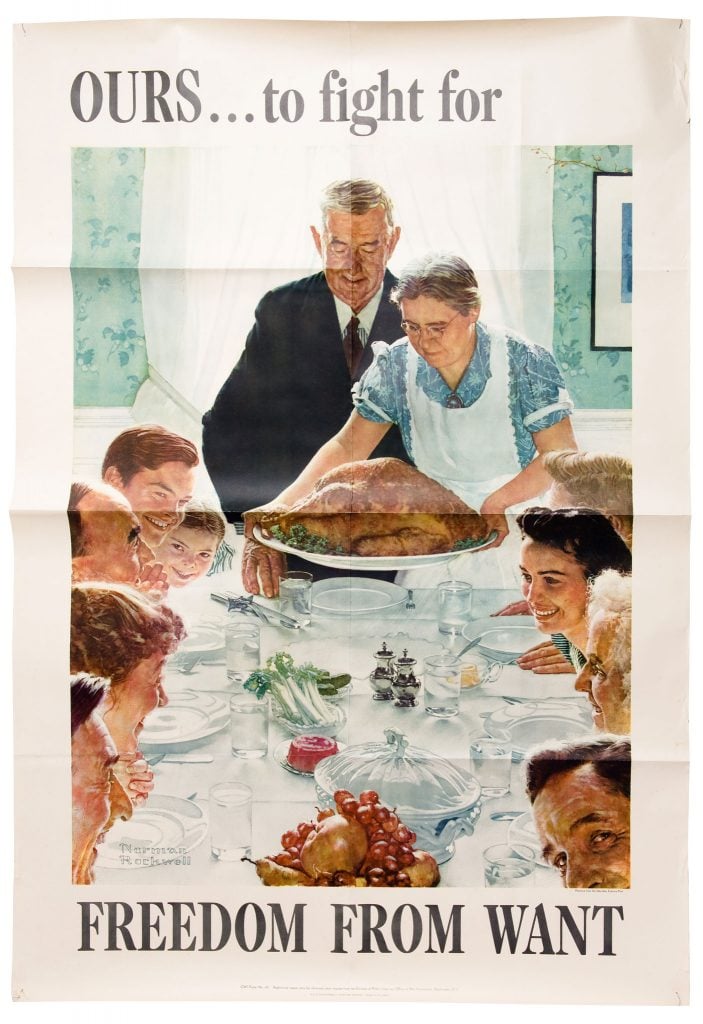
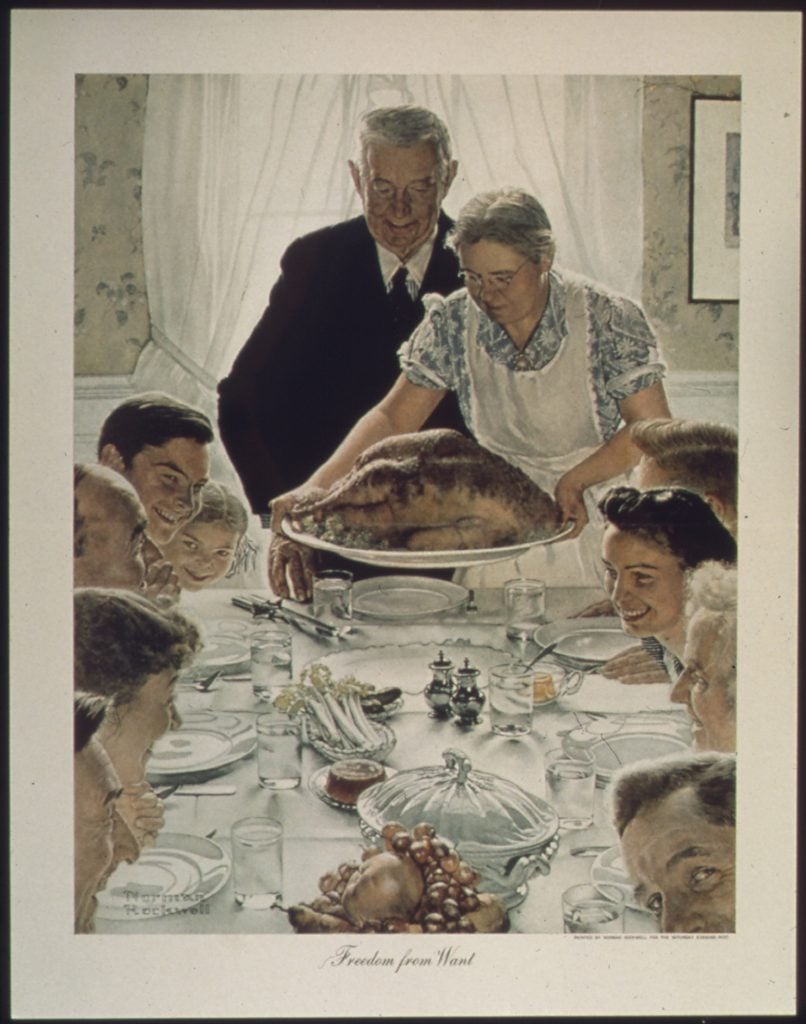
"Norman Rockwell’s Freedom From Want
is one of the most iconic (and parodied) paintings of the 20th
century—it’s the Thanksgiving painting we know without even necessarily
knowing its name
"Appearing in the March 6, 1943, edition of the Saturday Evening Post,
it depicts a white, middle-class family seated around a crisply adorned
dinner table. As was common for Norman Rockwell, his models for the
painting were his friends, family, and neighbors in the town of
Arlington, Vermont, whom he photographed in his studio and painted into
the complex composition individually (they never sat together).
"Rockwell’s wife appears on the left side of the table. The family
cook, Mrs. Thaddeus Wheaton, was the model for the elderly matriarch
serving the turkey. (She did, in fact, cook the meal used for the
painting; Rockwell joked about eating the turkey later.)
"Opinions on the famous image are mixed. Many a critic has dismissed
it as kitsch, and Rockwell himself thought that it “lacked a wallop.”
"But many more treasure the image. Deborah Solomon, his biographer,
goes so far as to call the light-filled canvas ”one of the most
ambitious plays of white-against-white since Whistler’s Symphony in White, No. 1.”
"Recently, Rockwell’s work and legacy have been back in the spotlight.
Earlier this month, a four-panel suite of the artist’s paintings, which
had hung in the White House for decades, went to the block at Heritage Auctions,
achieving $7.2 million ($5.8 million plus fees). The winning bidder was
none other than the White House Historical Association. In less idyllic
news, Rockwell’s family recently lambasted the Department of Homeland Security’s use of Rockwell’s art in highly divisive social media posts.
"There’s no denying that Rockwell’s artwork is deeply entwined with
American identity, and that many choose to see his artworks in ways the
artist never intended. Though seemingly so familiar, this cinematic
Thanksgiving scene, Freedom From Want, holds plenty of details that are easy to miss. This holiday season, we’ve pinpointed three facts that just might change the way you see it.
1) The Military Hated It (Until They Loved It)
"The idyllic scene was one in a series of four paintings Rockwell made
in response to Franklin Delano Roosevelt’s 1941 State of the Union
address known as the “Four Freedoms.” (The other freedoms were
“freedom of speech,” “freedom of worship,” and “freedom from fear.”)
"Rockwell had originally wanted to paint the series for the military
and, hoping for a commission, sent a charcoal sketch of the “Four
Freedoms” paintings to the Office of War Information (OWI). Not only did
the brass turn it down, they twisted the knife, writing, ”The last war, you illustrators did the posters. This war, we’re going to use fine arts men, real artists.”
Freedom From Want was reproduced in millions of posters promoting the sale of war bonds. Collection of the Charleston Museum.
"Saturday Evening Post editor Ben Hibbs, however, was
enthusiastic. And he was right—so popular were the images, in fact, that
the magazine decided to offer prints for sale.
"The OWI, which had turned down Rockwell just a few months earlier,
asked to use prints of the paintings in a war bond campaign that would
ultimately garner over $132 million in bonds and stamps.
"In the end, millions of posters of Rockwell’s paintings were
distributed across the country, posted in schools, libraries, and post
offices.
2) Some Worried it Was Too Much… Even Rockwell
Norman Rockwell , Freedom From Want in The Saturday Evening Post.
"Though Freedom From Want was enthusiastically embraced by
the American public, in Europe the happy scene left a bitter taste as
the population endured ongoing wartime hardship.
“Freedom From Want’ was not very popular overseas,” Rockwell later
recalled self-critically. “The Europeans sort of resented it because it
wasn’t freedom from want, it was overabundance, the table was so loaded
down with food.”
"In fact, even before it found success, Rockwell had been worried it would come off wrong. Each image in the Post
was accompanied by an essay on the relevant theme. “Freedom From Want”
was written by the Filipino immigrant, novelist, and labor
organizer Carlos Bulosan, who wrote about the privation and violence
endured by Asian immigrants to the West Coast.
“If you want to know what we are, look upon the farms or upon the
hard pavements of the city,” Bulosan’s essay began. “You usually see us
working or waiting for work, and you think you know us, but our outward
guise is more deceptive than our history.”
"Once Rockwell had read the essay, he hesitated to complete the
painting, aware that the contrast of his happy meal with Bulosan’s text
could be read as smug ignorance. He contemplated destroying it and
starting again, but his editor, Hibbs, begged with Rockwell to finish
the painting, saying that the illustration and essay need not match, but
merely reflect on the same theme.
3) Winking at Art History
Jim Martin, a neighbor of Norman Rockwell and a frequent model, peeks out from the canvas.
"The military may have dismissed him as
not a “real fine art man,” but Norman Rockwell (who had never claimed to
be anything more than an illustrator) was in fact a wellspring of
art-historical knowledge and compositional study.
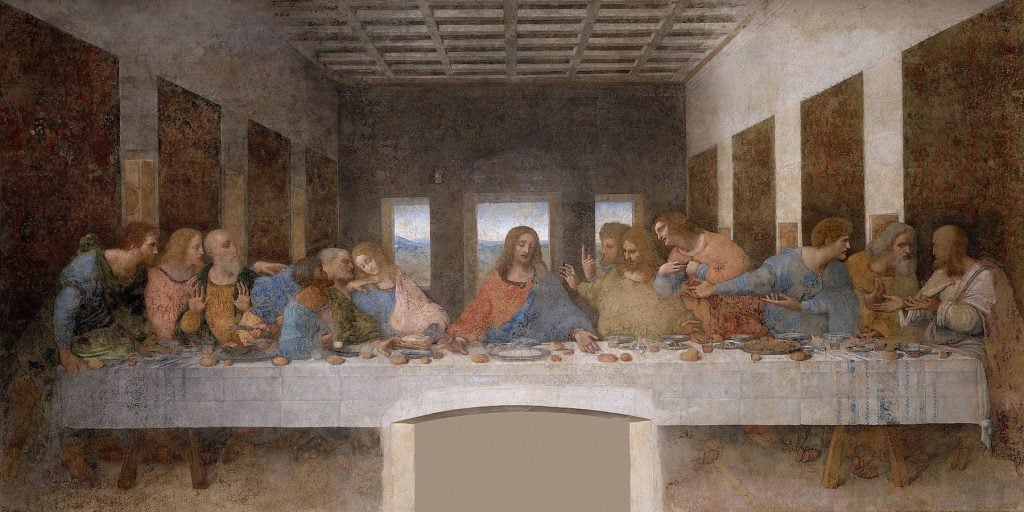
"The Last Supper, arguably art history’s most famous meal, was definitely on his mind. Like Leonardo da Vinci’s version, the central figures in Freedom From Want
are framed by a window, with the perspective lines converging to focus
attention on them. The creases in Rockwell’s humble tablecloth even echo
those in the cloth covering Christ’s table in the Leonardo.
Leonardo da Vinci, The Last Supper (1490).
"Most importantly, the Last Supper also provides a source for the central trope of Rockwell’s painting. Famously, in the Last Supper,
the Apostles look away from Christ, absorbed in the swirl of their own
thoughts and conversations. The same is notably true of the family in Freedom From Want,
who are absorbed with everything but the turkey being served. (This
art-historical echo also makes the turkey into a sacrament.)
"The man on the bottom right of Rockwell’s painting, whose partial
face glances out cinematically, has garnered a lot of critical
speculation.
"His features are based on a neighbor of Norman Rockwell named Jim Martin, whom the artist included in each of his Four Freedoms
paintings. But Martin’s fourth-wall breaking also riffs on another
Renaissance trope, in which one figure stares out from an otherwise
self-contained canvas as if to invite the viewer into the composition.
"Botticelli, for instance, used a self-portrait in his 1475 Adoration of the Magi much the same way, at the bottom right.
Sandro Botticelli, Adoration of the Magi (1475–1476). Collection of the Uffizzi.
"Diego Rivera, the Mexican muralist, was inspired to his craft by Renaissance art. In his famous Detroit Industry mural, completed 10 years before Rockwell’s Saturday Evening Post portfolio, he similarly inserted the figure of his patron, Edsel Ford, in the lower right corner, looking out.
Diego Rivera, Detroit Industry
south wall [detail] (1932-33), featuring Edsel Ford (in gray suit) and
DIA director William Valentiner (in blue suit), depicted holding a
contract for the murals
'Thus, the grinning man at the bottom corner of Freedom From Want can be taken as Norman Rockwell winking at art history."
This story was originally published on November 25, 2020. It was
updated on November 24, 2025, at 09:00 a.m. ET, with information about
the artist’s recent headlines, including the acquisition of his work by
the White House Historical Society and this family’s outrage over DHS
social media posts.
Well, here we go again: one of Joe Biden's "asylum seekers" showing his gratitude by travelling from Washington state to ambush National Guard members!
While other young people are busy protesting, causing mayhem, and committing crimes, these two Guard members, both under 25 years old, had answered the call to protect America. They should be celebrating with their families today instead of fighting for their lives in the hospital.
"The female West Virginia National Guard member critically wounded in a
cowardly ambush by an Afhgan refugee Wednesday had volunteered to work
that day so others could spend Thanksgiving with their families.
"The brave guardsman was identified as 20-year-old Sarah Beckstrom, US
Attorney Jeanine Pirro said at a Thursday press conference.
"She was shot in the chest and head, authorities previously reported.
“She volunteered to be there on Thanksgiving — working today — she
volunteers, as did many of those guardsmen and women so other people
could be home with their families,” US Attorney General Pam Bondi told
Fox News early Thursday, before Beckstrom was identified as the second
victim.
“Yet now, their families are in hospital rooms with them while they are fighting for their lives.”
"The other wounded guardsman was previously identified as 24-year-old Andrew Wolfe.
“Both Sarah and Andrew were sworn in less than 24 hours before they were shot on the street in Washington,” Pirro revealed.
"Both have undergone surgery and are in critical condition.
"They sustained the life-threatening injuries when Rahmanullah Lakanwal, 29, allegedly
opened fire near the Farragut West Metro Station in Northwest DC in
what’s being probed as a possible terrorist attack.
“They received the finest medical care. Their families are with them
now. They are critical — I think you understand the meaning of that.
It’s not clear how this is going to end up. But let me be perfectly
clear about how it will end up in this office — if one of them is to
pass, and God forbid that happens, this is a murder one. Period. End of
the story,” said Pirro.
“We are praying on a day like today when families come together in
America and they hold hands around the Thanksgiving table. I beg you, I
beseech you to play, to pray for these two young people that they
survive.”
"Bondi noted that the gunman’s charges would be determined by
Beckstrom and Wolfe’s prognosis, but that authorities were working at
“lightspeed” to put together the facts of the case.
"Lakanwal allegedly ambushed the two National Guard members near the
White House, lying in wait before opening fire in a brazen attack.
"He was shot by return fire from other guard members.
"His motive is not yet clear, but authorities are probing it as a targeted terrorist attack
"Lakanwal was a member of the Afghan Army stationed in Kandahar where
he supported US Special Forces in the region, a relative told NBC News.
"He applied for asylum in December 2024 and was approved on April 23 of this year — and had no known criminal history, a Trump admin official told Reuters."
I just heard this breaking news on TV, and I'm not surprised. The Democrats' continually hateful rhetoric about the National Guard and I.C.E has probably contributed to this shooting. You remember the vitriol directed at Elon Musk that resulted in Teslas being set on fire. There are plenty of criminals who would gladly respond with violence to this escalating, irresponsible anti-law enforcement talk
The shooter should be quickly be held accountable -- and so should the Democrats!
-----------------------------------------
National Review 11/26/25
Two National Guard Members Shot Near White House
“Please
join me in praying for the two National Guardsmen who were just shot
moments ago in Washington D.C.,” Noem said in a post on X. “@DHSgov is working with local law enforcement to gather more information.”
D.C. police said one suspect was in custody and the scene had been secured as of Wednesday afternoon.
Dozens of emergency responders and police vehicles were seen at the corner of 17th and I Streets NW, according to the New York Times.
White House Press Secretary Karoline Leavitt said the White House “is
aware and actively monitoring the tragic situation,” and that President
Trump, who is currently in Florida, had been briefed.
Trump responded to the shooting in a statement on Truth Social.
“The animal that shot the two National Guardsmen, with both being
critically wounded, and now in two separate hospitals, is also severely
wounded, but regardless, will pay a very steep price,” he wrote. “God
bless our Great National Guard, and all of our Military and Law
Enforcement. These are truly Great People. I, as President of the United
States, and everyone associated with the Office of the Presidency, am
with you!”
I myself have a chronic illness, and I'm sure everyone else who's suffering can relate to this opinion piece at STAT. My fear of getting Long COVID in addition to my disease is why I've always protected myself against COVID.
It's hard enough dealing with a disease, but it's made worse when healthy people make remarks downplaying or dismissing your disease as a "journey" when it's actually a living hell.
Swenson is professor emeritus in the Yale University Department of Political Science.
"Like an estimated 20 million Americans,
I have an incurable post-acute infection syndrome that goes by the name
of long Covid. Some people refer to the long Covid experience as a
“journey.” I wish they would stop. I’m pinned down by it, stuck with it.
I feel like I’m getting nowhere.
"Sugarcoating my bitter pill, a chronic disease, by calling it a
“journey” might sweeten it for you, but not for me. Among “you” I
include medical professionals, writers, and editors. Between 2007 and
2015 the BMJ ran a series of articles
written by chronic disease sufferers called “Patient Journeys” about a
slew of disorders from restless leg syndrome to much worse. According to
University of Pennsylvania linguist Mark Liberman,
the word’s usage in the biomedical literature rose slowly and steadily
from a low rate in 1990 to 2010, and then exponentially until 2024, by a
factor of over 20. Ghost co-writing by AI probably played an
accelerating role with its creeping homogenization of language and
thought. By comparison, according to linguistics professor Jesse Egbert,
general usage only about doubled over the same period.
"My personal MyChart page includes a “Care Journeys” section that lays
out an itinerary and tour guide for my visits and procedures. I would
sooner call them stops on a bad trip. For over a year I have suffered
from long Covid, a post-acute infection syndrome, whose symptoms overlap
with myalgic encephalomyelitis/chronic fatigue syndrome (ME/CFS). For
me, those are debilitating fatigue, dizziness, occasional brain fog,
dyspnea, hoarseness, muscle weakness, exercise intolerance, and crushing
post-exertional malaise. Inflammation, autoimmune mechanisms, and
dysautonomia are commonly thought to cause such symptoms. My tests show
cardiac and neurovascular conditions like arrhythmias, pre-load failure,
orthostatic intolerance, and likely because of severely impaired oxygen
extraction, mitochondrial dysfunction.
"People with other such complex chronic diseases, and of course
cancer, also read and hear their experiences referred to as “journeys”
by well-meaning sympathizers. The treacly word triggers my gag reflex,
and I’m far from alone. This should give users of the word pause.
Virtually every one of 352 reader comments on a 2024 New York Times
article by Lisa Miller called “When Did Everything Become a Journey?”
expressed varying degrees of displeasure about the word’s use in both
medical and non-medical contexts. The five most recent comments included
“cringeworthy,” “repulsively fussy and flowery,” “pretentious,” and
“yoga babble.”
"Colorful and occasionally cruder objections appear in chats among
eye-rolling disease sufferers in the internet forum Reddit. “A bullshit
word” said one person; others said it “makes my teeth clench and skin
crawl” and “makes me throw up a bit in my mouth.” Another said, “If
someone asks about my cancer journey, I will cut them and ask how their
bleed-out journey is going.”
"Users of the peeving word are unlikely to be confronted with even
mild objections in conversations with patients: Most people hesitate to
antagonize or make things awkward. But one Reddit contributor rebelled,
saying “I refused to be the uncomfortable one. It’s either them [or me]
or both of us.” Very few defended what others called “toxic positivity”
of the “warm and fuzzy” metaphor.
"The makeover of disease with metaphoric cosmetics is not new. In her
book “Illness as Metaphor,” writer and critic Susan Sontag criticized
“sentimental fantasies” concocted about disease — the awful disease of
tuberculosis being her historical example of “aestheticization” and
“glamorization.” The European literati once portrayed tuberculosis as
“the romantic disease,” an opportunity for artistic, intellectual, or
spiritual elevation. It was best savored with fellow sufferers, as
exemplified in Thomas Mann’s “The Magic Mountain,” with idleness and
isolation in a beautiful Alpine sanitorium, and maybe romantic
possibilities on the side.
"More recently, author, political activist, and breast cancer patient Barbara Ehrenreich skewered
the sticky sentimentality and infantilization of “breast cancer
culture,” aided in its propagation and advertisement by the
cancer-industrial complex and the cosmetics industry. Such swag as teddy
bears wearing pink ribbons and turbans (to hide hair loss) is
accompanied by tropes about the curative “power of positive thinking.”
Cancer with its “redemptive power” can be a “growth opportunity”
allowing “creative self-transformation,” “spiritual upward mobility,” or
otherwise make you a better person.
"Clearly, there is something sweetly seductive going on for many, but
far from disease sufferers and their consolers. It helps explain why the
J-word, because it is not disease-specific, and therefore very
portable, has spread like wildfire. The word “journey” suggests good
things: “It’s the journey, not the destination!” Above all, it’s
something willingly undertaken, not an abduction or a hijacking, or “a
forced march,” according to one Reddit user. I doubt any trafficked
persons ever described their passages into new lives as journeys. One
typically chooses a journey for interesting, exciting, enriching, and
even exotic experiences, preferably with novel scenery and enjoyable
companions. What chronic disease offers you those? Chosen journeys, even
if lonely and boring or arduous, at least have a desired destination.
Nobody chooses a disease to be guided toward the cure, even if one is
available. Mostly one drifts along with the prevailing winds and
currents of uncertain, conflicting, evolving, and often unpleasant and
ineffective therapeutics.
"In short, people like me are jarred by the contradiction between the
dreary experience of disease and the almost exclusively upbeat semantics
of journey. (The unintended exception is its suggestion of departure,
separation, and loneliness.) Also making one’s ears hurt is that it is
also now “an over-commodified buzzword” and “faux-spiritual branding
tool” according to peeved Reddit users. Commercial product and service
advertisers join with shallow self-help influencers on social media in
touting hair restoration, teeth whitening, and makeover journeys you can
embark upon. Online pharmacies gush about Ozempic as a ticket to a
“weight loss journey” they will sell you. Some realtors promise “your
home-buying journey,” and banks send out junk mail about “your credit
card journey.” It’s hard to imagine that some patients aren’t turned off
by the American Society of Plastic Surgeons’ advice about “your plastic surgery journey.”
The word even echoes in corporate consultant-speak to clients about
“customer journeys.” In short, while trivializing soul-destroying health
problems, the metaphor inflates the significance of trivial ones.
"Sontag offered a more apt metaphor than journey, though she ultimately preferred straight, unadorned talk: illness as a place,
and often a dark and lonely one, “the night-side of life” in “the
kingdom of the sick.” Reddit users agree, variously describing chronic
disease as a cage, a prison, or “a ditch on the side of the road of life
you fall into.” Another called it a “derailment,” conjuring an image of
injured people going nowhere fast. One ME/CFS sufferer said she felt
“trapped in a glass box watching life go by without you.” Likewise,
Ehrenreich titled one of her writings “Welcome to Cancerland.”
In Meghan O’Rourke’s “reimagining” of chronic disease, “The Invisible
Kingdom,” she echoes Sontag, describing feeling “locked away in the room
alone” while suffering from multiple symptoms of chronic Lyme disease
and autoimmune thyroiditis.
"I hasten to add that people often use the J-word about their own
disease experiences, and in the U.K. at least, somewhat more often than
health professionals. NHS verbiage surely bears some responsibility for
that. According to a U.K. collaboration of linguists with Sheila Payne, a
prominent end-of-life care specialist, providers used the euphemism only about 60% as often as patients.
"I can half understand why some Reddit commentators regard these
self-described journeyers as “narcissistic.” But if you want to call
your own disease experience a journey, I have no objection.
Perhaps it has special personal meaning or succor to you, something akin
to “it’s all part of God’s plan.” Maybe it has an analgesic effect,
like a pain medication that changes the brain’s perception of pain.
"To each their own — but not someone else’s. As one person wrote, “nobody who hasn’t been through it gets to call it a journey.”
"Thanksgiving is here—that magical week of joy, chaos, and family members who can somehow turn small talk into a UN summit.
"Here
are a few things that might help you survive the holiday: viral
updates, food safety tips (yes, bird flu is hitting turkeys), navigating
tricky conversations, and a poll for the most important debate of the
season: store-bought or homemade cranberry sauce.
"We also touch on
the opioid settlement, which sends $7 billion to communities, the
Department of Education removing public health degrees from
“professional” status, and, as always, some great scientific news.
Infectious disease “weather report”
"Colds, fevers, and coughs(also
known as influenza-like illnesses, or ILI) are just getting started and
haven’t reached the epidemic threshold. That’s great news heading into
Thanksgiving, as there’s simply less circulating illness than in
previous years, which means a lower chance of getting sick and fewer last-minute cancellations at your table.
Source: CDC; Annotated by Your Local Epidemiologist
"Covid-19 levels remain very low nationally. I expect activity to pick up soon and peak around January.
"RSV
is rising rapidly, so for infants, it’s best not to pass them from
person to person during the holiday. If the mom got the RSV vaccine
during pregnancy or the infant received the monoclonal antibody, they
are incredibly well protected, and I wouldn’t think twice about it.
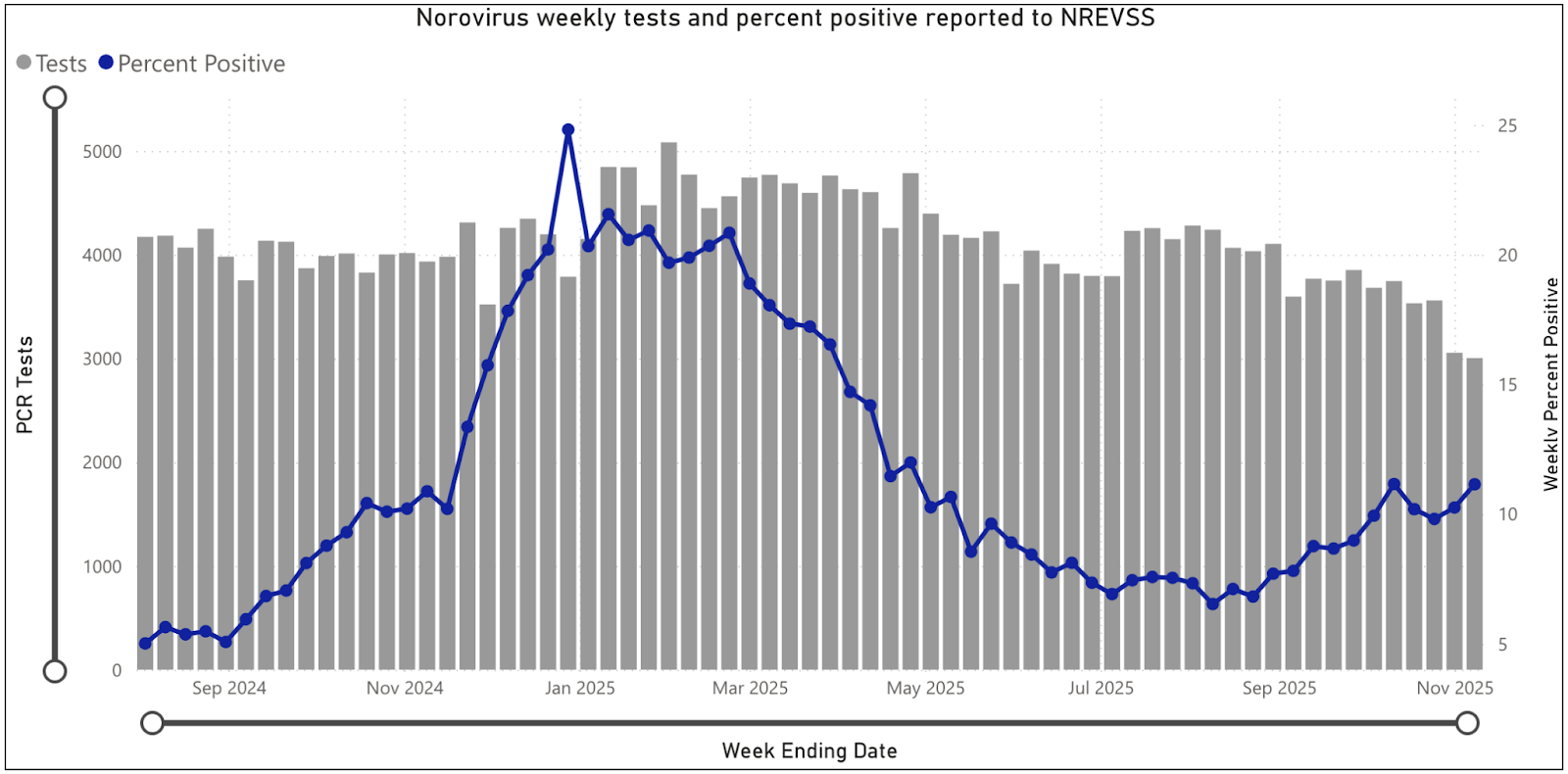
"Norovirus—the
nasty, highly contagious stomach bug that causes vomiting and
diarrhea—is rising across all U.S. regions, with the South hit hardest.
On average, one infected person can spread it to 2–7 others. It’s a
common foodborne illness. So, if you have symptoms (or recently
recovered, since you can still spread it for days after they fade),
avoid preparing food or drinks for others. Wash your hands thoroughly
(30 seconds with soap and water) and clean bathrooms frequently with
bleach-based products. Hand sanitizer won’t work against this one.
More Thanksgiving survival tips: Health + family edition
"We
often say “public health is everything”—and yes, that includes what
happens around the Thanksgiving table. Here are a few public health
tips.
"Hard topics.You may not see eye to eye with relatives on what’s happening in the world (and there’s… a lot happening). Thinking Is Powershared eight tips for approaching conversations:
Never mock or judge. Defensiveness shuts things down.
Don’t make it personal. Address the belief, not the believer.
Find common ground. Shared values build connection.
Work together. Explore the idea collaboratively.
Ask, don’t tell. Curiosity opens dialogue.
Lead by example. Model the tone you want.
Focus on why, not what. How people form beliefs matters.
Know when to walk away.
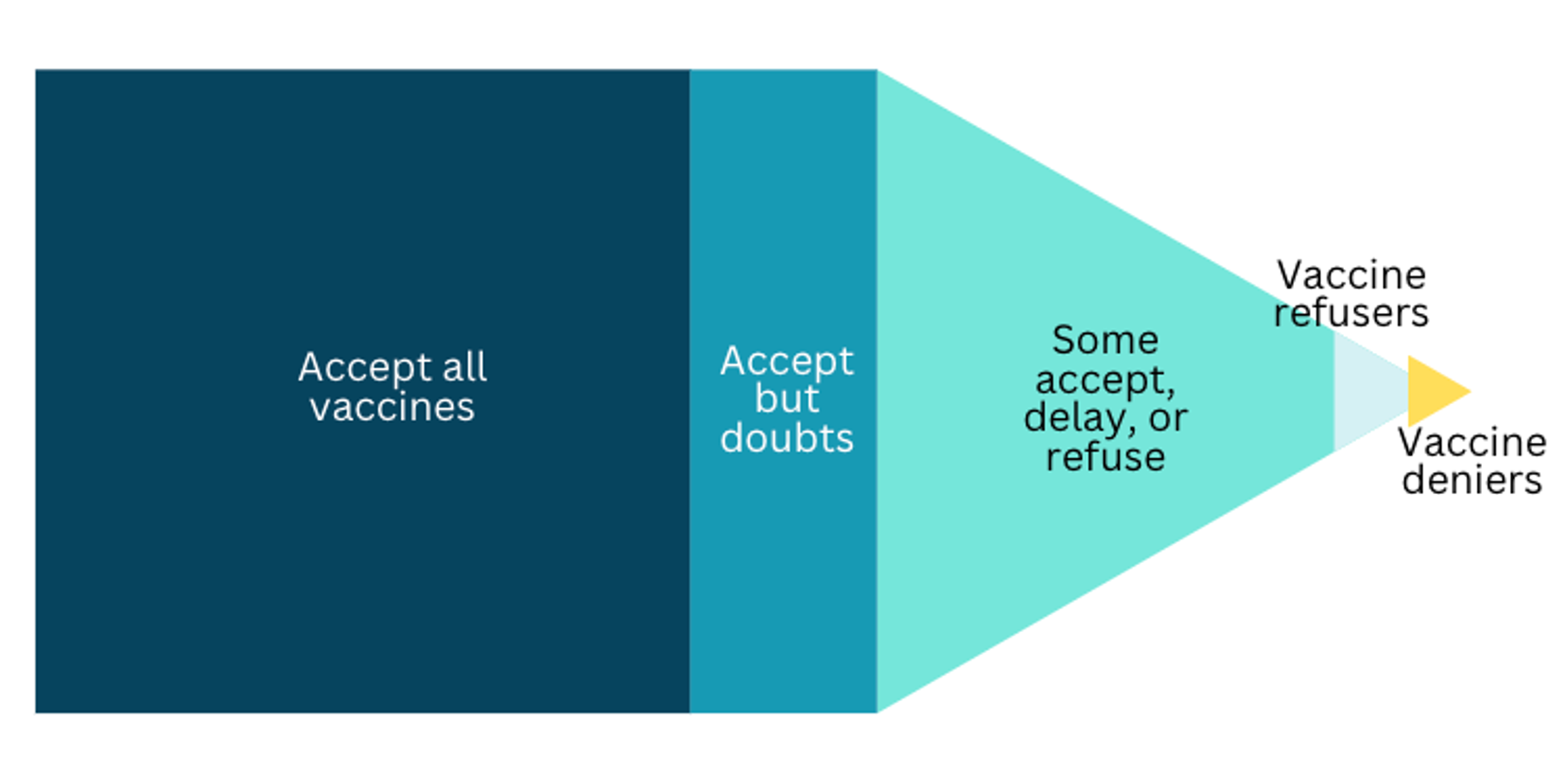
"If vaccines come up, keep these in your back pocket:
The vast majority of people (80-90%) support routine vaccinations.
Hesitancy
is a spectrum. Only a tiny fraction are true deniers (e.g., those who
believe vaccines contain 5G chips). Don’t assume the extreme if they
have doubts or questions.
Separate Covid vaccine conversations from routine childhood vaccination conversations. There are a lot of feelings around Covid-19 vaccines that we don’t want bleeding into other vaccines.
Avoid
the words “misinformation” or “mandate”—both trigger strong reactions
for ~50% of the country. Try “falsehoods,” “rumors,” or “school
requirements.”
Remember, you will not change someone’s
mind in one conversation. The goal is to set new foundations of trust so
they keep coming back with curiosity and being met with empathy.
"Our
friends at Unbiased Science put together a crash course on how to
handle some of this year’s controversial topics (think seed oils,
vaccines and autism, conspiracy theories.) Check it out here.
"Food availability and safety.Bird flu (H5N1) has taken out nearly 2 million turkeys since September 1. While this happens every year—bird flu spreads two times faster in turkeys than in chickens—it has started earlier than expected. This shouldn’t impact supply.
"Can you get bird flu from eating turkey?
There have been no reported human cases of bird flu in the U.S. linked
to handling raw food from the grocery store. Regardless, remember to
cook turkey to an internal temperature of 165°F to kill bacteria and
inactivate viruses.
Opioid settlement: $7B for communities in need
"Last
week, a judge ruled that $7 billion from the Sackler family fortune
will flow to communities across the nation to help fund solutions to the
opioid crisis. The Sacklers, who owned Purdue Pharma, had aggressively
marketed prescription opioids while denying their addictive properties
to maximize profits. This decision represents justice that hits home for
a lot of people who lost loved ones to this epidemic.
"One of
those families was in Marin County, CA, where Matt Willis—YLE
correspondent—served as public health officer. Matt, take it from here:
"During
my first week as public health officer in Marin County in 2013, I met a
father whose son died from an overdose of a prescription painkiller.
The young man was at a party in his first year of college, took two
pills, and never woke up. That conversation helped open my eyes to the
local toll of this crisis. Working with other impacted families, we
formed OD Free Marin, a county-wide initiative to tackle the opioid crisis.
"Eight
years later, I was invited to Washington, D.C. to share our local
experience with federal judges deciding how opioid settlement dollars
should be spent. I shared two perspectives: as a physician, I’d been
trained to treat pain as “the fifth vital sign” and address it in every
visit. With the whole medical community, I was misled by manufacturers
like Purdue Pharma, that opioids were effective and non-addictive, if
used as directed.
"As a health officer, I saw how our
community was fighting the opioid battle on multiple fronts—mental
health and rehabilitation services, law enforcement, health care,
schools—without enough resources to address the crisis these companies
created. Communities like ours were sharing approaches, proving what was possible, but needed support to scale services to match overwhelming demand.
"Purdue is one of many companies being held responsible for fueling this epidemic. So far, around $50 billion
has been invested back into American communities through lawsuits
against familiar names like CVS, Walgreens, and Johnson &
Johnson—companies that manufactured, distributed, or dispensed these
medications while the crisis escalated.
"The judges
decided that most funds should be allocated to state and local
governments for evidence-based strategies: treatment for opioid use
disorder, Narcan distribution, education campaigns, youth outreach, and
rehabilitation services. Ensuring these funds end up supporting opioid
mitigation, and not going to fill potholes or other government
priorities, is another challenge. You can track spending here.
"The
money flowing from this decision will ideally help fund the kind of
work we began in the wake of that young man’s death: preventing more
losses, supporting those at risk, and building local infrastructure to
fight this crisis on all fronts. It won’t bring him back—or the more
than 1 million Americans
who have died from overdose since 2000—but it’s placing accountability
on an industry that knowingly put profits ahead of health.
Good news
"Three pieces of great news this past week:
86 million girls vaccinated.Vaccine alliance Gavi announced
that 86 million girls in high-risk countries have received the HPV
vaccine, preventing an estimated 1.4 million deaths from cervical
cancer.
Another mRNA win: better flu vaccines. Clinical trial data shows
mRNA flu vaccine was 34.5% more effective than a licensed seasonal flu
vaccine. Side effects were more common (e.g., fever: 5.6% vs 1.7%), but
overall, this a major step forward toward better flu vaccines. The
bigger question is whether people will accept mRNA platforms amid
ongoing rumors and falsehoods.
Short workouts = big benefits. New research
shows short bursts of vigorous exercise are incredibly efficient for
heart health—6× more effective for preventing cardiovascular disease and
9× more effective for preventing diabetes than moderate activity. If
vigorous activity isn’t your thing, moderate exercise is still great.
The bottom line: move your body.
Question grab bag
"The
government no longer considers MPH and DrPH (master of public health
and doctor of public health) professional degrees. What does this mean
for students and public health as a whole?
"Last
week, the Department of Education agreed on a draft definition of what
counts as a “professional degree program” under the One Big Beautiful
Bill. Several essential fields—public health, nursing, social work,
physician assistant programs, and others—were removed from that list.
"If
this stands, students in these programs could lose access to federal
financial aid. Specifically, lower borrowing limits, fewer scholarship
pathways, and limited eligibility for loan-repayment programs. It will
make it harder to enter these careers at the exact moment our country
needs more of these professionals. The broader
consequences are significant: fewer trained professionals, more barriers
for students from low-income backgrounds, and added strain on already
stretched health and social systems.
"The Department of
Education will release a formal proposal in the next few weeks,
launching a 30-day public comment period. When that opens, I’ll make
sure you know, because responses will matter.
Bottom line
"That’s it for the week. YLE is closed until next week for the holiday and some much-needed unplugging. Grateful for all of YOU!
"Love, YLE"
Your Local Epidemiologist (YLE)
is founded and operated by Dr. Katelyn Jetelina, MPH PhD—an
epidemiologist, wife, and mom of two little girls. YLE is a public
health newsletter that reaches over 400,000 people in more than 132
countries, with one goal: to translate the ever-evolving public health
science so that people are well-equipped to make evidence-based
decisions. This newsletter is free to everyone, thanks to the generous
support of fellow YLE community members.




![Diego Rivera, Detroit Industry south wall [detail] (1932-33), featuring Edsel Ford (in gray suit) and DIA director William Valentiner (in blue suit), depicted holding contract for the murals](https://news.artnet.com/app/news-upload/2020/11/detriot-industry-detail-edsel-ford.jpg)






.jpg)