------------------------------------------
Where to find trusted health information now?
"I still remember the exact moment this photo below was taken. I was on my way to interview for CDC’s Epidemic Intelligence Service (EIS)—the two-year training program for “disease detectives.” For people in my world, EIS is the dream job. These were the folks who jumped onto planes with 24 hours’ notice, parachuted into outbreaks, and pieced together scientific mysteries fast enough for Americans—and communities around the world—to live safer, healthier lives.
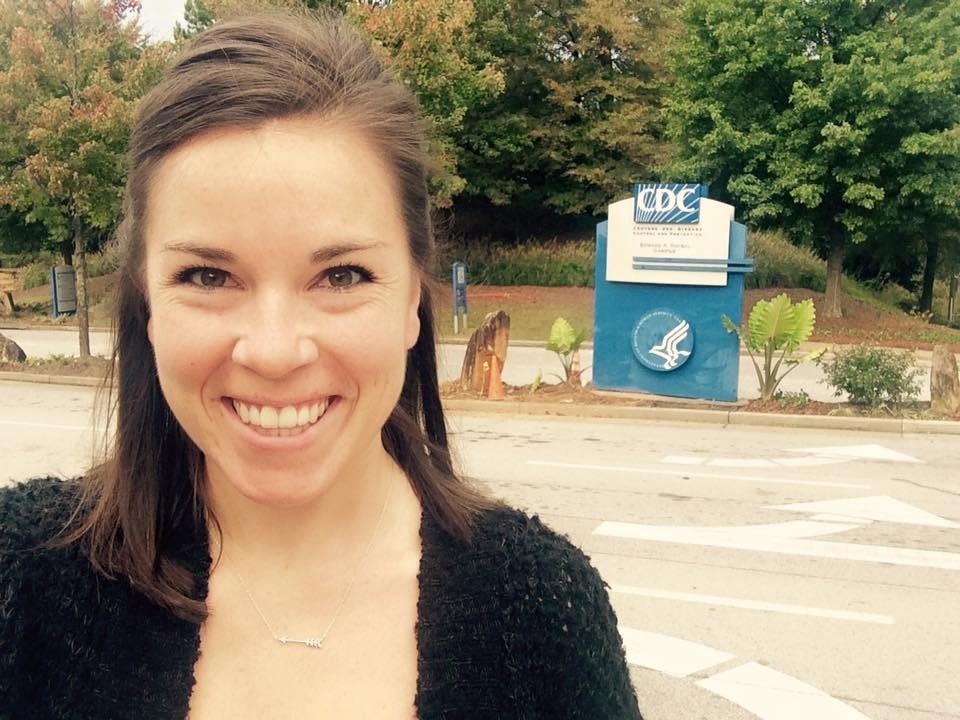
"Walking onto campus that day, I felt as if I were stepping into the beating heart of public service. Full on electric. People moved with purpose. Conversations were about problems that mattered to families, kids, clinics, and communities. It was alive with urgency, curiosity, advancement, and the shared belief and optimism that good science could make life better for all of us.
"I didn’t end up accepting the EIS position. Life took me in a different direction. But about 10 years later, I returned to CDC as a scientific communication advisor to two directors during a period when the agency was struggling through the pandemic. Even before Covid-19, the system was weakened by chronic underfunding, outdated infrastructure, bureaucratic bottlenecks, rising political pressure, and relentless falsehoods. The pandemic pushed the CDC to its limits, and Americans suffered because of it.
"Advising CDC then felt like caring for a critically ill patient. You stabilize what you can. You celebrate tiny signs of recovery. You push. You brace. And, like any clinician staring at a body in crisis, you begin to notice every detail, every connection. I saw the system’s complexity and started asking not just how to keep it alive, but what it would take to make it resilient, responsive, and worthy of the trust Americans place in it.
"Recovery takes time, and CDC was making headway. But that progress was abruptly undone. Over the past 10 months, the agency has been pushed onto life support amid escalating political interference. Leadership was purged, crucial scientific programs were dismantled, and irreplaceable, hard‑won knowledge was drained as experts were fired or left en masse.
And, now, part of CDC flatlined.
"On Wednesday night, a directive from HHS forced the agency to publish scientifically false claims about vaccines and autism—claims the agency itself and scientists across the world had spent decades investigating, and study after study has shown no link. This wasn’t a debate or a misunderstanding, and no new data was presented. This was political actors overriding science in a place where accuracy, integrity, credibility, transparency, and honesty literally saves lives.
"The damage doesn’t stay neatly contained to one webpage or one topic. When any part of the system is forced to publish something false, it immediately weakens the credibility and integrity of every other part that depends on shared trust. Hesitation, doubt, and confusion spread fast. Just yesterday, I was talking with colleagues responding to the infant botulism outbreak, and they asked, “How do you ask the public to trust that science on infant formula when another part of the agency is being forced to publish false information?”
What does this mean for you?
"It’s getting harder and harder to know what is data-driven and what is spun, and now the CDC website has entered the arena.
"There are parts of CDC I still trust, and there remains an important distinction between political operatives and the scientists doing the real work. In other words, there is still information there that I trust only because I have firsthand insight from friends and colleagues I speak with every week. That’s a privileged position to be in, and it’s not advice the general public can realistically rely on.
"So, what do you do?
At this time, I suggest the general public avoid the CDC website.
If you do go to the CDC website, avoid anything on vaccines, reproductive health, environmental science, or health equity.
Data systems are still largely under the control of states and CDC scientists. Flu and wastewater data, for example, are good to go.
Find trustworthy navigators outside the federal government, such as AAP, ACOG, and healthychildren.org, as well as many credible scientific communicators. (The Evidence Collective put together a comprehensive list of scientific communicators and organizations for you here!)
"The good news is that the level of mobilization outside the federal government—by health systems, medical societies, researchers, local health leaders, and entire professional communities—is extraordinary. We can’t replace what a fully functioning CDC provides, but many people are stepping up, coordinating, and building the scaffolding we need to navigate this moment with clarity. There are also so many CDC career employees flagging falsehoods and interferences for those of us on the outside, and trying to hold the line.
"As this evolves, I’ll keep you updated on what I’m relying on, what should be ignored, and what requires nuance. Keep sending me your questions, concerns, and confusion. It’s the only way I know how to equip you with the information needed.
Bottom line
"It’s hard to overstate what this moment represents. Ideology is now overriding evidence—the critical information parents, families, and communities rely on to stay healthy—at the nation’s once vibrant and leading public health agency. This is a sad and truly devastating place for our country to be.
"What we need now is collective action: refusing to let falsehoods prevail by building new pathways to protect, educate, and empower one another. It will be messy, even painful. But I believe we can get through this, and I hope we can do it without more lives lost.
"Love, YLE"
P.S.: If you have follow-up questions, drop them in the comments and I’ll keep answering as this continues to unfold.
Your Local Epidemiologist (YLE) is founded and operated by Dr. Katelyn Jetelina, MPH PhD—an epidemiologist, wife, and mom of two little girls. YLE is a public health newsletter that reaches over 400,000 people in more than 132 countries, with one goal: to translate the ever-evolving public health science so that people are well-equipped to make evidence-based decisions. This newsletter is free to everyone, thanks to the generous support of fellow YLE community members.





.jpg)
No comments:
Post a Comment