The Dose
Katelyn Jetelina, Jun 16, 2026
I’m not a big basketball fan, but boy, the sound of Manhattan at the final buzzer of the NBA Finals was electric in every video I came across: cheering, weeping, horns honking, singing, hugging, cigars being lit, an utter unselfconsciousness, pure and absolute jubilation. It gave me goosebumps. It’s a reminder that joy is contagious. Congratulations, New Yorkers, and thank you for the reminder of the value of community and shared joy. More of that, please.
Speaking of shared joy, the World Cup has officially kicked off, and we are here with what the health data show. We’re also at peak tick season, and mosquitoes and infant botulism have entered the chat. Other low-risk but high-consequence things are happening, including bird flu heating up among cows again.
And pediatricians are getting bombarded with vaccine questions. We answer the latest and update a resource for you.
Here’s what’s going on and, most importantly, what it means for you.
Disease “weather” report
We are at peak tick season
Across much of the U.S., we’re in the heart of tick season. After starting earlier than usual, it’s now tracking close to previous years. I’m hopeful we’ll see activity taper off over the coming weeks.
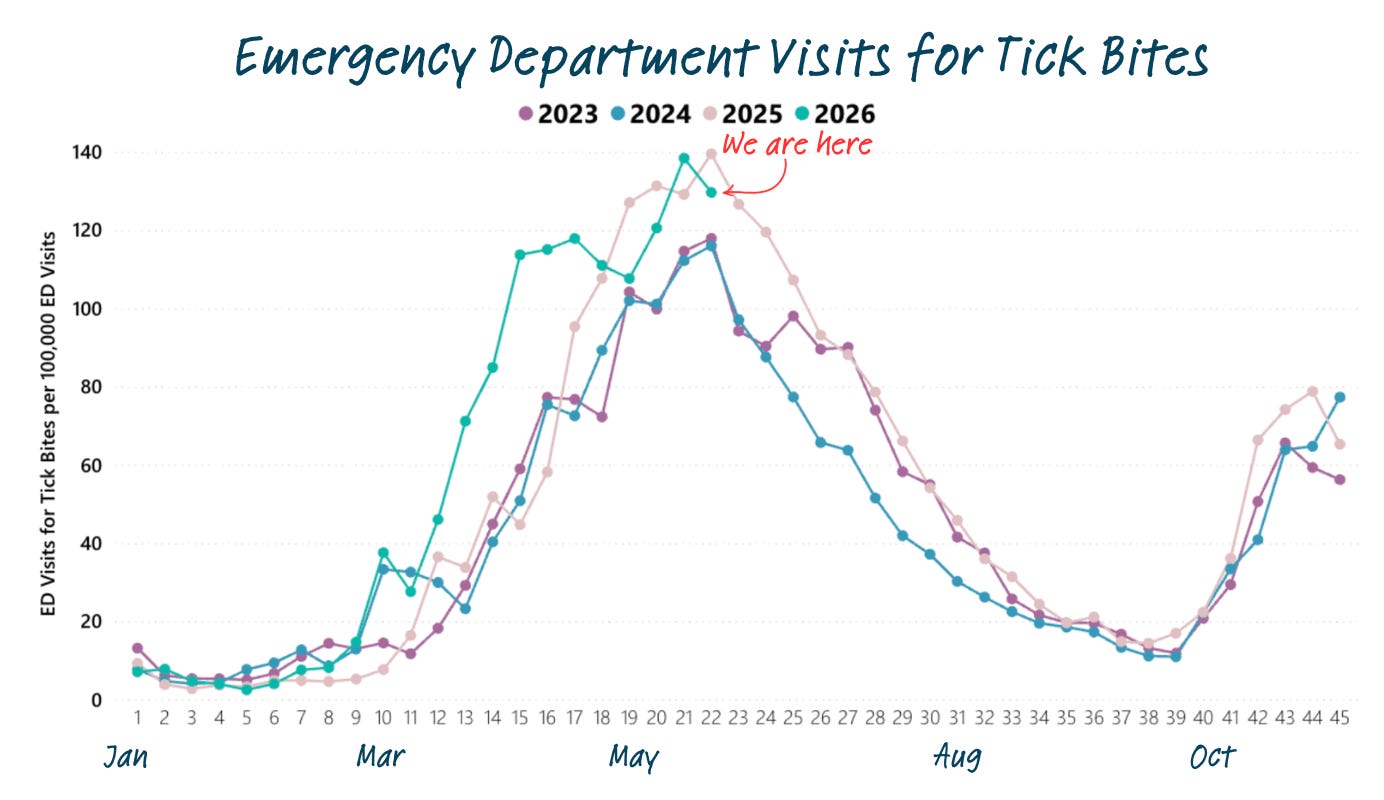
What this means for you: It’s still important to enjoy the outdoors, so prevention is the name of the game. Use an EPA-approved repellent, wear long pants when possible, and do a quick tick check afterward. The vast majority of ticks don’t carry diseases, but regardless, the sooner a tick is removed, the lower the risk of transmission.
Mosquito season is here
Mosquito season is ramping up across much of the country. We can expect mosquito-borne diseases to peak in August or September.
Why? Mosquitos are cold-blooded, so transmission is a bit like a chemistry experiment. If it’s too cold (below ~16°C or ~60°F), the mosquito life cycle slows down too much to spread disease. Closer to the “magic temperature” of ~25°C / ~77°F, mosquitoes are happier and diseases spread a little more easily from mosquito to human.
West Nile is the leading cause of mosquito-borne disease in the U.S. It is a fairly new disease—25 years ago, we didn’t have it around. But it is very rare. So far this year, we’ve seen only 13 cases of West Nile. (In June 2025, we had 62 total and August had the most cases at 958)
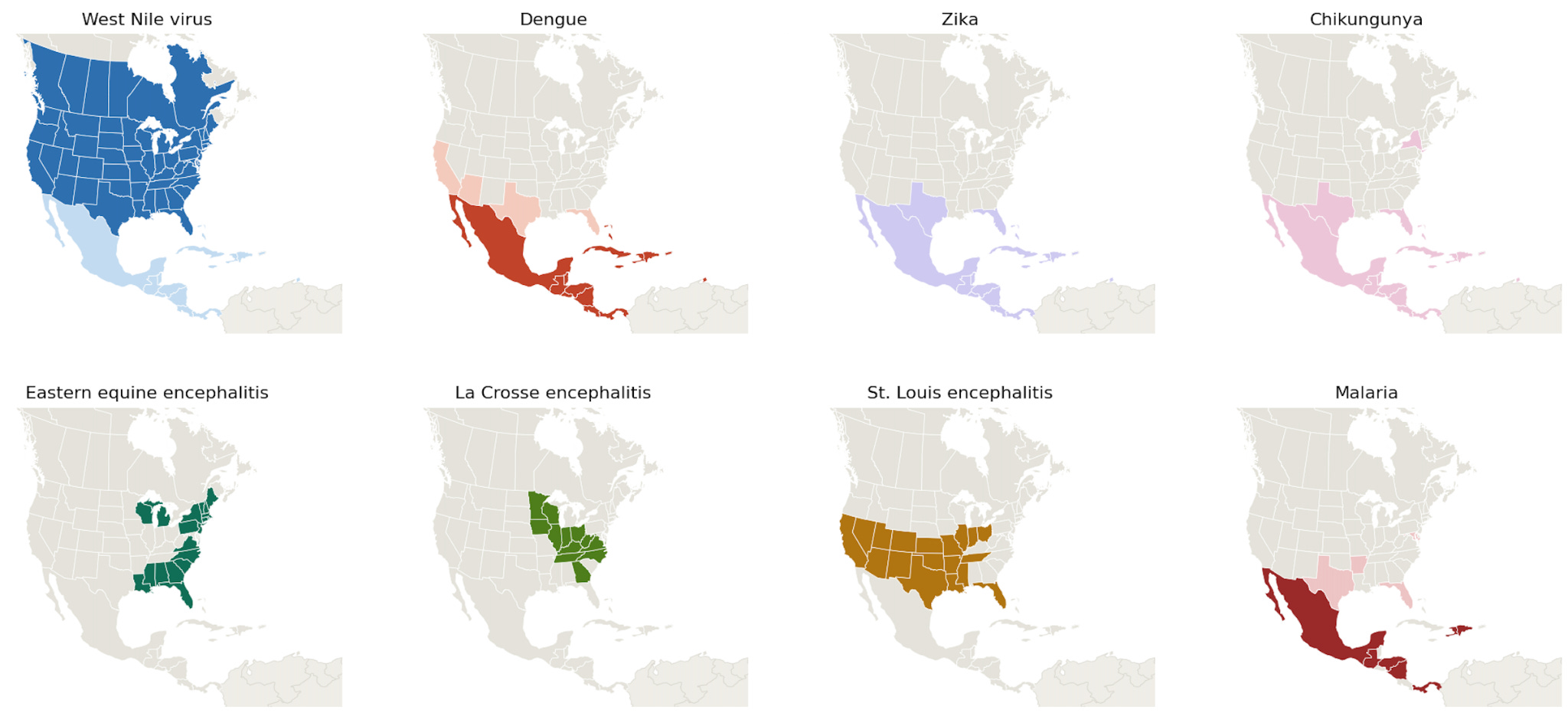
What this means for you: Your risk depends on geography and other factors, including older age. As mosquito populations grow, it’s worth dusting off the bug spray and clearing standing water around your home.
Low risk to you, but disease of high (and potentially) consequence
Several outbreaks are on my radar, but all remain very low risk to the general U.S. public:
Another infant botulism outbreak tied to baby formula. Nara Organics has recalled its organic formula, sold nationwide at Target, after three babies between 2 and 5 months became critically ill in CA, PA, and WA. Like the ByHeart recall last fall, it’s a niche product (under 1% of supply). What makes this one sting a little more: ByHeart had actually pointed parents to Nara as the safe alternative after their own recall. Regardless, it’s a reminder of how much we depend on the systems around us working.
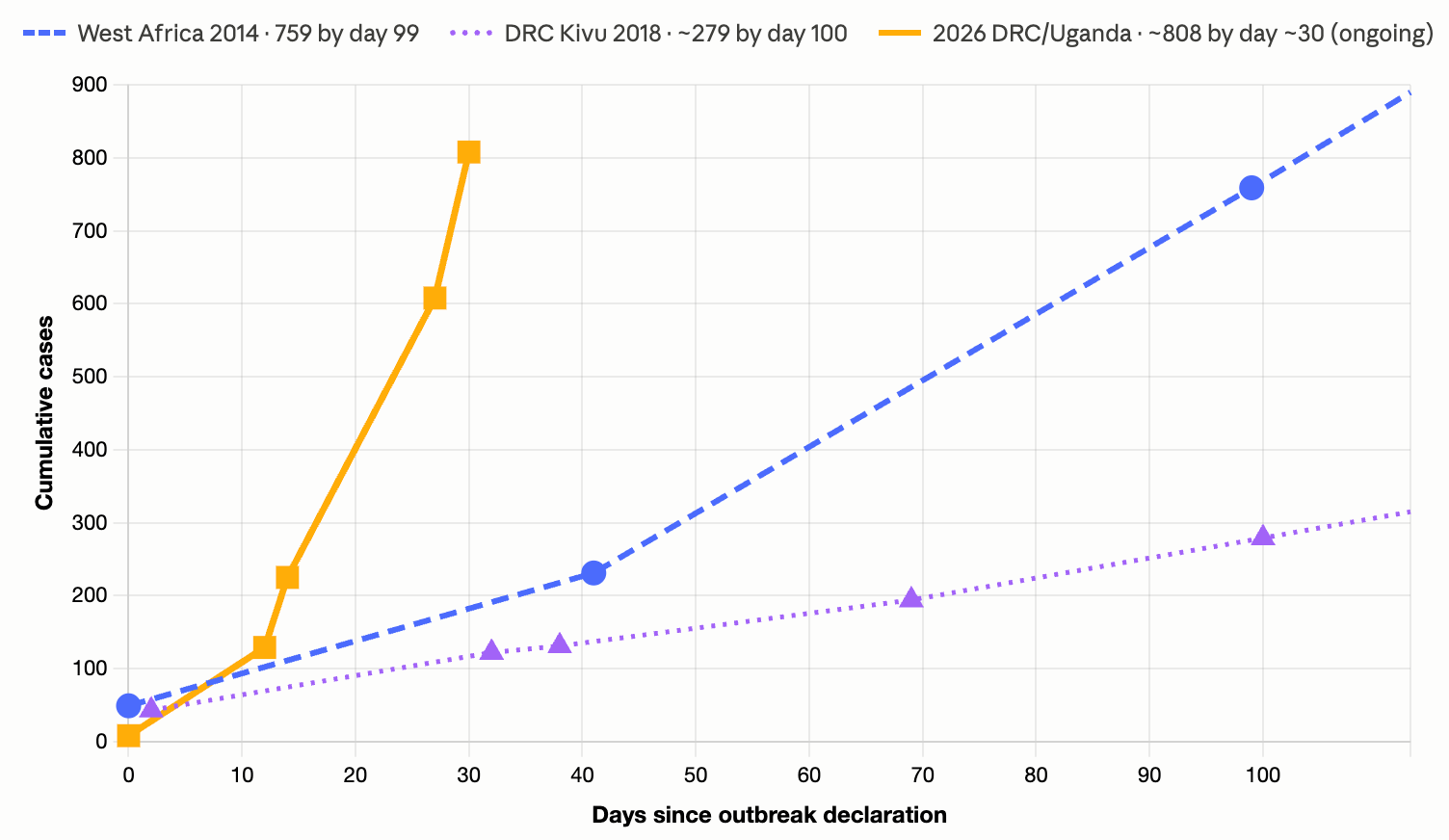
Ebola cases in Africa have climbed to 808, including one of the largest single-day jumps over the weekend. The cumulative total has already surpassed what the two biggest prior outbreaks reached at the same point in their first 100 days. This is a sign this one is likely to grow very large. If you're traveling to Africa (or have patients traveling), check out the YLE decision tree here.
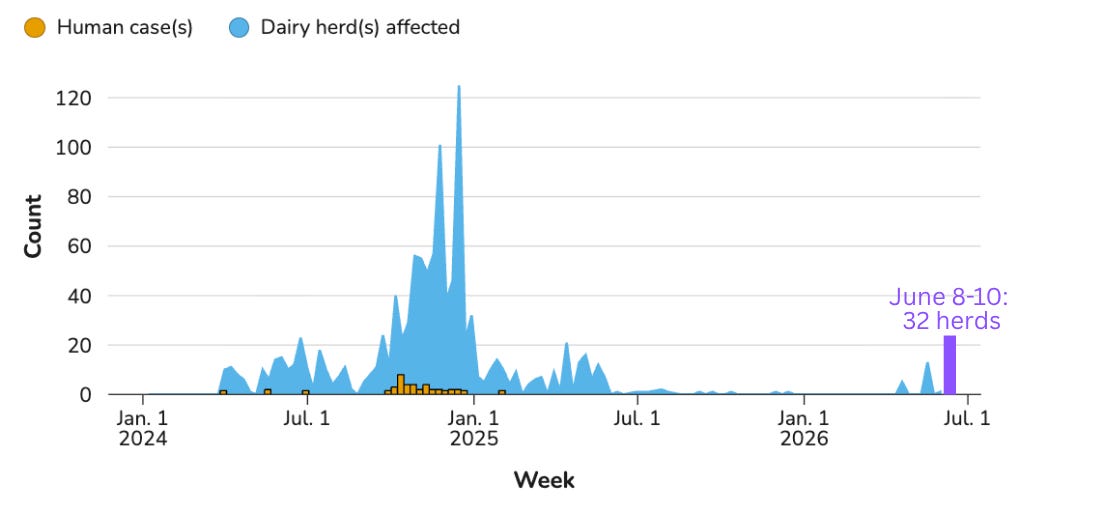
Bird flu (H5N1). After months of relative quiet, the USDA reports a sharp jump in infected dairy herds: in the past 30 days, 45 tested positive in Idaho, 2 in Utah, and 1 in Texas. We’re not at 2024 levels, but this is more than we’ve seen in a while.
Healthy Cup
The World Cup has officially begun, and the good news is that there have been no significant health events so far. Overall health risks remain low, but we’re watching three signals:
Heat. On opening day, Fan Fests in the Texas area saw nearly 100 fans fall ill from the heat, some requiring hospitalization. This is concerning because for every reported heat illness, many more sit just short of emergency, like dehydration and falls, cardiac problems, kidney stress, and mental status changes in elders. The “count” (22 out of ~30,000 attendees) underestimates the harm. Keep cool; drink water; know that alcohol and drugs mask heat injury symptoms, and common medications increase heat vulnerability. Go here to see your heat risk this week.
Measles. A few outbreaks are happening in the background, but two “sparks” sit particularly close to World Cup events, and we need to ensure they don't turn into wildfires:
Wastewater monitoring has detected a signal in Chester City, Delaware County (15 miles from Philadelphia Stadium).
One case among an unvaccinated resident in Santa Clara County, California, with recent international travel and community exposure, including at the airport.
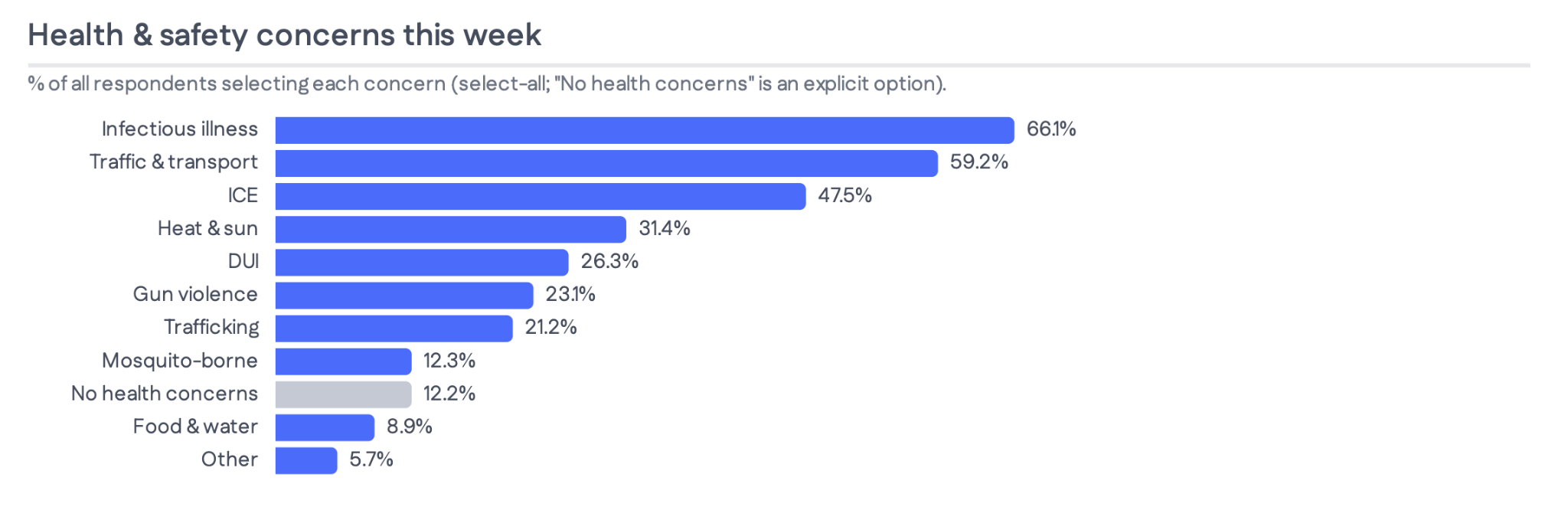
What other things are people worried about? The YLE weekly survey of World Cup goers started last week. No major health rumors are surfacing yet (only 13% have heard any), but there’s concern about traffic and transportation accidents, as well as ICE.
Good news
We can always use it. Three today:
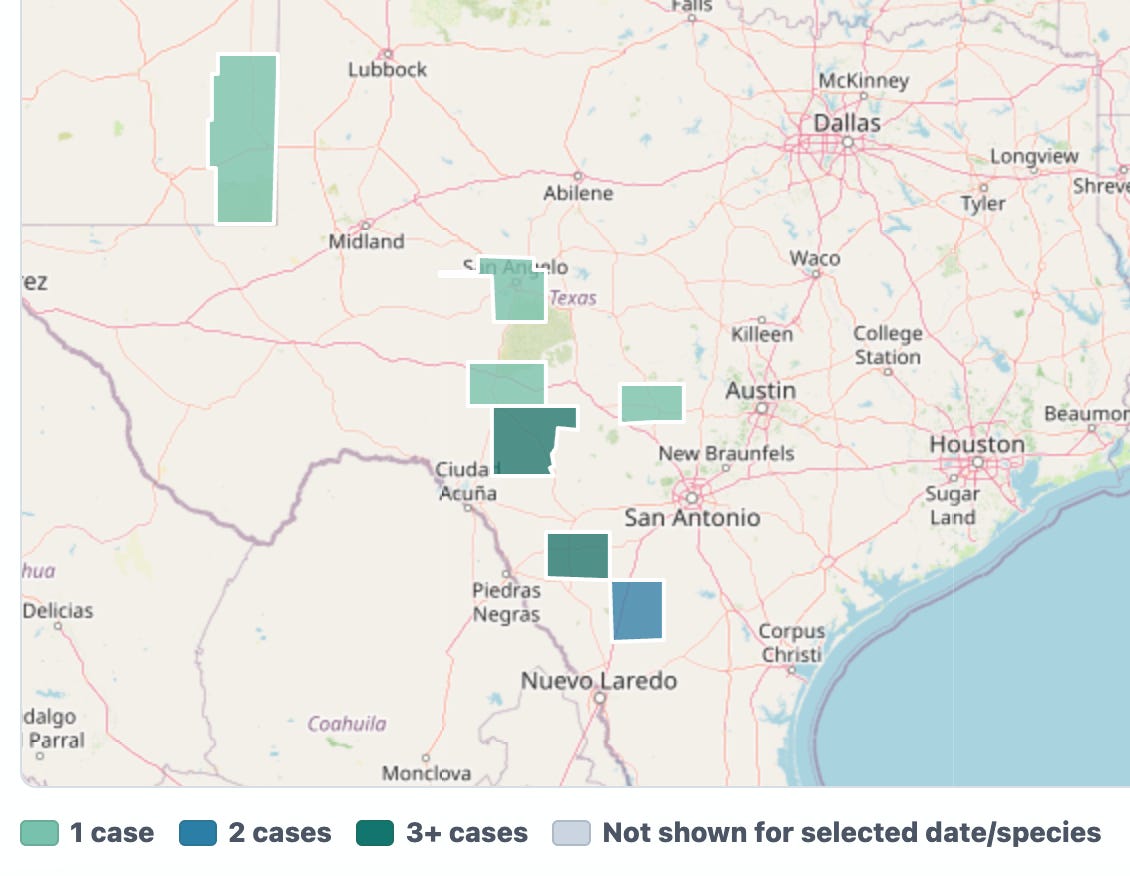
FDA clears a screwworm treatment for dogs and cats. The FDA authorized emergency use of generic nitenpyram tablets for infected pets, expected to kill most larvae within hours. New World screwworm numbers continue to climb, with 12 animal cases across 7 counties. This medication is not preventative but an important new tool if an infection occurs—and more will be happening given how quickly this thing spreads.
A new sunscreen ingredient, the first in over two decades. The FDA has approved bemotrizinol, used for years in Europe, Asia, and Australia, where it’s prized for strong, stable protection against both UVA and UVB. The approval spotlights a U.S. quirk: because sunscreens are regulated as drugs here, new ingredients can take years or decades to reach consumers. Products could appear later this year, though wide availability will take time. Read more about sunscreen at the YLE deep dive here.
A lab-grown heart-muscle patch. Researchers implanted a stem cell-derived patch of heart muscle onto the failing hearts of 16 patients with advanced heart failure. The effect was real but modest, more of a signal of progress. Read more here.
Question grab bag
“This week I have encountered several patients saying “vaccines are only studied for 5 days.” Can you update your 12 questions about vaccines handout to address this succinctly? It would be very much appreciated. - A tired pediatrician.”
This is a common rumor. That figure comes from a line in the package insert describing the short window when vaccine trial participants fill out a daily diary card (see below for an example). But that card is only tracking the expected, short-lived reactions to a vaccine (sore arm, redness, fever, fussiness), which are caused by the immune response itself and reliably fade within a few days. Symptoms that persist longer usually point to a different cause, like an unrelated infection picked up around the same time, so that brief window is all the diary card needs to cover.
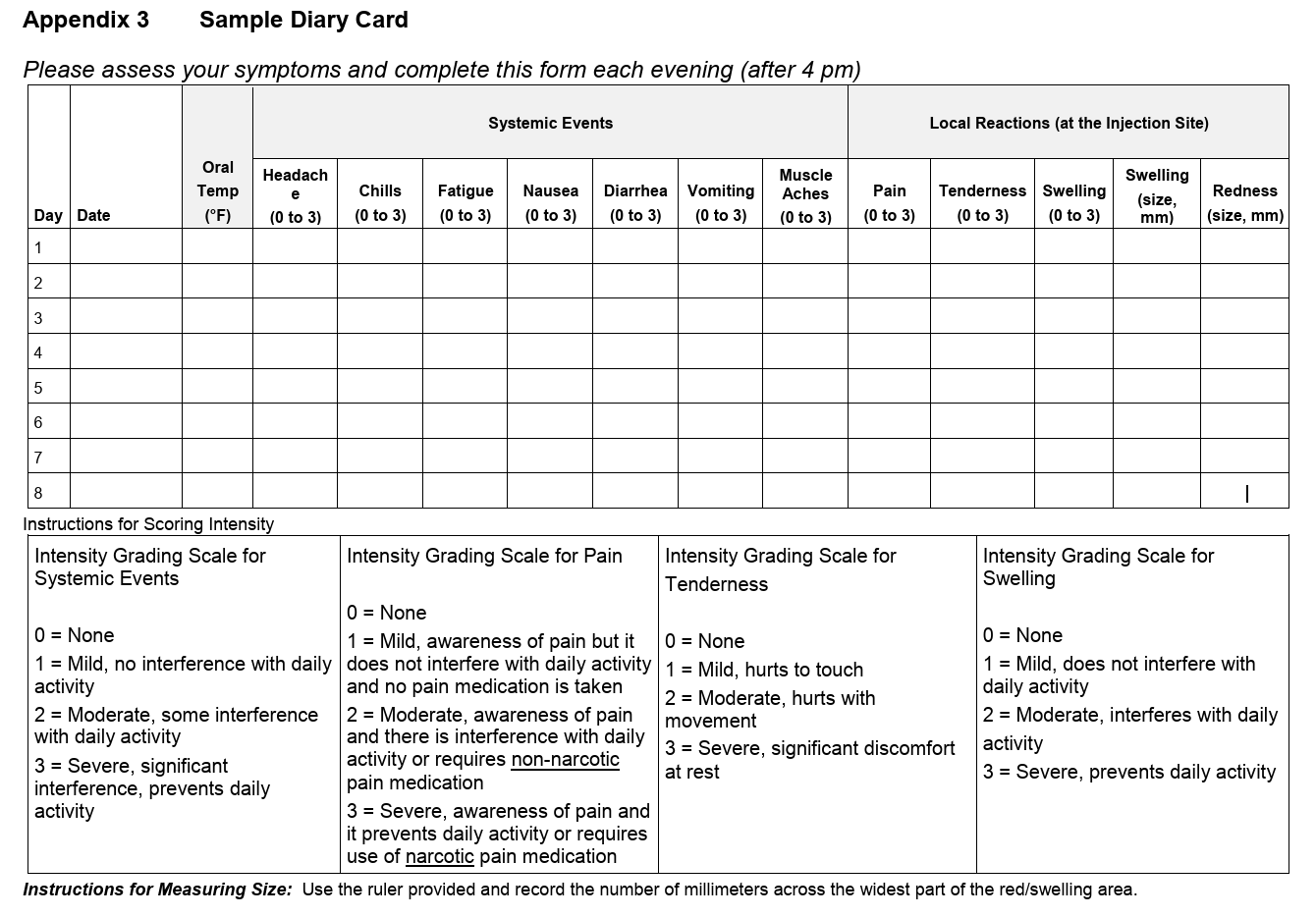
But vaccine monitoring doesn’t stop there. The same trials track other health events for months to years, recorded as they happen rather than on a checklist. And for routine childhood vaccines, those original trials are now just the starting point: we have real-world safety data on hundreds of millions of children across decades, consistently showing that the benefits far outweigh the risks.
We’ve updated the FAQs for paid subscribers, with the latest is available below. Thank you for all your effort, and all clinical care teams on the front line.





.jpg)
No comments:
Post a Comment