----------------------------------------------------
Dr. Ruth Report, 7/19/26
The Cyclospora outbreak, wild fire smoke, COVID and Long COVID news
Ruth Ann Crystal MD, Jul 20, 2026
Lots of news this week about the Cyclosporiasis outbreak, wild fire smoke, and of course, COVID and Long COVID.
When government agencies designed to protect Americans against threats like foodborne illness are working correctly, you never have to think about them because potential disasters are detected early and are contained before they cause significant damage. Unfortunately, significant staff cuts at the USDA, FDA, and CDC appear to have contributed to the country’s worst Cyclosporiasis outbreak ever.
Last year in July 2025, the CDC scaled back surveillance of foodborne illnesses from eight pathogens to two: Salmonella and Shiga toxin-producing E. coli (STEC). FoodNet had been tracking six additional pathogens: Campylobacter, Cyclospora, Listeria, Shigella, Vibrio and Yersinia which were dropped last July.
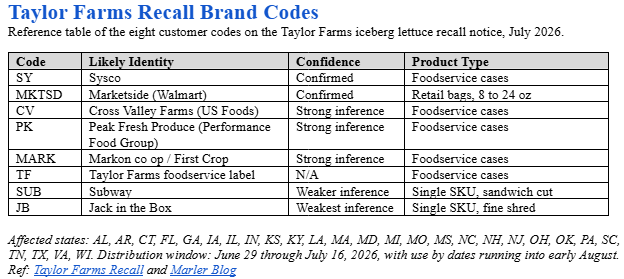
Now, the worst Cyclosporiasis outbreak in U.S. history appears to be from lettuce produced by Taylor Farms. Yesterday, Taylor Farms and the CDC posted that grocery store lettuce was not affected, but then in their recall notice, Taylor Farms stated that the Cyclospora contaminated lettuce was distributed in 27 states (AL, AR, CT, FL, GA, IA, IL, IN, KS, KY, LA, MA, MD, MI, MO, MS, NC, NH, NJ, OH, OK, PA, SC, TN, TX, VA, and WI) to restaurants like Taco Bell, but also to grocery stores like Walmart under the Marketside brand.
Unfortunately, the Taylor Farms recall names 8 customer codes instead of full brand names. Sysco and Walmart’s Marketside brand have been confirmed while five other codes remain unidentified by the company. Food safety attorney Bill Marler posted his assessment of the product brand codes which I put in a table below.
References:
The CDC quietly scaled back a surveillance program for foodborne illnesses | NBC
DOGE downsized CDC’s Cyclospora lab last year | Wired 7/17/26
Bad air, bad lettuce | YLE Katelyn Jetelina 7/17/26
Taylor Farms Recall 7/17/26
Parasite-Linked Lettuce Was Sent to Walmart Stores and Food Distributors in 27 States | Consumer Reports 7/18/26
Taylor Farms Posted Its Own Recall. It Went to 27 States, Not 5 — and the List Includes Bags Sold in Grocery Stores. | Marler Blog 7/18/26
Air Quality
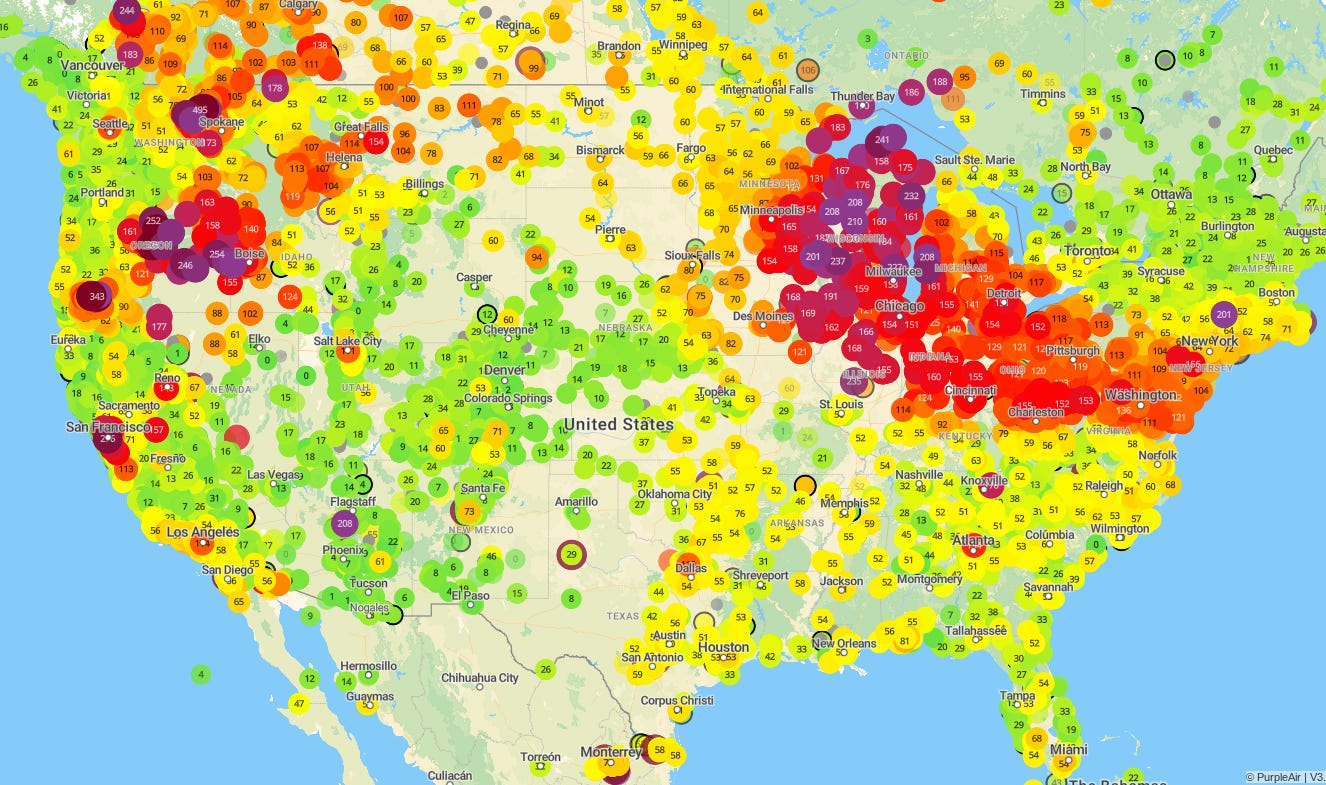
Wildfire smoke from Canadian wildfires caused dangerous air quality in many places, but is now improving. Up-to-the-minute information on local air quality can be found from citizen scientists at Purple Air. It is important to protect yourself from “unhealthy” levels (over 151 on the air quality index) as these can trigger lung inflammation and even heart attacks. Protection includes wearing a well-fitting N95 mask outdoors and using air filters indoors.
From Purple Air
COVID
COVID levels in wastewater are just starting to increase, but overall numbers are still quite low. CDC modeling demonstrates that as of July 15, 2026, COVID infections are increasing or likely growing in 18 states, declining in 3 states, and not changing in 28 states. The CDC wastewater map with data through July 11, shows that Texas has moderate levels of COVID in wastewater, while Florida, Nevada, and California have low levels (up from “very low”).
JP Weiland also notes a visible increase in SARS-CoV-2 in wastewater, but we are still at quite low levels and he believes that the summer wave will be limited. There are about 88,000 new COVID cases in the U.S. each day now.
In California, Alameda county and Sonoma county have some higher levels of COVID in wastewater per the CDC. SARS-CoV-2 levels are very low in most of Europe and the UK according to Bob Hawkins.
Seniors
Children’s Birthday Gatherings and SARS-CoV-2 Infection in Grandparents | JAMA Network Open 7/13/26
Danish researchers looked at over 1.1 million grandparents and found that COVID infection rates rose almost 10% following a grandchild’s birthday, climbing to 15% when the grandchild was preschool age. The findings point to small, informal family celebrations as a meaningful but often overlooked transmission setting for older adults.
Pediatrics
Functional Status and Long COVID Outcomes in Children | Sage Journals 7/14/26
Researchers from the Children’s Hospital of Philadelphia examined 651 pediatric patients and found that children with clinician confirmed Long COVID faced 3.5x greater odds of academic decline and 4.6x greater odds of new or worsening mental health symptoms.
Symptom variation up to two years post SARS CoV 2 infection in Children and Young People: results from the Children and young people with Long Covid (CLoCk) study | BMC Infectious Diseases 7/13/26
University College London researchers tracked 943 children and young people and found that Long COVID consistently presented as a cluster of multiple concurrent symptoms rather than any single defining complaint. Over two years of follow up, fatigue was the most persistent symptom, reported at every assessment by 73.5% of participants, with breathlessness and headaches also persisting.
Long COVID
Loss of vesicular monoamine transporter 2 in striatum of long COVID and relationship to neuropsychiatric symptoms | eBioMedicine (The Lancet) 7/12/26
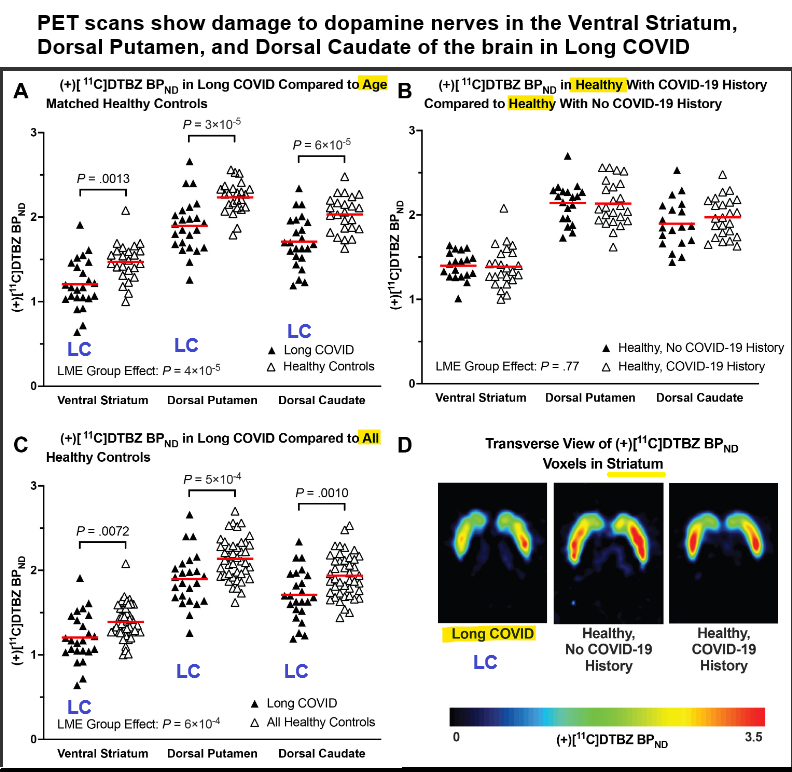
A new study provides evidence of dopamine system injury in the brains of people with Long COVID. CAMH researchers used PET scans on 24 Long COVID patients and 24 healthy controls, finding 16 to 20% lower VMAT2 binding, a marker of dopamine neuron density, in the striatum, a part of the brain that plays a central role in motivation, movement, learning, and cognition.
The location of the dopamine nerve damage matched specific symptoms: lower markers in the ventral striatum of the brain tracked with reduced motivation, changes in the dorsal putamen tracked with slower movement, and lower levels in the caudate tracked with worse memory. The authors concluded that dopamine boosting treatments should be tested in Long COVID patients to assess their impact on motivation, motor speed, and memory.
Fatigue after COVID 19 infection is associated with peripheral immunometabolic alterations affecting neuroimmune responses in the hippocampus | Translational Psychiatry 7/16/26
Researchers at King’s College London studied 38 individuals and found that serum from people experiencing more severe post-COVID fatigue provoked stronger IL-13 signaling and reactive astrocyte activity in human hippocampal cells in vitro. They concluded “our results suggest that fatigue after COVID-19 infection is associated with neuroimmune and metabolic changes in hippocampal cells, involving peripheral serotonin metabolism (5-HIAA) and cytokine signalling (IL-13).”
Neurological impairment in long COVID: implications for neurodegenerative disease | Journal of Translational Medicine 7/12/26
Researchers at Griffith University in Australia reviewed existing evidence identifying four biological mechanisms that may contribute to Long COVID cognitive difficulties: viral persistence, blood brain barrier disruption, immune cell infiltration, and microvascular injury. The authors concluded that a definitive causal relationship between these mechanisms and Long COVID brain fog has not yet been established.
Persistent neurological and behavioral alterations after SARS CoV 2 infection in an optimized K18 hACE2 mouse model | Frontiers in Microbiology 7/12/26
Spanish scientists examined 120 mice following SARS-CoV-2 infection and found that survivors exhibited enduring behavioral changes, immune disruption in both the brain and lungs, and measurable shrinkage of the Vagus Nerve. These effects persisted despite no detectable virus in brain tissue. This suggests that autonomic and immune injury, rather than direct viral invasion, drives post-COVID neurological damage.
Nirmatrelvir for acute COVID-19 to prevent long COVID (PANORAMIC Norway): a double-blind, randomised, placebo-controlled trial | Lancet Infectious Diseases 7/16/26
Researchers from the University of Bergen, Norway conducted a double blind, placebo controlled trial examining whether nirmatrelvir-ritonavir (Paxlovid) taken during acute COVID infection could reduce the likelihood of developing Long COVID. Among the 144 adult participants, those who received Paxlovid showed a meaningful drop in Long COVID rates at three months, from 43% in the placebo group down to 26% in the treated group. The authors caution that the modest sample size limits how broadly these conclusions can be applied.
Towards a long COVID prevention agenda | Lancet Infectious Diseases 7/16/26
UCSF scientists reviewed the 143 person Norwegian trial above that found that early Paxlovid treatment lowered Long COVID rates at three months from 43% to 26%. Longer follow up is needed to determine whether Paxlovid prevents Long COVID or just speeds up symptom resolution.
Dr. Resia Pretorius of Stellenbosch University posted a tweet this week and shared a table of over 20 blood biomarkers (fibrinogen, von Willebrand factor, complement proteins, and more) trapped in Long COVID fibrinaloid microclots. Seven of the proteins showed chemical modifications like glycation and oxidation. This may explain why standard clotting and inflammatory panels often look normal despite clinical evidence of microclotting, as normal blood levels may mask a functional problem if the protein is modified or is sequestered in clots.
Longitudinal assessment of SARS CoV 2 Spike and Nucleocapsid antigenemia in the ORCHESTRA Post COVID cohort | Clinical Microbiology and Infection 7/15/26
University of Antwerp researchers followed 200 participants and found that low levels of SARS-CoV-2 Spike and Nucleocapsid proteins lingered in the bloodstream of some individuals for up to 18 months after infection. However, the presence of these viral remnants did not reliably distinguish people who developed Long COVID from those who did not.
These results are similar to a recent Spanish study from June showing that “SARS-CoV-2 antigens circulate in plasma up to one year after infection in a minority of individuals, regardless of whether they develop Long COVID or not” as detected by the ultra-sensitive Simoa® assay at 6-12 months post infection.
Serological evidence of SARS CoV 2 exposure in marine mammals in the United States between 2020 and 2025 | PLOS ONE 7/14/26
Tufts researchers tested 1,017 marine mammals and found neutralizing SARS-CoV-2 antibodies in harbor seals, grey seals, and California sea lions. Nasal swabs detected no active infections, suggesting the animals had encountered the virus but were not currently spreading it.
SARS CoV 2 spike driven reactivation of latent herpesviruses as a mechanistic link to post viral diseases | Trends Open (Prusty lab) 7/14/26
Researchers from Latvia propose that persistent SARS-CoV-2 spike protein may reactivate three latent herpesviruses, HHV-6, HHV-7, and Epstein Barr virus (EBV), through interconnected mechanisms involving chronic inflammation, immune exhaustion, and mitochondrial stress. They review mechanisms of spike-mediated TLR activation and downstream metabolic dysfunction with NF-kB activation and IL-6 induction.
Therapeutic plasma exchange and immunomodulatory strategies in post-infectious syndromes: A review of immune dysregulation in PTLDS, long COVID, ME/CFS, and PANS/PANDAS | Transfusion and Apheresis Science 7/14/26 (Aug issue)
Dr. Gary Kaplan wrote a narrative review examining evidence that persistent inflammation, autoantibody production, and cellular immune dysfunction underlie post-treatment Lyme disease syndrome, Long COVID, ME/CFS, and PANS/PANDAS. These conditions share overlapping symptoms of fatigue, cognitive dysfunction, sleep disturbance, and neuropsychiatric features. The review evaluates the rationale for immunomodulatory therapies including IVIG, rituximab, and therapeutic plasma exchange across these overlapping conditions, arguing that identifying patients with measurable immune abnormalities through biomarker testing is essential to target treatments effectively.
Super resolution atlas of SARS CoV 2 infection reveals protease dependent organelle maturation, dsRNA landscapes, and intracellular structural proteins | Nature 7/13/26
COVID rebound: Using super-resolution microscopy, researchers from Stanford mapped the viral protein nsp5 inside SARS-CoV-2 replication vesicles at nanoscale detail. Nirmatrelvir (Paxlovid) left viral RNA and intact replication compartments behind after treatment. Once the drug was removed, viral replication quickly restarted, pointing to a hidden cellular reservoir as a likely cause of COVID infection rebound.
Recent SARS CoV 2 infections and increased antibody responses to viral antigens are associated with greater autoantibody reactivity | Journal of Autoimmunity 7/13/26
COVID infection can lead to autoantibodies. EPA researchers studying 302 people found that a recent COVID infection corresponded with a 10% increase in autoantibody reactivity, suggesting the virus may prime the immune system to mistakenly target the body’s own tissues. Elevated total IgG levels accounted for 54% of this association, and stronger antibody responses to the spike protein were also linked to broader patterns of self-directed immune activity.
Transcutaneous vagus nerve stimulation for long COVID associated autonomic dysfunction: mechanistic rationale and emerging clinical evidence | Clinical Autonomic Research 7/13/26
A review of transcutaneous auricular (ear) Vagus Nerve Stimulation (taVNS) use in Long COVID patients appears safe and the existing evidence suggests this approach may reduce excessive sympathetic nervous system activity and fatigue. However, so far studies have been small and larger studies would be needed to show direct mechanistic proof.
Emerging Trends in Post COVID Immune Dysregulation | Annals of Medicine & Surgery 7/12/26
Conclusion from this review: “Long COVID is a multi-system syndrome driven by a core set of primary immunological mechanisms: persistent immune activation with T-cell exhaustion, autoimmunity (particularly anti-cytokine and anti-interferon antibodies), and thromboinflammation. Secondary phenomena, including complement dysregulation, metabolic alterations, and endothelial dysfunction, likely represent downstream consequences or modifiers of these primary drivers rather than independent causes.
“Among the candidate biomarkers, autoantibody profiles and cytokine panels show the most promise for clinical translation: autoantibody testing could stratify patients for immunomodulatory therapy, while elevated IL-6, IL-10, TNFα, and IP10 may serve as monitoring tools for disease activity and treatment response. Early viral persistence (spike antigen, SARS-CoV-2 RNAemia, and EBV reactivation) identifies high-risk individuals who might benefit from antiviral strategies.”
ME/CFS
Association of Rapamycin treatment with the modulation of purine metabolism, reduced microglial inflammatory responses, improved mitochondrial energy metabolism, and alleviation of fatigue symptoms in ME/CFS | Journal of Translational Medicine 7/13/26
Simmaron Research enrolled 76 people with ME/CFS in a phase II observational pilot trial and found that 90 days of low dose rapamycin was associated with reduced fatigue and post-exertional malaise alongside decreased IMPDH2 enzyme activity, lower oxidative purine levels, and recovered mitochondrial reserve capacity. The trial did not include a placebo group, which limits how confidently the improvements can be attributed to the treatment itself.
Measles
CDC Measles updates (on Wed.): https://www.cdc.gov/measles/data-research/index.html
As of July 16, 2026, 2,260 measles cases were reported in the United States in 2026.
Ebola in Democratic Republic of Congo (DRC)
The DR Congo Health Minister reports that as of July 17, “2,267 confirmed [Ebola] cases have been recorded, including 722 patients in isolation or hospitalization, 444 people recovered, and 893 deaths. The case fatality rate stands at 39.4%, while the contact tracing rate has reached 83.6%.”
Government Health News
Hegseth’s testosterone mandate carries risks, raises questions | The Hill 7/19/26
The Endocrine Society advises against such routine testing without symptoms.
Other news
Biologists pinpoint how common virus triggers multiple sclerosis | Nature 7/15/26
Harvard and MGH scientists studying 60 people with Multiple Sclerosis (MS) found that the Epstein Barr virus (EBV) activates CD4+ T cells that appear to drive immune attacks on the myelin sheath protecting nerve fibers. Treatment with anti-CD20 therapy reduced those T cells by 2.5 times and also lowered EBV levels in saliva, providing the clearest mechanistic link yet between this EBV and MS onset.
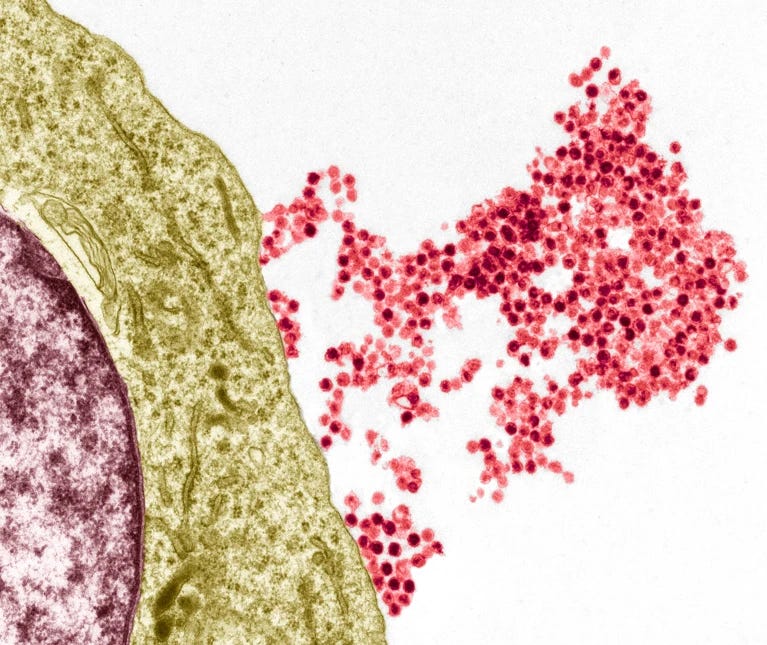
Photo: Epstein–Barr virus triggers specific T cells in the immune system, which leads to an attack on nerve cells in the brain and spinal cord. Photo Credit: Steve Gschmeissner/SPL
CD4+ T cells reactive to Epstein-Barr virus late lytic antigens are enriched in individuals with multiple sclerosis | Science Transl Med 7/16/26
Untreated Multiple Sclerosis patients had twice the CD4+ T cell immune response to Epstein Barr virus (EBV) late lytic proteins compared to controls, pointing to active viral replication as a feature of the disease. Anti CD20 therapy both reduced this elevated T cell response and eliminated EBV shedding in saliva, linking ongoing EBV viral activity to MS.
First-in-human testing of a mutant KRAS vaccine for Pancreatic Cancer interception in high-risk cohorts | Cancer Discovery 7/16/26
Vaccine to prevent Pancreatic Cancer:
Pancreatic cancer arises from precursor lesions over more than a decade and is associated with mutant KRAS (mKRAS). A Phase I study of a peptide vaccine targeting six common KRAS mutations (mKRAS-VAX) in 20 people with hereditary Pancreatic cancer predisposition and an abnormal pancreas on CT scan was safe and showed that 90% of these individuals had a significant mKRAS-specific T cell response which may help prevent pancreatic cancer in high-risk people.
Unifying the hallmarks of major depression through neuroimmune–metabolic–oxidative (NIMETOX) dysregulation: a mechanistic systems framework | Cellular & Molecular Immunology 7/13/26
Researchers at the Sichuan Provincial Center for Mental Health conducted a review of scientific work since 1990 linking major depression. Their NIMETOX (NeuroImmune, METabolic, and OXidative stress) framework proposes that these converging disruptions can compromise the brain’s protective barriers and drive neuroinflammation as well as direct neuronal damage.
Low Back Pain: A Review | JAMA 6/15/26
A review of low back pain, a leading cause of disability worldwide with an algorithm of the diagnostic approach for nonspecific low back pain.
Army Vet’s $2 Million GoFundMe to ‘Pay It Forward’ | Military.com 5/1/26
Ed Bambas worked for 40 years at General Motors, but when the company went bankrupt in 2012, his pension and health insurance were replaced with a $350,000 lump sum. Medical costs for his late wife’s illness and her death in 2018 left him nearly bankrupt, forcing him back to work as a grocery cashier at age 80 just to make ends meet. At age 88, a viral video by influencer Sam Weidenhofer led to almost $2 million in GoFundMe donations from 67,000 donors for Ed to finally retire. Wanting to pay-it-forward, he donated $50,000 of it, $1,000 each, to a GoFundMe for 50 veterans in all 50 states through a campaign called “For Your Service.”
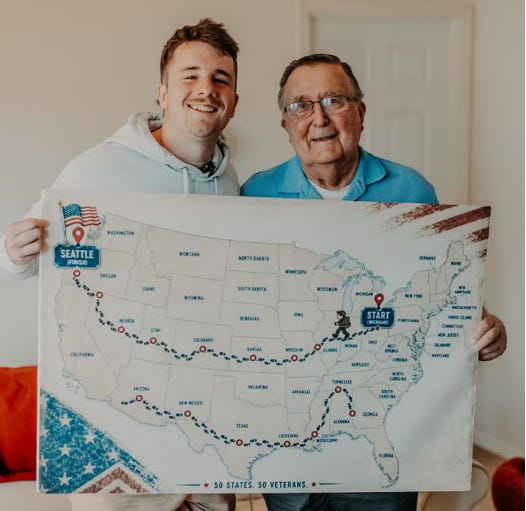
Sam and Ed pay-it-forward for veterans
This chaotic 2,000-pound seal has returned to sea – but leaves behind a conundrum | CNN 7/14/26
Neil the seal, a beloved 2,000-pound adolescent southern elephant seal, has swum back out to sea after another chaotic “haul-out” season on Tasmania’s roads and beaches. Normal male elephant seal behavior includes banging against other male elephant seals, but since there aren’t any in Hobart, he’s been banging against traffic cones and posts. Neil is a big guy, but is expected to reach about 8,000 pounds and 16 feet long, or as big as a pickup truck, when he is fully grown. Authorities are planning on how to keep both Neil and his adoring human fans safe when he next comes back to visit.
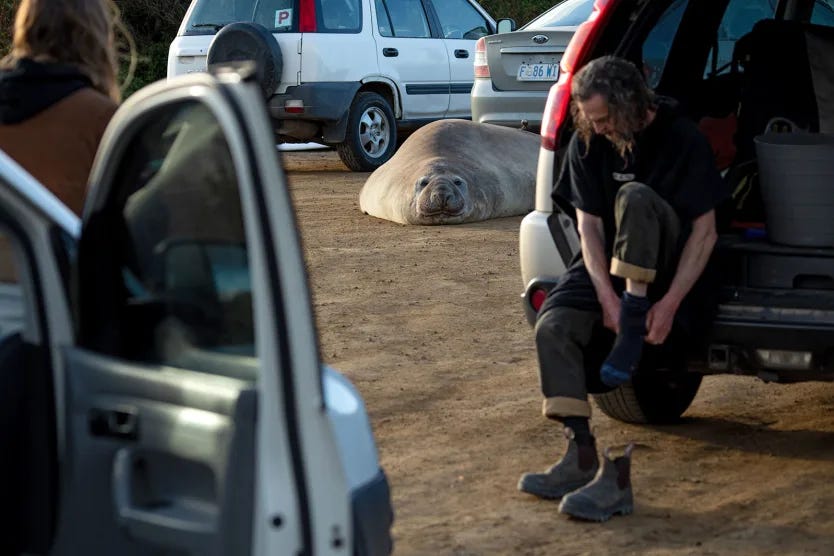
Teenager Neil the seal in a parking lot, photo credit: Rebecca Thomson
Have a great week,
Ruth Ann Crystal MD





.jpg)
No comments:
Post a Comment