-------------------------------------

Halloween gives us plenty of imaginary threats to fear: ghouls, goblins, your neighbor trying to dress like Kid Rock, and the monster under the bed (which, admittedly, makes a compelling case for keeping your feet under the covers).
Infectious disease experts have a more consequential list, but what tops it isn’t usually what scares people most. Headlines about rare infections and unfamiliar diseases tend to ratchet up anxiety, but, say experts, some of the greatest dangers have become so familiar that we underestimate them.
There are big gaps between what the public most fears and the threats that actually cause the most harm, says Director of the Center for Infectious Disease Research and Policy (CIDRAP) Michael Osterholm, PhD, MPH. “There's often a lot of confusion between what kills you versus what hurts you versus what concerns you versus what panics you.”
This Halloween, we asked Dr. Osterholm to outline the top three infectious disease threats that concern him the most and what people can do reduce their risk. And, in true Osterholm fashion, he provided four bonus scares.
Threat #1: Respiratory diseases
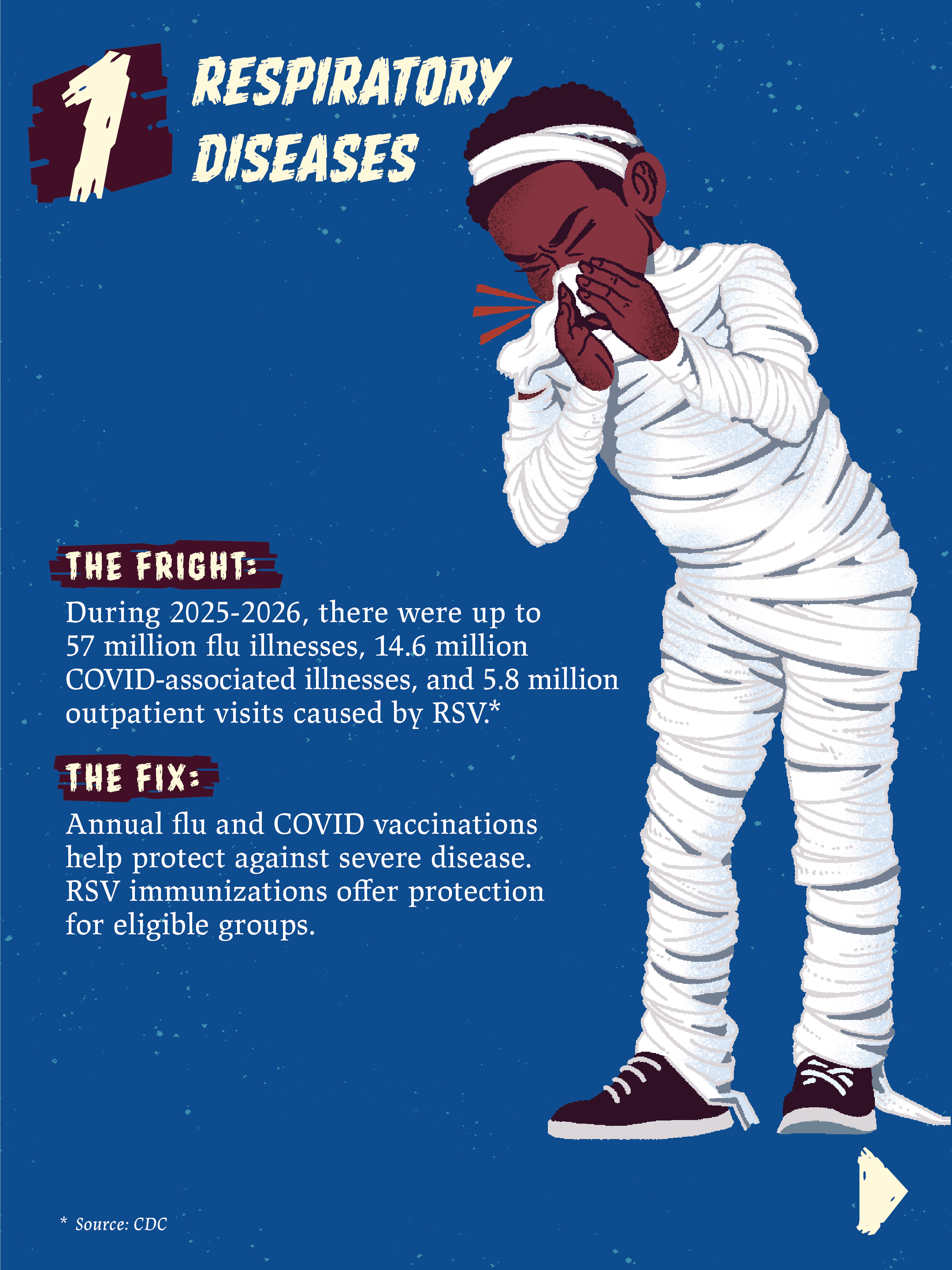
Influenza is so much a part of the fabric of fall and winter that most people barely register it as a threat. COVID-19, too, has receded in the public imagination, becoming just another illness we hope to avoid. And respiratory syncytial virus (RSV) often resembles a common cold, making it easy to overlook, despite it being the leading cause of hospitalization among infants in the United States and hitting older people hard as well.
But familiarity doesn’t make these diseases innocuous. During the 2025–26 respiratory virus season, the CDC estimates there were up to 57 million flu illnesses, 390,000 flu-related hospitalizations, and 81,000 deaths. Before that, the 2024–25 flu season was the highest-severity flu season in more than a decade, with hospitalization rates up to 2.8 times higher than the historical median and 280 pediatric deaths—the most in any non-pandemic flu season since pediatric flu deaths became reportable in 2004.
COVID’s toll has declined considerably since the height of the pandemic, but the virus remains a substantial public health threat, especially for older adults, infants, pregnant women, and people with compromised immune systems. During the 2025–26 respiratory virus season, COVID was associated with an estimated 5.2 million to 14.6 million illnesses and as many as 2.7 million outpatient visits, 270,000 hospitalizations, and 48,000 deaths nationwide.
Infants and older adults are at the greatest risk for severe RSV-related disease. During the 2025–26 season, RSV caused an estimated 2.8 million to 5.8 million outpatient visits, 170,000 to 340,000 hospitalizations, and as many as 25,000 deaths.
“When you look at the morbidity and mortality each year in this country from respiratory diseases, it’s remarkable,” says Osterholm. The toll is particularly striking, he says, given the resources available in the United States.
“When we see several hundred children dying in a year from an infectious disease in this country, we have to ask ourselves, ‘How could that happen?’” he says. “We're not living in a country that has unsafe water supplies or lack of medical care.”
Getting annual vaccinations against flu and COVID remain the best way to protect against severe disease. RSV immunizations offer protection for eligible groups. For guidance on who should receive immunizations and when, Osterholm directs people to the American Medical Association’s website, which compiles recommendations by age, medical status, and vaccine.
One thing to remember, says Osterholm, is that the protection provided by different vaccines varies. For respiratory infections, for example, vaccines help protect against severe disease more than against infection itself.
“When you get to COVID and the flu in particular, you're talking about not necessarily protecting against infection. You get relatively low protection from those vaccines,” says Osterholm. “What’s really important is that they are very effective at reducing serious illnesses, hospitalizations, and deaths, and if you could have an infection that lays you up for a few days but doesn’t send you to the hospital or the ICU [intensive care unit], that's really worth it. And that's what those vaccines do.”
Threat #2: Antibiotic resistance
 “
If you were to do a quiz on antibiotic resistance [AMR] and offer $1 million to people who get all the answers right,” says Osterholm, “you could probably keep your million dollars.”
The problem of bacteria changing in ways that allow them to survive the medication designed to kill them doesn’t grab a lot of headlines. And it can feel like a diffuse, distant problem—something happening to other people or gathering momentum for a future catastrophe, rather than a threat that deserves attention now.
“People forget how many people die every day in this country from antimicrobial-resistant infections,” says Osterholm. And mortality isn’t the only concern. Resistant infections make treatment more difficult, while the development of new antibiotics struggles to keep pace.
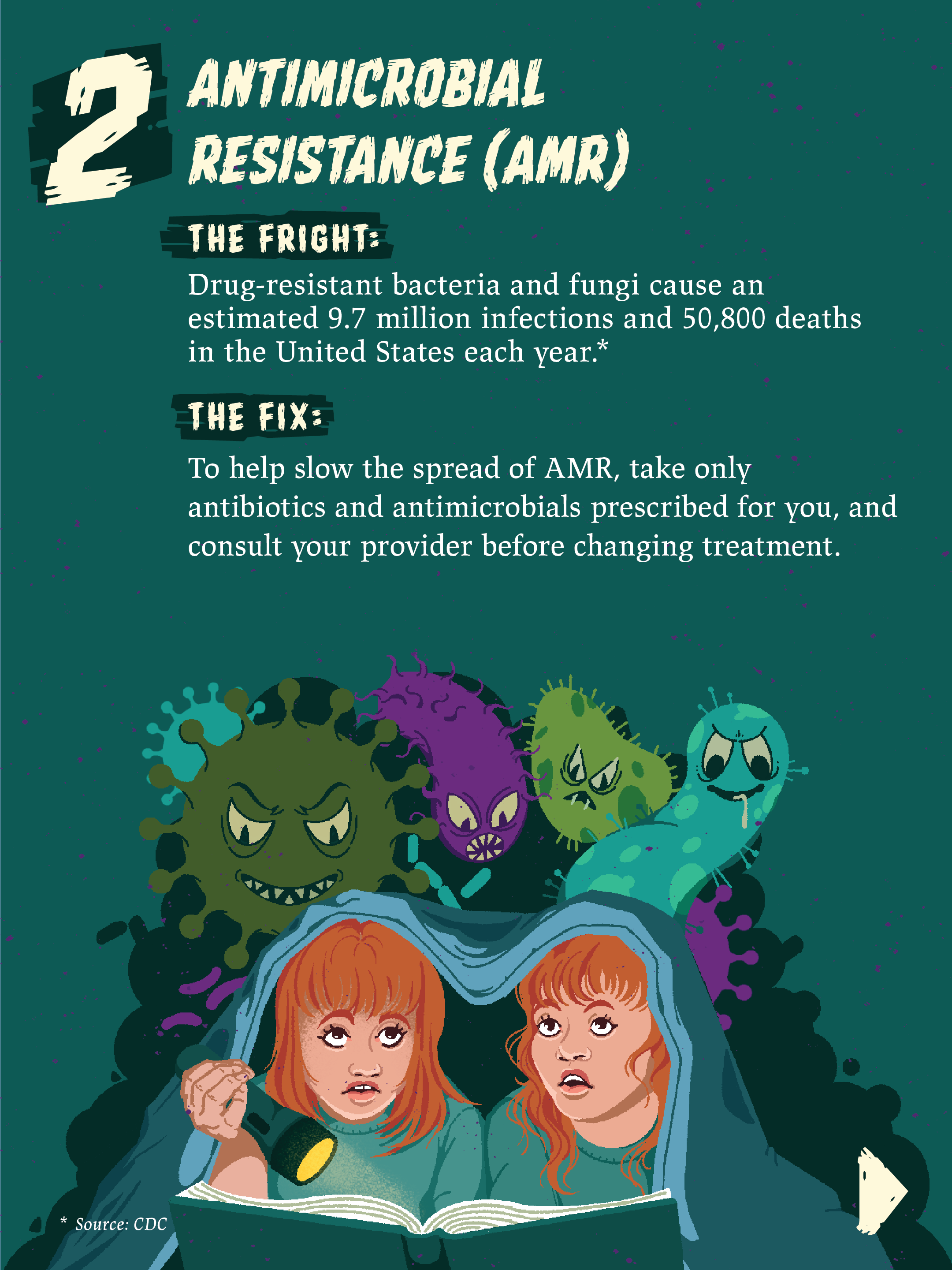
According to the CDC’s Antimicrobial Resistance Threats Report, drug-resistant bacteria and fungi cause an estimated 9.7 million infections in the United States each year, up from an estimated 2.8 million in 2019. A 2022 study estimated that AMR directly caused 1.27 million deaths worldwide in 2019 and was broadly associated with 4.95 million deaths.
More recent research, drawing on data submitted by more than 100 countries, found that one in six laboratory-confirmed bacterial infections were resistant to antibiotics in 2023.
As resistance spreads, treatment often requires more antibiotics. Yet antibiotic overuse can perpetuate the problem, creating conditions that favor resistant bacteria. For example, antibiotic overuse can disrupt the protective microbes in the gut, which makes the gut more susceptible to serious infections with pathogens like Clostridioides difficile (C diff), a potentially life-threatening infection of the colon.
“It causes severe diarrhea and even potentially fatal diarrhea,” says Osterholm. C diffis estimated to cause half a million infections annually in the United States.
Most cases of C diff happen while or shortly after taking antibiotics, notes the CDC—and most cases require treatment with specific antibiotics. It’s a cycle that illustrates the tricky balance in working responsibly with antibiotics.
“This is a slow-motion crisis,” says Osterholm.
To help slow the spread of AMR, take only antibiotics and antimicrobials prescribed for you, and consult your practitioner before changing treatment, says CIDRAP Program Manager Elise Holmes, MPP.
If a prescription is stopped, don’t save it for later or dispose of it in the sink, toilet, or your yard, where it may come in contact with the water supply, she continues. Seek out medication take-back programs, which are often available at local pharmacies.
Preventing infections also reduces the need for treatment. Staying current on recommended vaccinations, washing your hands, practicing food safety, and using safer-sex measures can help protect you, too, says Holmes.
Taking steps to prevent infection when you travel warrants extra attention, she adds. Always follow the food and water precautions appropriate for your destination and, if you’re considering medical or dental care abroad, know that it may come with increased risks.
Threat #3: Measles

Measles may seem like a disease that belongs to another era. But increasingly, it belongs to this one.
As of late last week, US measles cases had reached 4,588, the highest annual total since 1991 and more than double last year’s total of 2,289. Pennsylvania accounts for nearly a third of the total, and experts have warned that the official counts likely underestimate the outbreak’s true size.
“Pennsylvania is just one of what's going to be many,” says Osterholm.
Declared eliminated in the United States in 2000, measles is resurging because of a combination of its extraordinary contagiousness and growing gaps in protection. As many as nine in 10 susceptible people who have close contact with an infected person develop measles, and the virus can remain in the air—and infectious—for up to two hours after an infected person leaves a room.
At the same time, vaccination rates are falling. Measles-mumps-rubella (MMR) vaccine coverage among US kindergarteners has dropped from 95.2% during the 2019–20 school year to 92.4% in the 2025–26 school year. Keeping such a contagious virus in check requires community vaccination coverage of roughly 95%.
Measles vulnerability extends beyond children. Measles is often incorrectly thought of as a childhood disease, but adults account for roughly 40% of cases this year and 67% of cases in Pennsylvania. What’s more, adult infections can be more severe: nationwide, adults have a 14% hospitalization rate, compared with 5% for kids and teens aged 5 to 19 years.
“For most of history, people either got measles and died or got measles and recovered and then had protective antibodies,” says Osterholm. Then, in the 1970s, as the measles vaccine became more commonplace, more people had protective antibodies without having to survive a bout of measles.
Today, it’s different.
“Beginning in the 1990s, we started to see this decision by new parents not to vaccinate their children. Initially, that number was relatively low, but it continued to grow,” says Osterholm. “Now those individuals who didn't get vaccinated and who didn't get natural infections are young adults who are susceptible to measles, and that’s a huge issue.”
Not only are those adults susceptible to measles, they’re of childbearing age. Measles can complicate pregnancy, increasing the risk of premature delivery, low birth weight, and pregnancy loss. It can also increase the risk of passing measles to the fetus, causing congenital measles, an infection acquired in utero that can cause severe illness or death in newborns.
“Because pregnant women would have either had been vaccinated or would have previously had measles themselves before they were pregnant, they would have passed antibodies onto their unborn child, so this is a new phenomenon,” says Osterholm.
Some people dismiss measles as “just a rash,” but that underestimates measles true dangers. The CDC estimates that one to three of every 1,000 children die from respiratory or neurologic complications of measles. And children and adults who recover aren’t out of danger.
Measles can trigger immune amnesia, in which the immune memory cells are destroyed and survivors are vulnerable to infections they previously had protection against because of vaccination or infection.
Another complication is acute disseminated encephalomyelitis, an inflammatory condition of the brain or spinal cord that occurs in approximately one in 1,000 cases. Measles can also cause subacute sclerosing panencephalitis, a deadly neuroinflammatory disease of the central nervous system that can appear seven to 10 years after an initial measles infection in patients who seemed fully recovered.
The strongest protection against measles is vaccination. One dose of MMR vaccine is 93% effective at preventing measles; two doses are 97% effective. People unsure about their vaccination status should ask their healthcare provider whether they need a dose. This is especially important before travel or during a local outbreak. MMR vaccines can’t be given during pregnancy, so checking immune status before pregnancy is particularly important.
If a person is exposed to measles, “it's all about quarantine,” says Osterholm. Those with a suspected case should call ahead to the clinic or emergency department before going in.
More threats worth watching
The threats that warrant our attention don’t end there, says Osterholm. Four others should be on our radar for their potential to spread, the severity of the harm they can cause, and the gaps in our preparedness.
Chronic wasting disease
Chronic wasting disease (CWD) is a fatal neurologic illness that affects cervids such as deer, elk, moose, caribou, and reindeer. No human infections have been confirmed, but some experts, including Osterholm, worry that CWD could jump species. Since CWD was first documented in 1967, it’s spread across North America and has now been documented in 37 states and five Canadian provinces—and with its expanding reach comes more opportunity for human exposures.
he primary fear is that CWD could jump to humans through the consumption of venison or other infected meat. The infectious, misfolded proteins, called prions, that cause CWD are not confined to a deer’s brain and spinal cord. Prions have been detected in skeletal muscle, or the meat people eat. Continuing to eat deer meat without testing for prions is “a really dangerous, shortsighted activity,” says Osterholm.
He points to “mad cow” disease (bovine spongiform encephalopathy) as a precedent. Some people who ate contaminated beef developed variant Creutzfeldt-Jakob disease, the human form of mad cow disease. In terms of preventing a similar scenario with CWD, he says, “I fear one day we're going to wake up and regret we hadn't done more” to prepare.
Rubella
Overall, cases of rubella have dropped dramatically since vaccination helped eliminate transmission in 2004. But concern about the infection, which is especially dangerous during pregnancy, is rising as US MMR vaccination rates decline.
Rubella, sometimes called “German measles,” although it is caused by a different virus, can be mild in children and adults, but an infection during pregnancy can have severe consequences, including miscarriage, stillbirth, or congenital rubella syndrome (CRS), which can damage hearing, vision, and development.
About 20,000 babies developed CRS, and approximately 2,100 newborns died, in the last major US rubella epidemic in 1964-65. Today, roughly 10 rubella cases are reported annually in the United States, most of them acquired when traveling or living abroad.
Worldwide elimination is possible if enough people receive a rubella-containing vaccine, which is 97% effective at protecting against the virus. The CDC recommends that children receive two doses of the MMR vaccine and adults without immunity receive either one or two doses, depending on risk factors. Pregnant women who do not have evidence of immunity should be vaccinated immediately after giving birth.
Ebola
For people in North America, the threat level from the current Ebola outbreak in the Democratic Republic of Congo (DRC) is “extremely low,” says Osterholm. But the low domestic risk does not diminish the urgency of containing the outbreak.
In early October, a man traveling to Kenya through the DRC and Uganda contracted Ebola and died, demonstrating the potential for the infection to cross borders. And the current outbreak is the largest ever in the DRC, with 10,091 reported cases and 4,891 confirmed deaths as of today.
Researchers are investigating whether Ervebo, a vaccine approved against Zaire Ebola virus, offers protection against the Bundibugyo virus (the cause of the current outbreak). Researchers are also investigating Bundibugyo-specific vaccine candidates.
The vast majority of Ebola transmission happens through bodily fluids, but experts such as Osterholm speculate on the possibility of airborne transmission—a scary prospect for public health. “We have enough information to know that it could possibly happen,” he says. “And how prepared are we to have that?”
Food safety
This summer’s cyclosporiasis outbreak, linked to iceberg lettuce grown in Mexico and distributed by Taylor Farms de Mexico, sickened at least 12,883 people in 21 states and resulted in at least 570 hospitalizations and two deaths. The outbreak, caused by the microscopic Cyclospora parasite, drove a surge in US cyclosporiasis cases—the CDC received reports of 19,883 lab-confirmed cases this summer, while during the same period in 2025, just 1,180 cases were recorded.
“Foodborne outbreaks often are small and limited relative to the size of the food supply,” says Osterholm. “But when they happen, they're a huge challenge. They can be deadly. They can cause disability. They cost lost hours of work or family time.”
The public health concern extends beyond contamination to the systems that help identify and prevent foodborne illness. During the Cyclospora outbreak, delayed federal communication left the public without timely guidance. “We’re so late to the game to get information out to the public,” Osterholm told CIDRAP News in July. “By the time we get any recommendations for reducing risk, the outbreak’s over.”
Meanwhile, the CDC's Foodborne Diseases Active Surveillance Network (FoodNet) program reduced required surveillance from eight pathogens to two, making the reporting of illnesses caused by Campylobacter, Cyclospora, Listeria, Shigella, Vibrio, and Yersinia optional. While FoodNet monitors disease trends more than directly detects outbreaks, its data can help experts assess if prevention efforts are working.
Funding cuts to FoodNet and similar programs "would devastate our capacity to investigate outbreaks,” Craig Hedberg, PhD, a professor in the Division of Environmental Health Sciences at the University of Minnesota and codirector of the Minnesota Integrated Food Safety Center of Excellence, told CIDRAP News in August 2025.
"The disturbing thing about cutting FoodNet funds is that it normalizes the idea that foodborne disease surveillance is expensive and unimportant," he said. "In fact, it is the foundation of our food safety system, and needs further investments, not restrictions."





No comments:
Post a Comment