Monday, November 03, 2025

Your Local Epidemiologist,11/3/25

Here's another issue of The Dose from Dr Katelyn Jetelina:

------------------------------------ 

Fall back, quiet respiratory season, SNAP expiration and good news

This is what you need to know this week in public health.

It’s November! Time for us Scorpios to shine.

This week, we’re talking about falling back (literally and figuratively). From SNAP beneficiaries missing payments on November 1, to falling back on our broken health care system as open enrollment begins, to the time change messing with our health, a lot is shifting. We’re also flying a bit blind when it comes to respiratory disease data, but I’ve pieced together the best snapshot I can from different sources. There’s also always some good news to share! And, finally, we need your help: take a quick survey to help us learn how you’re using AI tools for health information.

Here we go!
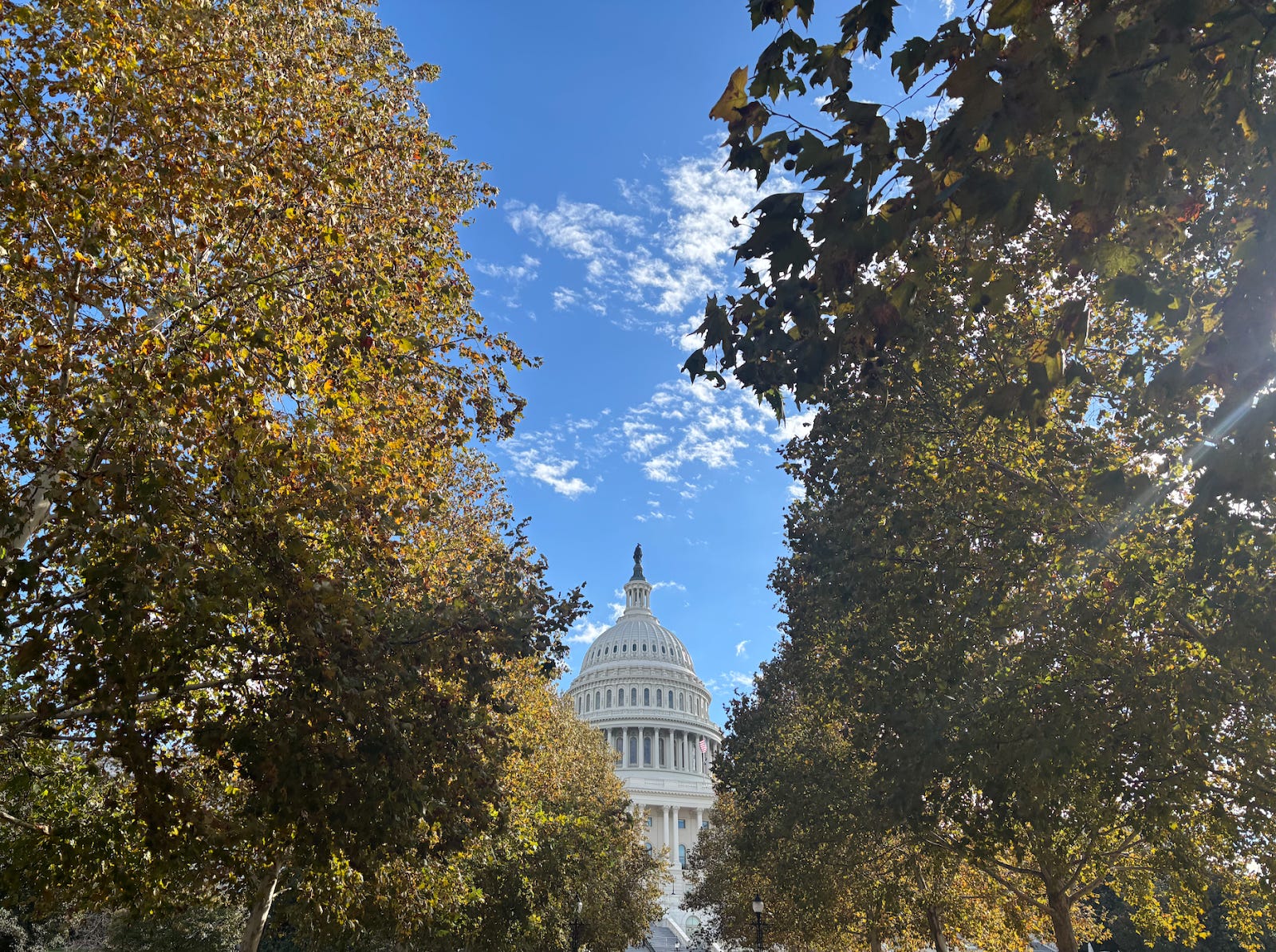
Hannah (YLE team member) flew to DC last week and went on a lovely run through the national mall, which reminded her of the triumphant moments in our country’s history. It gave her hope. Plus, the leaves!

From a health perspective, we’d be better off without daylight saving

Where are all my tired moms at? “Spring forward, fall back”—and children are waking up an hour earlier, of course. Over the weekend, clocks changed. This practice—a polarizing one—has been observed for over a century in an attempt to reduce energy use. In the U.S., most states follow this rule, except Arizona, Hawaii, and some territories. (Hello, Puerto Rico!)

This isn’t just annoying; there are health impacts:

  • In the spring, when we lose an hour of sleep and wake up in the dark, our circadian rhythms are disrupted, making it harder to get up and function. Fatal car accidents rise by about 6%, heart attacks spike by 24%, and rates of abnormal heart rhythms and inflammation increase.

  • In the fall, shorter days and reduced light exposure (sunsets are earlier) are linked to higher rates of depressive episodes.

Research shows that keeping one time year-round—either standard or daylight saving—would be healthier. Modeling studies that account for light, circadian effects, and health outcomes suggest that adopting a permanent system could prevent hundreds of thousands of strokes and lower obesity rates. While more evidence is needed, these findings give policymakers a clearer picture of what’s at stake.

Last week, a bill aiming to make daylight saving time permanent (the Sunshine Protection Act), authored by Florida U.S. Sen. Rick Scott, and backed by President Donald Trump, was blocked by Arkansas Sen. Tom Cotton. That means that, unfortunately, without Congressional approval, the 19 states that have passed laws for permanent daylight saving time cannot act.
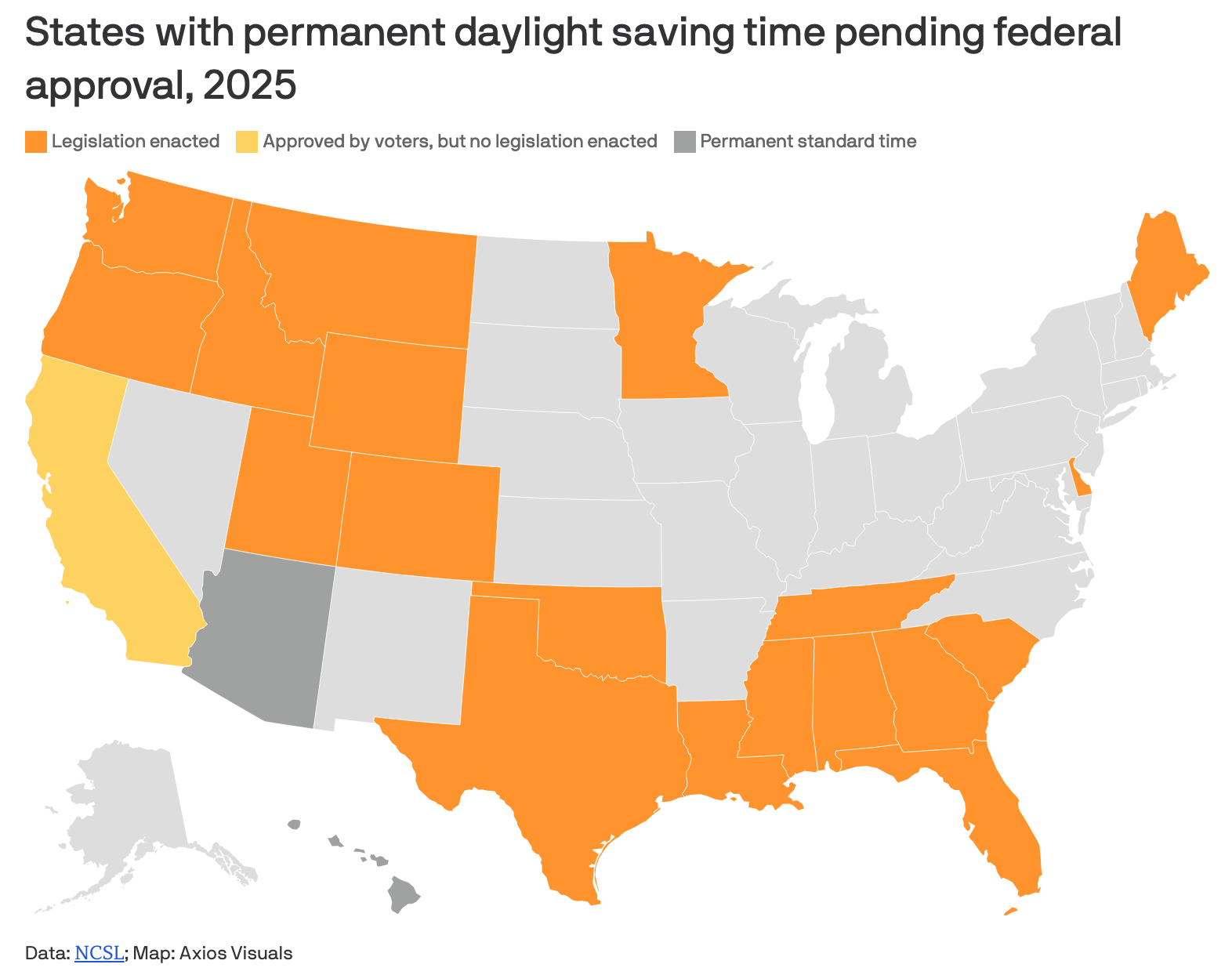
What this means for you: The biggest health impact comes when we “spring forward.” But as you adjust to “fall back,” make time for daylight exposure during the day—it helps recalibrate your sleep and mood. (We noted how you can improve sleep by adjusting light exposure, for example, in an earlier Dose.)


What else “fell back” this weekend?

  1. SNAP fell back. For the first time in history, SNAP benefits didn’t go out as scheduled. Two federal judges have since ordered the USDA to release the funds, but it’s taking time, and that uncertainty is straining families. Calls to 211 are up 97% compared to the rest of the year, according to researchers at WashU. Not all 42 million recipients receive benefits on November 1—states stagger benefits by Social Security number or first letter of the last name—so the longer the delay, the more severe the overall public health impact.
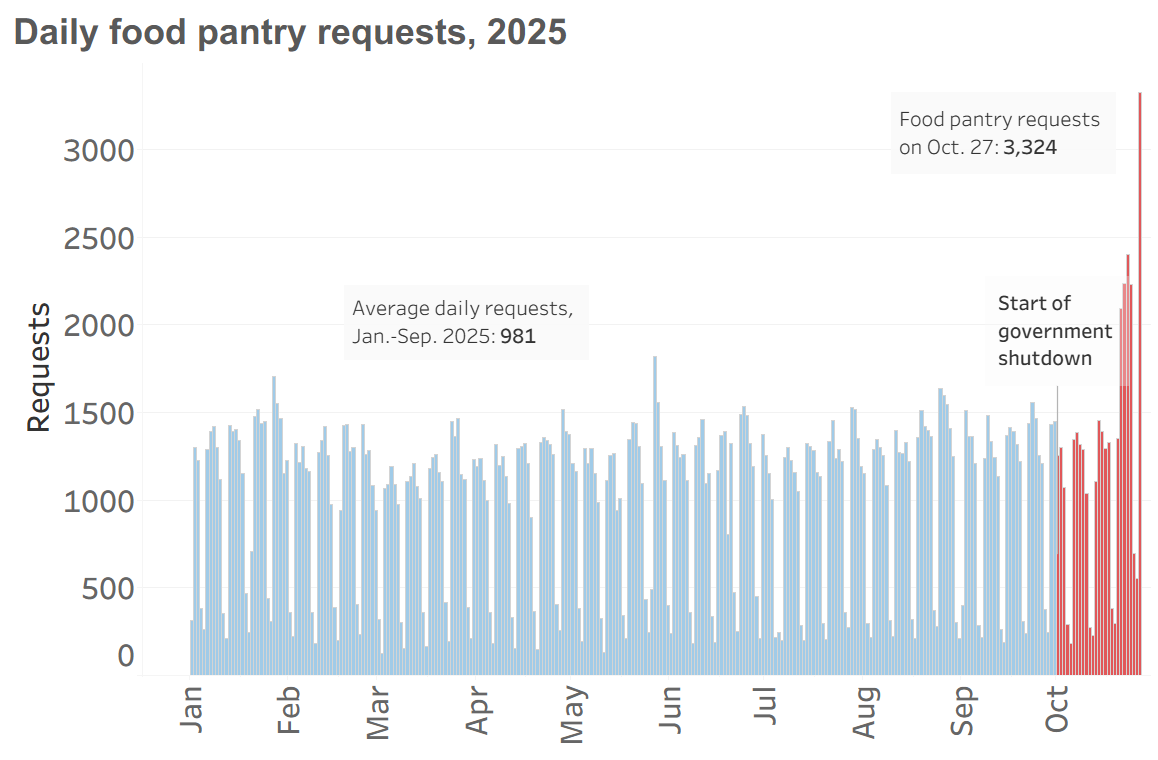
Source: Graph and analysis by Rachel Garg, MPH, PhD, assistant professor at WashU Public Health. Source here.
  1. Falling back on broken health care. The weekend kicked off open enrollment for Obamacare (ACA), during which more than 20 million families will shop for health insurance coverage. Unfortunately, this will come with sticker shock: a ~30% price hike. The price calculations are assuming that lawmakers won’t extend tax credits. (If there is a deal from the shutdown, prices will go down, but will be higher than last year regardless.)

  2. My vaccine uptake anxiety fell back. Normally, we’d have national data on flu and Covid-19 vaccination rates by now. But with the data shutdown, we’re in the dark. When I got my shots last weekend, I asked my pharmacist whether he’d seen any changes in demand. His answer: “No —actually, more people seem to be getting vaccinated this year.”


Infectious disease “weather report:” quiet for now

I’ll be honest, we’re flying a bit blind at the national level right now when it comes to what’s spreading and how. CDC data hasn’t been updated since the shutdown, so we’re missing our usual backbone of information. In the meantime, I’ve been relying on PopHIVE, which pulls data from multiple sources—but it hasn’t been updated since last week (although I’ve heard new data is coming soon).

Here’s what we can piece together: RSV is still low but continues to increase, while flu is just getting started among kiddos.

Here’s how I got there:

  • Scraping state and local health department websites. Shoutout to epidemiologist Dr. Caitlin Rivers for doing that heavy lifting; she mentioned a few places where flu cases are starting to increase.

  • In Google, we’re seeing an uptick in RSV-related searches, especially in Florida, Montana, Idaho, and South Dakota. That aligns with the early signs of an RSV wave we started to see last week. Still, activity remains low overall.
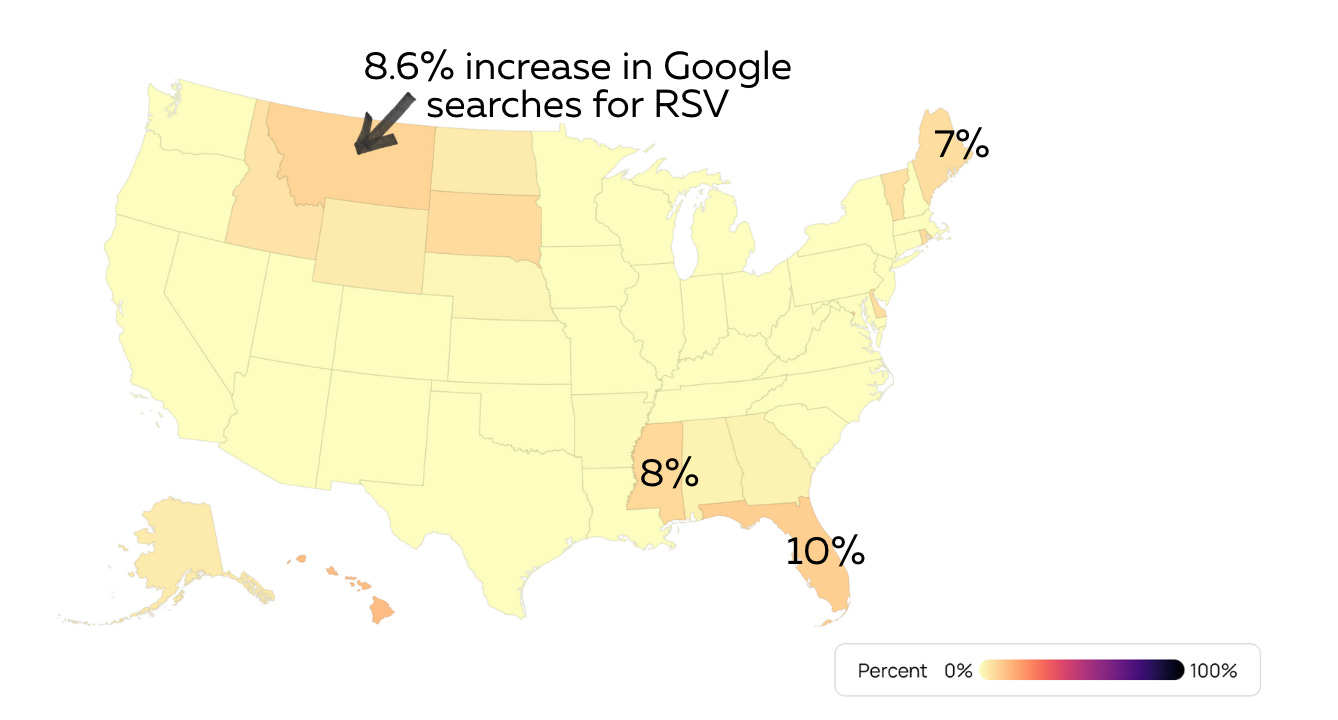
Google Trends data for RSV. Source: PopHIVE
  • Anecdotal data. When I went to get my flu and Covid-19 shots last week, a few people in line were picking up Tamiflu—so it seems flu season might just be getting started too.

  • Private data. One diagnostic tool I found is reporting their data, and it seems like the common cold is really taking the cake. However, it’s unclear to me who is being tested and whether the results are representative of the U.S. population.
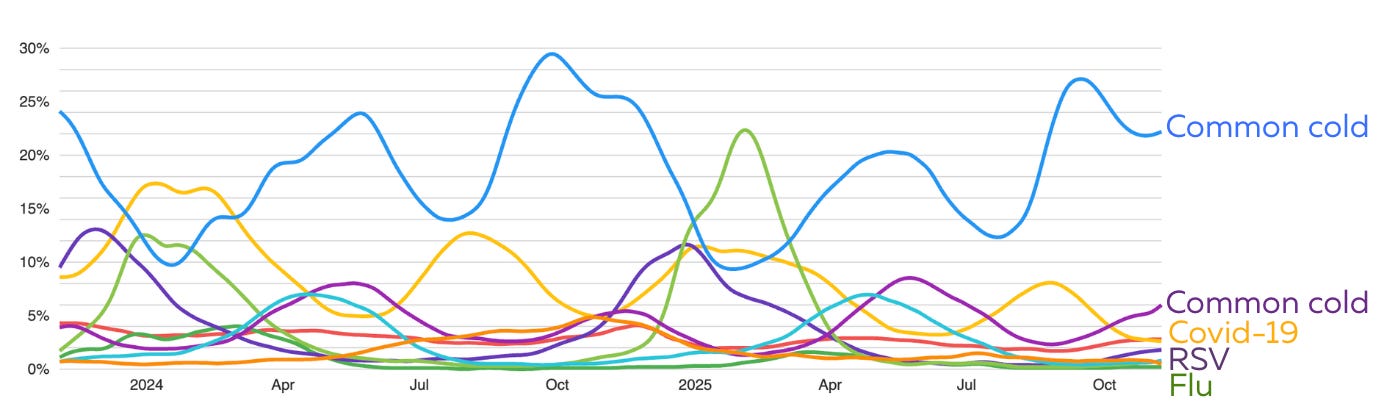
  • Europe. They are usually a few weeks ahead of us, and their flu season is starting to increase. They are also having a tranquil RSV season.
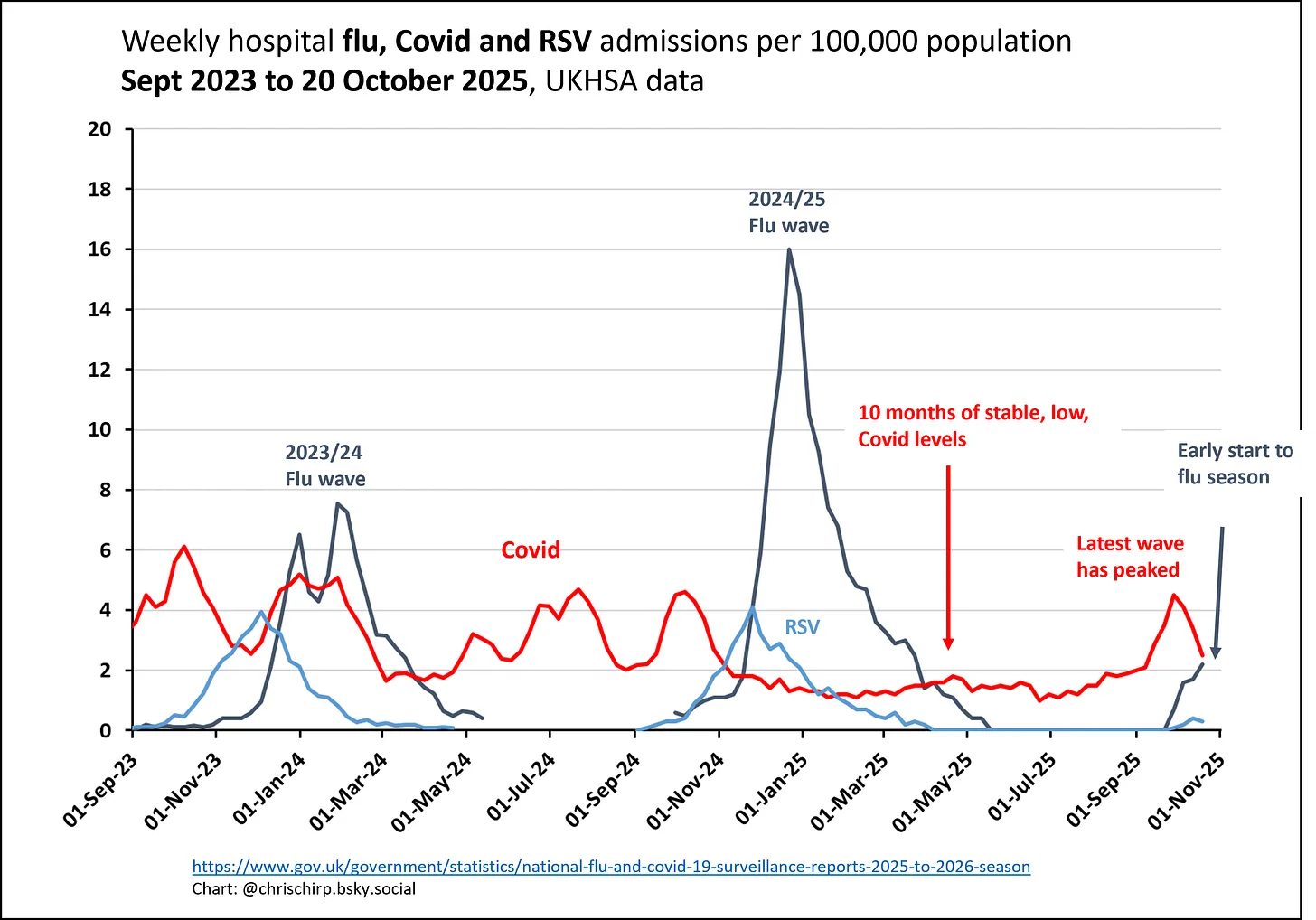
Overall, it’s an unusually quiet season. By now, RSV among infants is usually peaking and flu is picking up steam. Why the lull? Viral patterns depend on a complex mix of weather, humidity, human behavior, viral evolution, and unknown unknowns. In other words, we don’t really know.

What this means for you: Enjoy the lull!

Bird flu

Detections are rising across the country, and migratory birds are to blame as well as weather shifts. As the human flu starts to spread, so does flu for animals. Washington and Wisconsin have reported more than 3.5 million and nearly 2 million avian flu detections, respectively, in the past month. The most commercial flocks (12) have been affected in Minnesota.
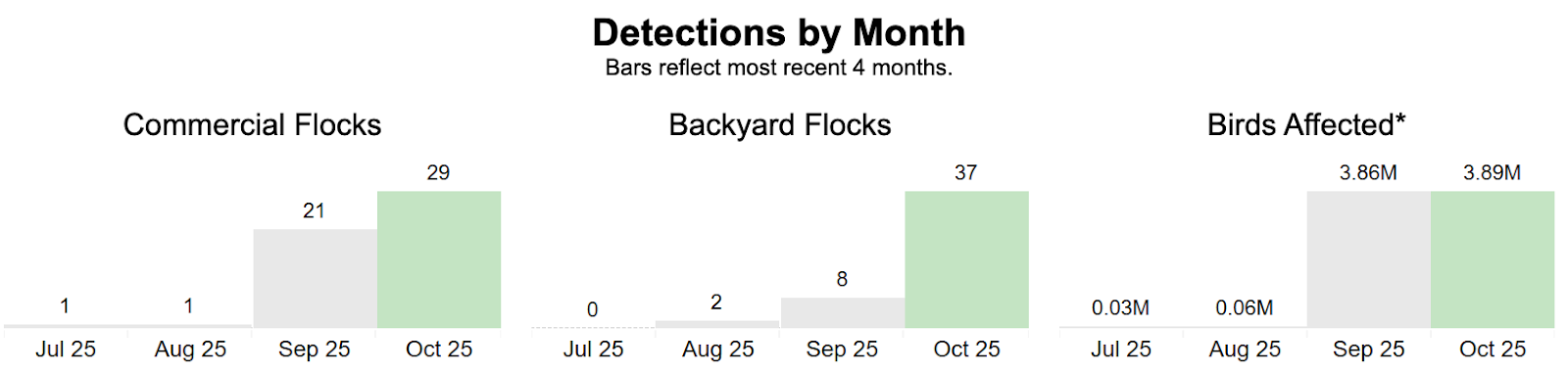
H5N1 detections by month. Source: USDA

This is expected, but the the greater the spread, the more chances there are for the virus to mutate. We haven’t seen human-to-human spread yet, but other variants like H5N2 and continued mutations in H5N1 might eventually make that possible. Unfortunately, all human reporting is currently down due to the shutdown, making it difficult to determine if there is human-to-human spread.


Good news

People STEPPING UP to fill in SNAP gaps. There isn’t anything good about nonpayment to beneficiaries, but it has been refreshing to see communities step up. Social media is filled with donation campaigns. Schools are sending announcements for food drives. More people are volunteering. As Fred Rogers said, “Look for the helpers. You will always find people who are helping.”

Obesity rates are on a steady decline. Recent results from a Gallup poll, which combined three nationally representative surveys, show that U.S. adult obesity rates continue to decline. The exploding popularity of GLP-1 drugs is part of the explanation here, but these drugs are still not available to everyone because of their relatively high price tag. Epidemiologists are still investigating the reasons behind this decline, but for now, it remains a dramatic phenomenon.
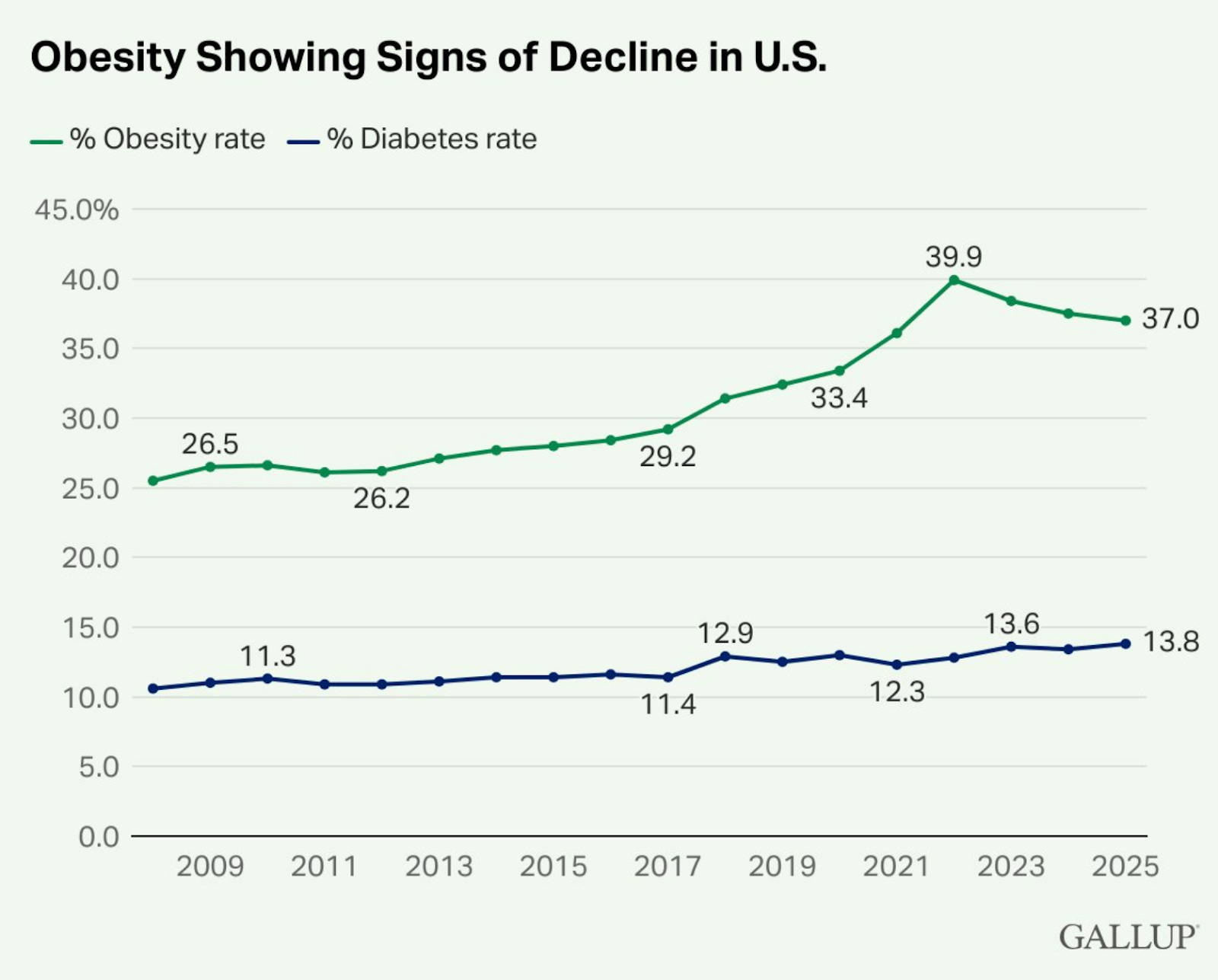
Source: Gallup

Announcement: survey on AI for health information

YLE has been thinking a lot about how AI tools are being used for health. We’re hearing from you that you’re turning to these tools with health questions, and we’ve also started exploring how AI could make it easier for you to find helpful advice on topics we cover. What we’ve learned so far is that there are some really cool things happening—and some really important questions that we want to explore together.

Our next webinar—and some upcoming posts—will dig into your questions, and ours, about how artificial intelligence is transforming the way we discover and understand health information. Think ChatGPT, Claude, Co-Pilot, PerplexityAI, Open Evidence, and more. How do these tools work on the backend? What questions should (and shouldn’t) we ask them? And most importantly, when (if ever) can we trust the answers they give?

We want to make sure this conversation is helpful to you. Please take a minute (literally) to complete this quick poll. Stay tuned for the registration link, which will be available soon (early to mid-November).


In case you missed it

And that’s it! You’re all caught up for the week.

Love, YLE

PowerLine's Week in Pictures

Make sure you check out PowerLine's The Week In Pictures: Trick or Treat Edition, posted on by John Hinderaker, where you'll find many clever memes like the ones about the Socialist Jew-hater Mamdani below. 


Sorry, But It's Not "Islamophobia". It's ISIS.

Well, I guessed right. And they're going to keep trying. 

Isn't it amazing that residents of blue states would rather fight I.C.E. than fight ISIS?

----------------------------------------- 

NewsNation 11/3/25 

2 charged in connection with alleged Halloween terror plot 

"Two people have been charged in connection with an alleged terrorist plot over the Halloween weekend in Michigan.

"Mohmed Ali and Majed Mahmoud are charged with receiving and transferring, and attempting and conspiring to receive and transfer, firearms and 71 ammunition knowing and having reasonable cause to believe that the firearms and ammunition would be used to commit a Federal crime of terrorism.

"They are set to appear in court on Monday.

"FBI Director Kash Patel announced the foiled plot last week. Patel said five people were arrested in connection with a terror plot, but as of Monday, the Department of Justice has only charged two individuals.

"The documents say Ali and an unnamed juvenile were referenced in third-party conversations on an encrypted communication app, with the “brothers” allegedly planning to conduct a terror attack in the U.S, on behalf of ISIS.

"Ali allegedly purchased a shotgun, an AR-15-style rifle and multiple firearms accessories, including a device that allows a shooter to increase the rate of fire on a semiautomatic.

"According to court documents, Mahmoud purchased 1,600 rounds of ammunition to be used in AR-15-style rifles during the attack.

"The complaint says the three scouted locations for an attack in Ferndale, Michigan, and appeared to set the date for the attack for Halloween.

“Our newly unsealed complaint reveals a major ISIS-linked terror plot with multiple subjects arrested in the Eastern District of Michigan targeting the United States,” Attorney General Pam Bondi said on X. “According to the complaint, subjects had multiple AR-15 rifles, tactical gear, and a detailed plan to carry out an attack on American soil.”

Sunday, November 02, 2025

Dr Ruth's COVID & Health News, 11/2/25

Here's the latest info-packed newsletter by Dr. Ruth Ann Crystal, MD, 11/2/25:

-------------------------------------

COVID & Health News, 11/2/25

"As the government shutdown drags on, the CDC’s data blackout also continues making it harder to find information on winter respiratory viruses and COVID.

"According to WastewaterSCAN, COVID levels are LOW across the nation at this time. Most likely they will start to increase again after Thanksgiving, so it is a good idea to get a COVID vaccine by mid-November. Even the highest areas (Dover NH 537 PMMoV, Montpellier VT 495 PMMoV, Snohomish WA 323 PMMoV, and Kinston NC 303 PMMoV SARS-CoV-2 in wastewater) are much lower than levels were a month ago. Mike Hoerger reports that about 1 in 185 people in the U.S. has COVID now which translates to about 264,000 cases per day across the United States. Because of the lack of CDC data, epidemiologist Caitlin Rivers has started posting information for each of the 50 states plus D.C. on respiratory viruses including SARS-CoV-2, flu and RSV.

"We may have an early Flu season like some other countries are having, so it is important to get your Flu shot now if you haven’t done so.

"Norovirus (stomach flu) levels are MEDIUM nationally, with higher levels in the South. If someone you know has the stomach flu (vomiting and diarrhea), make sure to wash your hands often and clean surfaces as needed.

SARS-CoV-2 Variants

"GISAID normally provides genomic data on disease-causing viruses so that we can see if any new variants have arisen. JP Weiland tweeted on October 30:

“GISAID is now blocking genomic sequencing access to critical resources like Nextstrain, Covspectrum, Outbreak.info/ & others. This makes us less safe, as live tracking of viral evolution remains critical for assessment of emerging threats.

I don’t see how I can continue modeling when access to ED, wastewater, and genomic data has been cut.” - JP Weiland

"The CDC last updated the COVID variant tracker 8/28/25.

"BA.3.2 is a variant that has been seen in small quantities on 4 continents and is being followed. According to Ryan Hisner, BA.3.2 has now been detected in low levels in New Zealand wastewater, so it is spreading, albeit slowly, geographically. Most likely, BA.3.2 would need a few more mutations to make it more immune evasive if it is going to spread significantly.

Acute COVID infections, General COVID info

"In a multicenter, double-blinded, randomized-controlled trial in Japan, daily intake of a Lactococcus lactis strain Plasma probiotic was investigated for its effect on 100 patients with mild COVID infection. The small study found that the Lactococcus lactis strain Plasma probiotic significantly accelerated the clearance of the viral load and hastened the recovery of smell and taste after COVID infection as compared to placebo. Overall, the treatment was deemed safe and well tolerated, suggesting a potential adjunctive therapy for mild COVID cases.

Pregnancy

"In a retrospective cohort study of 18,124 newborns at Mass General Brigham, babies whose mothers had COVID infection during pregnancy faced a 29% higher odds of a neurodevelopmental diagnosis such as speech delays, motor disorders, and autism by age 3. The odds increased to 36% if COVID infection had been in the third trimester and to 43% for male babies. While the overall risk remains low, the findings suggest that the maternal immune response to COVID could subtly disrupt fetal brain development, highlighting the importance of prevention of COVID infection during pregnancy.

Vaccines

"Researchers reviewed 511 studies including recent phase III trial and real-world data on the updated 2025–2026 formulations of COVID, RSV, and Influenza vaccines. All of the vaccines significantly helped to reduce hospitalization and severe illness. COVID vaccination and boosters reduced risk of hospitalization by about 50% for non-immunocompromised adults. Giving the COVID, Flu and RSV vaccines together at the same visit was safe and is key to helping ease strain on hospitals.

"The household contacts of 1,047 consecutive COVID infection inpatients from two Chinese hospitals were studied to evaluate vaccine durability. Although protection against infection waned over time, exposed household contacts who had received at least two vaccine doses maintained strong protection against hospitalization for more than 12 months. Boosters provided additional benefit, especially for older adults.

Post-Viral Cardiovascular Disease

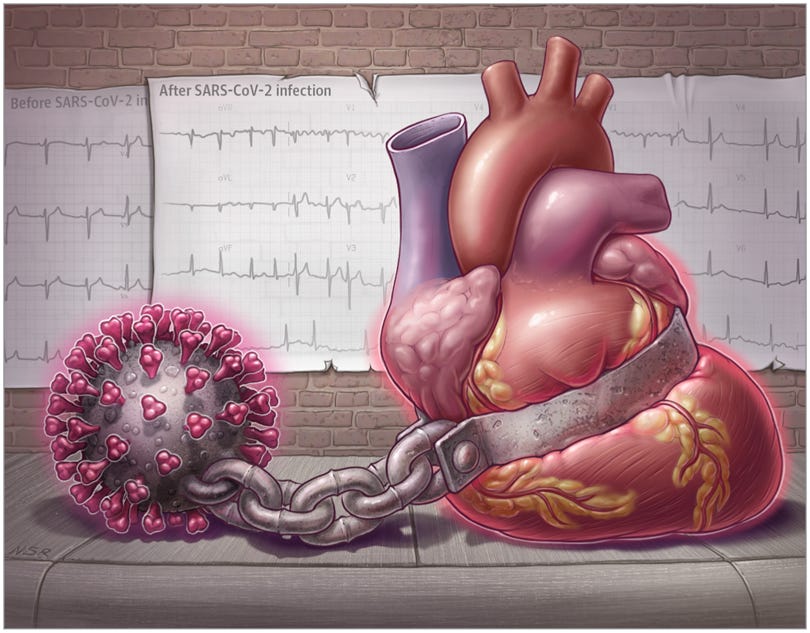
"A systematic review and meta-analysis of 155 global studies shows that Influenza, COVID-19, HIV, and shingles (herpes zoster) significantly increase the long-term risk of stroke and heart disease. In the 14 weeks after a COVID infection, people had 3x the risk of heart attack and were 3x as likely to have a stroke and these risks remained elevated for at least a year. In the month after Influenza, people were 4x more likely to have a heart attack and 5x more likely to have a stroke. “The study researchers say preventive measures, including vaccination, may play an important role in reducing the risk of heart attacks and strokes, especially in people who already have heart disease or heart disease risk factors.”

Long COVID

"A new global review of cardiac sequelae of Long COVID found that about 1 in 5 people with Long COVID report heart-related symptoms such as chest pain, palpitations, or shortness of breath. The rate of myocarditis was much higher after COVID infection (1,500 per million after infection) than after COVID vaccination which was 15x less common. This data highlights the importance of vaccination in preventing post-COVID cardiac complications.

From: https://jamanetwork.com/journals/jama/fullarticle/2840667

"Scripps Research Translational Institute in California has initiated a decentralized (remote) clinical trial called the Long COVID Treatment Trial (LoCITT, pronounced ‘lock-it’) to evaluate a repurposed drug, GLP1 RA drug Tirzepatide, to treat Long COVID symptoms. The study will enroll 1,000 participants from their homes across the United States, using digital platforms to streamline recruitment and monitoring. Researchers aim to assess whether Tirzepatide improves fatigue and cognitive issues in Long COVID patients by reducing inflammation.

"Tokyo researchers studied 105 people with Long COVID and found that those whose spike specific antibodies that switched toward the IgG4 type were four times more likely to recover. Antibody class switching may indicate an immune adaptation that promotes resolution of Long COVID symptoms.

"A University of Minnesota team analyzed HLA gene variants in patients with ME/CFS, Long COVID, and post-treatment Lyme disease syndrome (PTLDS). They found that specific HLA types bind poorly to viral and bacterial antigens, potentially allowing persistent antigen fragments to remain in the body. These findings support the theory that inadequate immune clearance and viral persistence contributes to chronic post-infectious syndromes.

"Researchers from Luxembourg’s CON-VINCE cohort followed 1,865 adults for four years, comparing those who had COVID infection with those who had not. They found that fatigue combined with memory impairment uniquely characterized the post-COVID group, while anxiety and depression occurred equally in both groups. The authors stated that these findings can help distinguish neurological Long COVID features from general pandemic-related stress.

"Tom Kindlon posted several helpful worksheets written by patient Helen Connick on what to do at home and in hospital to support someone with Post-Exertional Malaise (PEM).

Measles

"As of October 28, 2025, a total of 1,648 confirmed measles cases were reported in the United States, 12% of cases hospitalized (202 of 1648), and 3 confirmed deaths from measles.

Vaccine Preventable Disease Tracker

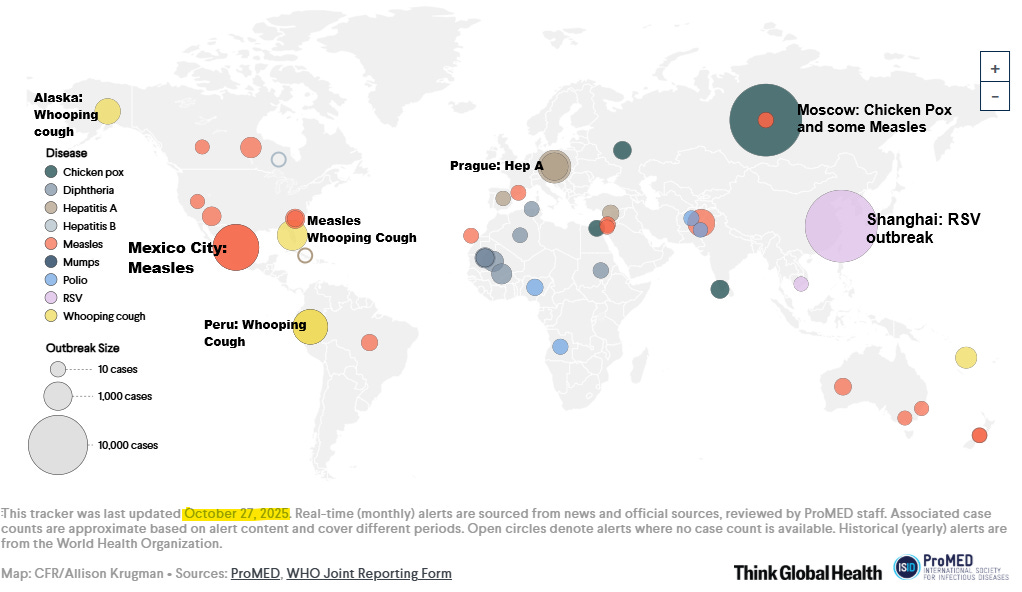
"A new Global Tracker for Vaccine Preventable Diseases is online. Recent data shows an RSV outbreak in Shanghai, Chicken Pox outbreak in Moscow, and Hepatitis A spreading in Prague. There is a large Measles outbreak in Mexico City, and measles are spreading in the United States, Canada, Brazil, the Canary Islands, Spain, Israel, Pakistan, Moscow, Australia and New Zealand. It is sad to see an increase in vaccine preventable diseases since we have the tools to stop them. Two doses of the MMR vaccine is 97% effective in preventing the measles.

From: https://www.thinkglobalhealth.org/article/vaccine-preventable-disease-a-global-tracker

Government News

"With the month-long government shutdown, SNAP (Supplemental Nutrition Assistance Program or food stamps) benefits were expected to run out of funds for payments today. However, on Friday, a federal judge in Rhode Island ordered the Trump administration to pay SNAP benefits during the shutdown. Approximately 42 million Americans depend on SNAP assistance for their food.

Other news

"Researchers in Iran performed a phase III randomized clinical trial on 396 patients who had suffered a heart attack, finding that a single infusion of Wharton’s jelly derived mesenchymal stem cells (WJ-MSCs) into the coronary artery significantly cut the risk of developing subsequent heart failure by more than half. This breakthrough suggests that regenerative medicine may soon offer a powerful way to repair the heart after a heart attack and prevent heart failure. 

"In a randomized, placebo-controlled trial of 50 middle aged people in Germany, Urolithin-A was found to boost CD8⁺ T cells and improved immune metabolism, hinting at a new way to slow age-related immune system decline and inflammaging. Urolithin A works by inducing mitophagy which is the clearance of damaged mitochondria.

"In a UK Biobank study of 80,000 adults, women derived the same heart-disease protection and reduction of cardiovascular risk and related mortality from about half the exercise time that men needed (250 min/week for women vs 530 min/week needed for men). For participants with existing coronary heart disease (CHD), women who were physically active had a threefold greater reduction in mortality risk than similarly active men.

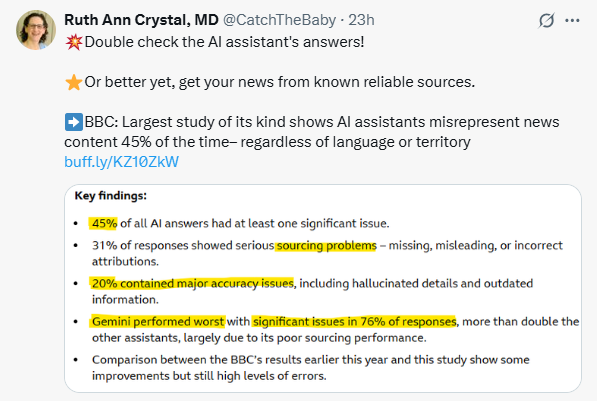
"It is always best to double check your artificial intelligence (AI) assistant’s answers. A new study from the European Broadcasting Union (EBU), led by the BBC shows that AI assistants like ChatGPT and Gemini misrepresent news content at least 45% of the time, regardless of language used.

"An unlikely hero saved a Japanese railway line from shutting down when a stray calico cat named Tama was appointed “Stationmaster” at Kishi Station in 2006. Her adorable presence drew tourists from across the country, boosted ticket and merchandise sales, and helped to make the railway financially sound. Tama passed away in 2015, but her legacy has been carried on by her feline successors, Stationmasters Nitama (which literally translates to Tama II) and Yontama (Tama IV), who continue to greet passengers and draw visitors.

Stationmaster Tama the cat

"Have a great week,

"Ruth Ann Crystal MD"

COVID Not Taken Seriously Enough

An excellent article by Andrew Nikiforuk at The Tyee 10/31/25:

This Physicist Says We Don’t Take COVID Seriously Enough. We downplay the virus at our peril, warns Yaneer Bar-Yam. And children are more at risk than we thought. 

"If you think the COVID pandemic is done and ever-evolving variants pose no significant threat, consider these two realities.

"The first is a recent U.S. study published in the Journal of the American Medical Association. It tracked 150 million workers and their absences in the workplace in the United States since the end of the so-called public health emergency in 2023.

"Its central conclusion: “Health-related absences from work continued to track COVID-19 circulation and were 12.9 per cent higher in the post-pandemic period compared with before the pandemic (140,000 monthly absences).” Absences were highest in occupations with the greatest exposure to the public.

"The study added that continuing circulation of COVID variants has created “a new year-round baseline for work absences” that amounts to adding an additional flu-like season in the workplace.

"Reality No. 2: excess deaths. That’s the level of mortality above what it was before the pandemic. This metric has not returned to normal and remains significantly elevated.

"Just last month Swiss Re, a global insurance firm that analyzes mortality risk by forecasting future life expectancy trends, pegged that number of excess deaths at two per cent above the pre-pandemic annual mortality rate. When you extrapolate that number to North America’s population of 617 million, that works out to be 120,000 unanticipated dead people per year. That’s roughly the equivalent of two fully loaded standard commercial jets crashing and killing everyone aboard every day.

"Last month Neil Sprackling, a CEO with Swiss Re, cited long COVID as a significant factor contributing to that two per cent jump in excess deaths, particularly in people over the age of 65. He also projected that this excess mortality could last until 2030, or longer.

"These two realities underscore a fact that is scarcely mentioned in the media and has become politically unpopular to say. Nearly six years after the arrival of the COVID pandemic, the virus continues to undermine public health, rattle politics and unsettle the economy.

"This state of affairs remains an abiding concern to Yaneer Bar-Yam, a complexity scientist and one of the founders of the World Health Network, a sort of people’s version of the World Health Organization dedicated to protecting health through community action. The U.S. physicist has been studying and fighting the dynamics of pandemics from Ebola to COVID for 15 years. 

A complexity scientist’s read on COVID

"At the beginning of the pandemic The Tyee interviewed Bar-Yam regularly because the scientist, who is currently based at MIT, was frequently ahead of the curve. He was one of the first to champion the importance of N95 masks in an airborne pandemic and he was one of the first to warn about the long tail of pandemics.

"Bar-Yam also was one of the first to recognize that vaccines would not end the pandemic, which is one reason why he advocated unsuccessfully to use public health measures to suppress the spread of the virus at the onset. In other words, he recognized and spoke about realities many politicians and public health officials couldn’t.

"So I decided it was time for a revisit. As it turns out, Bar-Yam, who lives in Cambridge, Massachusetts, has much on his mind. He thinks the fallout from repeated COVID infections poses a growing “existential threat” to human health. He is encouraged by the belated recognition of COVID as an airborne disease, including new Canadian standards for masks in health-care settings. And he is deeply worried about new evidence on how children are affected by long COVID. 

Cumulative effects of COVID infections

"During our talk the physicist summarized what the science now says about COVID infections, whether they appear mild or severe. Every infection increases the risk for heart attacks, strokes and heart disease; for new-onset diabetes; for cognitive decline and dementia; for deregulating the immune system; and for reactivating viruses like Epstein-Barr or shingles.

"An epidemic of shingles, for example, is now afflicting young Chinese adults who have just recovered from a bout with COVID.

"At the beginning of the pandemic researchers worried about the effects of an acute infection requiring hospitalization. Now the focus has shifted to the long-term impacts of repeated infections and long COVID, says Bar-Yam. Here again the science shows that risks are real and cumulative, particularly among those suffering from long COVID.

“The science is saying our health is progressively deteriorating,” says Bar-Yam.

"Because COVID destabilizes the immune system, researchers are now beginning to see a link between repeat COVID infections and rising cancer rates in young people. One study recently found that a COVID infection can accelerate or increase cancer risk, while another study revealed that a COVID infection substantially heightened the risk of six cancers caused by the sexually transmitted human papillomavirus.

"In this vein Bar-Yam has also co-authored a new peer-reviewed paper in the American Journal of Preventive Medicine Focus that draws some disturbing comparisons between repeated COVID infections and untreated HIV infections, noting each can cause chronic inflammation, immune exhaustion and accelerated biological aging.

"Bar-Yam and fellow researchers are not saying that COVID is the same as HIV-acquired AIDS — the two are vastly different viruses spread in very different ways. But a comparison of the two immune destabilizers helps us see something that public health discourse has largely neglected: “We may be living through a slow-moving immune decline crisis.”

"A recent Brazilian study also noted parallels to HIV and concluded “that SARS-CoV-2 is much more than a respiratory virus — it is a complex immunomodulator that targets central defense cells themselves.”

"As a consequence Bar-Yam doesn’t think COVID should be dismissed or minimized. And he defends his definition of COVID as “an existential threat” with a deliberate choice of words:

“This virus causes system-wide injury that accumulates with each infection: brain damage that undermines decision-making, immune dysregulation leading to infections like Kaposi sarcoma and tuberculosis in lymph nodes — the very signatures of HIV-AIDS now rising again — and cardiac injury with accelerated aging,” explains Bar-Yam.

“‘Brain fog’ is not a metaphor; it is evidence of structural loss,” he adds. “We see it in the research, and we see it around us. I have friends getting sick repeatedly, losing clarity, judgment and capacity. This threatens everything our societies depend on. After just a few years, the decline is visible. A few more, and large parts of the population may be too impaired to function effectively, leaving us without the collective ability to respond.”

"No treatment currently exists for long COVID, which affects millions of Canadians. “But we do have prevention tools: clean indoor air, high-quality respirator masks, testing and smart avoidance of exposure,” explains Bar-Yam. Vaccination won’t stop transmission, but it still helps reduce severe acute disease. “The tools are here. The question is: why we are choosing not to use them?”

"At the moment Bar-Yam is tracking two significant potential responses to the lingering threat posed by COVID. One concerns actions that should flow from the realization that COVID is primarily airborne — a fact once denied by the World Health Organization and dismissed by the U.S. Centers for Disease Control and Prevention. The current scientific consensus not only accepts that clean air saves lives but is belatedly shaping new engineering protocols for schools and hospitals that, with other measures, could eventually help end the pandemic.

"Here in Canada, Bar-Yam notes, the country’s crowded hospitals stopped mandatory masking in 2023, but B.C., Prince Edward Island and New Brunswick have returned to proactive masking. Last summer the Canadian Standards Association, a non-profit organization that sets safety standards for the workplace, proposed significant changes for health-care institutions based on what the science says on aerosols.

"After widespread consultation with health-care workers, it recommended key changes in mask guidance:

"Respirators such as N95 masks need to be worn by health-care workers at all times in health-care facilities. The blue surgical masks known as “splash guards” aren’t good enough for workers to use as respiratory protection. Proper masks should be supplied free of charge in health-care facilities to everyone. And hospitals should require specific assessments for airborne diseases to determine minimum respiratory protection.

“After years of denial the international consensus is now shifting,” says Bar-Yam.

"The reasons for these changes are measurable. Respiratory diseases are one of the major reasons Canadians seek care at a hospital. But recent surveillance data from Canada’s hospitals shows between 25 and 50 per cent of patients hospitalized with COVID were infected inside health-care facilities over the last two years.

"A 2024 study in Open Forum Infectious Diseases found that universal masking at a St. Louis hospital cut hospital-acquired respiratory viral infections by about 35 per cent. Fewer infections in the hospital had other benefits. It translated into substantial cost savings in terms of drugs and care and quicker recoveries and shorter hospital stays for cancer and transplant patients. And it resulted in fewer staff shortages and interruptions in care.

Risks to children, and protections

"Bar-Yam’s second major focus is on kids and what should be done to shield them, given that new studies clearly indicate children are just as susceptible to long COVID as adults, and particularly after repeated infections.

“Long-term harm from COVID, especially in children, is now undeniable,” he states.

"At the beginning of the pandemic it was widely assumed that COVID had little impact on children or adolescents. Recent research says otherwise, notes Bar-Yam. “Now this new information has to be digested by society.”

"A study in The Lancet Psychiatry first sounded the alarm in 2022. It looked at more than a million patients, adults and children, over a two-year period and reported that the risk of cognitive deficit, dementia, psychotic disorder or seizures remained increased even at two years after a COVID-19 diagnosis. Children did not face an increased risk for mood and anxiety disorders compared with adults but did have an increased risk of “cognitive deficit, insomnia, intracranial haemorrhage, ischaemic stroke, nerve, nerve root, and plexus disorders, psychotic disorders, and epilepsy or seizures.”

"A 2024 JAMA study challenged the “misperception” that long COVID is rare in children or resembles that of adults. It reviewed the health outcomes of thousands of children aged between six and 17, both infected and uninfected. It found 10 to 15 per cent of children and adolescents developed long COVID after one infection, a rate similar to that of adults.

"The researchers also noted substantial differences in symptoms in children and adolescents, which make it harder to see what is happening. While school-aged children experienced more neurocognitive conditions, pain and gastrointestinal symptoms, adolescents reported pain, fatigue/malaise-related symptoms and loss in smell or taste.

"A 2025 study in The Lancet Infectious Diseases has further clarified matters, concluding that children and adolescents face a significantly higher risk of various long-COVID symptoms after reinfection with SARS-CoV-2. In fact, a second infection doubles the long-COVID risk for a child.

"The symptoms and conditions of long COVID in children can include inflammation of the heart muscle, changes in taste and smell, blood clots, heart disease, acute kidney injury, fluid and electrolyte disturbance, generalized pain, abnormal liver enzymes, chest pain, fatigue and malaise, headache, musculoskeletal pain, abdominal pain and cognitive impairment. When the Omicron variant was prevalent in 2023 and reinfections became routine in schools, the risk of long COVID increased across almost every measure tracked by the researchers.

"Many public officials have over the years claimed or hoped that reinfections of COVID would be milder or carry less long-term risk in children. “But we found increased risks for a broad range of conditions, challenging the assumptions many had that children bounce back quickly,” noted lead author Bingyu Zhang, an applied mathematics and computational science PhD student.

"The weight of science on the risk repeated COVID infections can pose to children’s health, says Bar-Yam, is “no longer murky.” He urges parents to take precautions, including masks, vaccinations and advocating for well-maintained and properly calibrated ventilation systems in schools.

"Bar-Yam recognizes that in many places COVID and concerted public health responses to the risk it still poses have been politicized along polarized lines. So he recently started Unpolitics. The initiative is dedicated to “rebuilding connections and creating a space where people, physicians, scientists and community organizers can act on what reality requires and not partisan or special interests and their priorities. It is about restoring links between knowledge, responsibility and benefits of co-ordinated action, the kind of action that actually improves lives and strengthens communities. The purpose of action is the public good.”

"He remains undaunted. “The fight in the big pandemic public health story,” says Bar-Yam, “has moved from proving COVID is airborne to building a public health system that acts like it.”  

Antisemitism Is A Cancer & A Mental Disorder

Just as you increasingly see people with Trump Derangement Syndrome acting like psychopaths, you also see Jew-haters going out of their way to demonstrate their utter deranged antisemitism.

This is a case in point. Referring to this Israel-hating vandal as an "artist" is too kind, and an insult to actual artists. 

As I always say, "What did we ever do to her?"

-------------------------------

World Israel News, 11/1/25

Visitors were shocked to find a mock street sign reading “F–k Israel Ln,” anti-Israel posters, and a KKK hood decorated with Israeli and American flags.

"An unauthorized “art” installation on Governors Island featuring antisemtic posters drew swift condemnation from Mayor Eric Adams, who called it “vile” and accused far-left activists of normalizing antisemitism under the guise of art.

"Housed in Building 11, a publicly supported art studio operated by the nonprofit Swale, the installation caught families off-guard during a weekend Halloween event. Instead of finding pumpkins, visitors were shocked to see a mock street sign reading “F–k Israel Ln,” a “Beyond the Pale: Israel’s Existence” poster, and drawings of a Ku Klux Klan hood emblazoned with Israeli and American flags.

"Other pieces glorified terrorist groups, including a “Hamas Lover” sign, a painting of a Hezbollah flag, and slogans declaring “Abolish Israel” and “Free Palestine.”

"The uproar drew an immediate response from City Hall.

“This right here is beyond the pale,” said New York City Mayor Eric Adams during a press event Thursday evening. “As questions about where that art came from started to pour in, a shocking number of people were afraid to call this out for what it is, but I am not one of those people. This was a vile, antisemitic exhibit.”

“Antisemitism is a virus that mutates. It comes back in different forms and finds new ways to hide in plain sight,” he continued. “Disagreeing with the policies of Israel’s government does not make someone antisemitic, but to openly praise Hamas at an exhibit in a government facility sends a message of institutionalizing hatred.”

"Similarly, Assemblyman Kalman Yeger blasted the display as “another example of the normalization of Jew-hatred the Mamdani era is spreading through New York,” while Dov Hikind, head of Americans Against Antisemitism and a veteran legislator, warned that “antisemitism is out of control.”

"According to the New York Post, the artist, Rebecca Goyette, slipped into the studio without permission after being invited by another resident during the seasonal wind-down period. Both Goyette and the resident who let her in were banned from the site, and the display was removed within hours after outraged visitors reported it."

Saturday, November 01, 2025

"Celebrities" Today: Tasteless and Classless

Now I've seen everything. I've never heard of Julia Fox, and after this, I hope she crawls back in the hole she came out of. 

This is not a "statement about trauma and femininity", it's a desperate attempt at attention and publicity. Even in a state of shock after the assassination of JFK, Jackie had more grace and class than this wannabe will ever have.

On the plane before LBJ's swearing in, Lady Bird asked Jackie if she wanted to change her clothes. And she said no, "I want them to see what they have done".

--------------------------------

'Uncut Gems' actress Julia Fox sparks backlash over blood-stained Jackie Kennedy Halloween costume. Actress defends Halloween outfit as statement about trauma and femininity

                                                              Class


                                                              Trash


How Well Do Face Masks Protect? Mayo Clinic Staff Has The Answer.

In case you still don't wear a face mask or respirator, Mayor Clinic has a refresher course for you.

------------------------------------------------ 

Mayo Clinic 10/29/25:

How well do face masks protect against COVID-19?  Get answers to your questions about face masks, including how to use them properly. 

"The virus that causes COVID-19 spreads mainly through the air when a person coughs, sneezes, sings, talks or breathes. Virus particles can drift in the air and be inhaled, especially in crowded places with poor airflow. Face masks or respirators are products that cover the nose, mouth and chin. Most research finds that these products can slow the spread of the virus that causes COVID-19 when they are worn consistently, fit properly and are worn correctly.

"Wear a mask if you have symptoms of illness, if you are near others who are sick or if you're in a crowded indoor area. This is especially important if COVID-19 illness rates in your area are high.

"But face masks aren't safe for everyone. Don't put a mask on anyone who has trouble breathing or is unconscious or otherwise unable to remove the mask without help. And don't put masks on children younger than age 2.

How do different types of masks work?

"Face masks differ in how well they filter air and fit on the face. Masks also differ on how easy or hard they are to breathe through. Some masks rely on fabric type, weave or density to filter the air. Other masks use a static charge, like the static charge that causes clothes to stick together in the dryer, to catch and hold the virus. Some masks use both strategies as well as others.

"Some masks have valves that make them easier to breathe through. But these masks don't filter the air the wearer breathes out. For this reason, masks with valves can't be used in some places.

Respirators

"Masks called respirators have to meet specific standards and are designed to block almost all virus particles in the air. These masks include N95, FFP2, KN95 and other types. Respirators approved in the U.S. are called N95s. European respirators are called FFP2s and respirators from China are called KN95s.

"This type of mask may be available in a range of sizes and is meant to be adjusted to fit the face. These respirators have adjustable nosepieces and bands or ties. Many respirators can be used more than once. Replace the respirator if it gets wet or dirty or if it's damaged.

Medical masks

"Medical masks are loose-fitting and disposable. They're meant to protect you from droplets and sprays, such as mucus from a sneeze. Also called surgical masks, they filter out large particles in the air when you breathe in. Medical masks come in a larger size typically used for adults and a smaller size that may be used for children.

"To make medical masks more form-fitting, knot the ear loops where they attach to the mask. Then fold and tuck the loose material under the edges. Also, make sure to pinch the flexible nosepiece if the mask has one. This creates a snug fit over the bridge of your nose.

How to fit and wear a face mask

"Masks are most effective if they fit the face closely. Use masks that have bendable nose strips and adjustable ear loops or bands. This helps you fit the mask snuggly to your face, so air and breath move through the mask, not around the edges.

"You should feel warm air going out the front of the mask when you breathe out. You shouldn't feel your breath coming out under the edges of the mask. While it may feel like more work to breathe through a respirator or medical mask, the amount of oxygen you breathe into your body and the amount of carbon dioxide you breathe out doesn't change.

"Healthy adults may have minor physical changes, such as a small change in breathing rate, while wearing a face mask. This is more likely with respirators than with surgical masks. But these changes don't last or cause problems for most healthy adults.

"With all masks, your face may feel warmer or more humid under the mask.

How to put on and take off a face mask

"Follow these steps for putting on and taking off your mask.

  1. Wash or sanitize your hands before putting on your mask.
  2. Place your mask over your mouth, nose and chin.
  3. Tie it behind your head or use ear loops. Make sure it's tight against your face.
  4. Don't touch your mask while wearing it, and if you do, wash or sanitize your hands.
  5. Take off the mask by untying it or lifting off the ear loops without touching the front of the mask or your face. Fold the outside corners together. Throw away disposable masks or store your reusable mask to wash later.
  6. Wash your hands immediately after taking off your mask.

"Throw away disposable masks either after one use or if they get dirty, wet or damaged during use".

The Wreck of the Edmund Fitzgerald: 11/5/1975 -- 11/5/2025

---------------------------

Scott Bauer, Associated Press 11/1/25:

Without the song, ‘The Wreck of the Edmund Fitzgerald’ may have been largely forgotten

NASHOTAH, Wis. (AP) — Without Gordon Lightfoot’s song, the Edmund Fitzgerald could have faded from memory along with the names of the roughly 6,500 other ships that went down in the Great Lakes before it.

Lightfoot was inspired to write his ode to the Fitzgerald and the 29 men who died on board after reading the first Associated Press story about the wreck and a Nov. 24, 1975, article in Newsweek magazine. The song was released in August 1976, less than a year later.

Lightfoot’s mournful storytelling propelled the tragedy into infamy. Affection for the song and interest in the wreck has sustained for half a century, though it wasn’t even the deadliest recorded on the Great Lakes. The deadliest wreck on open waters was the Lady Elgin in 1860, which historians estimate killed nearly 400 people.

“The song has made this by far the most famous Great Lakes shipwreck,” said John U. Bacon, author of “The Gales of November,” a recently published book coinciding with the 50th anniversary of the wreck. He said the Edmund Fitzgerald trails only the Titanic and possibly the Lusitania as the most famous shipwreck in the world.

“When you listen to the record Edmund Fitzgerald, it’s like he’s putting you right there, like he was right there,” Haynes said in a telephone interview from his home in Canada. “And that’s pretty hard to do with a tragedy like that, you know?” 

Debbie Gomez-Felder was 17 when her father, Oliver “Buck” Champeau, died on the Fitzgerald. She couldn’t bear to listen to the song at first.

“I put it on the record player and I thought, ‘Oh no, this music is eerie,’” she said. “I turned it off.”

But she came to love it.

“The part that says ‘All that remains are the faces and the names of the wives and the sons and the daughters,’ I thought there wasn’t a word he missed,” Gomez-Felder said. “There wasn’t anything he didn’t recognize.”

Lightfoot died in 2023. His widow, Kim Lightfoot, said in a statement to The Associated Press that “the Edmund Fitzgerald was always present in Gordon’s mind.”

“Just as he eulogized the tragedy in song for the world, he also kept the memory alive in our home; Paintings, models and tributes adorned the walls and followed us from room to room as we went about our daily lives,” Kim Lightfoot said. “If Gordon were with us today, he would have been intent on helping keep the candle of memory lit.”

Lightfoot met regularly with family members and famously changed one of the lyrics at their request, removing a reference to a disproven theory that unsecured hatch covers caused the wreck. The exact cause remains a mystery.

That mystery and the song continue to draw people to the wreck, including a new generation encountering the story through TikTok and social media. Bruce Lynn, executive director of the Great Lake Shipwreck Museum, said children visit the museum wearing costumes of the Fitzgerald.

“There’s something about the Fitzgerald that really draws that attention,” he said.

Haynes estimated that he has played “The Wreck of the Edmund Fitzgerald” more than two thousand times without tiring of it. Lightfoot’s band still tours and plays it at every concert.

Haynes remembers flying with Lightfoot to Whitefish Point, Michigan, to mark an anniversary of the wreck. They met with victims’ families then Haynes took a walk along the shores of Lake Superior, looking out toward where the Fitz sank, about 17 miles away.

“I just sat there for about 15 or 20 minutes reflecting on all this stuff that had passed in connection with the Edmund Fitzgerald,” Haynes said. “And it was very emotional for me. It always has been.”