---------------------------
"This week, the CDC reports LOW overall levels of respiratory illness with COVID, RSV, and influenza hospitalizations are trending downward nationally. Influenza B remains more prevalent than Influenza A especially in the Northeast, but levels are decreasing.
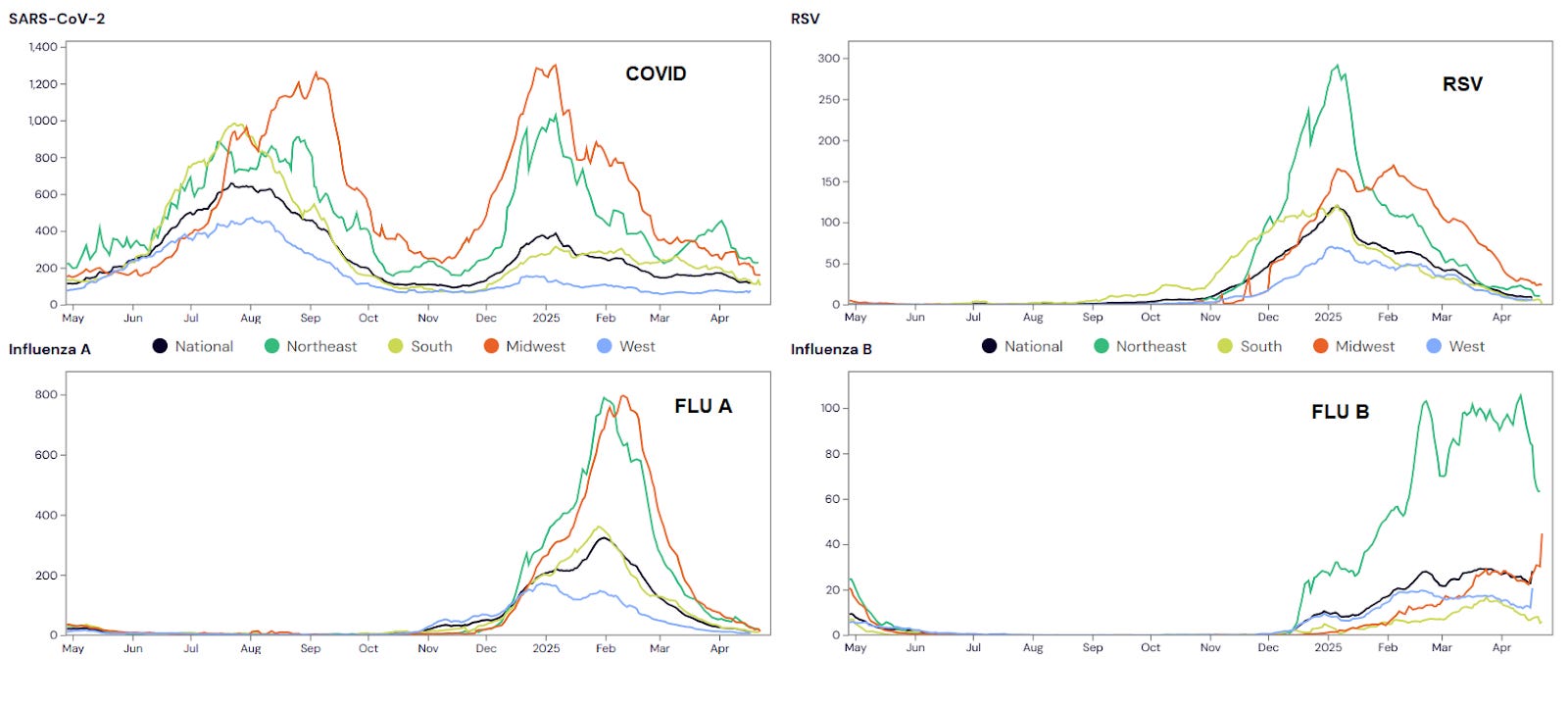
Regional wastewater levels from: https://data.wastewaterscan.org/
COVID
"Wastewater monitoring from the CDC through 4/19/25 showed that most of the country was at low SARS-CoV-2 levels. As of 4/27/25, WastewaterSCAN shows LOW levels of SARS-CoV-2 across most of the U.S., though MEDIUM levels persist in the Midwest and HIGH levels in the Northeast. Fewer sites are high in the Northeast as compared to last week. Nationally, COVID transmission is declining but remains slightly higher than some past spring lows due to the muted winter surge, per JP Weiland.
"According to Michael Hoerger, about 1 in 196 people in the U.S. are actively infectious with COVID. The South has higher transmission (1 in 118) and Louisiana cases are high (1 in 63). In contrast, the West has lower levels (1 in 240). Emergency department visits and deaths from COVID remain low, and weekly deaths are nearing record lows this spring.
"In California, most regions report LOW wastewater levels for COVID, though Novato is still HIGH per WastewaterSCAN. CDPH's wastewater data have not been updated since 4/10/25.
Variants
"LP.8.1 represents 69% of COVID cases now and XEC is down to 10%.
Acute COVID infections, General COVID info
"This week, the White House deleted health information about COVID testing, treatment, and vaccination, as well as information on Long COVID from the COVID.gov website, replacing it with a lab leak theory featuring a photo of Donald Trump.
Pediatrics
"Children who tested positive for COVID face significantly higher long-term risks for chronic kidney disease, gastrointestinal disorders, and cardiovascular issues compared to peers who tested negative. The study, led by the University of Pennsylvania and part of the NIH’s RECOVER initiative, found kidney disease risks increased up to 35%, GI symptoms by up to 28%, and cardiovascular conditions like heart inflammation or arrhythmias by 63%. Racial differences also emerged with Asian American Pacific Islander children showing slightly higher Long COVID risk.
“While most public attention has focused on the acute phase of COVID-19, our findings reveal children face significant long-term health risks that clinicians need to monitor,” said senior author Yong Chen, PhD.
"Another study from the University of Pennsylvania found that unvaccinated children and adolescents were up to 20 times more likely to develop Long COVID than those who were vaccinated. The vaccine’s protection against Long COVID comes mostly from preventing infection rather than reducing risk after infection.
"A nationwide study in Israel tracked 101,626 five-year-old kindergarteners over a decade and found that myopia (nearsightedness) prevalence nearly tripled from 3.7% to 12.6% following COVID lockdowns. Researchers linked this increase to less outdoor time and more screen use which are known risk factors for myopia.
"Using mass spectrometry and a machine learning technique called support vector machine (SVM) to find protein patterns in blood samples, a group from Rutgers found protein signatures that can distinguish children with Multisystem Inflammatory Syndrome in Children (MIS-C) from those with acute COVID infection, pneumonia, or Kawasaki disease. In MIS-C, proteins related to inflammation and clotting increased, while those tied to lipid metabolism decreased. A three-protein model (ORM1, AZGP1, SERPINA3) distinguished MIS-C from mild COVID-19 with high accuracy (up to 93.5% AUC), and another three-protein signature (VWF, SERPINA3, FCGBP) successfully separated MIS-C from other febrile illnesses like pneumonia and Kawasaki disease.
Vaccines
"Amid rising measles cases, vaccine misinformation, and public health funding cuts, CIDRAP has launched the Vaccine Integrity Project to promote evidence-based vaccine use in the United States. Funded by a $240,000 gift from the Alumbra Foundation, the project will evaluate how non-governmental groups can help ensure vaccine safety and effectiveness remain grounded in science.
“This project acknowledges the unfortunate reality that the system that we've relied on to make vaccine recommendations and to review safety and effectiveness data faces threats.” Michael Osterholm, PhD, MPH
"The FDA has requested that Novavax complete a new randomized clinical trial for its COVID vaccine creating costly hurdles that could delay U.S. approval. Novavax has already shown 90% efficacy and is approved abroad. This move, influenced by officials under Health Secretary Robert F. Kennedy Jr., has raised concerns about political interference in vaccine approvals.
"This week, there was a review in Nature on vaccination in pregnancy as an important way to protect newborns from infections. Since newborns have immature immune systems and limited vaccine options, maternal antibodies passed through the placenta offer crucial early protection. The article highlights successful examples like vaccines for tetanus, pertussis, influenza, and COVID-19, and notes recent approvals for respiratory syncytial virus (RSV) vaccines and upcoming vaccines for Group B Streptococcus.
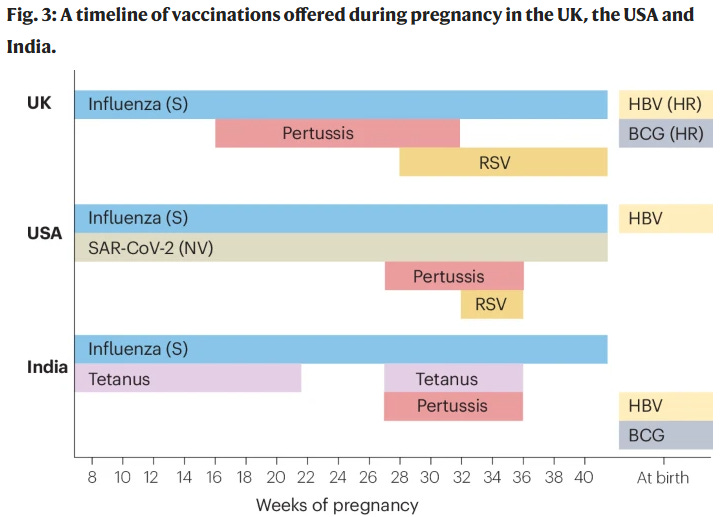
From: https://www.nature.com/articles/s41577-025-01162-5
Antiviral treatments
"A group from Istanbul tested drugs that are already FDA-approved for other indications to see which could inhibit the SARS-CoV-2 3CL protease. Lumacaftor, candesartan, nelfinavir and other drugs showed strong antiviral activity against COVID replication in vitro. Clinical trials will be needed to see if these drugs could be repurposed to treat COVID.
"A large U.S. EMR-based study found that taking Paxlovid within 5 days of a mild-to-moderate COVID-19 diagnosis significantly lowered the risk of stroke and death 90+ days later. Among nearly 182,000 matched patient pairs, those who took Paxlovid had a 15% lower risk of stroke and a 32% lower risk of death. The benefit was consistent across all age groups, sexes, health conditions, and vaccination statuses, with particularly strong protection seen in older adults and those with obesity or metabolic diseases.
Long COVID
"A new study using specimens from the UCSF LIINC biobank found that people who had COVID, and especially those with Long COVID, showed signs of persistent immune dysfunction and metabolic imbalances up to four months after infection. Those with Long COVID had immature, inflamed immune cells, high oxidative stress, low tryptophan levels, and markers of immune cell exhaustion and senescence especially in CD8 T-cells. The researchers also identified changes in gene methylation linked to disrupted metabolism and potential cancer risk, suggesting that Long COVID may result from long-lasting damage to immune and metabolic systems. Other viruses like Epstein Barr Virus (EBV) and Human Papilloma Virus (HPV) are known to cause cancers, and SARS-CoV-2 may have oncogenic potential as well.
"Another study showed that mild or asymptomatic COVID infections can cause long lasting changes to DNA methylation patterns seven months after infection. Two specific DNA sites on AFAP1L2 and PC genes which are linked to immune responses and how cells use energy, were consistently altered. Changes resembled patterns seen in autoimmune or inflammatory diseases suggesting long-term epigenetic remodeling even after mild COVID infection.
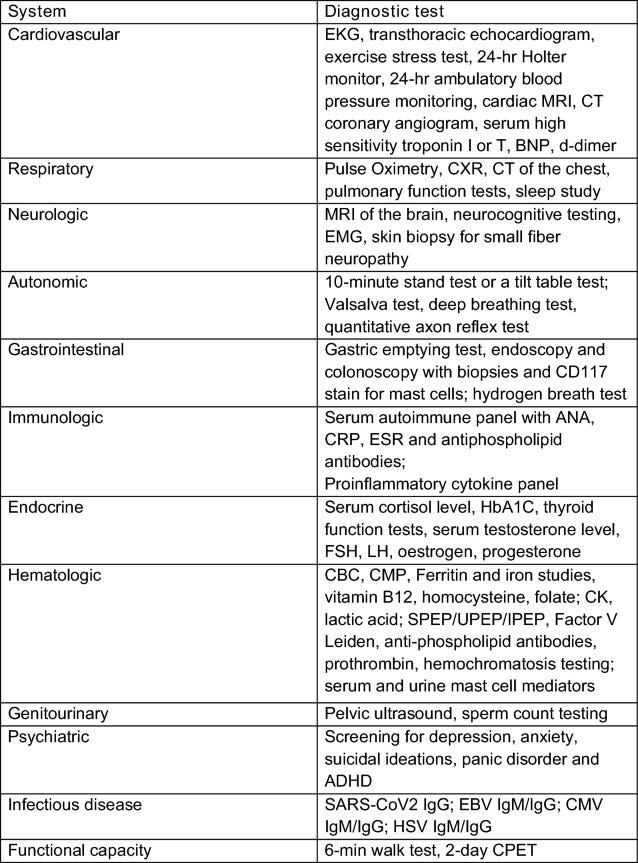
"Long COVID affects over 400 million people worldwide, yet there is little guidance or formal training for healthcare professionals. This week, two different groups put out amazing articles on the diagnosis and treatment of Long COVID with helpful tables. The first paper was published by a multidisciplinary group associated with the American Academy of Physical Medicine and Rehabilitation (AAPM&R) Multidisciplinary PASC Collaborative and the other paper was written by 179 global Long COVID experts, both using a Delphi approach.
"The AAPM&R Multidisciplinary PASC Collaborative wrote an extensive compendium on the differential diagnosis, testing, management and treatment of Long COVID broken down by symptom. I found this article to be extremely helpful and very detailed.
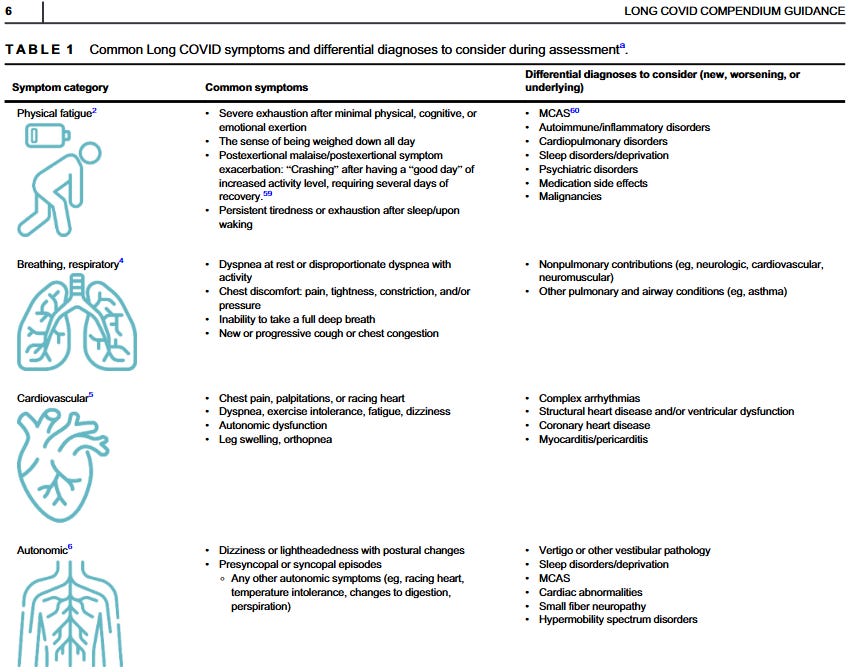
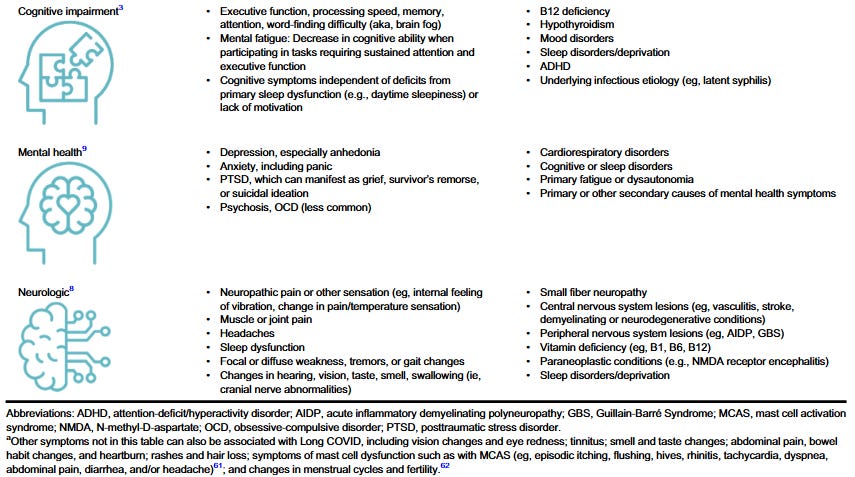
From: https://onlinelibrary.wiley.com/doi/epdf/10.1002/pmrj.13397
"The second paper entitled “Long COVID clinical evaluation, research and impact on society” was written by 179 international experts on Long COVID who used a 3-round Delphi method to build consensus on key recommendations for definition, diagnosis, treatment, research, and societal issues relating to Long COVID.
"Table 3 Recommended diagnostic tests available to clinicians for evaluation of patients with Long COVID based on clinical history and examination
From: https://ann-clinmicrob.biomedcentral.com/articles/10.1186/s12941-025-00793-9/tables/3
"Western University in Canada and the Schmidt Initiative for Long COVID (SILC) have launched a global clinical trial to evaluate two repurposed anti-inflammatory drugs upadacitinib and pirfenidone as potential treatments for Long COVID. The trial will enroll 348 participants across seven sites on four continents, using an adaptive trial platform to focus on the most severe symptoms in each patient, including fatigue, brain fog, breathing issues, and muscle aches. The two drugs were selected using artificial intelligence (AI) from over 5,400 proteins linked to Long COVID, offering a promising shortcut to treatment by targeting 13 shared biological pathways.
"A new preprint validated earlier findings that genetic factors strongly influence who develops Long COVID, using data from both U.S. (All of Us) and U.K. (Sano GOLD) cohorts with diverse ancestries. Over 90% of genes identified in the original study were also associated with Long COVID in the U.S. population including in Black and Hispanic groups. These results confirm that combinatorial genetic analysis can uncover more risk genes than traditional Genome-wide association studies (GWAS) and support the continued exploration of drug repurposing candidates for Long COVID treatment.
"A study in BMJ Global Health of 6528 adult patients with symptomatic COVID from Argentina, Brazil, Canada, Colombia, Ecuador, Egypt, India, Nepal, Pakistan, Philippines, Russia, Saudi Arabia, South Africa and the United Arab Emirates found that 25% of COVID patients reported Long COVID symptoms with higher rates in less wealthy countries and among people of Arab or North African ethnicity.
Lyme Disease
"New research from Northwestern University suggests that lingering symptoms after Lyme disease treatment may be driven by immune responses to leftover bacterial cell wall fragments called peptidoglycans and not active infection. Scientists found that B. burgdorferi peptidoglycan persists in the liver and joints long after the bacteria are killed. These remnants appear to trigger prolonged inflammation in some patients, much like viral fragment persistence may trigger inflammation in Long COVID. This may explain why anti-inflammatory drugs can sometimes help Lyme disease symptoms when antibiotics do not. The group also showed that B. burgdorferi peptidoglycan alters energy metabolism in immune cells and triggers protein changes similar to those seen in chronic illness after infection.
"Researchers from Virginia Tech screened 500 antibiotics and identified that piperacillin may be a potentially safer alternative to doxycycline for treating Lyme disease. These findings could lead to better treatments and more targeted therapies for the roughly 1,200 people diagnosed with Lyme disease each day in the United States.
ME/CFS
"Researchers used deep learning techniques to analyze genetic data from individuals with myalgic encephalomyelitis/chronic fatigue syndrome (ME/CFS). HEAL2, a novel deep learning framework, identified 115 ME/CFS risk genes that show mutations in the central nervous system (CNS) and immune cells. Further analysis of these ME/CFS genes shows a “genetic correlation between ME/CFS and other complex diseases and traits, including depression and Long COVID.”
H5N1
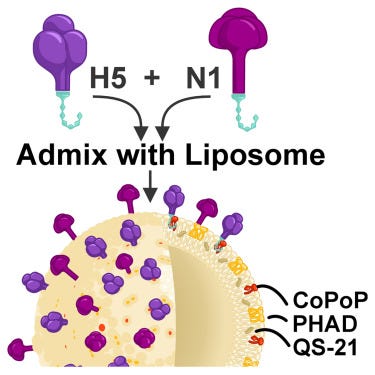
"A group from SUNY Buffalo developed a nanoparticle vaccine candidate that displays recombinant H5 and N1 proteins from the highly pathogenic avian influenza H5N1 clade 2.3.4.4b on liposomes. In mice, this vaccine triggered strong immune responses and protected against lethal infection showing promise for future pandemic preparedness. The vaccine will be developed for potential use in both animals and humans.
Graphical Abstract
From: https://www.cell.com/cell-biomaterials/fulltext/S3050-5623(25)00061-3
Measles
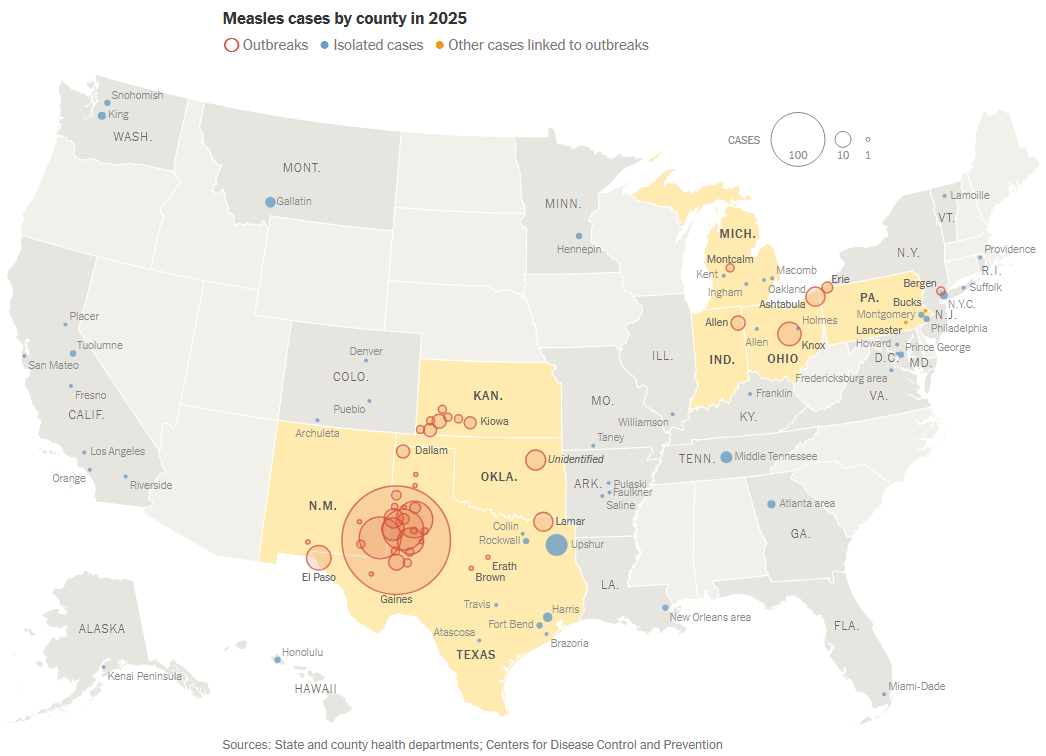
"As of 4/24/25, the CDC reports 884 reported US measles cases in 2025 with 11% hospitalization for pneumonia and other complications and 3 reported deaths. Measles have been reported in 29 states now.
4/25/25 From https://www.nytimes.com/interactive/2025/health/measles-outbreak-map.html
"A new simulation study from Stanford warns that declining childhood vaccination rates in the United States could lead to a resurgence of previously eliminated diseases like measles, rubella, polio, and diphtheria. Even if we stay at current vaccination rates, measles could become endemic again within 21 years, underscoring the urgent need for high vaccine coverage to prevent major public health setbacks.
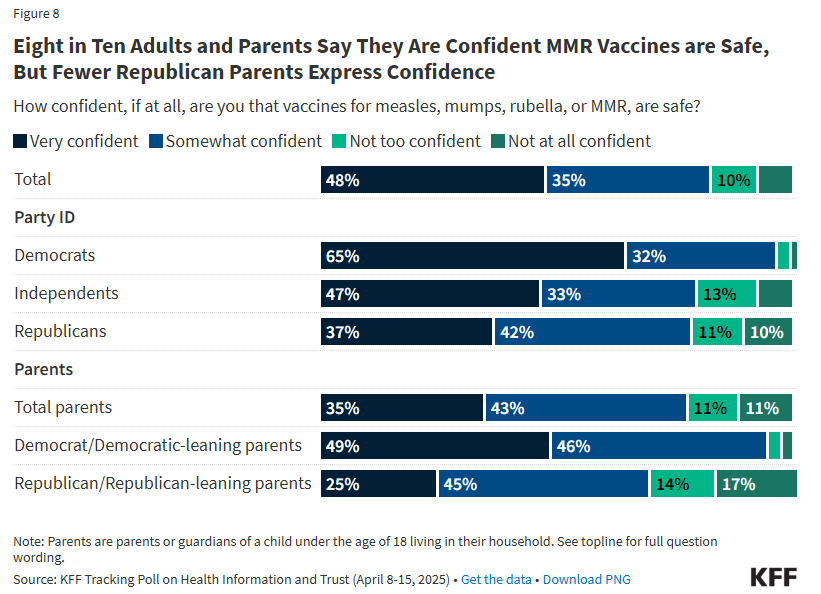
"As measles cases surge to the highest levels since 2019, about half of adults and parents are worried, with concern higher among Black, Hispanic, and Democratic respondents per a new KFF poll. Many adults have encountered false claims about measles and MMR vaccines, but overall 83% still express confidence in vaccine safety. Partisan divides strongly influence both awareness of the measles outbreak and belief in vaccine misinformation.
From: https://www.kff.org/health-information-and-trust/poll-finding/kff-tracking-poll-on-health-information-and-trust-the-publics-views-on-measles-outbreaks-and-misinformation/
Other news
Multiple Sclerosis and Gut Microbiota
"Taking gut bacteria from an identical twin with Multiple Sclerosis (MS) and putting it in the gut of germ-free mice triggered MS-like disease in the mice, suggesting a causal role for specific microbes. Implicated bacteria include Eisenbergiella tayi and Lachnoclostridium.
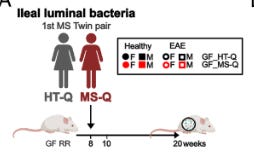
From: https://www.pnas.org/doi/full/10.1073/pnas.2419689122
"Metformin may prevent a form of acute myeloid leukemia (AML) in people at high risk of the disease. A common mutation in the DNMT3A (R882) gene increases the risk of this leukemia. The mutated cells rely heavily on mitochondrial energy production (OXPHOS). Using mouse models and human data, a study showed that targeting this energy pathway with Metformin can suppress the expansion of leukemia cells like AML.
"A Danish twin study found that tattoo ink exposure is linked to a higher risk of skin cancer and lymphoma, especially with large tattoos. Individual-level analyses showed hazard ratios up to 3.91 for skin cancer and 2.73 for lymphoma, with tattoos larger than the palm of a hand carrying the greatest risk. The studies were small and larger studies over a longer period of time will be important to clarify health impacts of tattoo ink.

From ChatGPT
"For the first time, microplastics have been detected in human ovarian follicular fluid raising concerns about potential impacts on female fertility. The study found microplastics in 14 out of 18 women undergoing fertility treatments suggesting widespread exposure. Researchers call for further investigation into how these particles affect reproductive health.
"The FDA has suspended milk quality testing due to layoffs of FDA inspectors. Layoffs included FDA staffers responsible for responding to the ongoing bird flu outbreaks as well.
"The Trump administration ended federal funding for the Women's Health Initiative (WHI), a landmark study tracking the health of over 160,000 women since the 1990s. Thankfully, a day later, the administration restored funding to the WHI.
"When Serendipity Books in Michigan needed to move to a nearby larger store, owner Michelle Tuplin enlisted 350 local people who made two human chains and passed each book down the line to the new store's bookshelves. The entire store was moved within 2 hours and people had a great time discussing which of the books they enjoyed.

People help move books for Serendipity Books. Photo by Burrill Strong from https://buff.ly/aUgRSBc
"Have a good week,
"Ruth Ann Crystal MD"





.jpg)
No comments:
Post a Comment