------------------------------------------
Heat risk paradoxes, disease trends, and food alerts
The Dose (June 23)
"Happy Summer! Today, I’m wishing you a slow news day. And in that spirit, I’m keeping this YLE update short. Here’s what you need to know to keep you and your family healthy—from heat risk to ticks to food recalls.
It’s getting hot in here, which can impact your health
"For the next two weeks, more than 265 million people, from DC to Minneapolis to Houston, will face temperatures over 90°F for days with little overnight reprieve.
"But when it comes to extreme heat, some of the most important health risks aren’t always obvious. It’s not just about the temperature you see on your weather app, and believe it or not, cranking up a fan can sometimes make things worse.
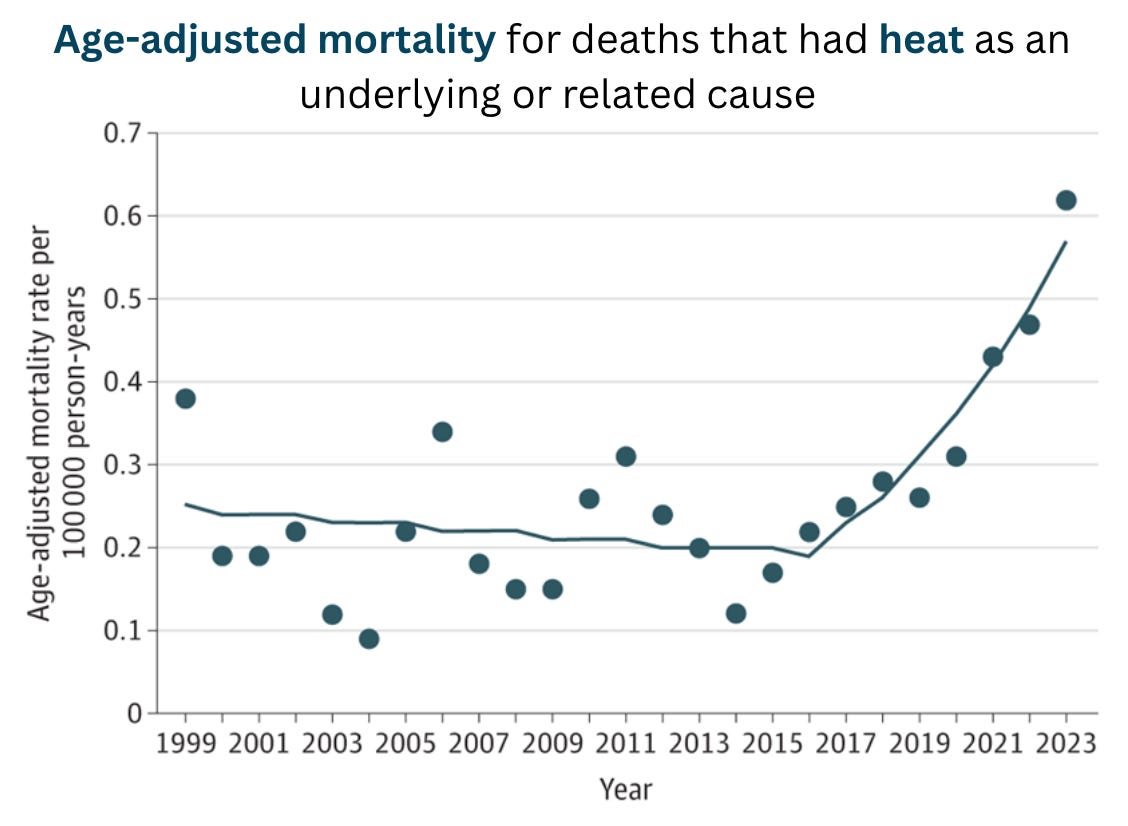
"Heat waves can be dangerous to health. They send more people to the ER with heat stroke, asthma attacks, dehydration, and heart problems. While relatively rare, they can also lead to death, which has increased over the past decade with more extreme heat. An increase in outside deaths largely drives this pattern. Indoor deaths are mostly among those without a working AC.
"The real danger is heat imbalance. That’s when your body produces more heat than it can release. Normally, sweat helps cool us down. But when it’s hot and humid, sweat doesn’t evaporate as easily. The air is already packed with moisture, making it harder for your body to cool itself and raising the risk of illness quickly.
"So, while 120 degrees in Phoenix isn’t great, 90 degrees in New York can be worse. Instead of temperature in your weather app, watch two other metrics:
Relative humidity—the “feels like” percentage in your weather app—is better because it tells us how full the air is with water vapor relative to its capacity. But warm air holds more water, meaning 60% humidity on a hot day feels much stickier than 60% on a cool day.
Dew point is more precise. It measures the actual amount of moisture in the air. Technically, it’s the temperature at which air becomes saturated and dew forms. The higher the dew point, the more moisture is in the air, and the muggier it feels. Over 70 it gets dangerous.
"But, it’s not just about the hottest part of the day:
A string of hot days can wear your body down, even if no single day feels extreme.
Warm nights make it harder for your body to cool and recover.
Early-season heat waves (like this one) are especially risky since most people haven’t acclimated yet.
"Some federal tools to track heat-related illness were dismantled in 2025 with the firing of CDC employees, but the NOAA-CDC HeatRisk tool* is still active. It offers hyperlocal risk forecasts up to 7 days ahead, rating conditions from “No Risk” to “Extreme” by considering temperatures, humidity, and other factors. If you want a simple daily check-in or a forecast, put in your zip code.
*Disclosure: I helped build the HeatRisk tool as a Senior Advisor to CDC last year.

"The following people should take action when their area is “orange” or higher. Everyone else, start taking action in “red”.
People taking medications that impair heat regulation: Certain drugs interfere with sweating, hydration, or heart function, and can even reduce your thirst sensation. Check out the list here.
Older adults: Aging reduces the body’s ability to sweat and regulate temperature.
Infants and children: Smaller bodies heat up faster, and young children may not recognize or communicate early symptoms. Kids with asthma are at high risk.
People with chronic diseases: Underlying conditions like heart disease strain the body’s ability to cope with heat stress.
Pregnant women: Pregnancy increases metabolic heat production, making it harder to stay cool. More here.
Outdoor workers and athletes: Prolonged physical activity in hot environments increases internal heat production.
People experiencing homelessness: Continuous exposure to heat, dehydration risk, and limited access to cooling or hydration increases vulnerability.
"Watch out for heavy sweating, dizziness, nausea, fatigue, rapid heartbeat, confusion—all can escalate quickly to heat stroke, a life-threatening emergency.
Check the HeatRisk tool to avoid strenuous activity. Maybe today isn’t the best day for that soccer game.
Stay hydrated. Check your urine color.
Use air conditioning if you can. If not, find a cooling center.
Be smart with fans: Fans can help when it’s moderately hot by circulating air and helping sweat evaporate. But once temps climb above 90°F fans may actually blow more hot air onto you, increasing heat stress.
"We’ll need to keep adapting. Heat-related illness and deaths are rising, and this summer will be no different.
Your disease “weather” report
Covid-19: Good news
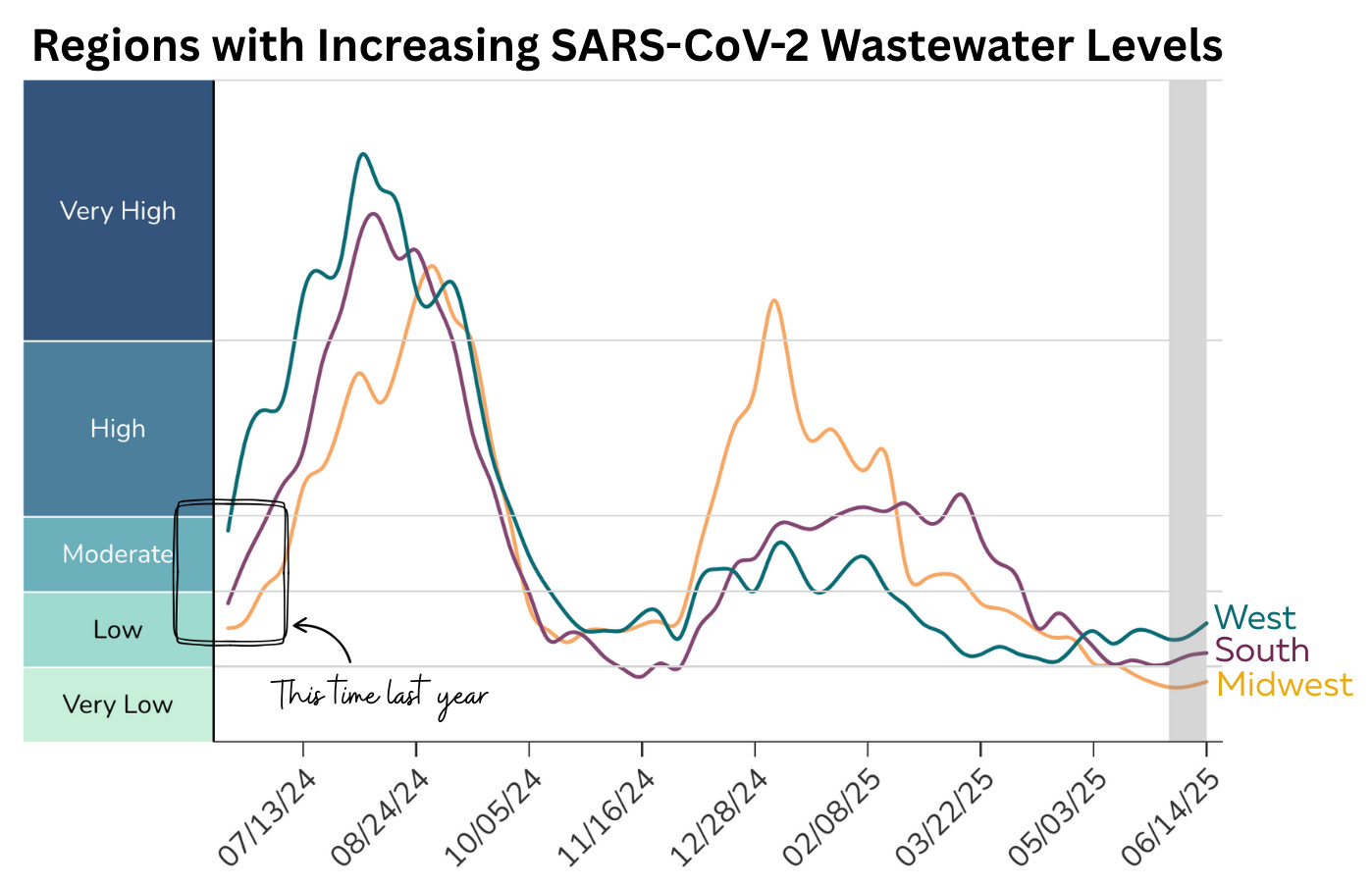
"Transmission remains “very low” or “low” across all regions. A few states (Nevada, Texas, Missouri, Mississippi, Florida, Connecticut, and Washington, D.C.) have “moderate” levels, but signals are erratic, and it’s unclear if this is a true trend or errors due to limited testing.
"The newest Omicron variant, NB.1.8.1, continues to circulate but has been struggling lately to spread fast (at about 25% growth compared to two weeks ago, which was at 65%; as a comparison, the first Omicron tsunami was 500%). This may mean a smaller summer wave. Time will tell.
Measles: Good news
"The number of measles cases has continued to slow nationally. Last week, 17 new cases were reported, bringing the total number of infections to 1,214. New cases were reported in Georgia, Iowa, and Utah.
Ticks: Shaping up to be a bad tick season
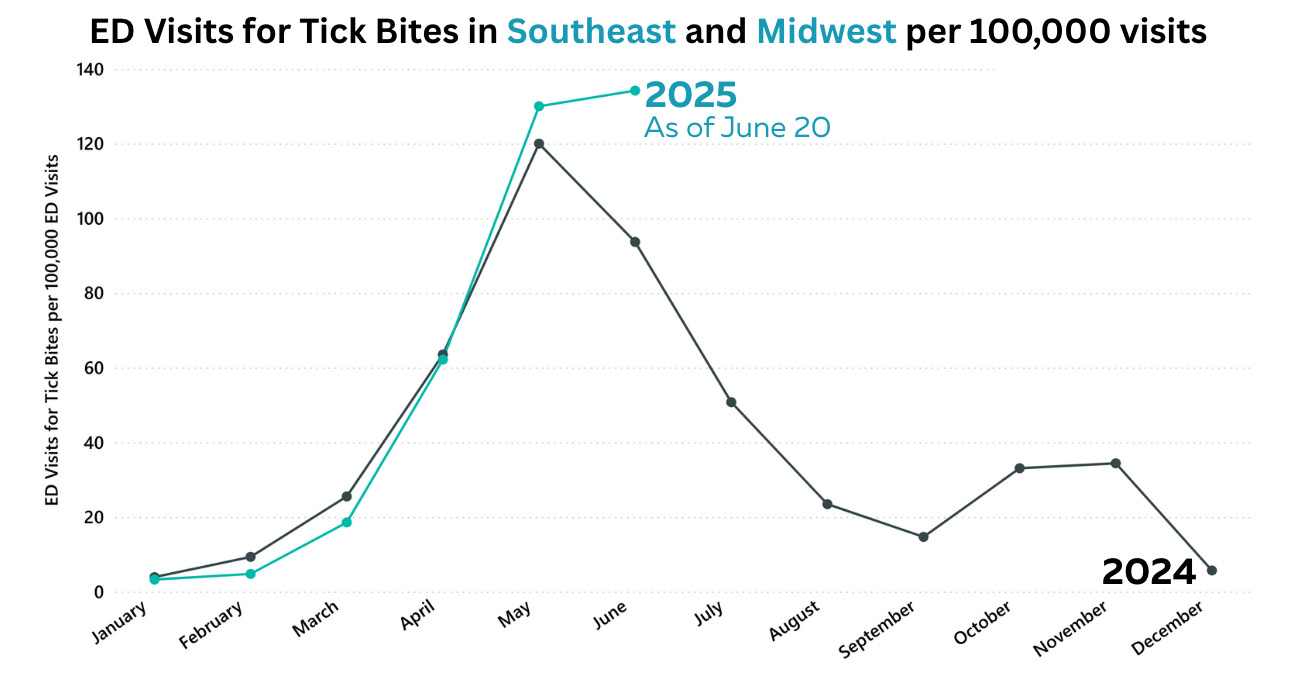
"Emergency department visits for tick-related disease are up 20% compared to the last two years. The Northeast is seeing the highest rates, with 257 ED visits for tick bites per 100,000 people (where most tick-borne diseases are). Normally, we’d expect numbers to drop by June, but rates remain stubbornly high in the Southeast and Midwest. I’m hopeful relief will come soon.
"Go here for a deep dive into ticks—why we are getting more and what to do.
Check your fridge and cabinet: 3 food safety alerts
FreshRealm Chicken Fettuccine Alfredo Meals
Listeria (bacteria), which is of greatest risk to kids, pregnant women, and older adults
17 infections: 16 have required hospitalization, and 3 deaths
Michigan, Louisiana, Nevada, Minnesota, Missouri, Illinois, Indiana, Ohio, Virginia, North Carolina, South Carolina, and Florida
More here
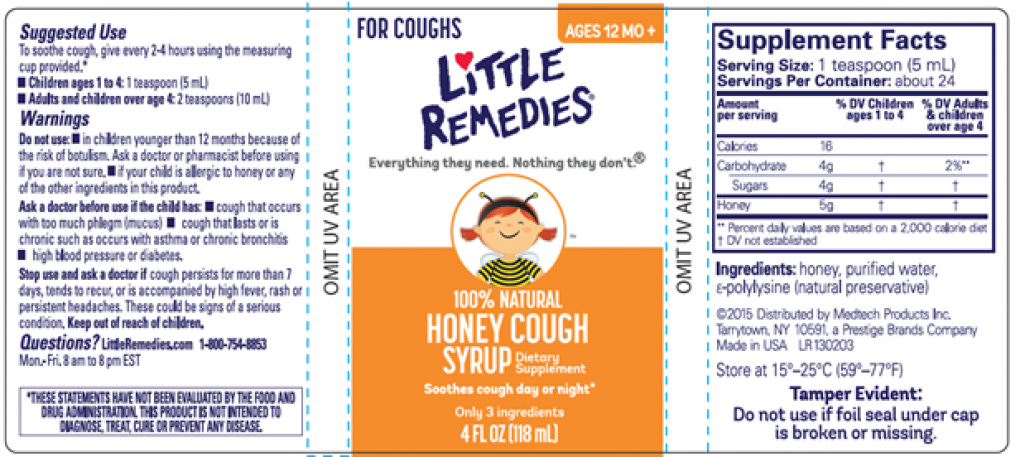
Little Remedies® Honey Cough Syrup (all other products okay)
Nationwide recall
Reason: Loss of shelf-life and potential for foodborne illness caused by Bacillus cereus
Preventative: No illnesses reported yet
More here
Vampire Slayer Garlic Cheddar Curds, 6oz. cups
Trader Joe’s in Northern California and Northern Nevada
Listeria (bacteria), which is of greatest risk to kids, pregnant women, and older adults
Preventative: No illnesses reported yet
More here
Toss these products if you have them at home.
In case you missed it
Are you in New York? Marisa, the NY YLE correspondent, explored heat risk more deeply in the local context.
This week is a big one for vaccine policy in the U.S., as it’s anything but normal. I discussed what to expect.
"Stay healthy, cool, and sane out there!
"Love, YLE"





.jpg)
No comments:
Post a Comment