-------------------------------------------------
Dr. Ruth Report, 4/12/26
RSV activity continues to be high into April in many U.S. regions.
COVID is low in the West, moderate in some Midwestern and Southern locations, and is still high in a few spots through the Northeast. JP Weiland estimates that we are down to 118,000 new COVID infections per day in the United States, which is one of the lowest levels in years.
Flu A is low overall, and Flu B varies by region, but is still high in some places like the Northeast.
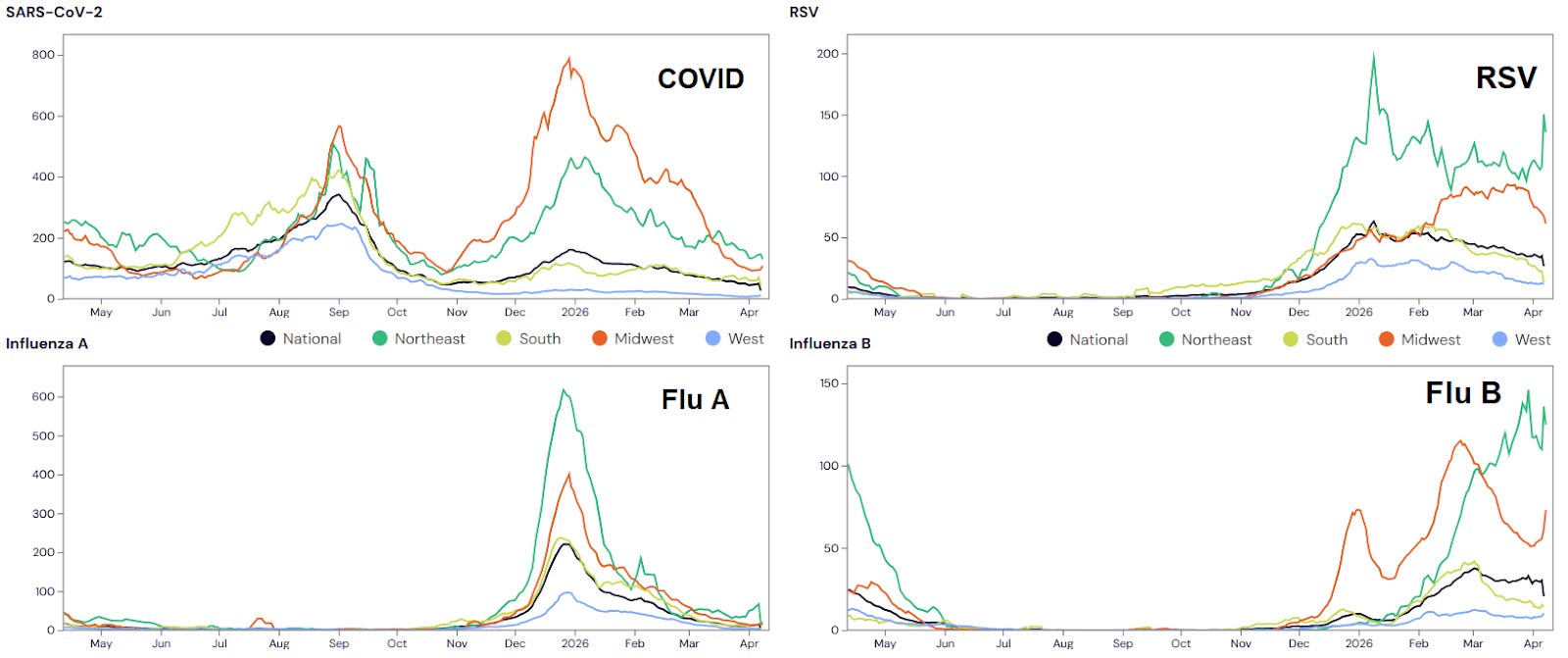
From: WastewaterSCAN
4/7/26 Cell: SARS-CoV-2 directly infects the inner ear and causes hearing dysfunction https://buff.ly/zU3Rl4P
A study from Huazhong University showed that SARS-CoV-2 can invade the cochlea directly in mice, killing the spiral ganglion neurons (SGNs) responsible for transmitting sound. Rather than causing damage through inflammation, the spike protein appears to trigger this cell death by disrupting the normal function of stress granules.
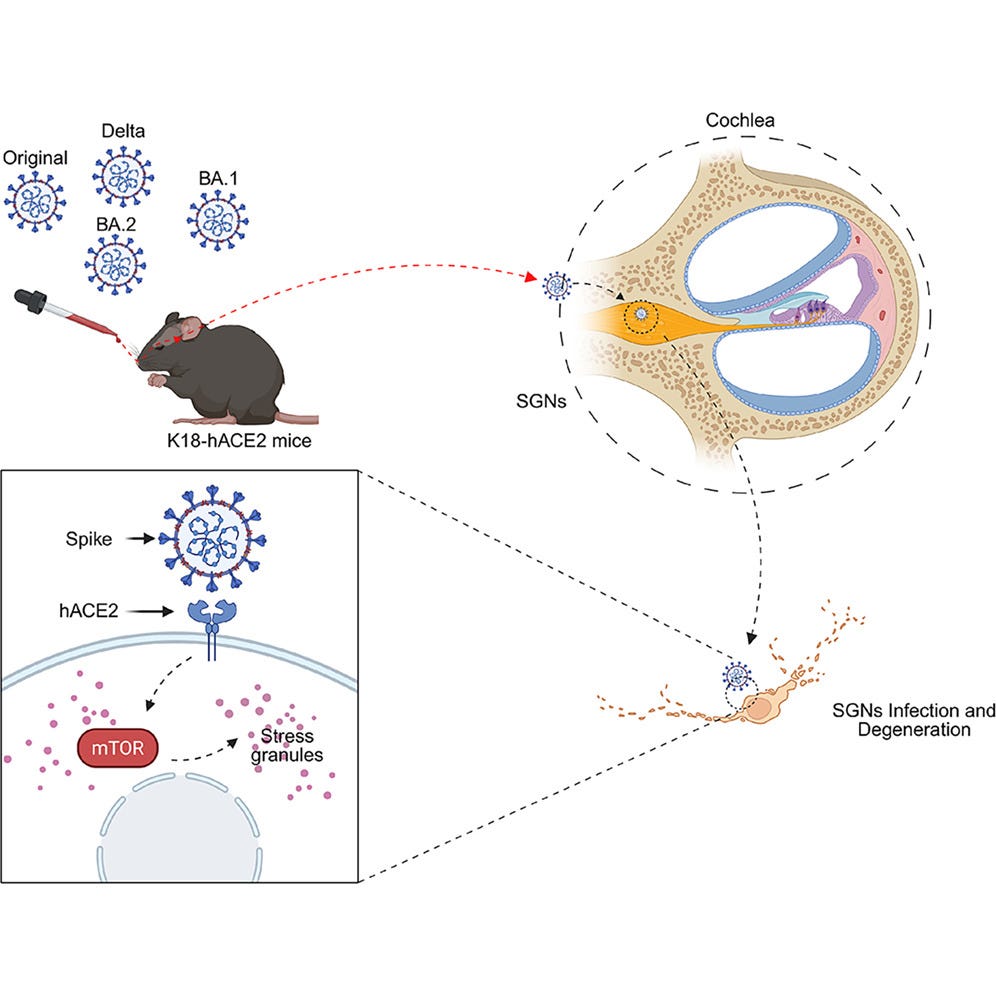
From: https://www.cell.com/cell-reports/fulltext/S2211-1247(26)00329-3
4/2/26 Academic Pediatrics: School Difficulties and Long COVID in Children and Adolescents https://buff.ly/ssLaO9P
A RECOVER Pediatrics study of 1,976 children and teens found that those with Long COVID were more than twice as likely to experience falling grades, and also had greater difficulty with concentration and socializing with peers. Given how many children are affected, the authors call for urgent development of school-based support services.
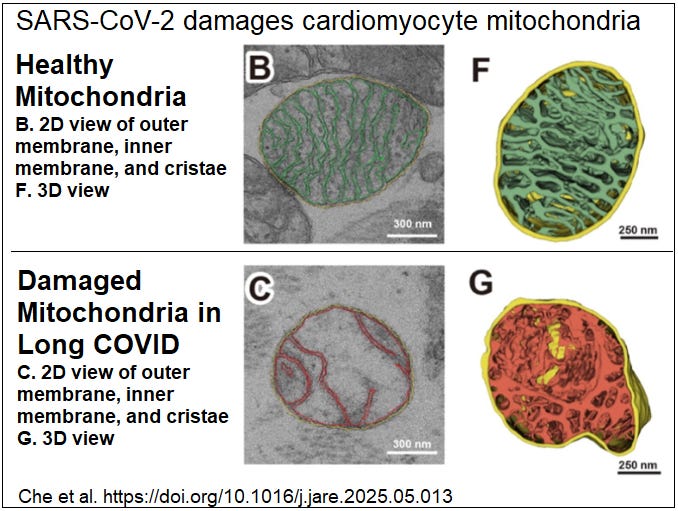
2/2026 Journal of Advanced Research: SARS-CoV-2 damages cardiomyocyte mitochondria and implicates long COVID-associated cardiovascular manifestations https://buff.ly/WjLO5BU
Electron microscopy shows that SARS-CoV-2 harms myofibrillar bundles in heart muscle and also severely damages mitochondria, the energy producers for the heart cells. This can lead to Long COVID/post-COVID cardiovascular symptoms and heart arrhythmias.
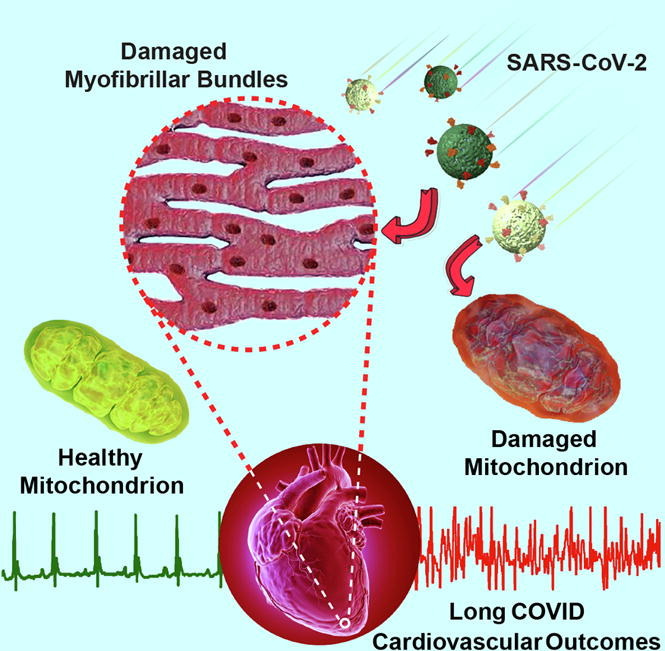
From: https://www.sciencedirect.com/science/article/pii/S2090123225003066?via%3Dihub
4/8/26 BioRxiV (Yale Iwasaki lab): Intranasal Anti-CD3 Antibody Treatment Attenuates Post-COVID Neuroinflammation and Enhances Hippocampal Neurogenesis and Cognitive Function in Mice https://buff.ly/qEpRMVu
A Yale University mouse study found that nasal administration of an anti-CD3 antibody controlled neuroinflammation after COVID, restored neuron growth in the hippocampus, and helped to improve memory. The findings suggest a potential noninvasive treatment for Long COVID cognitive dysfunction.
4/8/26 BMJ: Long covid’s £8bn bill: OECD report warns pandemic continues to cast a “long shadow” https://buff.ly/YZ4s987
A new OECD report projects that Long COVID will cost OECD countries $135 billion per year because of people leaving the workforce and having lower productivity from disability. In addition, Long COVID will generate an additional $11 billion per year in healthcare costs across member countries over the next decade.
4/9/26 BioRxiV Preprint: An imaging flow cytometry method to study platelet-monocyte aggregates (PMA) using Long COVID as a model https://buff.ly/xMjVdvo
Researchers at Stellenbosch University found that people with Long COVID had far higher levels of platelet-monocyte aggregates (PMA) than healthy controls, roughly 29% versus 5%. They suggest that PMA could act as a biomarker for thromboinflammatory burden in Long COVID.
3/28/26 European Archives of Oto-Rhino-Laryngology: Self-Reported Smell and Taste Disorders in the General Population: A Cross-Sectional Survey in Austria, Germany and Switzerland https://buff.ly/7FBxsi1
A survey of 2,340 people across Austria, Germany, and Switzerland found that roughly 40% reported significant loss of smell or taste, a striking prevalence that researchers have connected to COVID infections in the region.
4/9/26 Journal of Human Hypertension: COVID-19 and cardiovascular outcomes in patients with pre-existing hypertension https://buff.ly/Y7YgCeQ
A large study of 75,180 patients at Montefiore Health System found that COVID infection, irrespective of disease severity, raises long-term heart risks in people with hypertension. Hospitalized patients showed 65% higher rates of major cardiac events and 2.5x mortality, years after their infection.
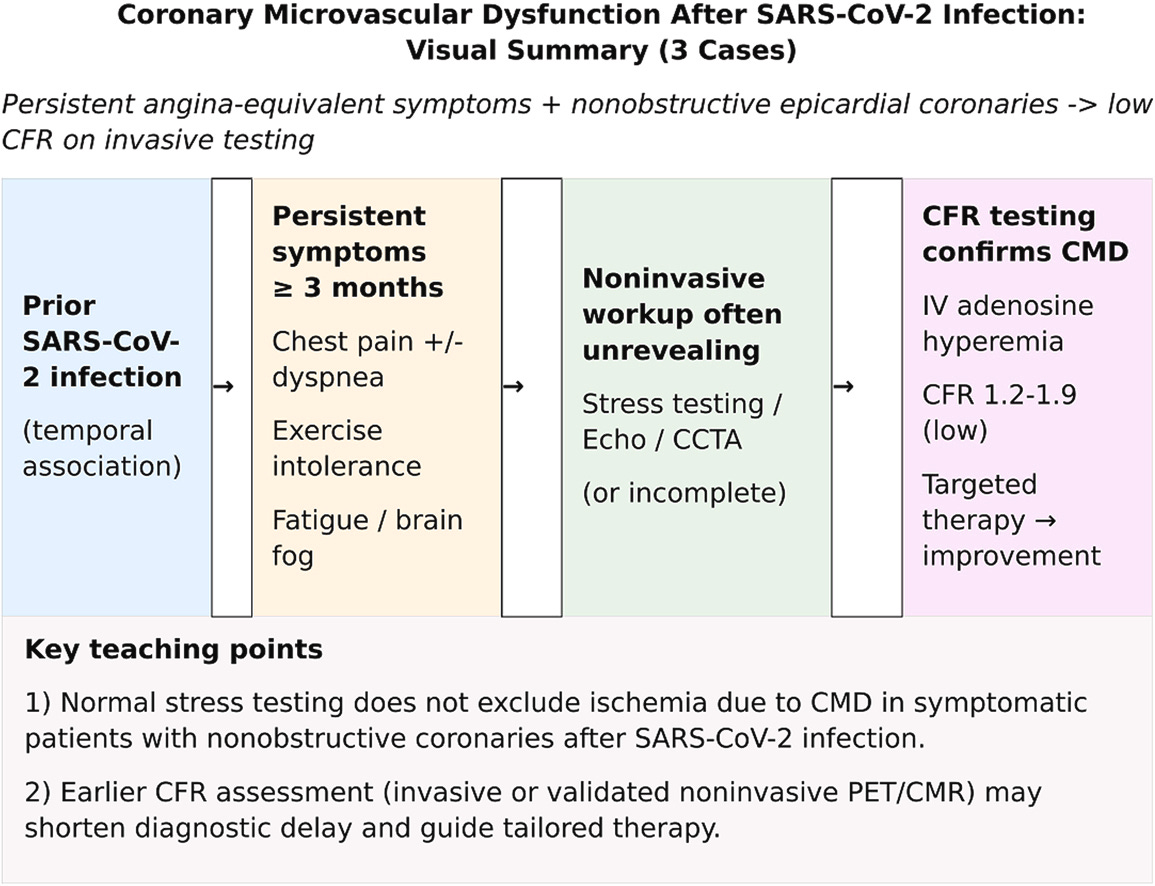
4/6/26 JACC Case Reports: Atypical Presentations of Coronary Microvascular Dysfunction in Patients After COVID https://buff.ly/eCWD0Xw
University of Florida physicians describe 3 patients with persistent chest pain after COVID whose routine cardiac tests looked completely normal, but whose coronary flow reserve (CFR) was significantly impaired. They concluded, “Coronary microvascular dysfunction may be the etiology of post-COVID chest pain. An earlier CFR assessment may shorten diagnostic delays and improve quality of life.”
From: https://www.jacc.org/doi/10.1016/j.jaccas.2026.107508
3/24/26 Frontiers in Cellular and Infection Microbiology: Proteomic signatures of COVID-19 Post-Vaccination/Post-Infection Syndrome (PV/PIS) https://buff.ly/uwatuH2
In a small pilot study of 30 participants from Stellenbosch University, people with persistent symptoms following either COVID vaccination or infection showed signs of immune dysregulation and abnormal clotting patterns, with some differences from classic Long COVID. Larger studies are needed to confirm these findings.
3/27/26 Current Cardiology Reviews: Retrospective Analysis of Clinical Repurposing of Dipyridamole and L-Arginine for Treatment of Long COVID Endothelitis https://buff.ly/QzxljAj
In a retrospective study of 44 Long COVID endothelitis patients, “treatment with dipyridamole and L-arginine, particularly in combination, was associated with meaningful improvements in fatigue, dyspnea, ability to perform ADLs, and mental health symptoms in patients with Long COVID.” Larger controlled trials are needed before firm conclusions can be made.
4/8/26 CIDRAP: Eye symptoms may signal higher-severity long COVID https://buff.ly/kSk7OkY
A new study found that people who developed new eye symptoms such as blurred vision, dry eyes, or floaters after COVID were more likely to report worse overall health and greater financial and housing difficulties, suggesting that ocular symptoms may serve as a marker for more severe Long COVID.
4/6/26 Unilad: People with long Covid are turning to opera singing for a surprising reason https://buff.ly/SiQkz0O
A program rooted in opera based breathing techniques has now reached more than 5,000 Long COVID patients in England. Opera exercises teach people to breathe more slowly and deliberately can help with symptoms of shortness of breath, coughing, chest pain, and fast breathing. Organizers are now planning to extend the program to people living with asthma and COPD.
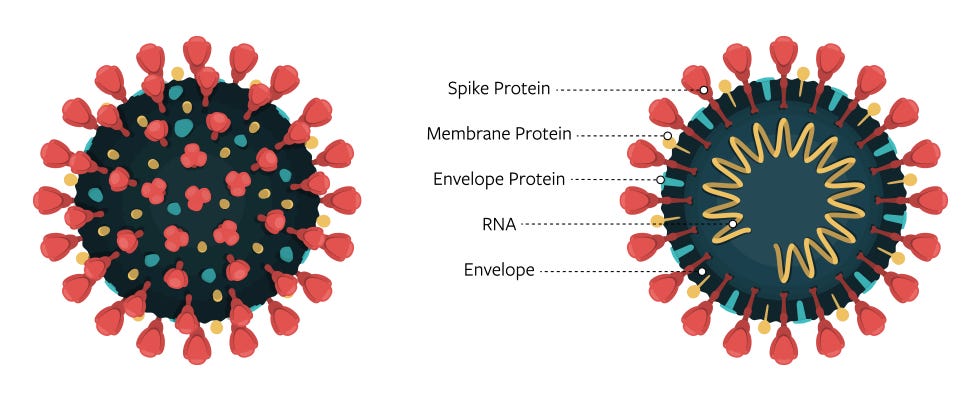
Three new studies about the SARS-CoV-2 envelope (E) protein show that it can 1) disrupt mitochondria, 2) can cause epithelial cells to dedifferentiate and then die, and 3) can increase iron within cells to help the virus replicate.
From: https://magazine.medlineplus.gov/article/sars-cov-2-up-close
4/1/26 J of Biological Chemistry: SARS-CoV-2 envelope protein mitochondrial localization reveals host metabolic disruption https://buff.ly/rHTTGj0
Purdue University researchers found that the SARS-CoV-2 envelope protein enters mitochondria, disrupts the cell’s energy and lipid balance, and causes a buildup of damaging reactive oxygen species (ROS) without killing the cell outright. This metabolic disruption may help the virus replicate more efficiently by shifting the cell toward aerobic glycolysis.
3/23/26 Cell Death & Disease: SARS-CoV-2 nonspike structural proteins hijack mucosa epithelial cell fate https://buff.ly/c3yeuex
Multinational researchers studying 64 COVID patients found that the SARS-CoV-2 envelope protein can push mucosal epithelial cells to dedifferentiate, stall tissue repair, and ultimately trigger cell death. A molecule called calponin 2 (CNN2) was identified as a potential new treatment target.
3/25/26 BioRxiV: Coronavirus envelope protein drives iron sensing disorder by hijacking the TAp73-FDXR axis https://buff.ly/0hQ5n6K
A preprint from Yangling, China reports that the coronavirus envelope protein disrupts iron sensing inside cells, causing iron to accumulate in ways that may help the virus replicate. The authors developed a new molecule called DPTP-FC that appears to reduce this iron buildup and limit tissue damage across several coronaviruses including SARS-CoV-2.
As of April 9, 2026, 1,714 confirmed measles cases have been reported in the United States in 2026. Actual hospitalization numbers are unclear because some states, including South Carolina, do not report all hospitalized cases.
By the end of March, the US reported 1,671 measles cases in the first 3 months of 2026. “That’s 73% of the total [measles cases] from 2025, the worst year for the virus in more than three decades.”
4/7/26 South Carolina Department of Public Health: No new measles cases have been reported in South Carolina since March 17, keeping the outbreak total at 997, which is larger than the 2025 Texas outbreak.
Utah Department of Public Health (Measles): https://epi.utah.gov/measles-response/
4/9/26 AP News: Too young for the MMR shot, babies become ‘sitting ducks’ in measles outbreaks https://buff.ly/2Ri8PSO
Babies under 6 months of age cannot receive the MMR vaccine and are especially vulnerable during outbreaks. “Babies depend entirely on herd immunity — at least 95% of a community must be vaccinated to prevent measles outbreaks.” National MMR vaccination rates among kindergartners have fallen to 92.5% in 2024-25, with some communities far below that. As Dr. Martha Edwards, president of South Carolina’s American Academy of Pediatrics chapter commented, “The choice not to vaccinate impacts other parents’ rights to keep their children safe.”
4/9/26 NBC: White House calls new ballroom a national security necessity that’s ‘vital’ to the Trump family’s safety https://buff.ly/xQpgcqw
The Trump administration described the proposed 90,000-square-foot White House ballroom as a “national security necessity” vital to the first family’s safety, and indicated it will seek Supreme Court review if a federal appeals court does not rule in its favor.

4/8/26 Nature: Genetic predictors of GLP1 receptor agonist weight loss and side effects https://buff.ly/V0nKWDg
A genome-wide study of 27,885 people from 23andMe found specific variants in the GLP1R and GIPR genes that can predict both how much weight a person will lose on GLP-1 medications and whether they are likely to experience nausea or vomiting. The GIPR association for nausea was specific to people taking tirzepatide, and the findings may eventually help match patients to the right medication for them.
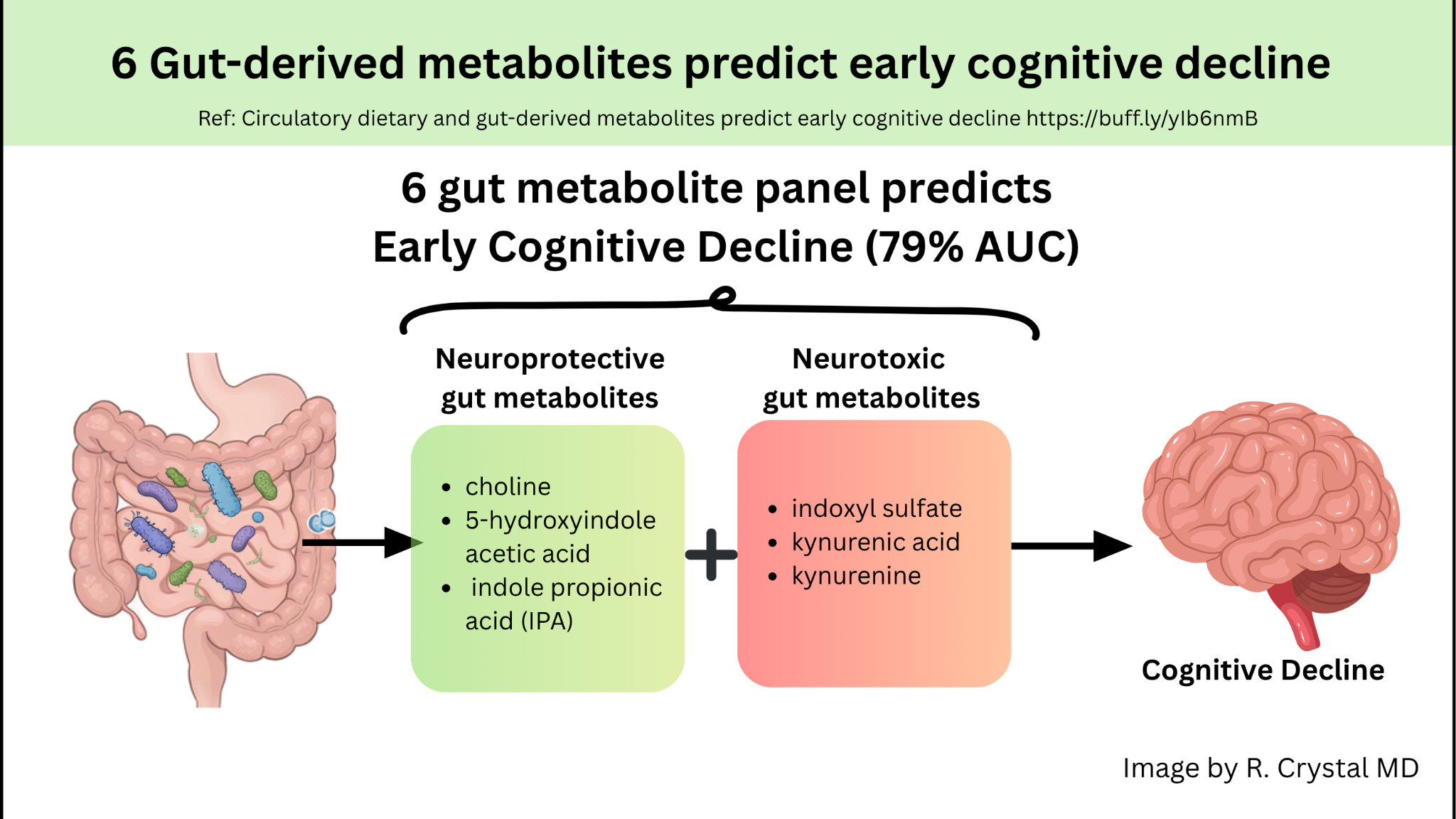
3/27/26 Gut Microbes: Circulatory dietary and gut-derived metabolites predict early cognitive decline https://buff.ly/yIb6nmB
University of East Anglia researchers analyzed blood and stool samples from 150 adults aged 50 and older and found that six metabolites produced by gut bacteria could classify people into healthy, mildly impaired, and cognitively declining groups with about 79% accuracy. The findings raise the possibility that a simple blood test based on gut-derived metabolites could one day help detect dementia risk before symptoms become obvious.
2/17/26 Fred Hutch Cancer Center: Scientists develop first-of-its-kind antibody to block Epstein-Barr virus https://buff.ly/11tV8e1
4/7/26 Signal Transduction and Targeted Therapy: Triggering multiple sclerosis: infection with Epstein-Barr virus activates multiple pre-existing autoreactive B and T cells https://buff.ly/t9381TQ
Munich researchers found that the Epstein-Barr virus (EBV) may trigger multiple sclerosis by waking up pre-existing immune cells that attack myelin, leading to brain inflammation and myelin loss years after the initial infection.
4/9/26 Nature: One woman, three autoimmune diseases: CAR-T therapy vanquishes ultra-rare disease trio https://buff.ly/506I4gq
A single course of CAR-T cell therapy made three simultaneous rare autoimmune diseases into remission in one patient. More than a year later, she remains free of symptoms without any ongoing medication.
4/3/26 Science: Copper supports regulatory T cell energetic state to sustain peripheral immune tolerance https://buff.ly/J9pEecr
A Chinese study of 122 people along with a separate mouse study found that adequate levels of copper are necessary for regulatory T cells to maintain the metabolic energy they need to keep the immune system calm. Disrupting copper transport caused T reg cells to lose their ability to prevent excessive inflammation, suggesting that copper metabolism could be a meaningful target in autoimmune disease.
4/11/26 AP News: Artemis II’s record-breaking journey around the moon ends with dramatic splashdown https://buff.ly/9BysiBi
The four Artemis II astronauts completed humanity’s first crewed lunar voyage in more than 50 years with a Pacific splashdown on Friday, breaking Apollo 13’s distance record at 252,756 miles from Earth. Data will be used to prepare for a new landing on the moon by another crew in approximately two years.
NASA photos of Artemis II: https://www.nasa.gov/artemis-ii-multimedia/#images
Zero gravity hug of pure joy

Lunar eclipse

“Echoing the iconic Earthrise photo captured by the Apollo 8 astronauts in 1968, during the lunar flyby, the Artemis II crew captured a shot of Earthset as they passed behind the Moon’s far side.”

Have a great week,
Ruth Ann Crystal MD





.jpg)
No comments:
Post a Comment