
SARS-CoV-2 RBD evolving to evade immune recognition, PJ.2.1 rising in BC, Verbal memory deficits in Long COVID, H5N1 raging on mink farm, US measles cases now more than double 2025, & Ebola spreading
Ruth Ann Crystal MD
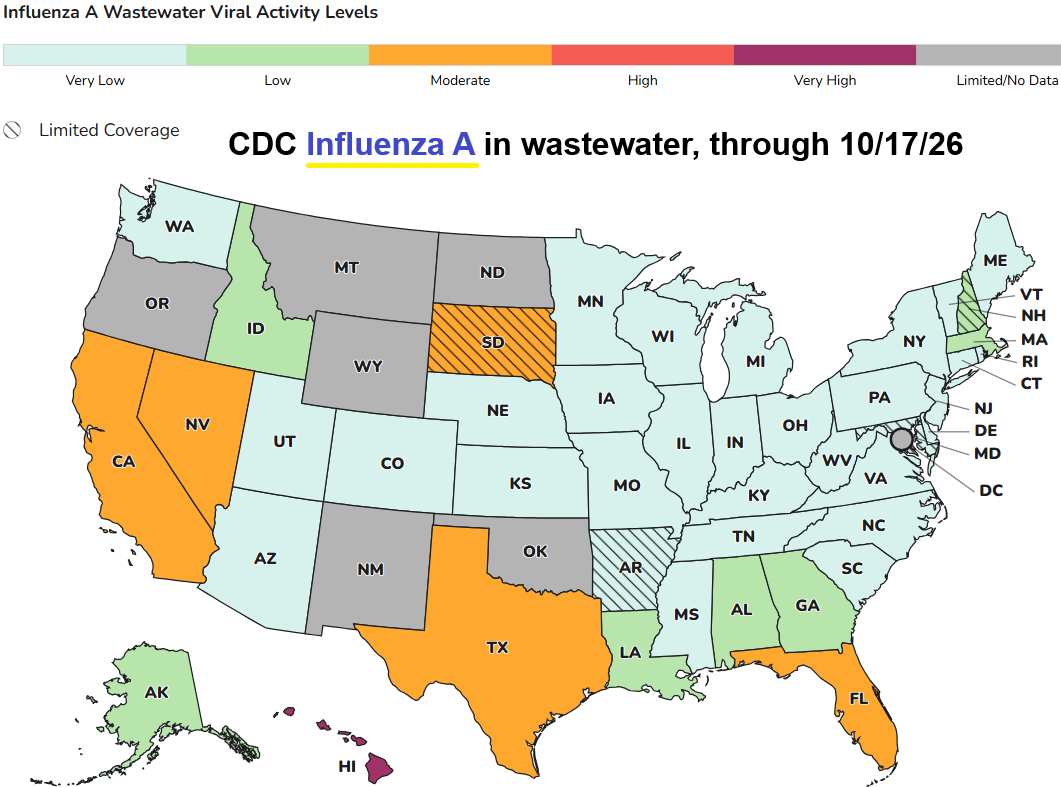
The CDC reports that national flu activity is still low, but key indicators (positive tests, outpatient and ED visits, and hospitalizations) are rising. Annual flu vaccination is recommended for everyone 6 months and older, and antiviral medications are available for those who need them. Influenza is very high in Hawaii, and is moderately high in California, Nevada, South Dakota, Texas and Florida according to the CDC.
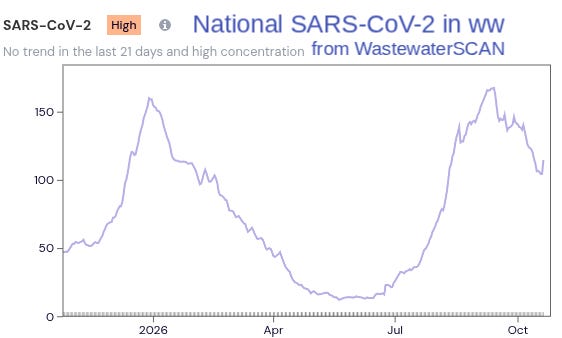
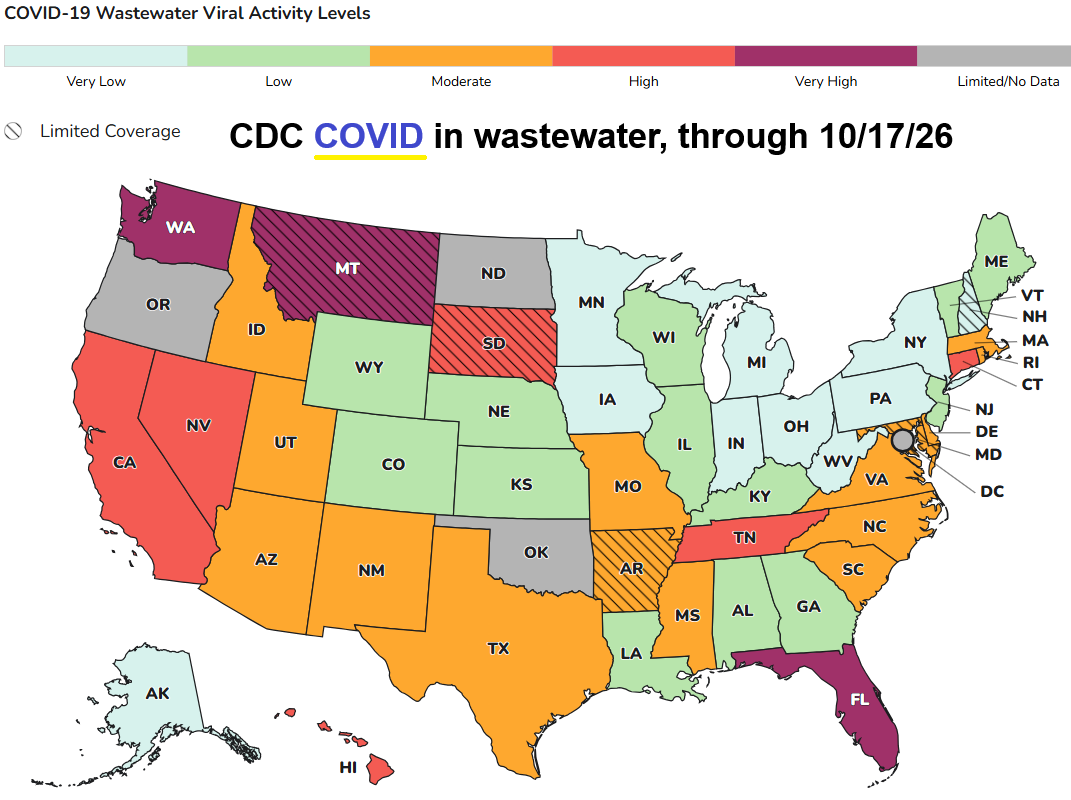
Regarding COVID, Mike Hoerger wrote on Oct 20, “the CDC has made sizable retroactive upward corrections over and over. What once looked like a small wave or wavelet has nearly doubled in height.” Levels of SARS-CoV-2 are still high in many places across the United States according to WastewaterSCAN and the CDC, but the late summer COVID wave is starting to decrease.
I expect that Mike Hoerger’s interactive U.S. COVID map will update tomorrow.
COVID Variants
Ryan Hisner noted on 10/23/26 that PJ.2.1 appears to be growing in British Columbia, Canada and is expected to become the dominant COVID variant there soon.
Acute COVID infections, General COVID info
The SARS-CoV-2 spike receptor-binding domain has evolved decreased inherent antigenicity in humans | BioRxiv 10/16/26
Fred Hutch researchers found that newer SARS-CoV-2 variants are harder for unprimed human immune cells to recognize. Naive B cells bound the spike RBD of KP.2 three times less often than the original Wuhan strain. The authors call the drop modest, with ample naive B cells still able to bind, and say that neutralizing antibody effects will need further study. No similar drop appeared in mouse B cells.
How Bad Is Another Case of Covid? | NY Times 10/19/26
Although repeat COVID infections are often milder, no COVID infection is risk-free. “COVID can cause long-term damage to nearly every part of the body and repeated cases can compound those harms. A number of studies have shown that each time someone contracts COVID introduces an opportunity to develop long-term symptoms. Researchers often compare it to Russian roulette: Any infection could be the one that leads to Long COVID.”
Antibiotic overuse and mortality in patients hospitalised for COVID-19: a global cohort study | The Lancet Microbe 10/24/26
WHO researchers analyzed 592,898 hospitalized COVID patients across 64 countries and found that 75.6% of those with prescribing records received antibiotics, even though bacterial coinfection was suspected in fewer than 8% of cases. This widespread overprescribing was associated with higher mortality among affected patients.
Circulating cholesterol fuels SARS-CoV-2 replication via ORF3a | EMBO 9/11/26
Gladstone Institutes and UCSF scientists found that the SARS-CoV-2 protein ORF3a pushes cells to take in more LDL cholesterol, which the virus then uses to replicate. ORF3a may be a promising target for future antiviral therapies.
A Novel Proviral Mechanism for the ISG, Shiftless, During Human Coronavirus Infection | bioRxiv 10/16/26
Emory University researchers found that Shiftless, an interferon-stimulated gene product long thought to fight viruses, actually helps SARS-CoV-2 enter cells and dampens interferon signaling. In lab experiments, inhibiting Shiftless was enough to reduce coronavirus infection in cultured cells.
Long COVID
‘Nobody knows what to do’: How Long COVID left Physics Girl searching for answers | KPBS 10/22/26
Dianna Cowern, creator of the YouTube channel Physics Girl, developed severe Long COVID after a mild infection on her 2022 honeymoon, eventually becoming bedbound. With no FDA-approved treatments, she tried unapproved options that helped, and she has since returned to making videos, though she functions at roughly 30% to 40% of her previous capacity.

Multi-omic analysis of post-acute sequelae of COVID-19 (PASC) | Nature 10/21/26
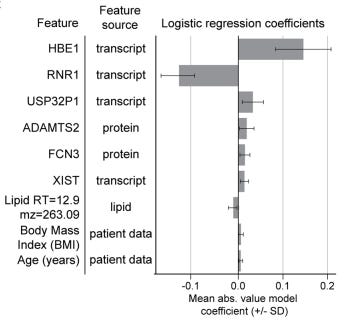
Researchers at Albany Medical College in Albany, New York examined blood samples from 299 individuals and identified lasting abnormalities in both immune function and metabolic activity among people with Long COVID. A machine learning model trained on this data reached an AUC of 0.97, suggesting that a blood based diagnostic test for Long COVID may be within reach.
Figure 4C: (C) Biomolecule and age coefficients from the logistic regression model.
Long-term episodic memory alterations and the role of perceived stress in post-COVID condition | Acta Psychologica October 2026
Researchers at the University of Oviedo in Spain examined 41 individuals and found that those meeting criteria for post-COVID condition recalled significantly less verbal information over 9 months compared to controls, even though both groups performed similarly at initial encoding. The post-COVID group also demonstrated measurably slower memory retrieval speeds, pointing to a deficit in how stored information is accessed rather than how it is first learned. The study suggests that memory issues in Long COVID may not show until months later.
Mechanisms of sex differences in acute and long COVID sequelae in mice | BioRxiv 10/22/26
Johns Hopkins researchers found that after SARS-CoV-2 infection, female mice, despite milder acute illness, developed lasting memory deficits and neuroinflammation. The effect tracked with two X chromosomes and prolonged Xist and TLR7 activity, rather than sex hormones. Blocking TLR7 prevented the deficits, pointing to a possible Long COVID treatment target.
ATLAS (Autonomic Titration Load Adaptation System) Manual
David Putrino announced the release of the ATLAS Manual, a guide that “walks rehabilitation professionals through safe autonomic rehabilitation” for dysautonomia and POTS. Its aim is to improve dysautonomia symptoms without triggering post-exertional malaise (PEM). The Mount Sinai IACCI Provider Manual is available at the same page.
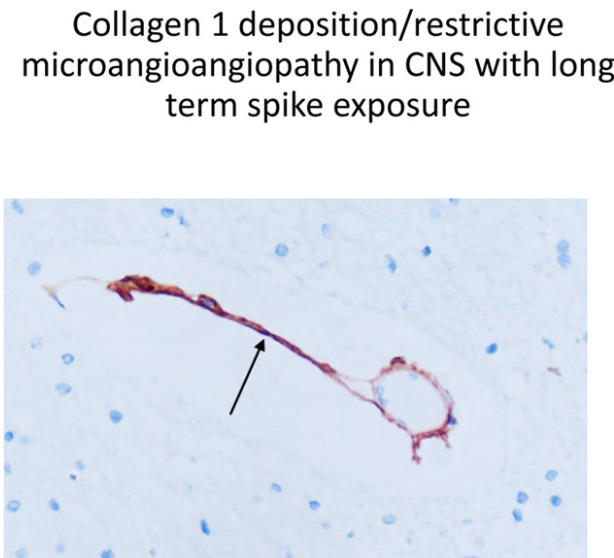
Effects of prolonged SARS-CoV2 spike protein exposure in long COVID and a mouse model of the disease | Am J of Pathology 10/19/26
Weill Cornell researchers in New York examined 8 Long COVID patients and detected SARS-CoV-2 spike protein lingering in the small blood vessels of multiple tissues, including the central nervous system, well after the initial infection had resolved. The persistent spike protein was accompanied by measurable inflammation and collagen accumulation in the microvasculature, structural changes that could impair blood flow and may help explain the prolonged symptoms seen in Long COVID patients years after infection.
No evidence of hypercoagulability, altered fibrinolysis, or increased fibrin(ogen) microaggregates in never‐hospitalized long COVID | Hemasphere 10/19/26
UK researchers from the EXPLAIN trial examined 151 participants (80 Breathless Long COVID patients, 37 non-breathless Long COVID individuals, and 34 controls) and found that the Long COVID patients showed no increased blood clotting activity, no disrupted clot dissolution, and no excess fibrin microaggregates relative to individuals who had fully recovered from COVID infection.
Inflammatory and immunologic analysis of bronchoalveolar lavage from patients with post-COVID-19 lung disease | Frontiers 10/18/26
Researchers from Indiana University examined bronchoalveolar lavage samples from 32 patients with post-COVID pulmonary disease and found SARS-CoV-2 spike protein still present in lung tissue up to 627 days after the original infection. The persistence of viral proteins may drive ongoing pulmonary inflammation.
H5N1
Bird Flu Is Raging on a Mink Farm. It Could Spark a Human Pandemic, Experts Say, but Officials Won’t Act. | Propublica 10/23/26
A ProPublica investigation finds that the Highly Pathogenic Avian Influenza H5N1 has been spreading unchecked on a Utah mink farm for over two months. Experts warn mink could help the virus adapt to humans, yet state officials and the CDC declined to cull the animals or test workers, prioritizing the fur industry over pandemic risk. Minks have lung cells that are very similar to humans.
Measles
As of October 22, 2026, 4,588 confirmed measles cases were reported in the United States in 2026. The CDC is only reporting 3 of the 6 measles deaths.
US measles cases hit 4,588, more than twice last year’s total | CIDRAP 10/23/26
The CDC has confirmed 4,588 US measles cases this year, which is more than double last year’s total. Pennsylvania accounts for nearly 30% of cases. “Andrew Pavia, MD, a pediatric infectious disease epidemiologist at the University of Utah, said that because of underreporting, he believes the number of US cases since the beginning of last year is “probably greater than 20,000.”
Pennsylvania raises alarm on congenital measles | CIDRAP 10/20/26
The Pennsylvania Health Department is warning doctors about congenital measles, now that 66 pregnant women in the state have contracted the virus this year and at least six babies have been born with measles infections. An AAP expert says there is no national database, so the true risk to infants is unknown, and underreporting is likely.
Pennsylvania Department of Health Measles Dashboard:
As of October 23, there have been 1,338 known measles cases in Pennsylvania with 78 cases in the last 7 days. The PDH website reports 5 measles-associated deaths, but a 6th death was reported last week.
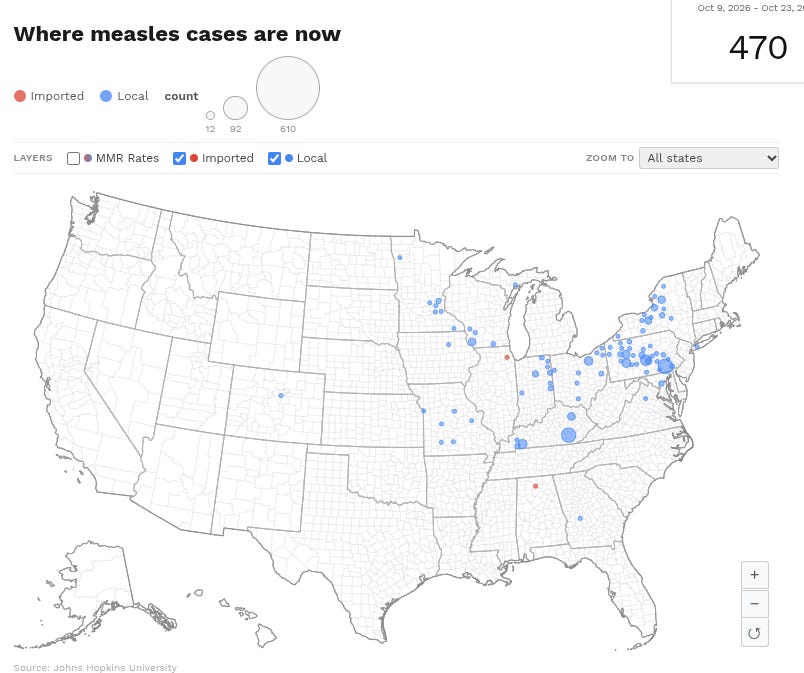
Johns Hopkins US Measles Tracker
Measles cases Oct. 9 to Oct. 23, 2026:
Ebola- now in 4 countries (DR Congo, Uganda, Kenya, Nigeria)
Ebola disease caused by Bundibugyo virus, Democratic Republic of the Congo, Kenya and Nigeria | WHO News 10/23/26
WHO reports the Bundibugyo Ebola outbreak is expanding, with 9,704 confirmed cases and 4,687 deaths in DR Congo as of Oct. 20. Kenya has nine cases in one cluster with two reported deaths, and Nigeria confirmed its first imported case. The WHO advises against travel or trade restrictions. A Phase 2/3 vaccine trial launched on Oct. 23.
Nigeria announces its first Ebola case in 12 years | CIDRAP 10/21/26
Kenya reports more Ebola cases, all linked to initial patient | CIDRAP 10/19/26
Woman, 65, becomes second patient to die of Ebola in Kenya | BBC 10/23/26
Dr Jean Kaseya, Director General of Africa CDC Oct 20, 2026
“EBOLA IN NIGERIA: AN URGENT CALL FOR GLOBAL SOLIDARITY”
Other news
El Niño in California (Listos California)
The state of California discusses what causes El Niño and how to protect yourself this year. El Niño is expected to increase the odds of heavy rain, snow, flooding, debris flows and power outages. The state’s Listos California guide urges you to check your address risk, review flood insurance (which can take 30 days to start), clean gutters, sign up for alerts, and pack supplies.
The anatomy of a personal health agent | Nature (Google Research) 10/21/26
Google Research describes a personal health agent built from three cooperating AI agents that outperformed a standalone large language model chatbot. The design offers a foundation for integrating wearable sensor data, medical knowledge and coaching, moving AI health advice beyond generic chatbot answers toward personalized, data informed guidance.
Using AI to offer personalized health advice | Nature 10/21/26
This Nature piece explores the growing use of AI tools in medicine, asking what technologies may be coming and how personalized health advice tools can be tested.
Sequential diagnosis with language models | Science 10/23/26
Microsoft researchers tested a frontier AI diagnostic system on 629 clinical cases. It correctly identified 83% of complex cases and 80% of emergency cases, compared with 36% and 47% for physicians. The system asked more questions and relied on fewer diagnostic tests to reach its conclusions.
Foundation artificial intelligence models for health recognition by use of face photographs (FAHR-Face): a model development and validation study | Lancet Digital Health 10/19/26
Researchers developed and validated FAHR-Face based on > 40 million face photos. FAHR-Face is “an AI algorithm that can directly predict cancer patient survival from a simple face photograph.”
How a photo of a person’s face could help predict whether they’ll survive cancer treatment | CNN 10/21/26
Dynamic force sensing by bone delays aging and extends lifespan | Cell Metabolism 10/23/26
Last week, I reported on a study in mice and in pigs that showed that there is a bone-brain axis in which pressure placed on the tibia causes the release of neuroprotective factors from osteocyte bone cells through PIEZO1 receptors. These factors can travel to the brain and to improve survival and motor and cognitive recovery after traumatic brain injury (TBI).
This week, a new article from the same group in China shows that dynamic force placed on the tibia is sensed by the PIEZO1 pressure receptor in an experimental model. Pressing on the tibia delayed aging and extended healthspan and lifespan while reducing inflammation and bone marrow immune aging. Deleting Piezo1 had the opposite effect, showing that bone may be a modulator of aging.
HealthBio researchers examined 10 individuals with post-treatment Lyme disease syndrome (PTLDS) and found bacterial proteins lingering inside CD16+ monocytes long after antibiotic treatment finished, with no signs of ongoing active infection. These residual Borrelia burgdorferi antigens were associated with dysregulation of monocyte immune function, pointing toward a mechanism by which leftover microbial debris may sustain chronic inflammatory symptoms in affected patients.
Antiviral and inflammatory immune signatures in anti-CD20-treated multiple sclerosis: a cross-sectional study | Journal of Neurology 10/15/26
A cross-sectional study of 107 people living with multiple sclerosis (MS) found that B-cell depleting therapy using anti-CD20 monoclonal antibodies (ocrelizumab) specifically diminished T-cell immune responses to Epstein-Barr virus while leaving responses to both SARS-CoV-2 and cytomegalovirus largely intact. This selective suppression of Epstein-Barr virus immunity may offer a mechanistic explanation for why this class of treatment is so effective at reducing neurological inflammation in relapsing MS.
A single-cell atlas of human neutrophils reveals neutrophil heterogeneity across health and disease | Nature Immunology 10/21/26
A Stanford-led team catalogued 1 million neutrophils from 781 samples and 43 datasets into a single-cell atlas, mapping distinct subsets across tissues, infection, cancer, and sex. Neutrophil-specific gene signatures predicted mortality in critically ill patients and tracked with metabolic dysfunction and long-term all-cause mortality. Even normal-range neutrophil counts on the higher end were associated with higher risk of later chronic disease and death.
Meet the Texas man known as the “fairy godfather” of Halloween | CBS mornings 10/18/25
Christophe Waggoner is a Texas man known as the “fairy godfather” of Halloween. For 8 years, Waggoner has spent his free time thrifting, washing, and sewing Halloween costumes that he donates to children who cannot afford them.

Have a great week,
Ruth Ann Crystal MD





No comments:
Post a Comment