Covid-19 in pockets, sugar cane isn't better, ticks march on, rescission cuts (vs. everything else), bright spots, and more
The Dose (July 21)
Covid-19 is definitely increasing in some pockets of the U.S. and
ticks are still thriving. Also, is sugar cane in Coke really better? A
landmark study on aluminum in vaccines, a quiet federal rollback of
multilingual services, and a few things worth celebrating, including
increased use of the 988 crisis line.
Plus: a quick explainer on
what the heck is going on with all these federal budget cuts:
reconciliation, rescissions, and appropriations.
Here’s your deep dive into the public health news you can use.
But first: announcements
Calling Californians! Come help shape YLE.
Following the success of the YLE New York edition
and hearing from tens of thousands of you about more state editions,
we’ll launch a YLE newsletter dedicated to California starting in
August. More on that soon…
For now, we’re looking for California residents to join us in shaping the conversation. What issues matter most in your communities? What do you want to see more (or less) of? Your input is invaluable. If you’d like to participate in a live, virtual small group conversation, submit your info here.
We’re hiring!
We’re also growing our team and are looking for a Community Engagement Manager. If this sounds like you or someone you know, apply here.
Disease “weather” report
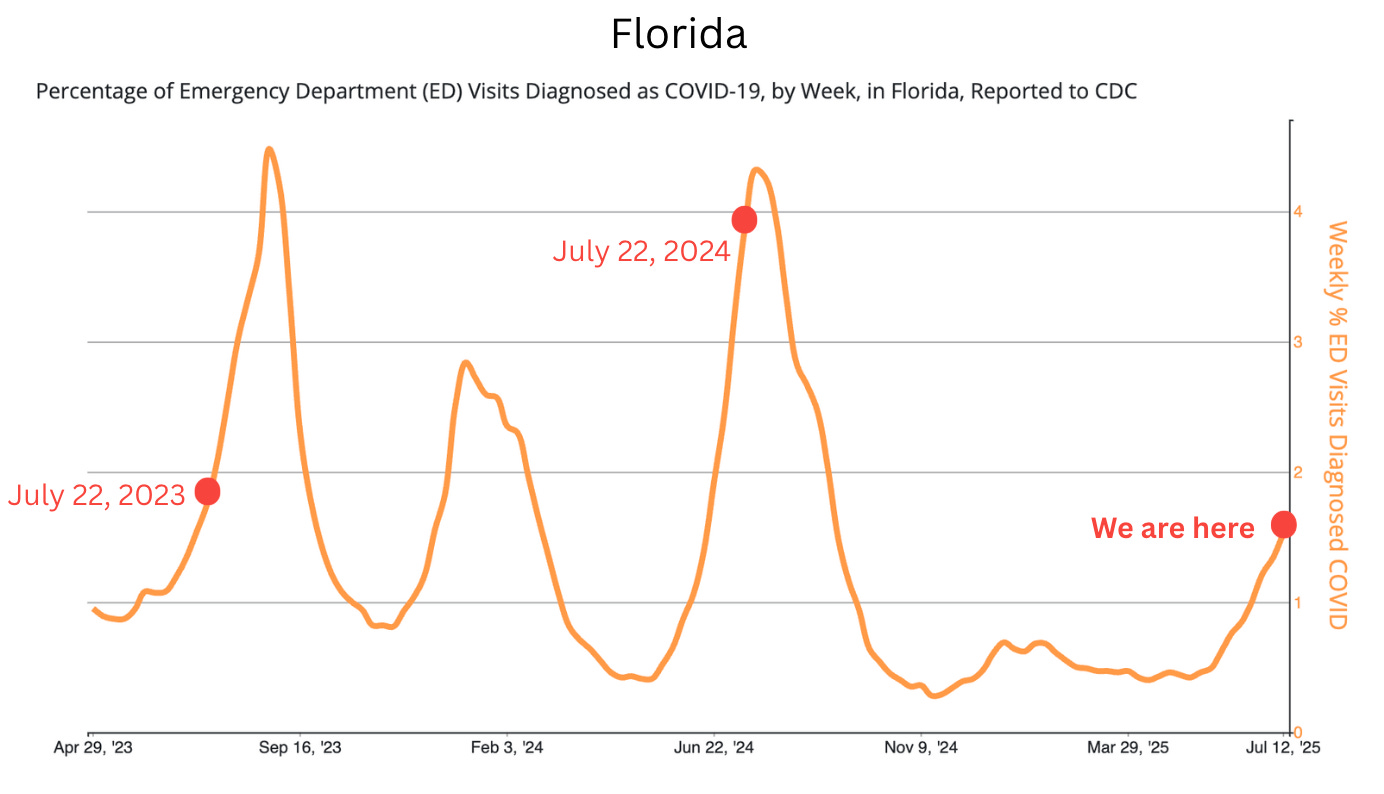
A summer Covid-19
wave is underway in the South and West. All three early
indicators—wastewater data, test positivity rates, and ER visits—are
rising. Texas and Florida, for example, are already into a wave,
aligning with summer 2023 trends.
Source: CDC; Annotated by Your Local Epidemiologist
This
isn’t being driven by a dramatic new variant, but rather by small
changes in circulating strains, humid weather prompting people to stay
indoors, and waning immunity from infection among those who haven’t had
Covid-19 in a while.
What to do: To
minimize disruptions and protect the highest risk people, consider
wearing a mask in crowded indoor spaces, especially places like
airports. Monitor for symptoms, especially if you’re visiting high-risk
individuals, like grandparents in nursing homes.
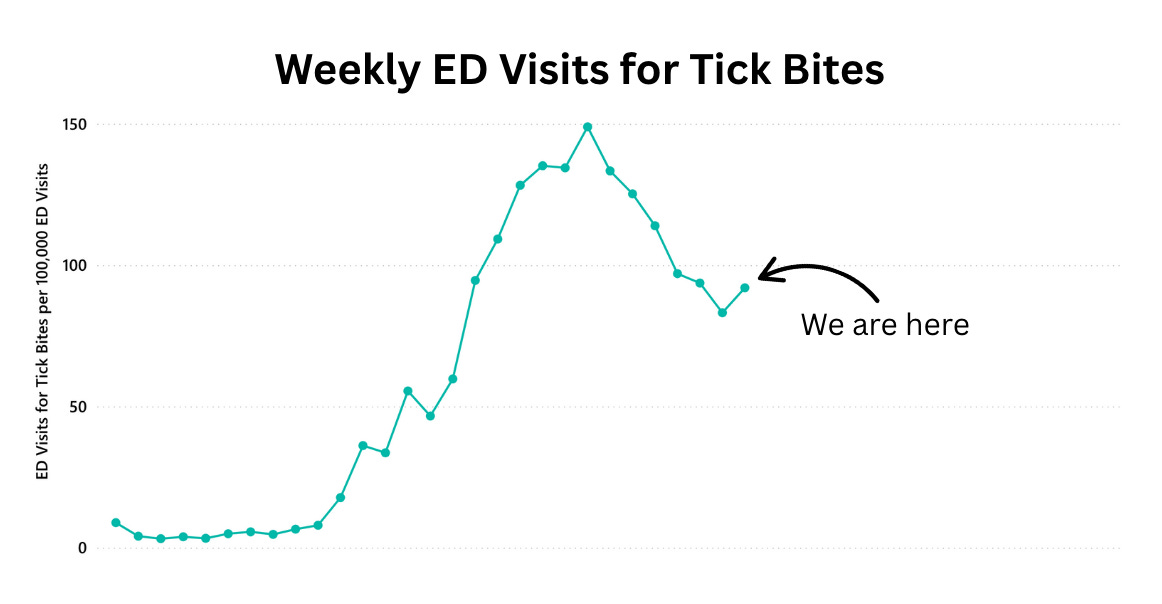
Ticks are still tickin’ withemergency
room visits remaining high (higher than in the past eight Julys) with
the Northeast and Midwest seeing the biggest uptick.
Why
the bad year? Annual variation, as well as ticks slowly migrating to
more populated areas, climate change, and increased awareness. Here’s all you need to know, including yes, falsehoods, on these bite-sized threats.
What does this mean for you?
Wear clothes that cover your ankles and arms.
Use repellent that contains 20% or more DEET, picaridin, or IR3535 on exposed skin.
Do
a thorough tick check, including on pets—dogs can bring ticks into your
home. For kids, especially check under arms, in and around ears, in the
belly button, and their hair.
If you get bitten, remove the tick as quickly as possible.
Unless you are experiencing symptoms, there is no need to go to the ER.
If you are experiencing flu-like symptoms (fever, body aches), rash, or are having trouble removing the tick, contact your doctor.
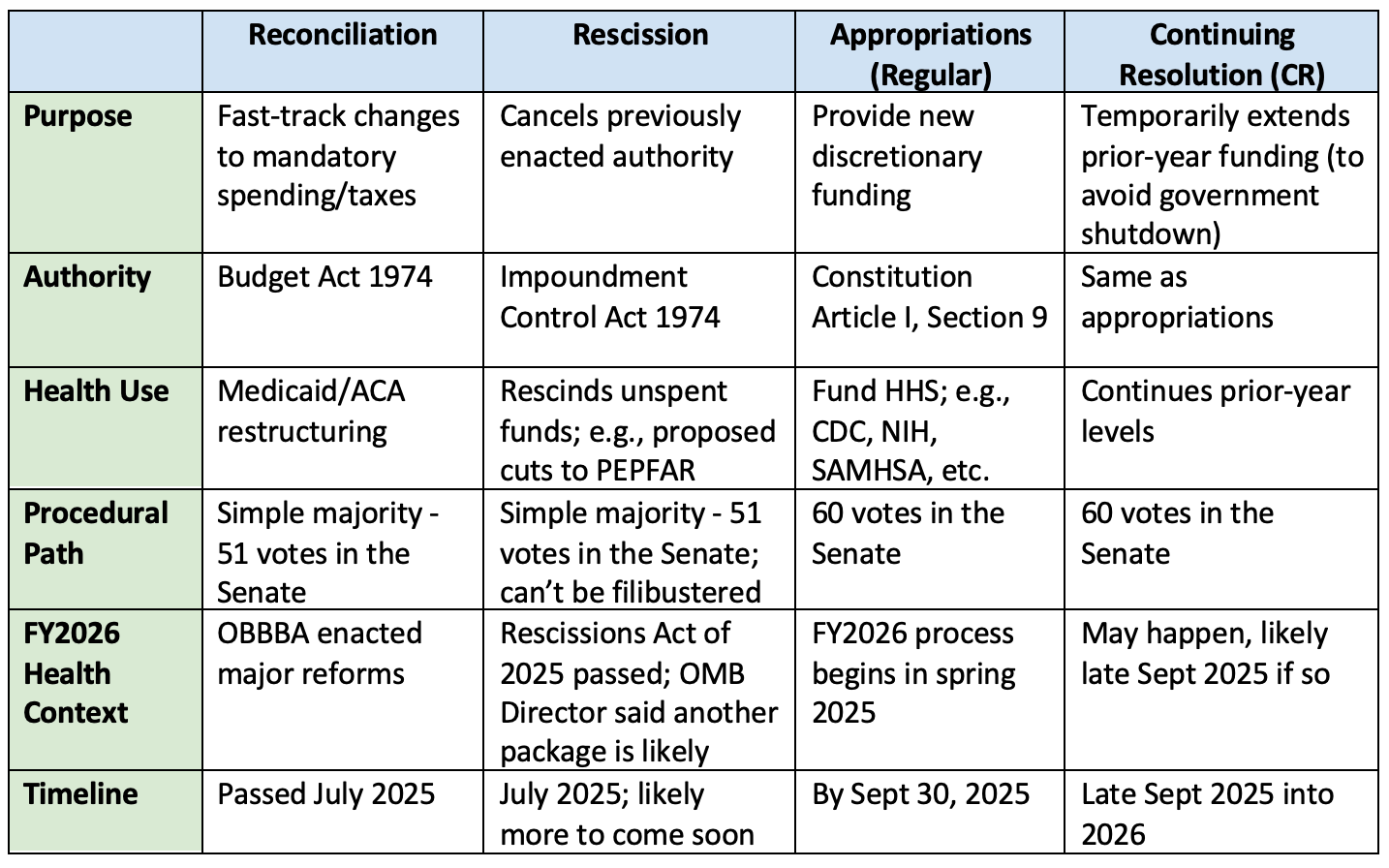
Reconciliation vs. Rescission vs. Appropriations. Whattt is happening with the budget?
Feeling confused? You’re not alone.
Last Friday, a rescission
package was passed, which pulled back $9 billion in previously approved
funding, primarily from foreign aid ($8 billion) and public
broadcasting ($1.1 billion). While Congress controls the budget, the
executive branch can request these kinds of cuts
through the 1974 Impoundment Act. That’s exactly what Trump did.
Congress agreed, retroactively canceling funds that had been approved
but not yet spent.
This is separate from two other major budget moves:
Reconciliation (a.k.a. the “Big Beautiful Bill”), which already passed, cut funding for Medicaid and SNAP.
Appropriations, the next big budget showdown, will set spending levels for fiscal year 2026, including for NIH and CDC.
Table by Chelsea Cipriano for Your Local Epidemiologist
What does this mean for you? Your voice still matters (and in fact, had an impact on the rescission bill—see Bright Spots
below). October’s appropriations season is critical. Keep showing up
for the programs you care about. Relationships with your representatives
are more important than ever.
Cane sugar vs. HFCS: Does it matter?
MAHA is celebrating food industry announcements about switching from high-fructose corn syrup (HFCS) to cane sugar.
So… should you buy the cane sugar version? From a health perspective, it doesn’t matter.
There’s certainly a taste difference. And, whileboth sweeteners consist of glucose and fructose, there are also slight differences in the ratios:
Cane sugar comes from sugarcane and has equal amounts of glucose and fructose.
HFCS is processed from corn starch and has a higher proportion of fructose to glucose (typically 55:45 in sodas).
This means that HFCS is metabolized differently by the liver; however, strong research that has pooled study after study indicates that there are no meaningful differences between the two sweeteners in terms of health outcomes.
What’s really at play here is the appeal to nature fallacy
that we, humans, love to gravitate towards—the idea that something
“natural” (like cane sugar) must be healthier than something “processed”
(like HFCS). But both are sugar. Both are processed. And both, in
excess, increase the risk of obesity and type 2 diabetes. We covered
this fallacy in detail a few months ago, in anticipation of RFK Jr.’s
Health Secretary position:
RFK
Jr.’s hearing for Health and Human Secretary of the United States is
soon. A recent poll showed that 40% of Americans view him positively.
Despite the myriad fringe beliefs he has espoused, such as that HIV
doesn’t cause AIDS or Wi-fi causes cancer, his message has resonated
with many Americans. Why?
What policy would make a difference in the health of Americans? Really anything that takes the time, money, and energy going into this and puts it toward effective actions, including:
Clearer labeling
Reducing sugar availability in schools and kids’ menus
Price policies
Public education campaigns
New study: Aluminum in vaccines isn’t driving chronic illness
A
major study from Denmark has just been released, offering reassuring
news: aluminum salts used in childhood vaccines are not linked to
chronic diseases.
Here’s the background:
Aluminum salts are an additive for many children’s vaccines.
They are used as an “adjuvant” to boost the immune response.
Some
of the public has been concerned about the safety for decades, which
was heightened when a 2022 CDC study suggested a possible relationship
between exposure to aluminum salts from vaccines and the risk of asthma.
The new study
included over 1.2 million people, tracked over a 24-year period.
Scientists leveraged Denmark’s robust national health data system (which
the U.S. lacks). They found that aluminum-adjuvated vaccines are not linked to:
Autism
Asthma
Allergic or atopic disorders
50 other chronic conditions (a median of 5 years later)
A
few critics are not convinced, and that’s okay. Science should be
scrutinized. But the truth is we’ll never test every possible scenario
in every individual. Evidence builds over time, not from one study
alone, and this new study aligns with decades of safety data across
billions of doses.
What does this mean for you?
If you’re asking good-faith questions about vaccine safety, this study
offers strong reassurance. Aluminum in vaccines is not causing a wave of
chronic illness, such as asthma.
Multilingual resources in the federal government
Last
week, federal agencies received a quiet but consequential directive:
begin implementing an Executive Order that declares English the official
language of the United States. This order, signed in March, revokesa
Clinton-era Executive Order that required federal agencies to improve
access to services for individuals with limited English proficiency
(LEP).
The policy shift introduces uncertainty and
raises concerns for emergency response, healthcare (like Medicaid), and
public services (like SNAP food benefits). One in five U.S.
residents speaks a language other than English at home. Language is key
to equitable health access, informed consent, and health empowerment.
But
language access is still the law. This isn’t the end of federally
supported translation services. Rather, multilingual services may no
longer be actively prioritized or expanded at the federal level.
What does this mean for you? For health professionals, community organizations, and anyone working to reach diverse populations:
Download existing translated resources now, in case they’re removed from federal websites.
Support
trusted messengers in immigrant and non-English-speaking communities
with the tools they need to communicate health information effectively.
Languages are beautiful. This wall in Paris says “I love you” in 311 languages. Source: Hannah’s camera roll.
Bright spots
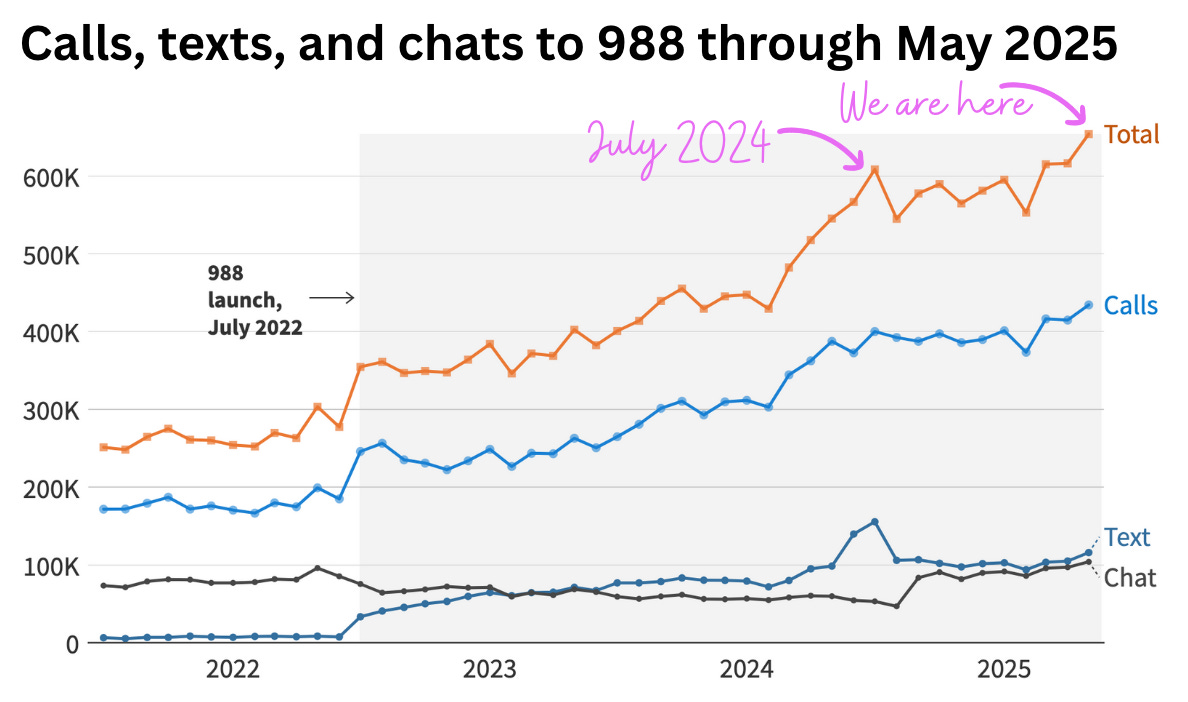
It’s the third anniversary of the national suicide and crisis lifeline,
988. Call volume is up, a promising sign that more people are aware of
the service and utilizing it. (In 2023, just 18% of adults knew about
988.) The current HHS budget is set to maintain
funding for 988 (although the LGBTQ+ support line was discontinued last
week, and Medicaid cuts could threaten broader access to mental health
care).
Source: KFF; Annotated by Your Local Epidemiologist
PEPFAR funding preserved.In
a rare bipartisan win, $400 million for the President’s Emergency Plan
for AIDS Relief (PEPFAR) was spared from cuts this past Friday in the
rescission bill. This U.S. program, started in 2003 by President Bush,
is credited with saving 26 million lives from HIV and AIDS and allowed 7.8 million babies to be born healthy to mothers living with HIV.






.jpg)
No comments:
Post a Comment