------------------------------------------
Covid-19 wimpy wave is here, corn sweats, SSRIs, the optimal number of steps, and more
"It’s midsummer, and much is heating up: Covid-19 levels are rising, the air is thick with humidity (and some “corn sweat”), and a national conversation about antidepressants in pregnancy just hit a boiling point. We’re also exploring a more realistic step goal backed by science, and, as always, we have some good news!
"Here’s what you need to know for your health this Monday.
Disease “weather” report
"The summer Covid-19 wave has arrived, though so far, it’s been relatively wimpy. Wastewater signals, emergency department visits, and test positivity rates are all gradually increasing, but not yet reaching the levels we saw at this time last year. Hawaii and Florida are notable exceptions, with more significant activity. Hospitalizations and deaths remain low due to broad population immunity, though—as always—severe outcomes tend to lag behind other indicators. Currently, Covid-19 is causing about 100 deaths per week in the U.S.
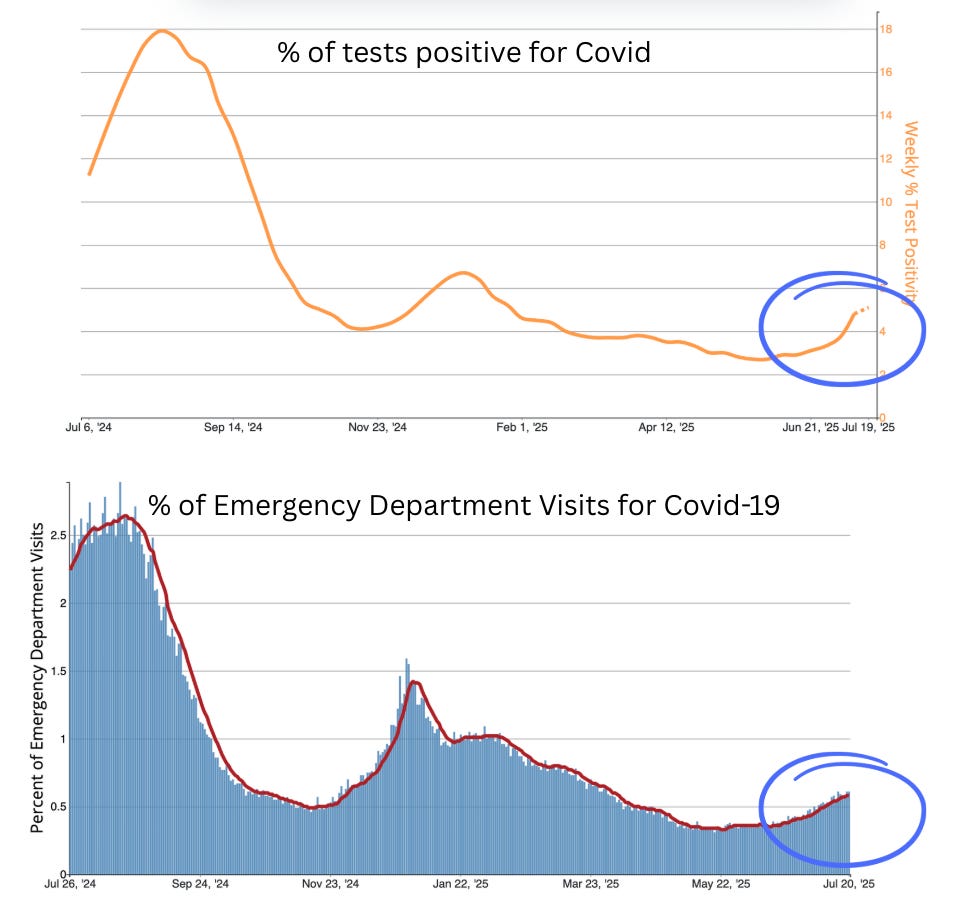
"Can we still trust wastewater data? Yes! The U.S. wastewater surveillance system—anchored by the CDC and spanning 1,400+ sites—remains funded through FY2025. And it’s evolving, as many local systems are now also tracking measles, opioids, and more.
"For the data nerds: While wastewater is an important signal for Covid-19, I’m currently relying more on ED visits and test positivity. That’s because there’s no standardized wastewater baseline. Instead, some states compare to their own previous 12-month levels. But with unusually low Covid levels over the past year, even small increases can look artificially large right now and that is throwing a lot of states off.
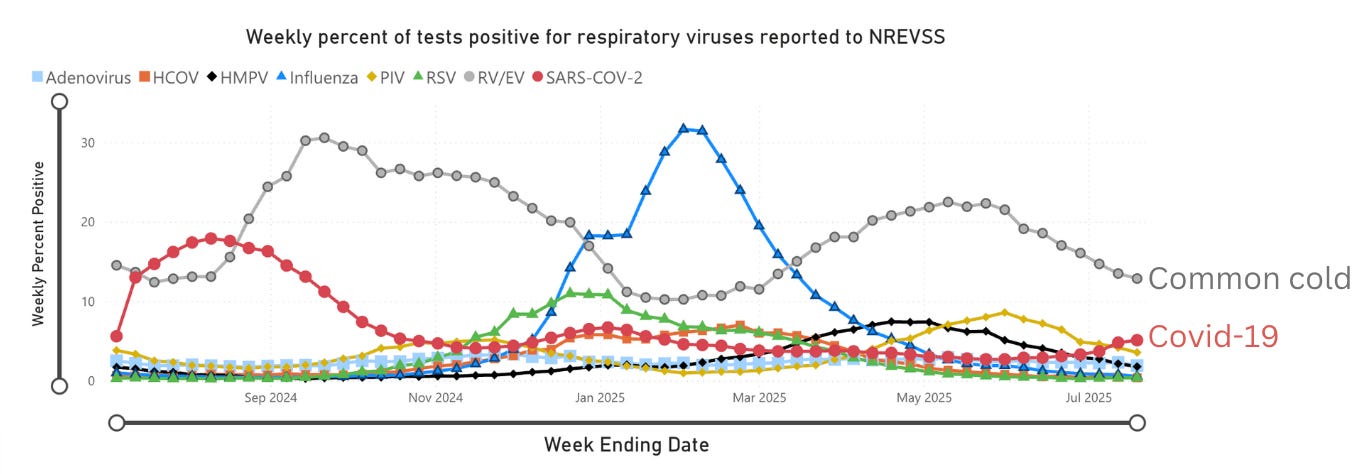
"If you’re feeling sick: Even with Covid-19 increasing, odds are it’s not Covid. Most positive respiratory tests right now are still coming back as the common cold.
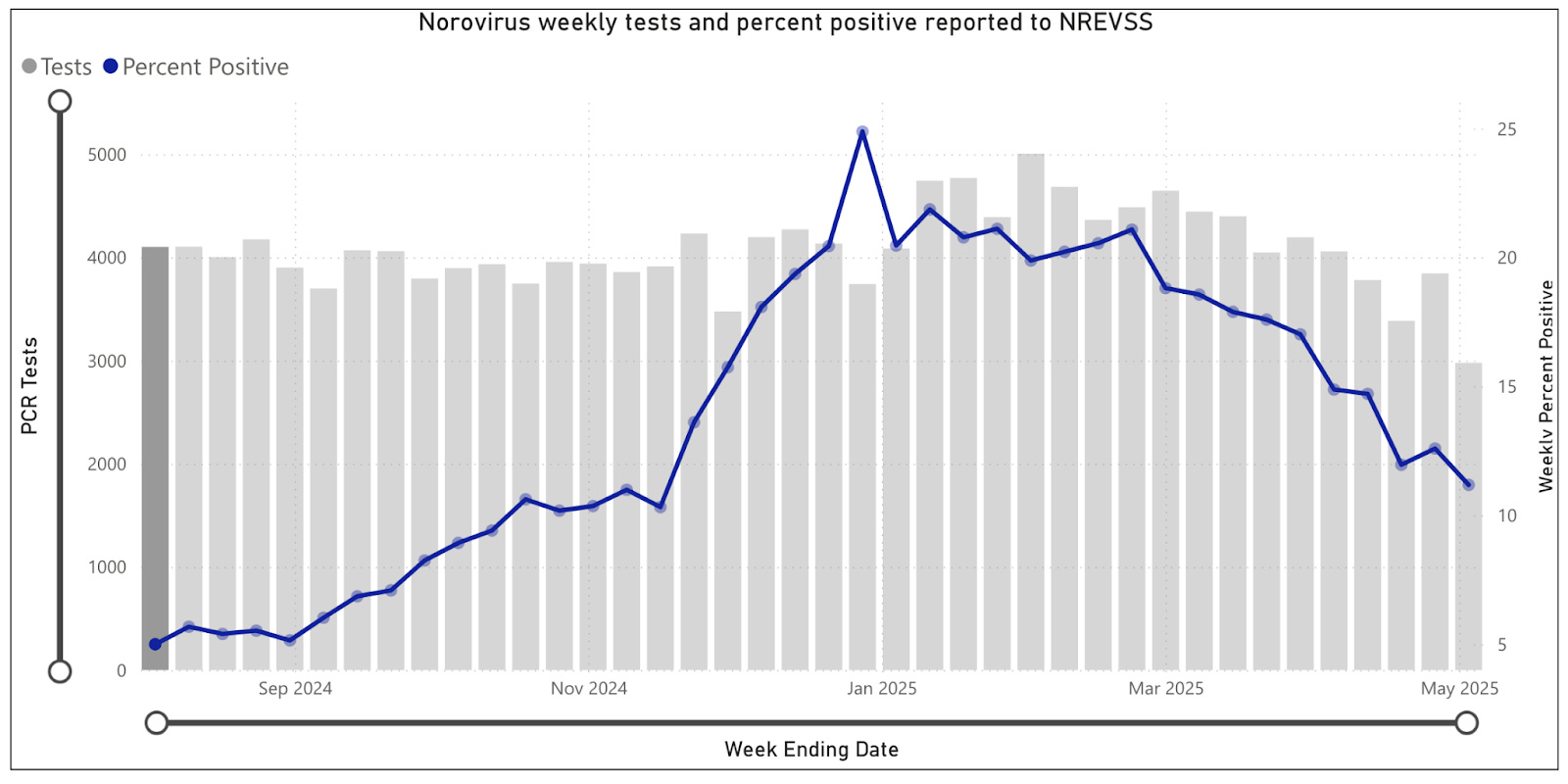
"Norovirus rates—think vomiting, diarrhea, and rapid spread—continue to linger after an unusually intense year thanks to a new variant. Currently, levels are still elevated compared to previous years, but are trending downward.
"What to do: Wash hands thoroughly with soap and water—sanitizer doesn’t kill norovirus. Be extra cautious if it’s going around your kid’s summer camp or your friend group.
"A recent norovirus outbreak in Utah was linked to frozen oysters, serving as a reminder that norovirus can spread rapidly through contaminated food and surfaces. (Note: The same oysters were sold in Arizona, California, Colorado, and Montana. If you’re here, pass on the frozen oysters for now.)
Heat and welcome to “corn sweat” season
"Mid-summer means an increase in heat-related illnesses. The Midwest, in particular, is in the thick of corn sweat.
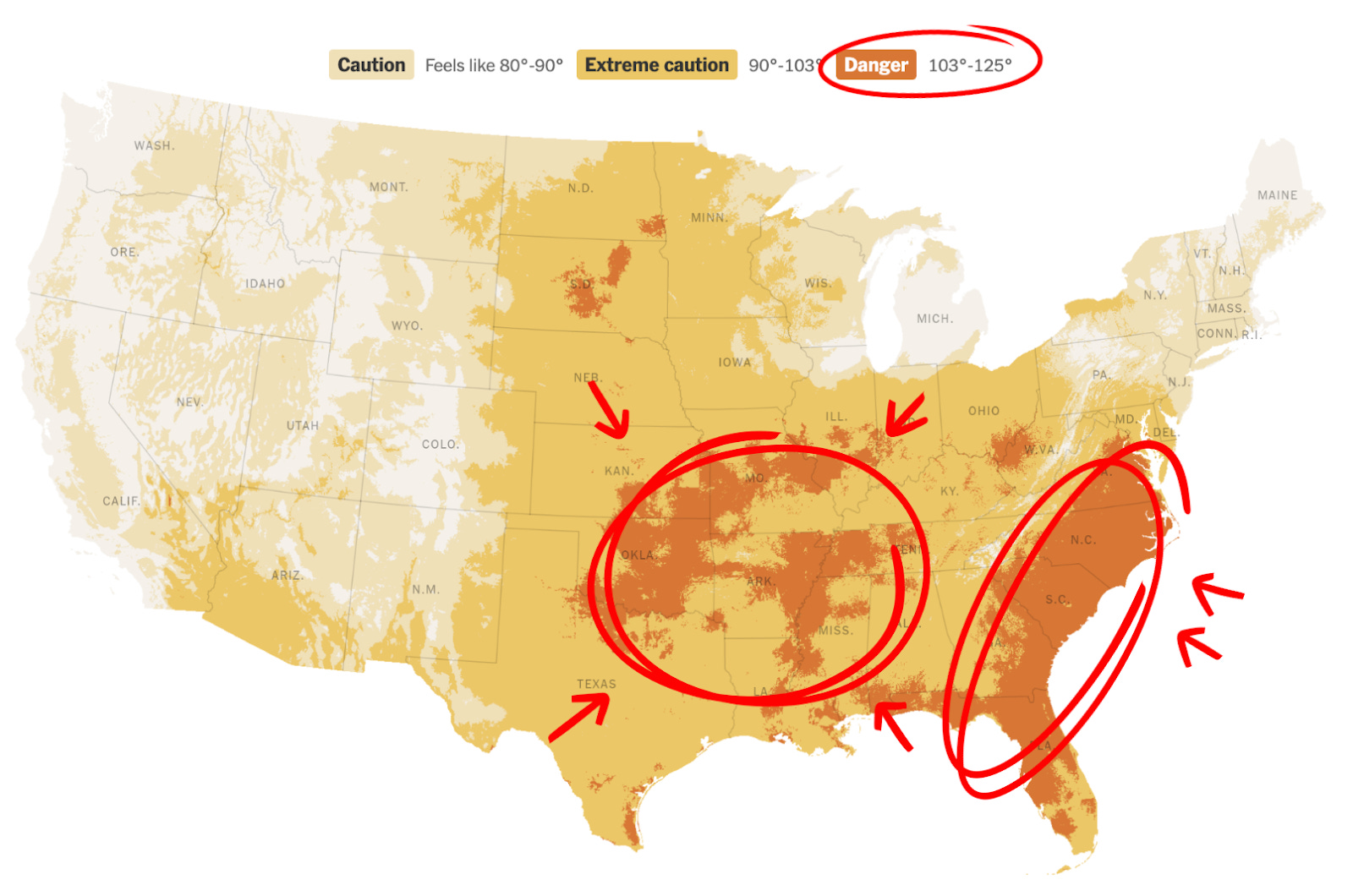
'What is corn sweat? Cornfields release moisture into the air through a process called evapotranspiration. This is a natural process in which plants move water from their roots to the surface, and the water then evaporates into the atmosphere. With millions of acres of corn growing in the Midwest, that extra water vapor can make the air feel heavier and hotter. Dr. Zachary Rubin has a great explainer.
"But here’s an important nuance: While cornfields do add moisture to the air, they’re not the main driver. Research by Illinois State shows that most moisture originates from large-scale wind patterns that pull it in from the Gulf of Mexico.
"Why it matters: During hot weather, the real risk to your health is heat imbalance—when your body produces more heat than it can dissipate. Sweat helps cool us down, but high humidity (like from corn sweats) slows evaporation. This makes it harder for your body to cool off, increasing the risk of heat illness, particularly for individuals with chronic conditions, pregnant women, and older adults.
"How to protect yourself:
Hydrate early and often (don’t wait until you’re thirsty)
Stay indoors if possible during peak heat (10am–4pm)
Cool down fast with wet towels, ice packs, or a cold shower
New science: 7,000 steps is a solid target
"A new meta-analysis—a study that pools numerous studies to identify trends—found that walking 7,000 steps a day is associated with significant health benefits. However, the most dramatic benefit was for moderate step counts (compared to low). This makes sense because it lifts people out of the high-risk, sedentary zone. Increasing to just 5,000 steps/day (from 2,000) can dramatically improve:
Blood sugar control
Insulin sensitivity
Blood pressure
Inflammation
Mental health
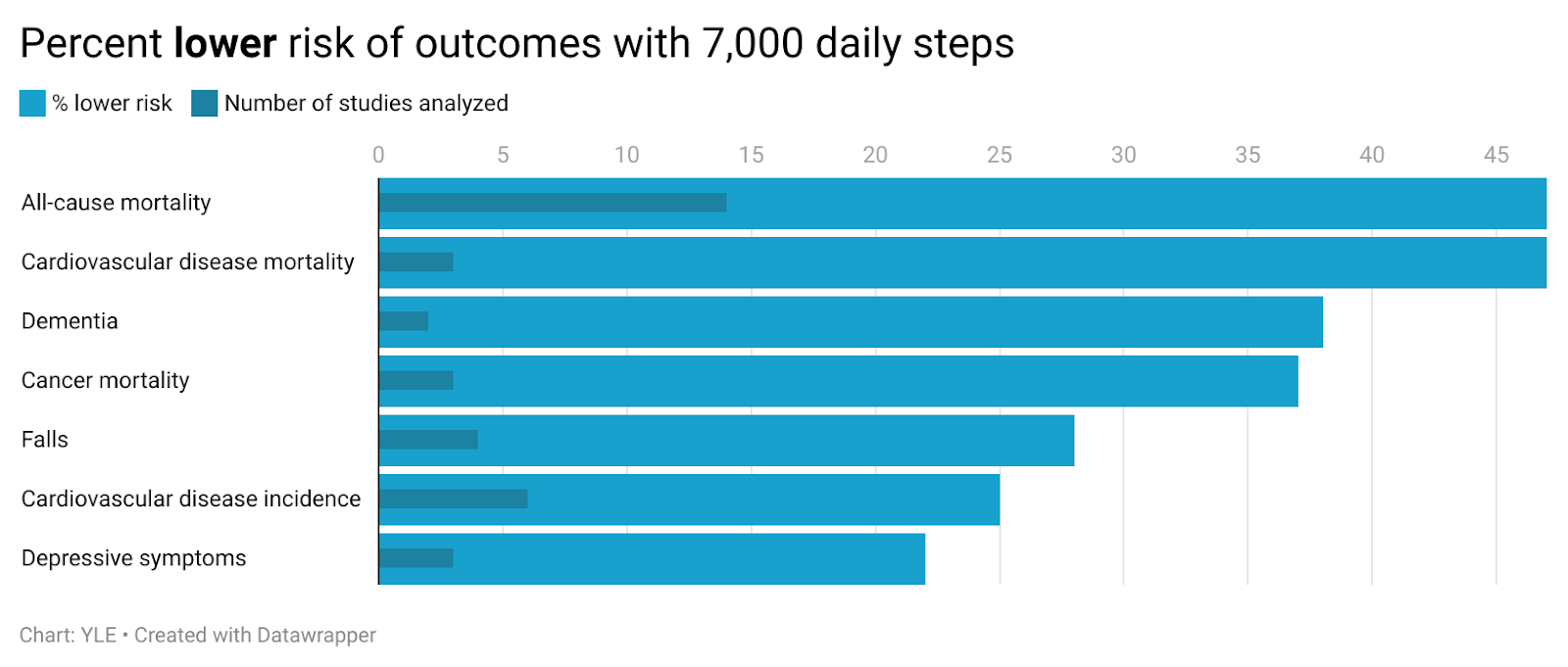
"While these studies have limitations (for example, the healthier a person is, the more likely they are to walk, which introduces study bias), they do support what decades of research have shown: movement is important.
"But wait: wasn’t the goal always 10,000 steps?
Sort of. The 10,000-step benchmark originated
from a highly successful 1960s Japanese marketing campaign for a
pedometer, which preceded the 1964 Tokyo Olympics. (The number was
chosen because the Japanese character for 10,000 resembles a person
walking.) While catchy, it wasn’t based on scientific evidence, yet this
arbitrary number became the global standard for step tracking.
"What does this mean for you? While more movement is best, you don’t need 10,000 steps to see the most significant benefits. The most important thing is to get moving.
SSRIs in pregnancy: Moms deserve better than this FDA panel
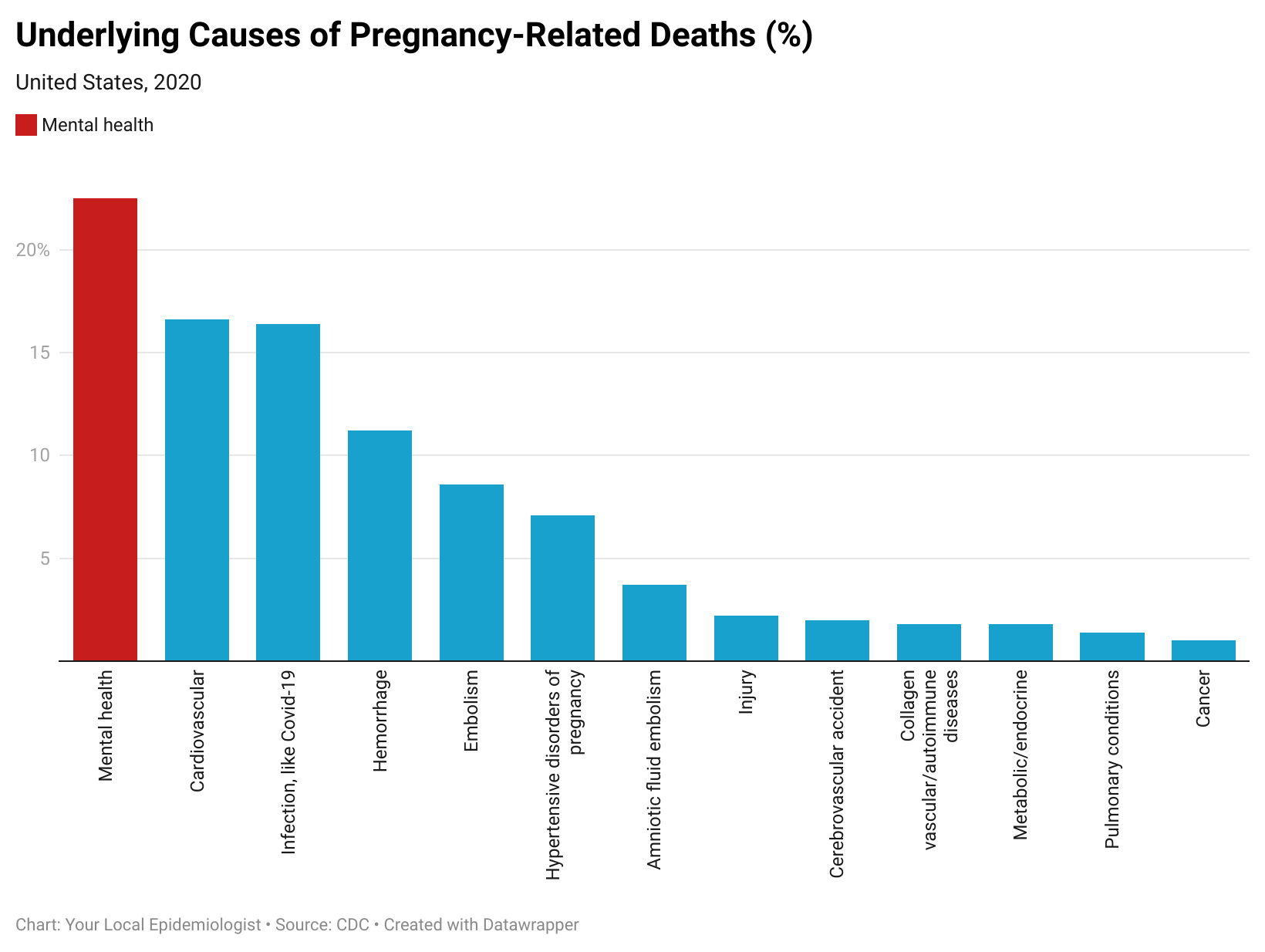
"Last week, RFK Jr’s FDA convened a panel to review the safety of SSRIs (a class of antidepressants such as Zoloft, Prozac, and Celexa) during pregnancy. Of the ten panelists, nine were known critics of antidepressants, and many had significant conflicts of interest. Instead of fostering a nuanced discussion, the panel overwhelmingly focused on the treatments’ risks, ignoring the well-established benefits and devastating risks of untreated perinatal depression, which is the leading cause of maternal death in the U.S.
"The fallout was swift: several fear-stoking social media posts went viral, and many moms flooded social media with questions, confusion, and concern.
"This is a deeply personal and complex topic that demands compassion, nuance, and scientific clarity. Yes, there is ongoing research on the safety of SSRIs in pregnancy, but we already have decades of data. The most robust population-level studies show no consistent evidence that SSRIs cause major birth defects, hypertension, or long-term developmental harm when accounting for confounding factors like maternal mental illness. There may be a slightly increased risk of preterm birth, short-term neonatal symptoms (like increased fussiness), and postpartum hemorrhage.
"Bottom line: SSRIs can be lifesaving. For many, the risks of untreated depression far outweigh the potential risks of medication. Moms know their bodies, and treatment decisions should be guided by them, their doctors, and a robust review of evidence, instead of whatever this panel was last week at FDA.
Good news
This is the first week with no new reported measles cases linked to the Southwestern U.S. outbreak (Texas, New Mexico, Oklahoma, and Kansas). If that trend continues for a few more weeks, it will signal that the outbreak has been contained. That’s a big deal for young families in these communities who have faced weeks of worry and disruption. It also helps protect the U.S.’s WHO measles elimination status, which is jeopardized if an outbreak lasts 12 months or more.
The Covid vaccine saved 2.5 million lives between 2020-2024 according to a new global study. The biggest benefits were for older populations: 9 out of 10 deaths prevented were among those aged 60 and above. Other researchers have found even larger effects, estimating that vaccines have saved more than 18 million lives in Europe and 3 million in the United States.
Flu vaccines also averted 33% to 42% of U.S. cases across 2022-2023, even though uptake was comparatively low.
"Have a great week! Get those steps in, as long as it’s not too hot :)
"Love, YLE"





.jpg)
No comments:
Post a Comment