---------------------------------------------
COVID, Flu & Health News, 1/18/26
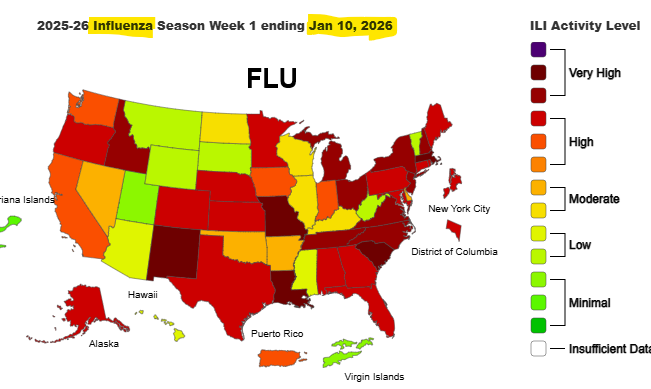
Flu may have peaked in some US locations, but levels are still very high in most places. The CDC estimates that there have been at least 18,000,000 illnesses, 230,000 hospitalizations, and 9,300 deaths from flu so far this season. Sadly, 15 more children died last week from the flu bringing the total pediatric deaths to 32 children. Ninety percent (90%) of reported pediatric deaths this season have occurred in kids who were not vaccinated against Influenza. This year, children have had high severity of influenza illness, while adults have had a moderate severity per the CDC. Flu vaccines are still available for children 6 months and older and for adults.
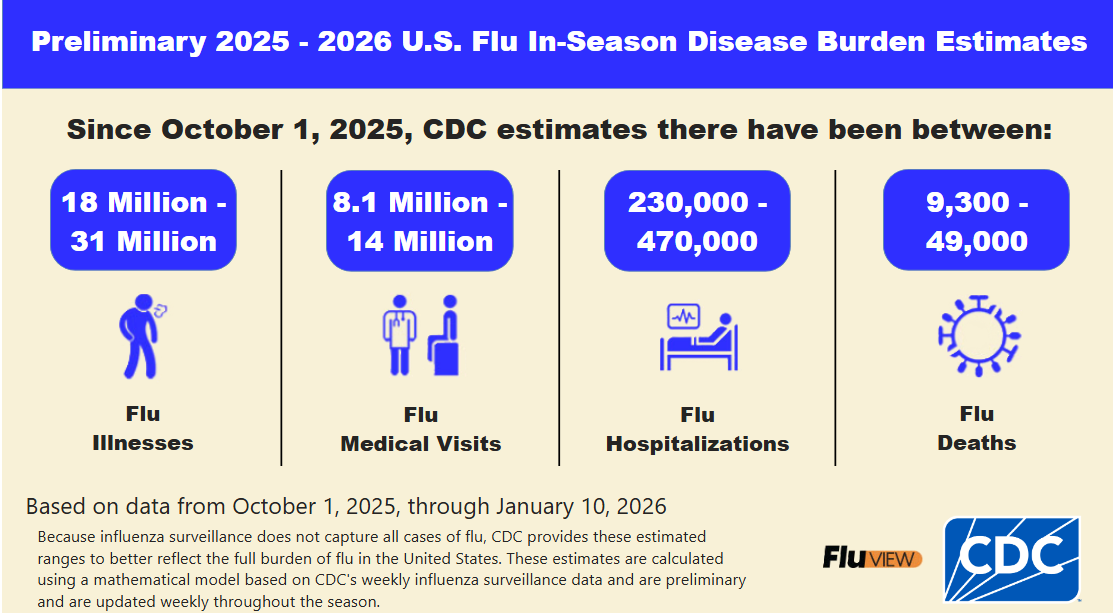
From: https://www.cdc.gov/flu-burden/php/php/data-vis/2025-2026.html
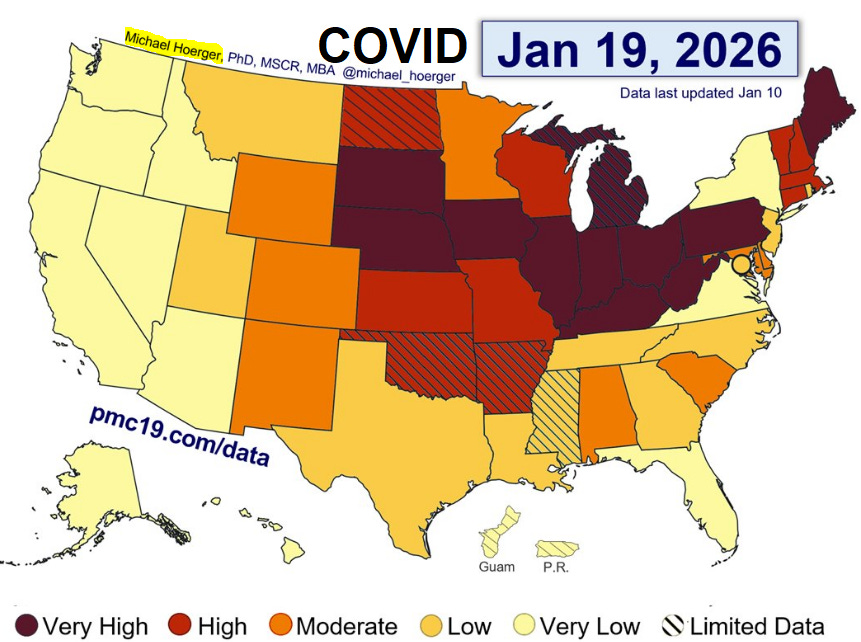
According to Michael Hoerger, as of January 10th, there were 941,000 new COVID infections per day now in the United States, with 1 in 52 actively infectious with COVID. He notes that 11 states have VERY HIGH COVID levels now.
Data through Jan 10th:
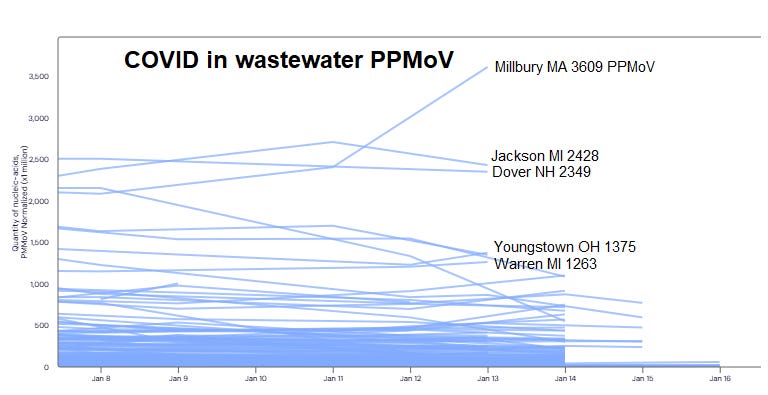
Data through Jan 16 from WastewaterSCAN:
(Note: Anything over 1,000 PPMoV is very high)
Researchers from China found that baseline oral microbiota patterns before COVID infection can help classify the severity of COVID infection with Omicron. Using machine-learning models, they identified specific oral bacterial patterns associated with COVID recovery versus persistent symptoms.
In Japan, a 62-year-old man, who had undergone B cell depleting therapy for follicular lymphoma developed a chronic SARS-CoV-2 infection despite antiviral treatment with molnupiravir and nirmatrelvir/ritonavir and multiple courses of remdesivir and corticosteroids. The patient was then given a Japanese herbal medicine called Mao-to (2.5 g, 3 times daily) for 14 days with subsequent decrease of viral load and improvement of symptoms.
I looked further into Maoto and COVID and found this article from 2022 showing that Maoto was successfully given as pre-exposure prophylaxis (PEP) against SARS-CoV-2 to healthcare workers. Of 42 healthcare workers who took Maoto for 3 days as PEP, only 7% became infected while working on the COVID ward, as compared to 46% of the healthcare workers who did not take Maoto. “The prophylactic effectiveness of Maoto was 84.5%.”
Of note, Maoto contains Ephedra herb, Apricot Kernel, Cinnamon Bark, and Glycyrrhiza and the makers caution possible blood pressure and potassium issues.
Endothelial cells line the blood vessels throughout our bodies. Researchers propose that viral infections, including SARS-CoV-2, can induce endothelial cell senescence (aging) through immune dysregulation and chronic inflammatory signaling. Senescent endothelial cells linger due to a weakened immune system, blocking proper blood flow in microvasculature and fueling chronic inflammation which could lead to post-viral fatigue. Endothelial cell senescence may help explain shared features of ME/CFS and Long COVID, including exercise intolerance, cognitive dysfunction, and multi-system symptoms.
German researchers studying post-COVID immune profiles found that people who developed Long COVID after mild-to-moderate acute COVID infection showed persistent pathogenic changes in monocyte gene expression that were different from people who had Long COVID after severe acute COVID infection. These gene changes in monocytes correlated with fatigue severity in Long COVID after mild infection and were linked to systemic immune dysregulation.
Researchers from China identified activation of the NLRP3 inflammasome as a common pathway linking fatigue and mood symptoms in Long COVID. They suggest that NLRP3 activation may be a drug target for treating Long COVID.
Feline Infectious Peritonitis Virus (FIPV) is a coronavirus that leads to ongoing immune system dysfunction in cats. FIP is considered to be sort of the cat equivalent of Long COVID and may be useful as an animal model. UC Davis researchers looked at lymph nodes in cats and found that a FIPV infects not only macrophages, but also infects T and B lymphocytes. FIPV RNA was found in CD3⁺ T, indicating active viral RNA replication within these lymphocytes even after antiviral therapy. The article explores how similar mechanisms of viral persistence within immune cells may contribute to immune dysfunction in Long COVID.
Even when standard blood tests show no detectable SARS-CoV-2 in people with Long COVID, this does not mean the virus is fully gone. FIPV viral material can persist inside white blood cells in cats, where it is effectively hidden from routine blood testing. These intracellular reservoirs are not captured by typical clinical assays, yet the virus can remain biologically active and continue to drive inflammation or tissue damage. This concept is also reinforced by work from Dr. Morgane Bomsel, whose group has demonstrated SARS-CoV-2 persistence in platelets and megakaryocytes in Long COVID patients.
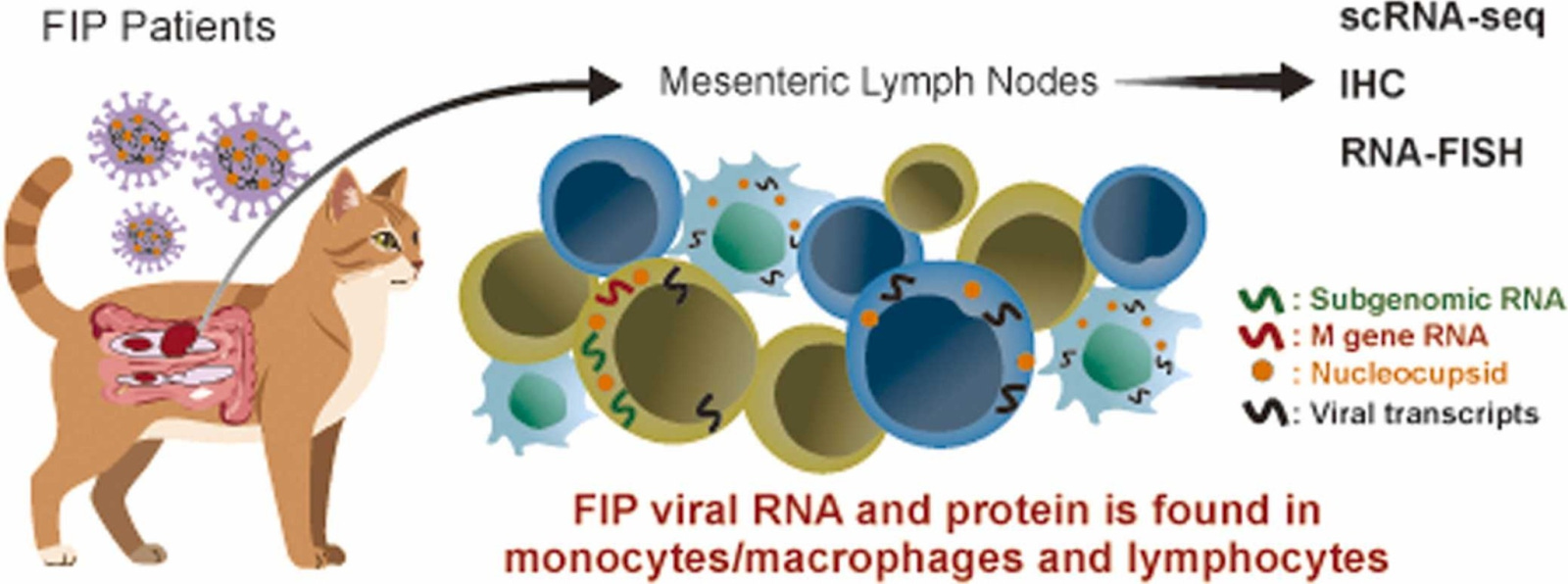
From: https://www.sciencedirect.com/science/article/pii/S0378113525005000
In a small U.S. randomized trial of adults with Long COVID, REGENECYTE umbilical cord blood cell therapy, administered as repeat infusions from unmatched cord blood donors, showed improvement of Long COVID fatigue with acceptable safety.
Scientists at Stony Brook University have followed 227 World Trade Center (WTC) responders over time, analyzing blood samples collected before and after COVID infection. Those who developed Long COVID with persistent brain fog and memory problems showed a 59% increase in pTau-181 which is a protein linked to Alzheimer’s disease. While WTC responders have unique environmental exposures, this longitudinal evidence suggests that even mild COVID infections may trigger brain processes typically seen in neurodegenerative diseases like Alzheimer’s.
A review from Italy combines neuroimaging and pathology studies to show that astrocyte-mediated physical injury to the hippocampus may underlie the dysexecutive syndrome of Long COVID which is marked by fatigue, apathy, low mood, and impaired executive function. “The evidence reviewed indicates that SARS-CoV-2 infection may precipitate hippocampal dysfunction through a convergence of astrocytic infection, microglial activation, blood–brain barrier disruption, and impaired neurogenesis.”
Using advanced MRI, Australian researchers found that people with Long COVID show lasting changes in brain microstructure and neurochemistry compared with recovered individuals and controls. COVID-recovered individuals showed partial normalization, but they still had some abnormalities in the brain. Brain microstructural changes in Long COVID significantly correlated with physical and cognitive function. The authors summarized that “COVID-19 may lead to lasting brain alterations that potentially impact overall brain function even after recovery.”
Researchers in the United Kingdom used advanced multimodal brain imaging to study 20 adults with Post-COVID Syndrome and 20 matched controls. They found altered regional cerebral blood flow and oxygen metabolism, particularly in frontal and subcortical regions, patterns consistent with immune-vascular dysfunction rather than structural brain damage. These findings suggest that persistent cognitive symptoms and low mood in Long COVID may be driven by ongoing microvascular or inflammatory processes affecting brain energy use.
In a European preprint study, researchers analyzed brain MRI data from 20 Long COVID patients and 20 healthy controls using network-level and cellular mapping approaches. They identified subtle but widespread structural deviations across brain networks involved in cognition and sensory processing, rather than focal lesions. They postulate that brain “structural alterations could propagate through connected neural networks, although direct evidence of such propagation requires further investigation.”
Northwestern researchers used a mobile app to follow 63 Long COVID patients and found that women and those with loss of smell (anosmia) or taste (dysgeusia) were less likely to recover. In addition, they noted that recovery from Long COVID was not linear, but rather often fluctuated from day to day.
This week there were two articles in Cell about Multiple Sclerosis and the HLA-DR15 haplotype. The HLA-DR15 haplotype is a significant genetic risk factor for Multiple Sclerosis (MS), particularly in people of Northern European descent. Prior Epstein-Barr Virus (EBV) infection is also a risk factor for MS. Researchers at the University of Zurich and USTC studied 16 patients with Multiple Sclerosis and found that EBV-infected B cells present myelin peptides on HLA-DR15 which then can trigger autoreactive CD4+ T cells in the blood and brain in MS.
CD4+ T cells are long-lived immune memory cells. Another article shows that in half of people with Multiple Sclerosis, T cells originally trained against an EBV antigen called EBNA1, also recognize a normal human (self) protein called Anoctamin-2 (ANO2) that is expressed in the nervous system. People with HLA-DRB1*15:01 have increased numbers of these cross reactive T cells. Theoretically, it may be possible that viral persistence of SARS-CoV-2 or its fragments in Long COVID may also chronically stimulate B cells to make autoantibodies or T cells to attack self-proteins as we see in Multiple Sclerosis autoimmunity.
In 2025, the total number of confirmed measles cases in America reached 2242. The CDC reported that as of January 13, 171 confirmed measles cases were reported in the United States in 2026.
In an outbreak that started before the new year, South Carolina Department of Public Health reports that as of January 13, there have already been 434 measles cases in South Carolina.
To achieve herd immunity and prevent measles outbreaks, about 95% of people in a community must be vaccinated with the MMR vaccine. We are now seeing outbreaks in the United States because many places are below the 95% threshold. Even in states with more than 95% of people vaccinated, there can be pockets of unvaccinated communities that will be susceptible to measles outbreaks.
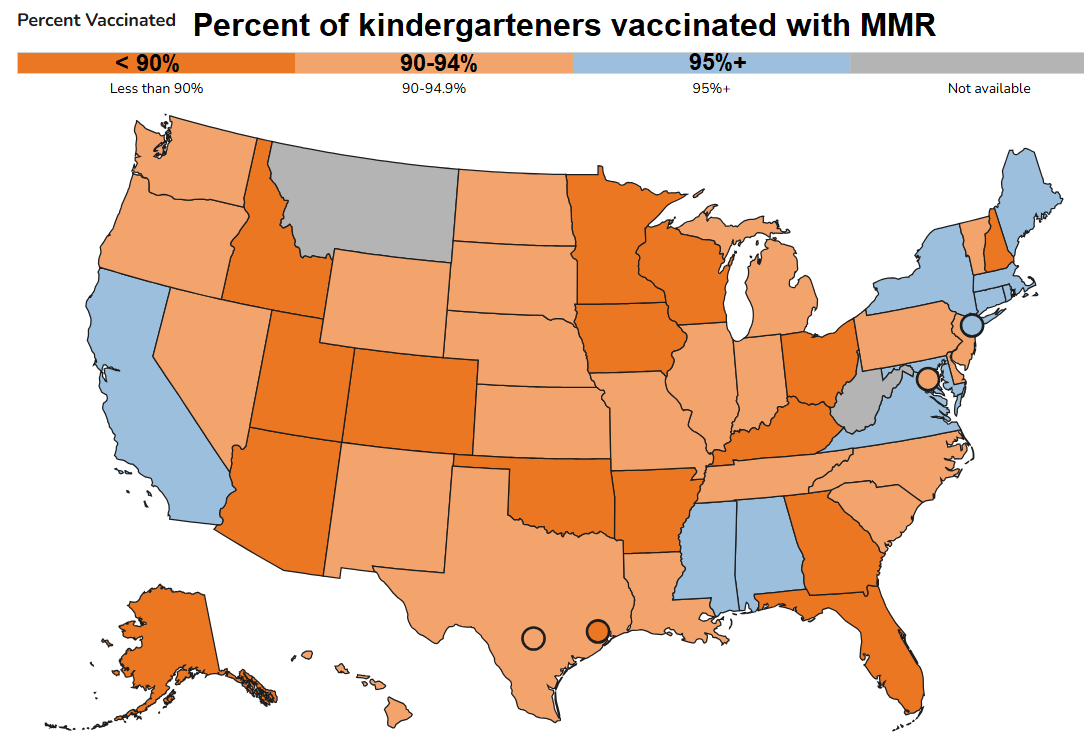
From: https://www.cdc.gov/measles/data-research/index.html
Under RFK Jr’s guidance, the CDC changed the Childhood Immunization Schedule to reduce the number of vaccinations recommended for children without new scientific evidence to back the change. At least 19 states announced this week that they will follow the American Academy of Pediatrics’ guidance on immunizations instead.
A very large review and meta-analysis shows that acetaminophen (Tylenol, paracetamol) use during pregnancy does not increase risk of autism, ADHD, or intellectual disability in children after accounting for familial and genetic factors. High-quality evidence supports continuing Tylenol as a safe option for pain and fever in pregnancy.
“Amid the rise of AI-generated celebrity deepfake scams, [Matthew] McConaughey has been granted eight trademark applications by the US Patent and Trademark Office to ‘prevent misuse’”, including his likeness and his catch phrase ‘Alright, alright, alright’.
In a phase 1b/2 proof-of-concept trial of high-risk Lynch syndrome carriers, a neoantigen vaccine triggered strong cancer-targeting immune responses with good safety. The study suggests preventive cancer vaccination may be feasible for people with inherited cancer risk.
“Paws on Parchment“ is a new exhibit at the Walters Art Museum about medieval cats in art and culture that features a 15th-century manuscript with paw prints from a cat who walked across drying ink more than 500 years ago.

Inky paw prints on a manuscript from 1470 https://buff.ly/DtW0MBT
I will be taking next week off from the newsletter.
Take care,
Ruth Ann Crystal MD





.jpg)
No comments:
Post a Comment