------------------------------------------------------------------
Part I: Respiratory Illness Data, 1/4/2026. Data on COVID, Influenza, RSV, and Measles
Since I took a couple of weeks off, I am going to split this week’s newsletter into 2 separate posts. This first one will review current data on respiratory viruses and the second will include research news from the last several weeks on COVID, Long COVID, ME/CFS, and other health related issues.
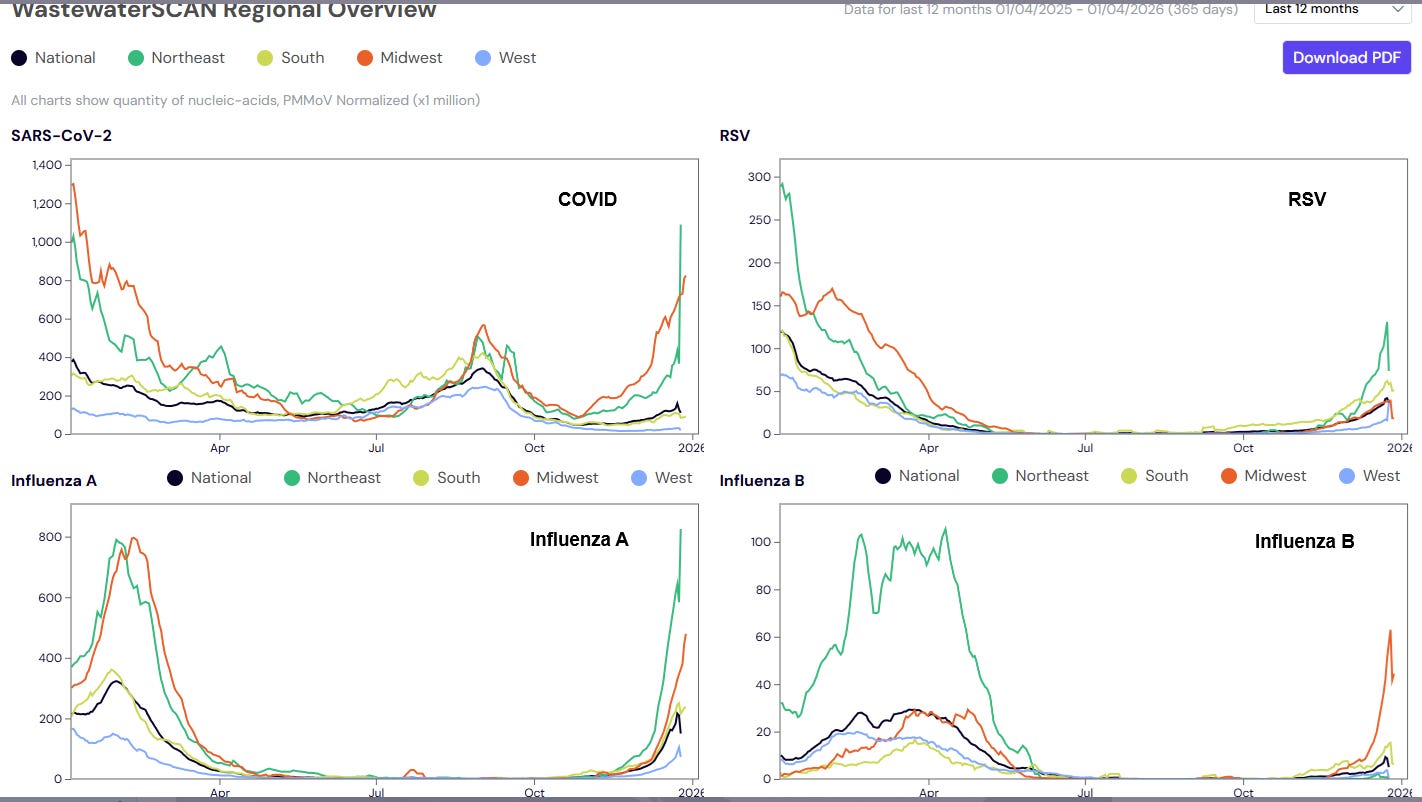
Influenza A is VERY HIGH or HIGH in most of the U.S. due to a high prevalence of the novel H3N2 subclade K variant (see chart below). RSV activity is also HIGH in many parts of the country as expected for this time of year, with emergency department visits and hospitalizations increasing among children 0-4 years old.
Nationally, the CDC ranks COVID activity as “low but increasing nationally”. CDC data is outdated and I prefer to use up-to-date sources like WastewaterSCAN.
COVID, RSV, Flu A, Flu B wastewater levels by region from WastewaterSCAN:
Flu activity is very high now, especially among children. Emergency Department visits and hospitalizations for influenza are elevated, and children account for the highest number of ED visits. The New York City health department notes that the number of flu cases there are already higher than the peaks of the two previous flu seasons and New York state reported the highest number of flu cases ever recorded in a single week.
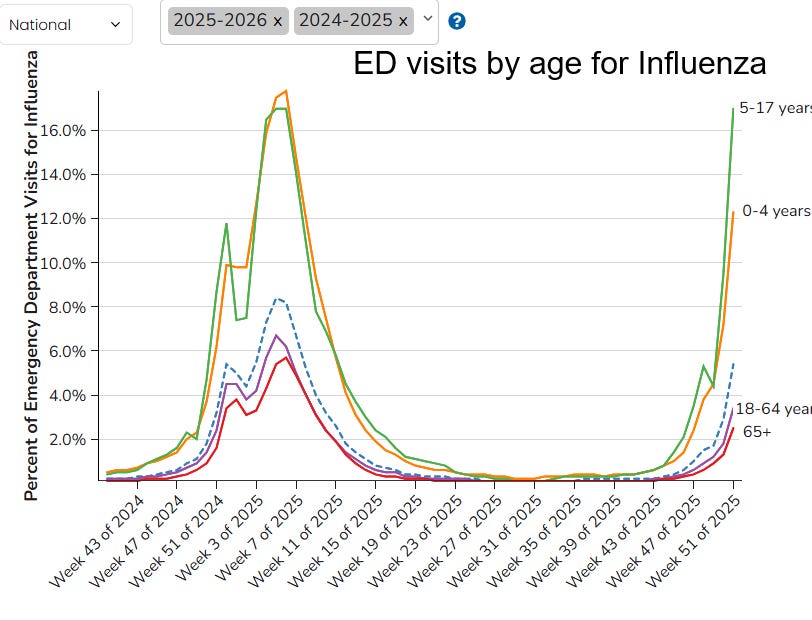
From: CDC Flu View: https://www.cdc.gov/fluview/surveillance/2025-week-51.html
It is not too late to get a flu shot. The CDC recommends annual flu vaccination for everyone 6 months and older, to reduce the risk of severe illness, hospitalization, and death. According to Public Health Scotland, “New, early seasonal influenza vaccine effectiveness data show that despite concerns about the impact of a new influenza A(H3N2) drifted clade in the UK, the vaccine is providing good protection against influenza A hospitalisations in Scotland, with a 78% reduced risk of hospitalisation in ages 2–17 and 37% in those 65 and over.”
Flu is widespread now, so layered precautions are needed. In addition to vaccination, consider masking indoors, using air filters, washing hands frequently, and testing before social gatherings. I have found these combined COVID-19/Flu A/Flu B rapid tests helpful. It is also very important to stay home when sick.
CDC Flu updates (through 12/30/25):
Five influenza-associated pediatric deaths were reported this week, bringing the 2025–2026 season total to eight children who have died from flu.
Influenza A (H3N2) is the dominant strain so far this season and 89% are subclade K.
Prescription flu antiviral medications are available and should be started as early as possible, especially for people at higher risk of complications.
Influenza A in wastewater from WastewaterSCAN as of January 4, 2026:
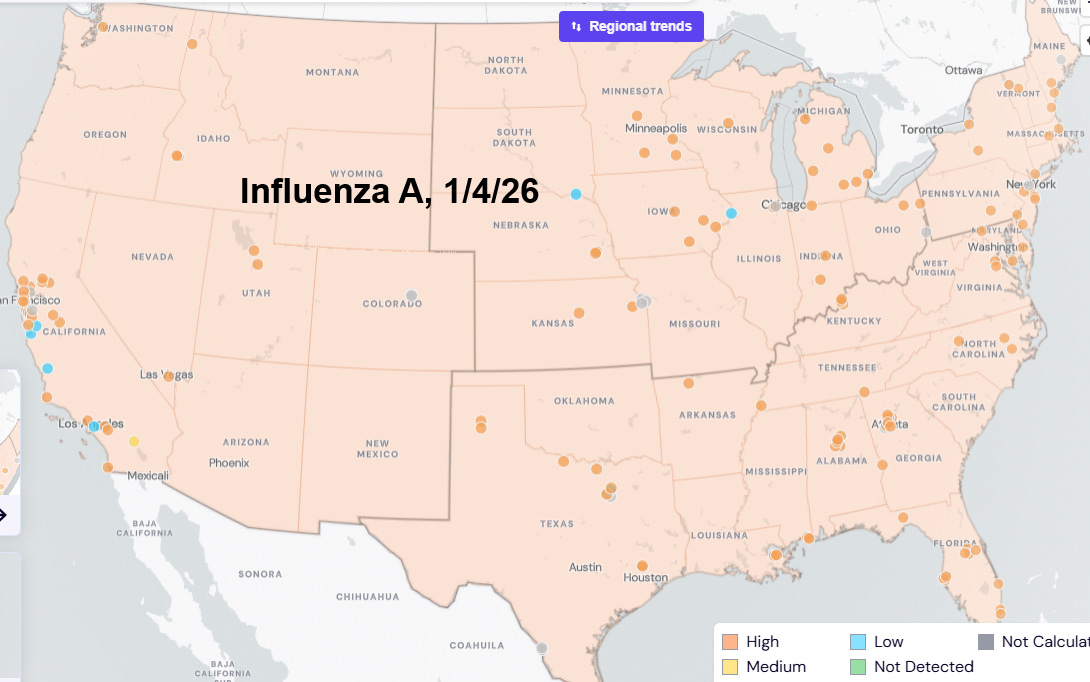
From: https://data.wastewaterscan.org/
CDC Flu View map is shown through 12/30/25. Data should update tomorrow on 1/5/25 and I anticipate that even more states will be in the Very High to High range for Flu.
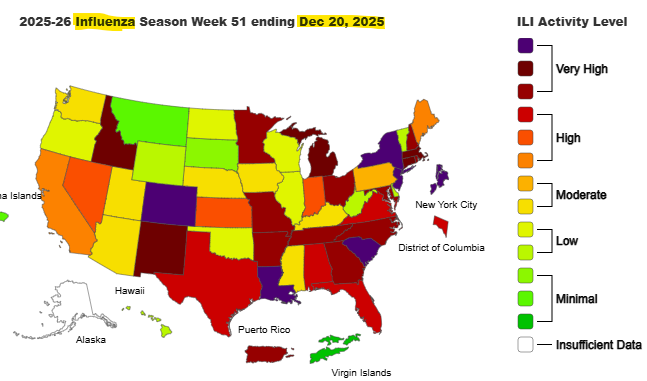
From: CDC Flu View: https://www.cdc.gov/fluview/surveillance/2025-week-51.html
RSV can spread when an infected person coughs or sneezes, by direct contact with someone who has RSV, or by touching a contaminated surface. RSV can be especially dangerous for babies and older adults. Talk to your doctor about medications and vaccinations to prevent RSV.
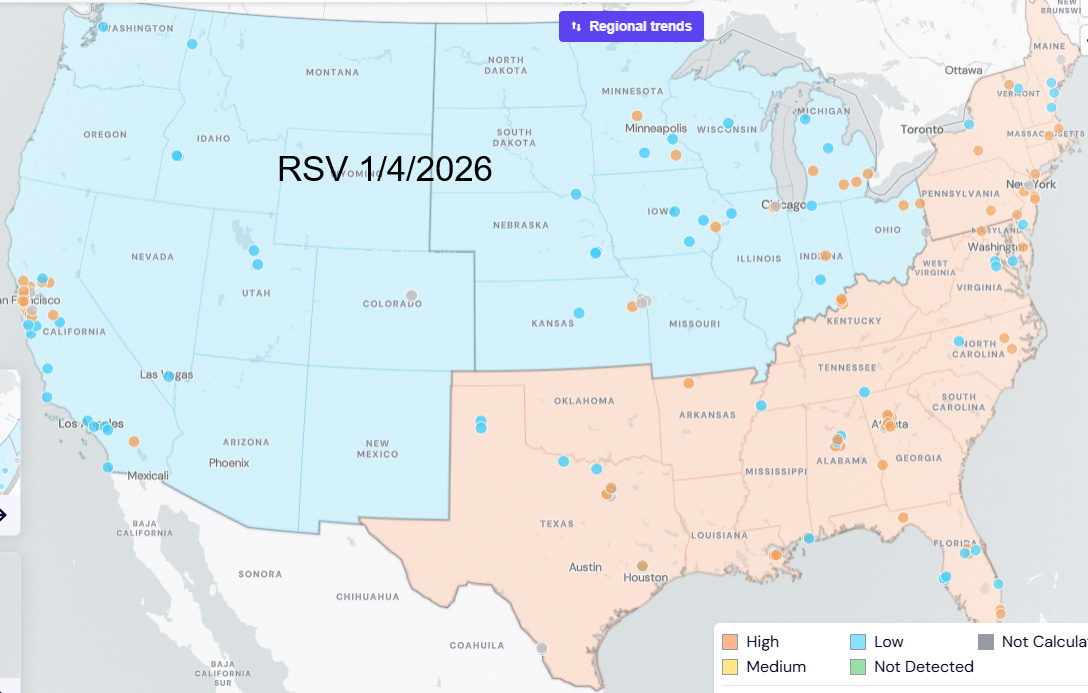
From: https://data.wastewaterscan.org/
The CDC still reports COVID in wastewater as “LOW”, but their data is old (through 12/20/25) and does not represent what has happened since the holidays. WastewaterSCAN shows that levels of SARS-CoV-2 in wastewater are HIGH in the Northeast and Midwest. If you are sick, home testing can let you know if you have Influenza (more likely) or COVID, so that you can get the correct antiviral medication if needed.
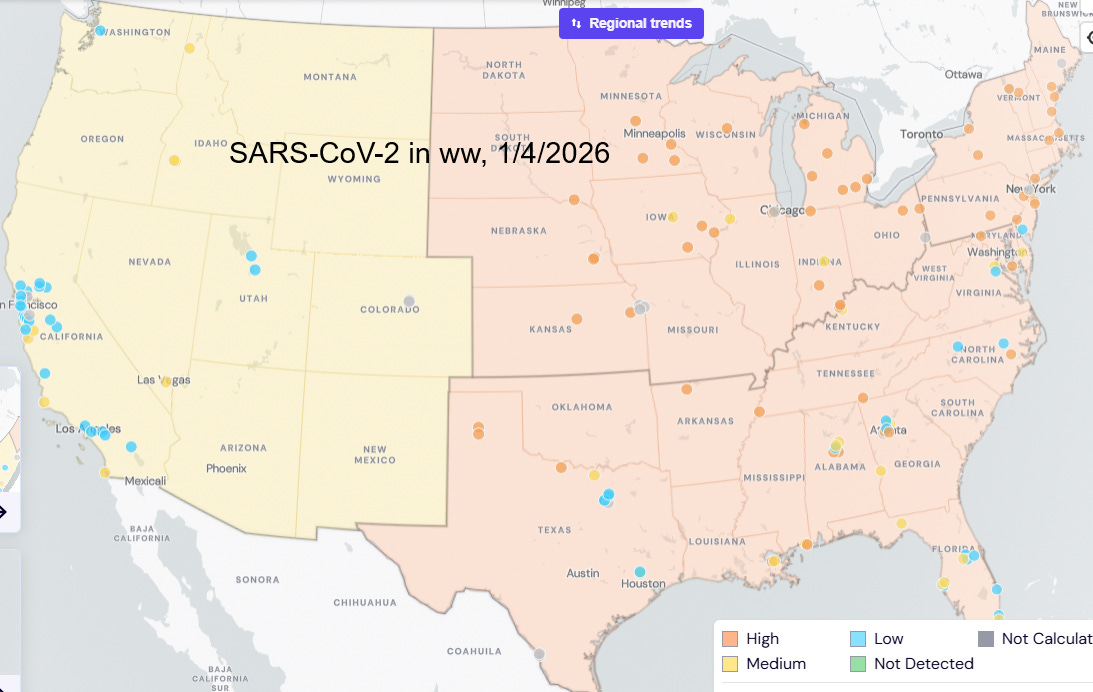
From: Wastewater SCAN (omits 12 states): https://data.wastewaterscan.org/
Mike Hoerger notes that the “CDC and Biobot are experiencing holiday-related reporting delays, so we [pmc19.com] will as well.” Using data through December 20th, he estimates that at that time, there were 958,000 new COVID infections per day nationally with 1 in 51 people actively infected with COVID. That number is expected to increase significantly when the CDC reports newer data tomorrow. Of note, Hoerger reports that our COVID wave is starting later this year as compared to past years, so he expects many people will get “surprise” COVID infections after holiday celebrations.
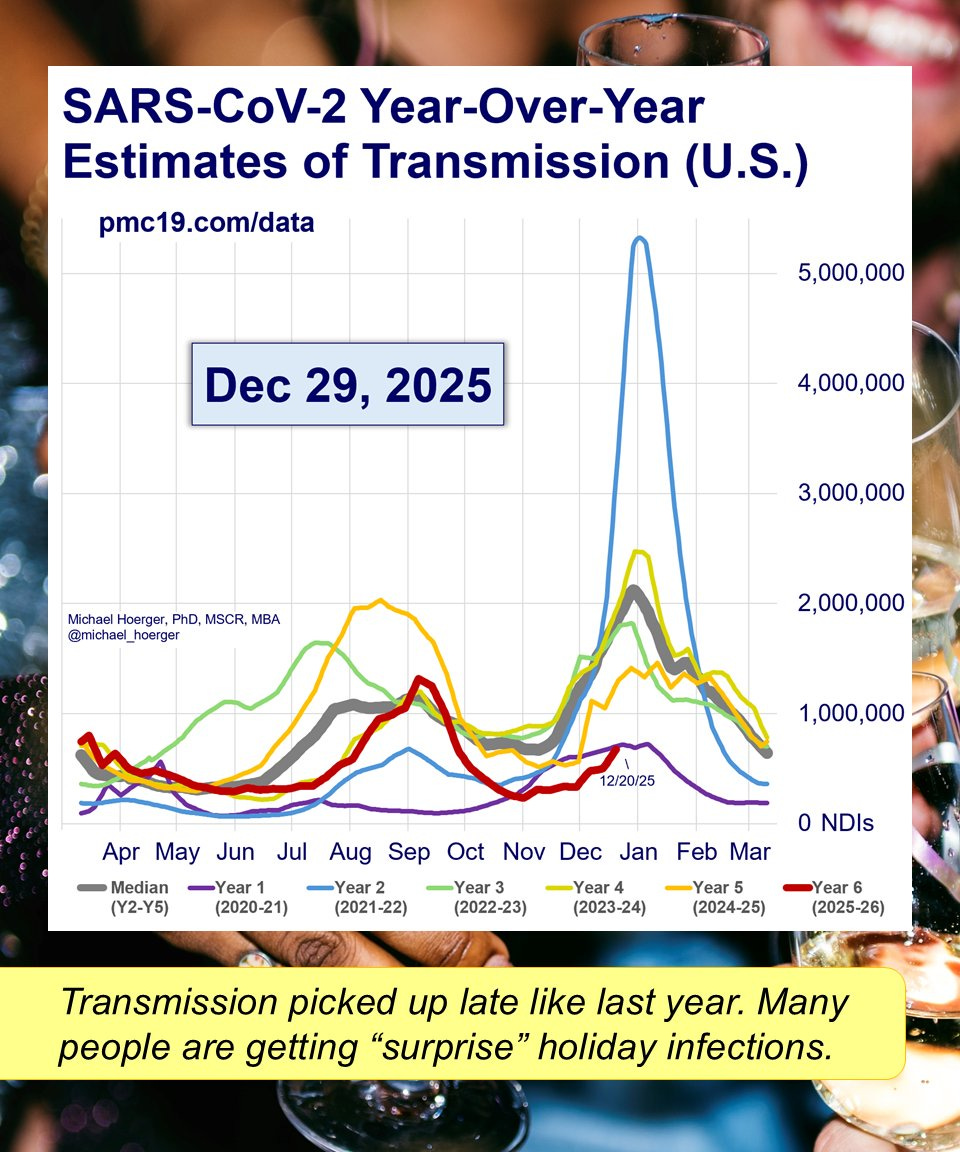
Of note, the BA.3.2 variant and its subvariants are just starting to cause a new wave in Germany and are being seen in other places internationally. Once BA.3.2 gets enough mutations to make it more immune evasive, we probably will see a new COVID wave from BA.3.2 or its descendants.
As of December 30, 2025, a total of 2,065 confirmed measles cases were reported in the United States, with 11% of cases hospitalized (235 of 2065), and 3 confirmed deaths from measles. Measles outbreaks are ongoing in South Carolina, as well as in Arizona and Utah.
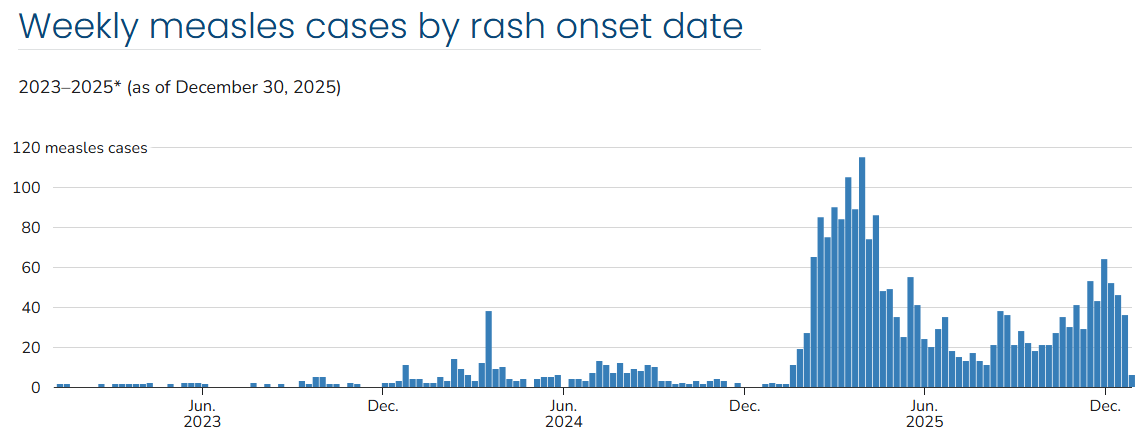
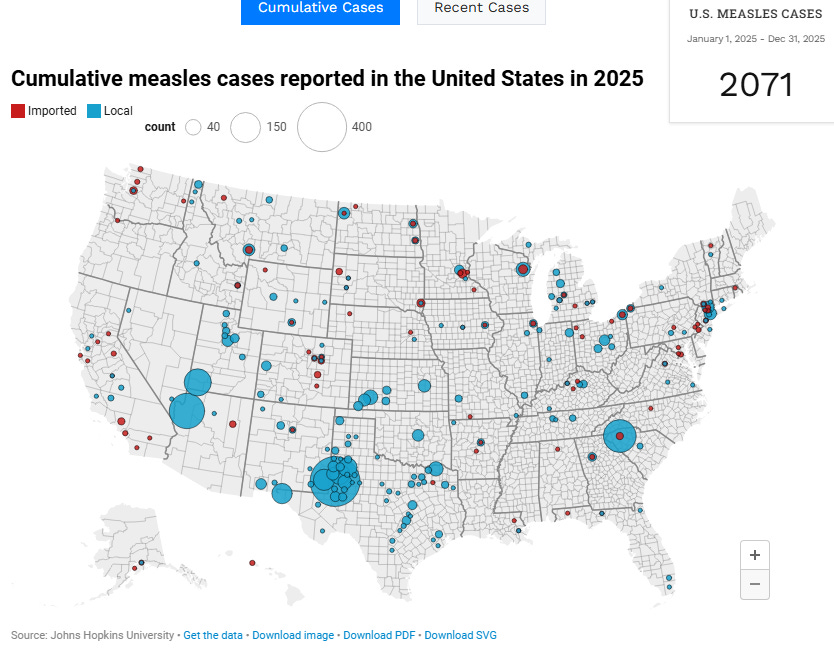
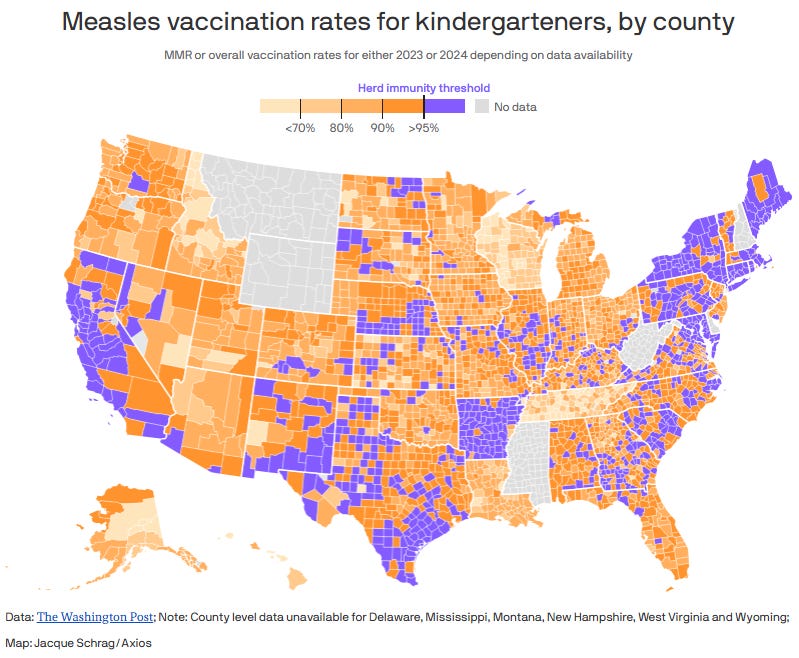
From: https://www.axios.com/2025/12/31/measles-flu-vaccine-mmr-rates-2026
Please see Part II of this week’s newsletter for information about new research findings on respiratory illnesses including COVID and other health related news.
Happy 2026!
Ruth Ann Crystal MD





.jpg)
No comments:
Post a Comment