----------------------------------------------
Flu is up, up, and away. SNAP restrictions, measles milestone, and good news!
The Dose (January 8)
Well, it’s been a week. But happy New Year! I hope it was peaceful, magical, and restful. If you’re a parent, I’m guessing you’re just as excited as I am that school is back in session.
There’s one big thing we need to talk about: flu. It’s everywhere, as this is shaping up to be a rough season. (Perhaps it’s a bad year to recommend dropping vaccines?!). We also crossed a sobering measles milestone, and several new health policies kicked in at the start of the year, including changes that restrict choice for some SNAP beneficiaries.
Here’s your Dose to start the week (and year) on a public health note.
Infectious disease “weather report”
There are so many sick people out there.
Influenza-like illness (ILI)—the number of patients clinicians see with cough, fever, and sore throat—is a metric to gauge the state of respiratory health in the U.S. Levels are high and exponentially increasing. In fact, it’s the highest it’s been in the past 6 years.
Rates dramatically vary across states, but 32 jurisdictions have “very high” levels. Eventually, I expect the entire map below to be deep red and purple.
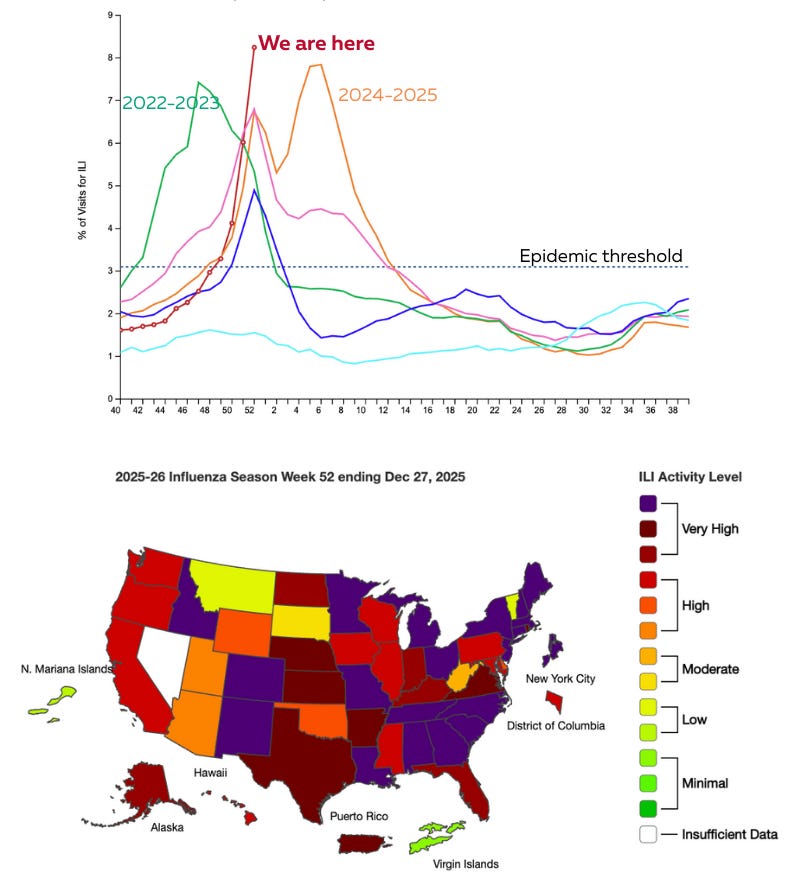
Flu
Flu, though, is having a year. Thus far this season, CDC estimates 11,000,000 illnesses, 120,000 hospitalizations, and 5,000 deaths from the flu. (Here’s why we still trust CDC numbers.)
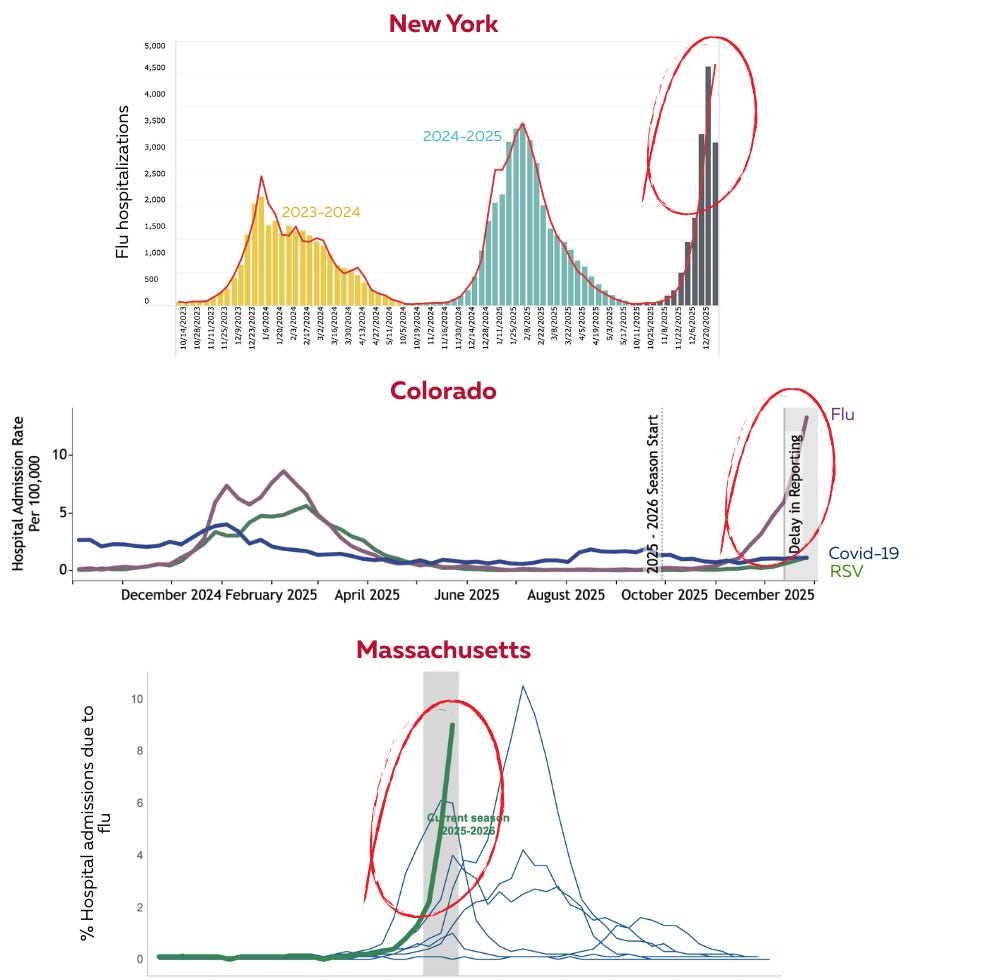
New York, one of the leading states for the flu season, is breaking records for both acceleration and the total number of flu hospitalizations compared with previous years. We’re seeing similar patterns in Colorado and Massachusetts, among others. If you squint, New York seems to be slowing down, so hopefully the leaders are at the peak soon.
Why is this flu season so intense? Two main reasons:
One flu strain—called influenza A (H3N2)—mutated over the summer as it circulated in the Southern Hemisphere, shifting from one form (J subclade) to another slightly different form (K subclade). Mutations are very normal for flu; it’s notorious for throwing curveballs. But this year’s changes were more substantial than usual—not enough to spark a pandemic, but enough to fuel a severe season.
The timing of this mutation was also terrible, as it occurred after the flu vaccine formula was finalized in February. That means this year’s vaccines likely recognize part—but not all—of the updated virus. This is just bad luck.
Vaccination rates, especially among children, continue to decline substantially. Last year was the deadliest non-pandemic flu season for U.S. children on record. It also happened to have one of the lowest flu vaccination rates. This season, the vaccination rate is even lower. Already, nine children have died from the flu, including an influencer’s 5-year-old son as well as a healthy 16-year-old. The “true” number of deaths is higher, as reporting is delayed.
Vaccination still matters. Even a mismatched flu vaccine still provides some protection against severe illness. This is because the vaccines still train the immune system to recognize viral components that haven’t changed. Also, there is more than one flu strain circulating (not just H3N2). Preliminary data from the U.K. show that flu vaccination reduces hospitalization by 70–75% in kids and 30–40% in older adults.
What this means for you: It’s not too late to get the flu vaccine. We still have plenty of flu season left, which usually stretches out into March. Flu tests can still detect this strain, and if you do get sick, early antiviral treatment like Tamiflu can help reduce the number of days you’re sick.
RSV
RSV activity continues to increase among our youngest, but man, this has been a relatively mild year. Parents and hospital systems sure are thankful.
Covid-19
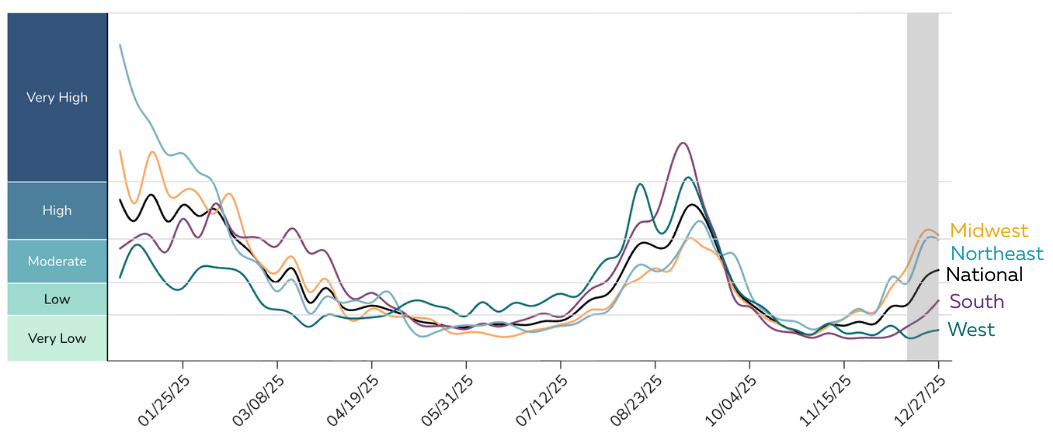
Covid-19 transmission remains low nationally, but is increasing. This is a late wave, as this will be the first winter Covid-19 doesn’t peak in the first week of January.
Norovirus
The stomach bug—diarrhea, cramping, vomiting—is also increasing, though not as high as last year when the virus mutated. Norovirus is extremely contagious, so wash hands frequently, disinfect surfaces (bleach works), and don’t cook while sick. Hand sanitizer does not work.
New year, new policies: SNAP restrictions
Last year, USDA and HHS encouraged states to request SNAP food restriction waivers to limit purchases of non-nutritious food items as part of the Make America Healthy Again strategy. So far, 18 states have received approval to test these restrictions for two years. In previous years, similar waiver requests were denied due to cost, implementation challenges, and limited evidence of health impact.
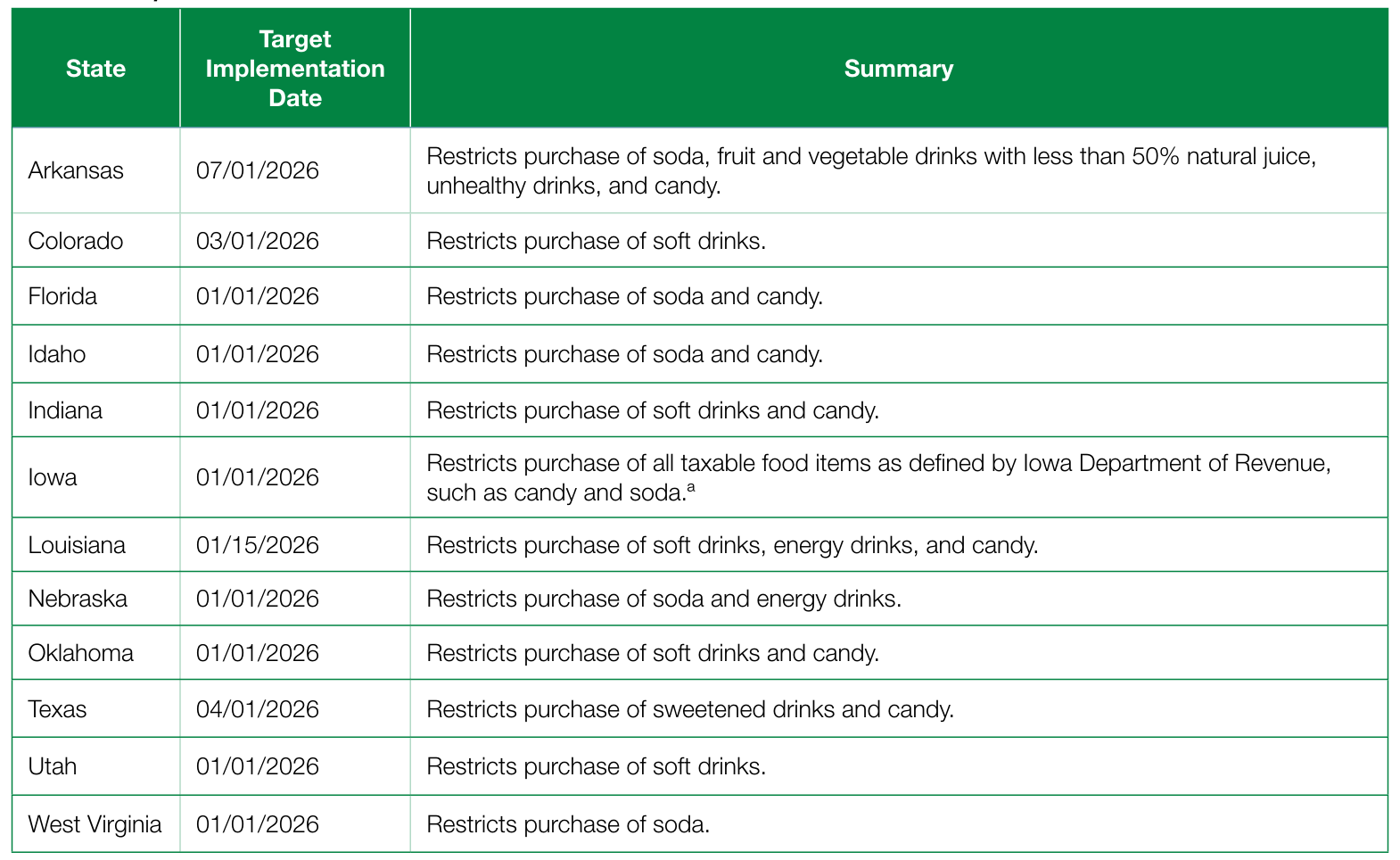
I will let Megan, YLE’s registered dietitian nutritionist, take it from here on this topic…
Restricting SNAP beneficiary choice—like banning the ability to purchase of soda— has long been debated because, like most health policies, it sits at the intersection of science, ethics, economics, culture, and politics. It’s also expensive (about $1.6 billion for retailers) and complex to implement. The lack of a clear definition of “non-nutritious” foods makes implementation, enforcement, and evaluation challenging across states.
What does the science say about the effectiveness of restriction on health? The research is limited and mixed. Among the studies on this topic, scientists have found:
SNAP restrictions can reduce purchases of targeted items (like sugary drinks).
Restrictions may not increase purchases of healthier items (e.g., fruits/vegetables) or improve overall diet quality.
Combining incentives (such as financial incentives for fruits and vegetables) with restrictions seems more promising. Some trials show this pairing can reduce calories from unhealthy foods and improve overall diet quality.
We don’t yet know if the changes will meaningfully improve health outcomes, like obesity or diabetes rates.
There are also ethical concerns regarding autonomy and stigma. SNAP was designed to reduce hunger by supporting household food purchasing power, yet these restrictions can feel punitive—“Here’s the money, but we don’t trust you to use it right.” They also divert attention from other upstream drivers of health, such as improved access to health services, food, and education.
All of this is especially hard to reconcile, given that this administration eliminated funding for SNAP-Ed: the very program designed to educate SNAP recipients about nutrition and promote healthy food purchases.
Bottom line: Efforts to improve nutrition through pilot programs are important and widely welcomed, and could provide valuable insights. But they must be done the right way. SNAP purchase restriction waivers must be evaluated through an evidence-based lens that considers their real-world impacts on families, autonomy, dignity, and health.
Good news
The chickenpox vaccination is finally being offered in the U.K. The chickenpox vaccine is finally being offered in the U.K., following the U.S. lead. Strong evidence shows it does not increase shingles risk (an early concern); rather, evidence shows the opposite—it helps prevent shingles. In the U.S., the vaccine has prevented 91 million cases of chickenpox, 238,000 hospitalizations, and saved $23.4 billion.
Bad news
In 2025, the U.S. crossed 2,000 measles cases (2,024 to be exact). Large outbreaks in Utah (142 cases), Arizona (195), and South Carolina (156) continue to grow, with over 90% of cases unvaccinated. This is bad news on every level—not just for the children affected by this preventable disease, but because the U.S. is now likely to lose its WHO measles elimination status. In other words, measles may soon become endemic.
Bottom line
Stay healthy out there. Get your flu shot, wash your hands, wear a mask, and stay home if you’re sick. Wellness, from the food we eat to the infections we prevent, is both an individual and a community effort.
Love, YLE





.jpg)
No comments:
Post a Comment