The Dose (February 10)
Katelyn Jetelina and Hannah Totte, MPH, 2-10-26
I hope you had a great weekend! I’m still buzzing from the rare combination of the Olympics and the Super Bowl halftime show. Both are powerful reminders of community, connection, and love. Moments like that make me feel deeply proud of this country, even when we’re going through a really hard stretch.
In the health world, we’re seeing a late-season flu bump, and measles in South Carolina is doing what measles does best: spreading. Also, don’t let the flashy Trump Rx discounts or Super Bowl wellness ads fool you too much.
Here’s what’s happening, and what it means for you.
Disease “weather report”
There are still plenty of sick people out there. After several weeks of decline, we’re seeing a modest uptick in people with coughs, sore throats, and fevers. This bump appears to be driven by late-winter suspects: the common cold, RSV, and flu B.
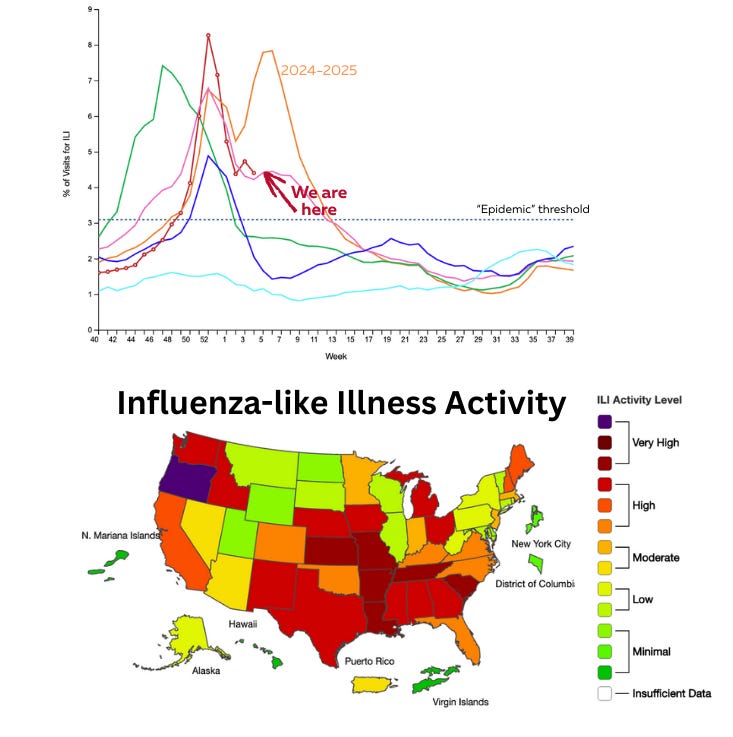
Flu B often rises after flu A has already peaked, so a late-season increase like this is expected and not unusual.
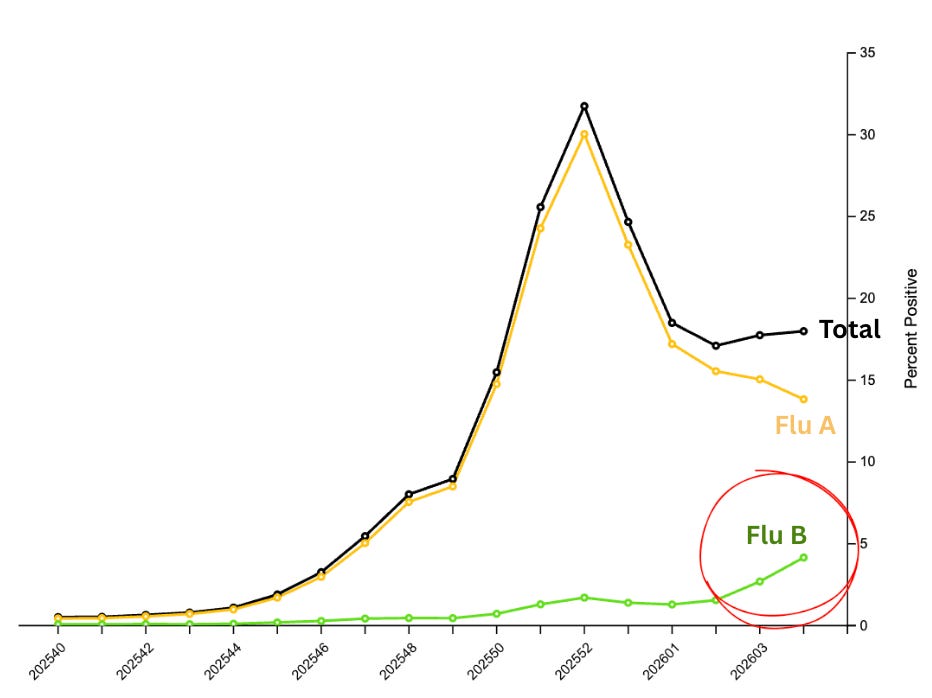
How big will flu B get? It’s unclear. Some countries, like Japan, are experiencing a sizable second wave of flu, while others are not. Historically, flu B causes smaller waves than flu A, partly because of existing population immunity. We’ll be watching the data closely.
So far, the much-hyped “super flu” hasn’t materialized at the national level. Overall severity, measured by cumulative hospitalizations, has been middle-of-the-road. That said, some states have had very tough seasons (as we covered at YLE New York), while others have fared better (as we covered at YLE California).
Measles. There have now been 803 confirmed cases nationally in 2026. In just five weeks, we’ve hit 35% of the total number of cases in 2025.
South Carolina keeps on growing. It has now reached an astonishing 920 cases. It looks to be slowing, but time will tell how big this gets.
TrumpRx: Big branding, limited impact
Americans pay outrageously high prices for brand-name drugs, so I’m all for efforts that tackle the root causes. But despite the patriotic branding behind TrumpRx, it lacks real teeth, and most people are unlikely to see any meaningful relief from the new drug website.
Here are the details:
TrumpRx only applies to people who pay cash for prescriptions. So, the vast majority of Americans with health insurance will not benefit.
If you do pay cash for drugs from the site, it will likely not count towards your deductible. However, this may be changing following a recent FTC settlement involving Cigna/Express Scripts. Also, eight states have passed laws requiring insurers to count certain cash prescription purchases toward deductibles and out-of-pocket limits.
Don’t forget generics. One of the more misleading aspects of TrumpRx is that it focuses on brand-name drugs without clearly telling consumers that much cheaper generic drugs already exist. In fact, 18 of 43 of the drugs on TrumpRx already have cheaper options. So, before you use the platform, double-check that there isn’t already a cheaper option here. For example:
Tikosyn (antiarrhythmic): TrumpRx $672 vs. generic version for $36
Pristiq (antidepressant): TrumpRx $200 vs. generic version for $20
Protonix (acid reflux): TrumpRx $361 vs. generic version on Mark Cuban’s Cost Plus Drugs platform is $6.
This isn’t a change in the law. TrumpRx is essentially an online drug marketplace; it doesn’t alter legal requirements or hold industry players more accountable. Real cost relief requires stronger levers. That’s what sets it apart from approaches like California’s, which uses legislation to change the system itself by holding middlemen accountable and reshaping incentives across insurers and pharmacies.
Sweeping changes are still needed. The most consequential shift we’ve seen so far came with the 2022 Inflation Reduction Act, which finally allowed Medicare to negotiate drug prices, but it is narrow, and more reform is urgently needed.
Starting this year, 10 Medicare drugs are now, on average, 22% cheaper than before.
Just announced: in 2027, 15 more drugs will be added, with prices about 44% lower on average.
Super Bowl commercials are worth a closer look
Whether you were there for the friends, football, halftime show, or snacks. As always, the ads were entertaining, but my public health head just couldn’t resist looking closer at two wellness ads.
Hidden details in Hims & Hers. A telehealth company, Hims & Hers, promoted a blood-based multi-cancer screening test called Galleri, which looks for cancer-related DNA signals in the bloodstream. The challenge here isn’t whether the test can ever detect cancer (it can), but how often it misses cancers and how often it raises false alarms.
So what does the data actually show? The company tested the blood of nearly 36,000 adults over 50 who were asymptomatic and followed them for a year. (This was not a randomized controlled trial). Results were:
Of everyone who had cancer, the test caught about 4 out of 10.
Among the cancers it did catch, more than half were early-stage, and about three-quarters were cancers that currently have no routine screening tests, such as pancreatic cancer.
Of everyone who tested positive, about 2 out of 3 truly had cancer, while a little more than 1 in 3 people experienced a false alarm.
Among those who had a negative test, 99% were confirmed to be negative.
These are not strong numbers, and it remains unclear whether the test improves long-term survival. Screening always has tradeoffs, and consumers deserve to understand them, especially before paying around $900 for a test that is not FDA-approved, not covered by insurance, and can trigger significant anxiety if a result turns out to be a false alarm.
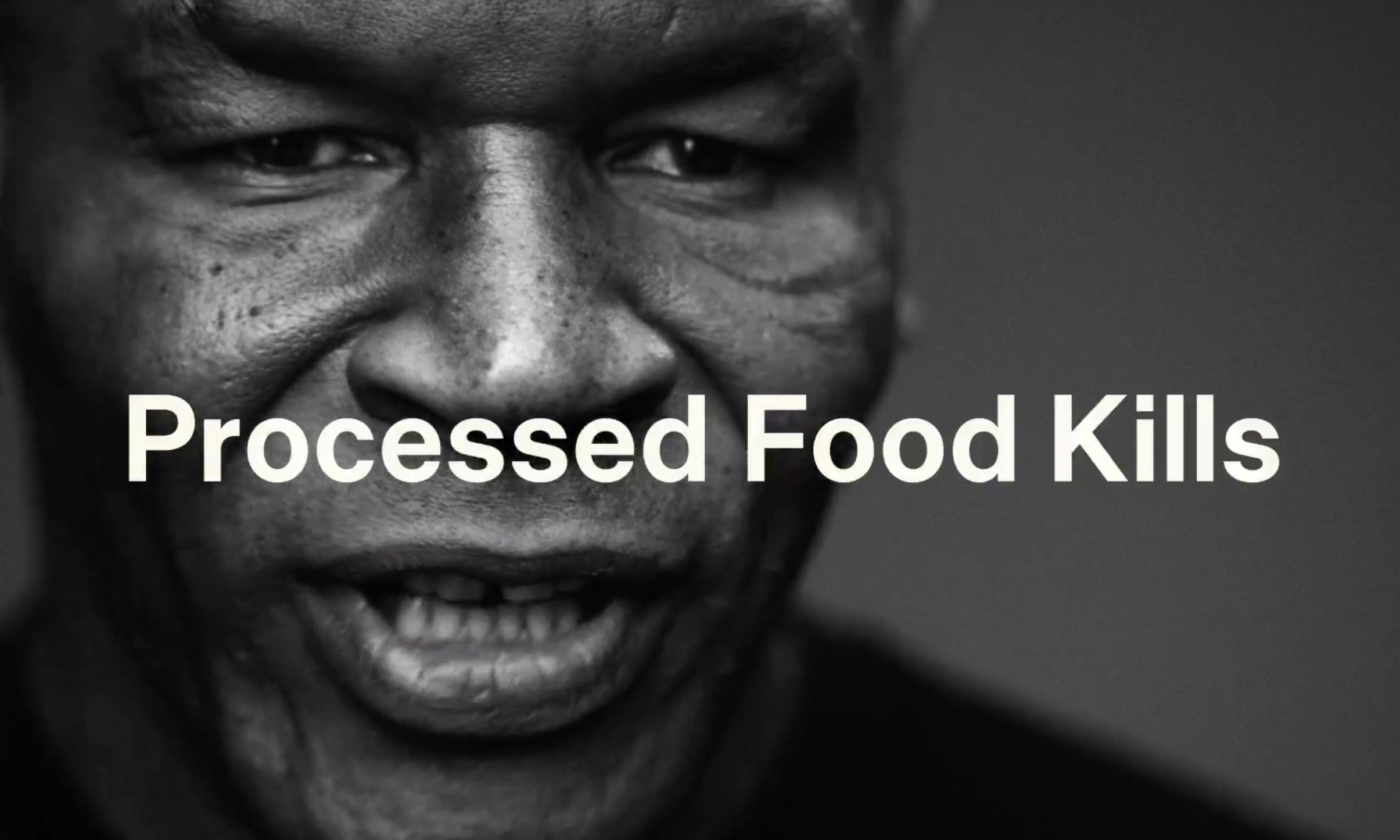
Shame doesn’t work. The second ad featured Mike Tyson promoting realfood.gov, a government site where he describes how eating processed foods led him to self-hate. MAHA sponsored the commercial, and that’s what makes it so frustrating. With decades of behavioral science showing that shame backfires and agency-based messaging works better, this could have been a powerful, empowering moment. Instead, they missed an opportunity to make a far more impactful and effective case for healthier eating.
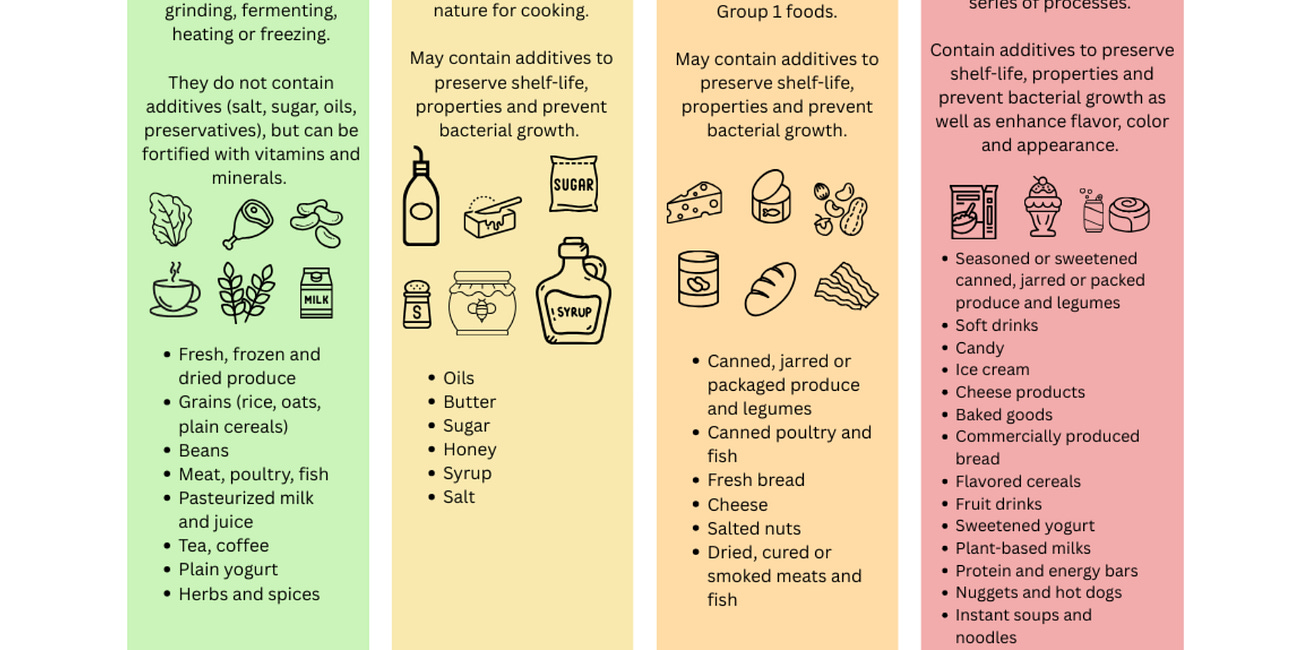
Shame-based framing (“I ate this, so I’m bad”) largely doesn’t work because it shuts people down. Guilt-based framing paired with agency (“This choice wasn’t great and I can change it”) is more likely to make a difference. People rely on ultra-processed foods because of cost, time constraints, and limited access to healthy foods, not simply a lack of willpower. And some ultra-processed foods, like seasoned canned beans or whole wheat bread, can be part of a healthy diet. If the goal is healthier eating, the message should offer honesty, nuance, and realistic choices, rather than moral judgment.
For more on this, check out the YLE deep dive from last year below.
Some good news!
Congress passed funding for the CDC at roughly the same level as the 2024–2025 budget, restoring programs that had been paused. In this moment, “nothing got worse” qualifies as good news.
Hospital-acquired infections are declining, meaning fewer patients are being harmed. This trend suggests that strengthened infection-control practices from the pandemic era are paying off.
A personalized mRNA cancer vaccine sustained a 49% reduction in melanoma recurrence or death at five years. The new follow-up data suggest that mRNA-based cancer therapies may deliver durable, long-term benefits. This is only from a Phase II trial. In other words, there is still a while before it may go to market, but we will take this as a win!
In case you missed it
Marisa over at YLE in New York covered the pros and cons of the new NYC Health Commissioner pick.
Matt over at YLE in California covered the TB outbreak in a school and measles at Disneyland.
Bottom line
Stay healthy and warm out there! And don’t let the performative policy changes and ads fool you.
Love, YLE
Your Local Epidemiologist (YLE) is founded and operated by Dr. Katelyn Jetelina, MPH PhD—an epidemiologist, wife, and mom of two little girls. Hannah Totte, MPH, is an epidemiologist and YLE Community Manager. YLE reaches more than 425,000 people in over 132 countries with one goal: “Translate” the ever-evolving public health science so that people will be well-equipped to make evidence-based decisions.





.jpg)
No comments:
Post a Comment