By Katelyn Jetelina and Hannah Totte, MPH
Flu season is winding down just as spring kicks off, which is great news if you have travel plans. Less great: other bugs are already moving in to fill the void.
This week we’re covering what that means for you, plus why the polio travel headlines were scarier than the actual risk, what breakthrough measles cases reveal about how vaccines work, and two recalls worth checking before you head out. Good news at the end, as always and a reading recommendation if you find yourself stuck in a TSA line.
Disease “weather” report
Goodbye flu season. Nationwide, the number of people with fever, sore throat, or runny nose (collectively known as “influenza-like illnesses”) is nearly back to below the epidemic threshold. In other words, flu season is behind us. A few states are still seeing high levels, but they too are on their way down.
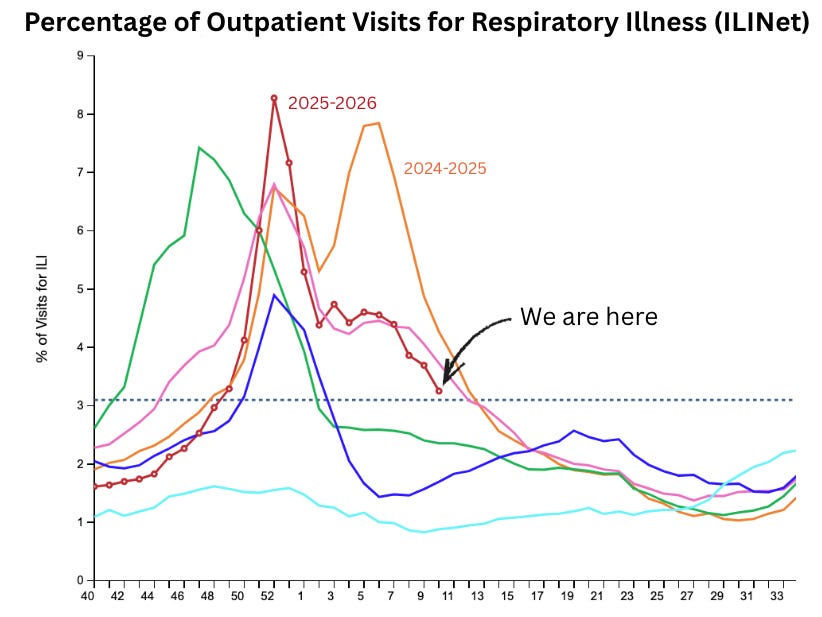
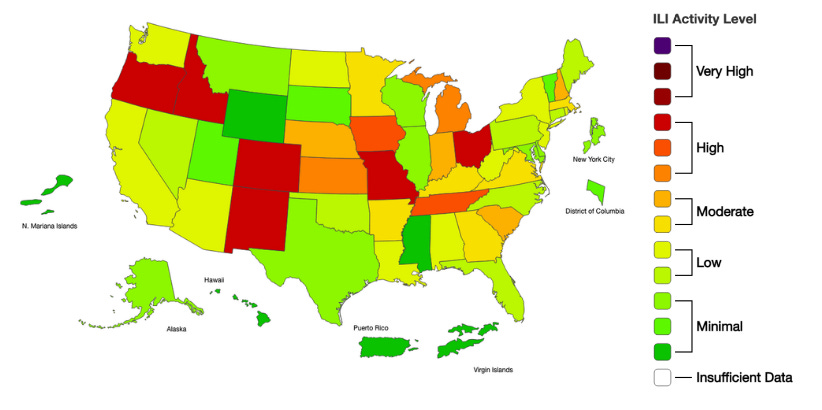
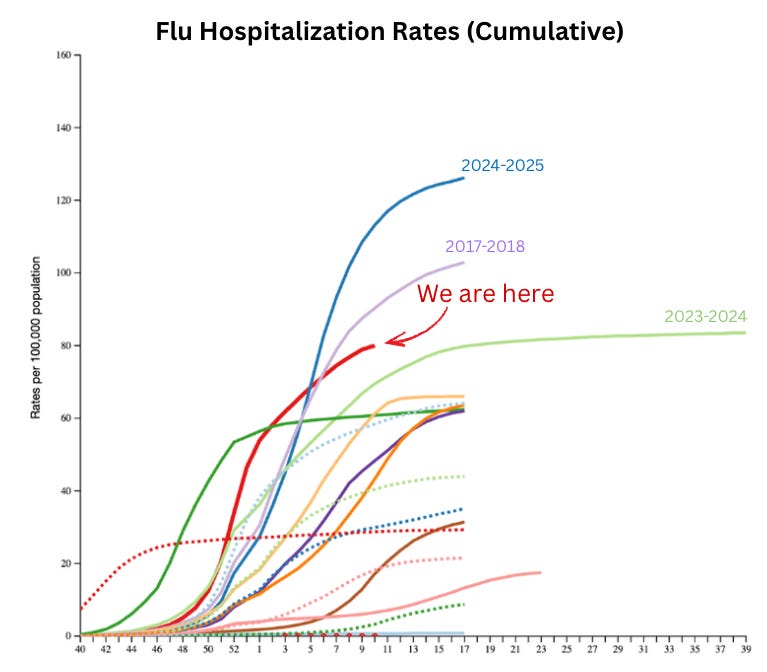
Was this the “super flu” season many feared? Earlier this year, a notable mutation raised concerns that this could be a particularly bad season. Looking back, cumulative hospitalizations were worse than average, but not record-breaking.
Spring brings another set of bugs
That said, not all runny noses and prolonged coughs will be avoided, as some common colds, as well as the family of RSV viruses, are at their peak.
Norovirus (the stomach bug behind diarrhea and vomiting) also continues to climb. The number of people testing positive is not necessarily abnormal—it’s within levels seen in previous years and, thankfully, lower than last year, when a new strain triggered a notable surge. Norovirus season typically winds down by April, so we should be peaking soon.
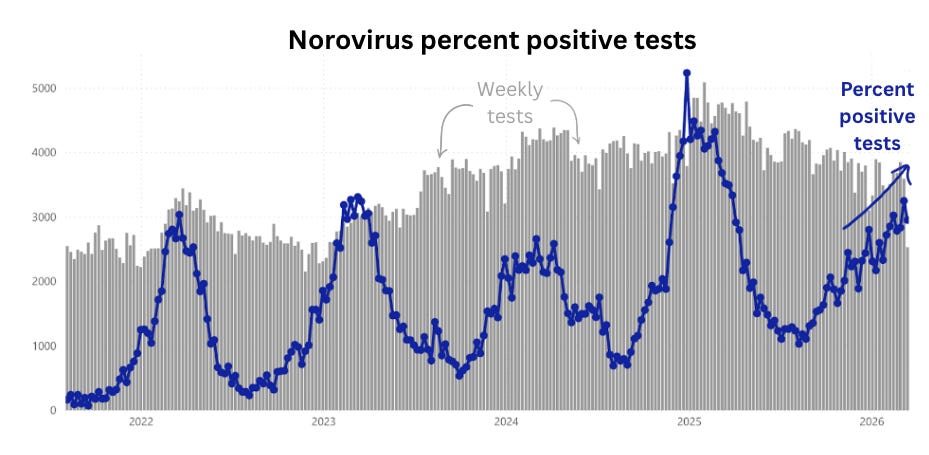
What this means for you: Norovirus is extremely contagious. If you have the stomach bug, use a separate bathroom in your house. Hand sanitizer doesn’t kill this bugger, either. Soap and water are your best bet after touching hotel door knobs or elevator buttons, for example.
Measles has historically been tightly coupled with school calendars. Because of spring break travel, we usually see an acceleration of case counts in March and April. But relative to everything else you worry about, in general, this is still very rare. The latest U.S. tally for 2025 is 1,524 measles cases.
Utah is experiencing the most rampant spread right now. This is in part is due to a large sporting event held in February 2026. South Carolina and Arizona are on the mend.
In the Americas, all eyes are on Mexico, which has an enormous amount of cases (7,584) just this year. Guatemala is also a new hot zone with 1,718 cases this year.
What this means for you: If you’re traveling to these places, make sure you’re up to date on your MMR vaccine. If you have an infant under 1 year old, you may want to reconsider travel plans or get them vaccinated early.
Coming in April: As we move into spring, the disease weather report will expand to cover ticks, mosquitoes, allergies, and heat-related illnesses. Stay tuned!
Food (and drug) safety alerts
Children’s ibuprofen recall. Nearly 90,000 bottles of Strides Pharma Children’s Ibuprofen Oral Suspension (100 mg/5 mL., berry flavor, 4 oz.) have been recalled. The product was distributed nationwide and may be on shelves at CVS, Target, and similar retailers.
Why? Complaints of a gel-like mass and black particles in the bottles.
How bad is this? No cases of serious adverse events have been reported so far; this warning is a precaution. Specifically, FDA classified this as a Class II recall (not its most dangerous). For context, FDA’s recall classification system has three tiers: Class I (reasonable probability of serious harm or death), Class II (possible temporary or reversible harm), and Class III (unlikely to cause harm but still violates regulations).
How to check your bottle: Look for lot numbers 7261973A or 7261974A with an expiration date of January 31, 2027. These are typically stamped on the bottom or side of the bottle.
What to do: If your child took it, call their pediatrician. Before tossing it, many retailers accept returns on recalled products. You can also contact Taro Pharmaceuticals directly for reimbursement.
Raw cheddar cheese is linked to E. coli. The FDA has linked Raw Farm brand raw cheddar cheese to seven E. coli infections across California, Florida, and Texas. Four of the seven cases are in children aged 3 or younger. Two people have been hospitalized. If you have this, toss it.
Breakthrough measles cases at Utah hospital
A Utah Health Action Alert recently flagged that vaccinated health care workers who contracted measles and came to work, not realizing infection was possible despite their vaccination status. The story has been circulating on social media and raises some important questions worth unpacking.
The MMR vaccine works extremely well, but no vaccine is perfect. A vaccinated person is 35 times less likely to get measles than someone who is unvaccinated. Breakthrough infections do happen, though: roughly 3 out of every 100 fully vaccinated people can get infected. The vaccine’s primary job is to prevent serious illness, hospitalization, and death. Preventing infection altogether is a bonus.
Expect to hear more breakthrough cases, and don’t read them as a sign of vaccine failure. When a virus circulates at levels the U.S. hasn’t seen in more than 30 years, more people will be exposed, and more breakthrough infections follow. This is inevitable.
Exposure level matters. A health care worker treating an infected patient is essentially walking through a viral cloud. Antibodies can neutralize the virus, but an overwhelming exposure can sometimes outpace them.
Even when breakthrough infections occur, serious illness remains uncommon. Data confirms that vaccination significantly reduces the risk of severe complications, even among people who become infected.
Breakthrough cases can spread the virus, but this also appears to be rare. The first documented case of a fully vaccinated person transmitting measles was during a 2011 New York outbreak. Out of 88 close contacts, only 4 became infected. An older study found no viral shedding among asymptomatic or mildly ill vaccinated patients, though that research needs replication with more sensitive modern tools.
Many people have a lot of really great questions about immunity against measles. Here are the top 10 we’re hearing from YLE.
10 FAQs on MMR and Measles Protection
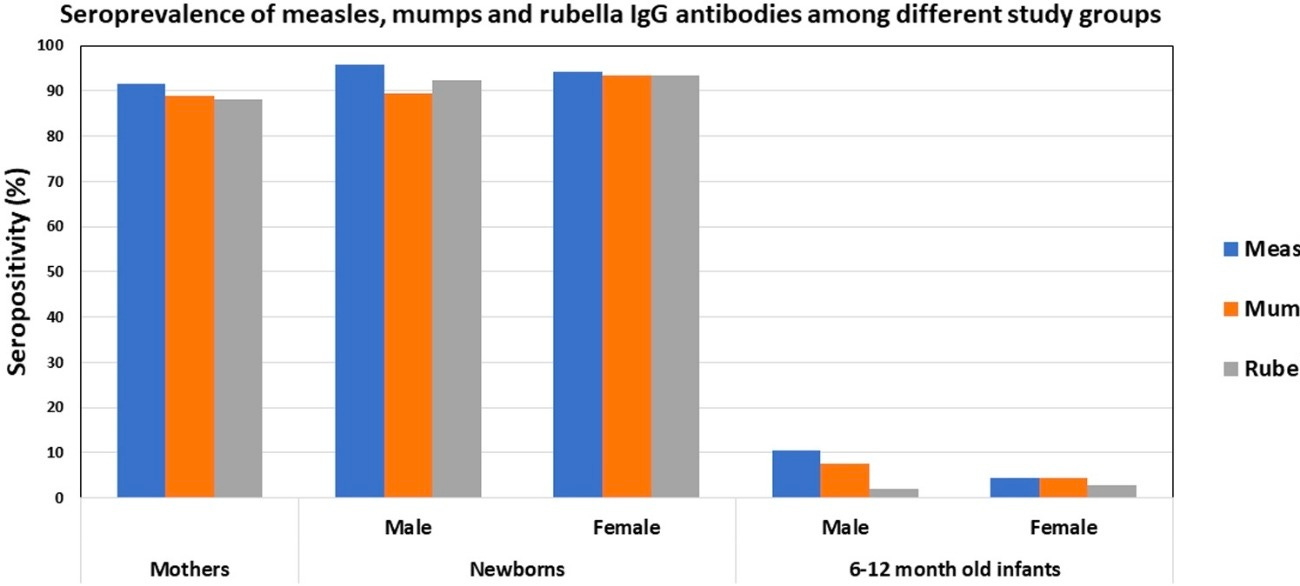
With measles cases rising across the country, I’ve been getting a lot of questions (especially after that Hannity interview yesterday)! Here are your top 10 answered.
Good news
U.S. smoking rate drops below 10% for the first time (and researchers are stepping up). Cigarette smoking among U.S. adults fell into single digits: 9.9% in 2024. This is massive progress, given that in 1965, the rate was 42.4%. This analysis was published by a researcher. Normally, the government’s Office on Smoking and Health would analyze and publish these results. But after federal cuts removed this office, outside researchers are filling the gap.
How you think about aging appears to shape how you actually age. The power of the mind! A new Yale study followed 11,000+ adults aged 65+ over 12 years and found that 45% showed measurable improvement in cognitive function, physical function, or both. People who held more positive beliefs about aging were significantly more likely to improve.
Question grab bag
I’m headed to Iceland soon. Do I need a polio booster? I thought there was a travel warning about this.
The short answer: No.
What you saw in the news was a case of media misinterpretation, not a new travel warning. And Iceland isn’t on the notice list. Here’s what happened:
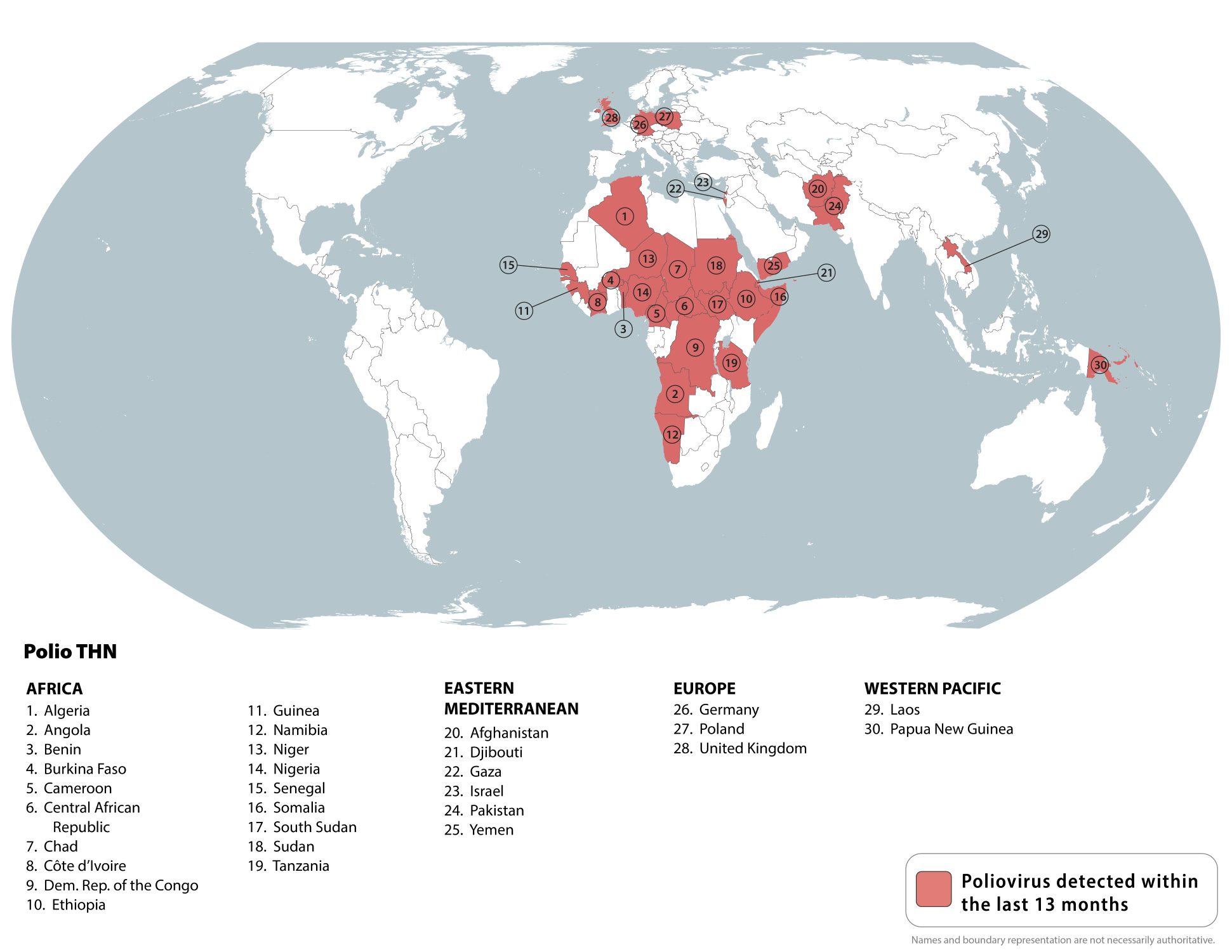
The CDC has maintained a global polio notice since 2022. This is a notice (not a warning), which is an important distinction. A notice is meant to provide information to promote safe and healthy travel, not to discourage travel to a destination.
The recent media frenzy was triggered by a fairly mundane internal fix: someone at the CDC noticed a discrepancy between the list of countries named in the notice and the countries shaded on the accompanying world map. When they corrected that mismatch, the page got a new date stamp, and the media interpreted that timestamp as a brand-new advisory. It wasn’t.
Some places on the notice list, including the U.K. and Germany, do fall under the “you can get a booster” category. But the actual risk is genuinely very low for most travelers because:
The polio vaccine is 99% effective against paralytic disease. Immunity in anything can wane over time, but in general, this vaccine is believed to provide lifelong protection.
Detections in places like the U.K. and Germany has largely been through wastewater surveillance, meaning public health agencies are detecting trace evidence of the virus in sewage systems rather than seeing widespread illness.
Normal tourist activities face a very low risk. If you’re traveling to an affected country and plan to spend extended time in a close community setting, it could be worth a conversation with your doctor. A booster would top off your protection by triggering a recall response, so you reach very high antibody levels before you encounter the virus in the real world.
Recommended reading for that TSA line
As many of you know, I’ve been partnering with MAHA grassroots over the past year on several projects. But, I will be honest, it’s often felt like a one-way street: Listening but not being heard. That was until last week, when I read something by Aaron Everitt, who is an acquaintance and MAHA star, about his positive experience at a public health conference. It was incredibly refreshing and felt like a big win. This country has a lot of work to do. Read it below.

Bottom line
Spring is approaching, the bugs are changing, and as always, knowing what to watch for is half the battle for staying healthy and enjoying spring.
Love, YLE





.jpg)
No comments:
Post a Comment