Here's a straightforward article about how to get the COVID vaccine, and who to trust. The thought that confused people might skip their vaccines entirely because of this turmoil is a disaster waiting to happen.
-------------------------------------------------------
Don’t Rely on the CDC, Says Doc, and Offers Info on New Flu and COVID Vaccines
Katie Kerwin McCrimmon, Colorado Times Recorder, 8/31/25
"The new 2025-2026 COVID-19 vaccines will fight the newest COVID-19 variants.
"Vaccine makers also update flu shots every year to protect people
from the flu strains that are most likely to surface this fall and
winter.
"The opportunity to protect yourself from the newest respiratory virus
variants is one of many reasons you’ll want to get both your COVID-19
and flu vaccines this fall.
"You can get both shots at the same time, and the exact timing doesn’t matter, according to infectious disease expert, Dr. Michelle Barron.
"Just plan to get the updated 2025-2026 COVID-19 and flu vaccines if
you can sometime in the next couple of months so you can avoid getting
severely ill this fall or winter from COVID-19 or the flu and ending up
in the hospital. Manufacturers have already been shipping the new
versions of the vaccines.
"Barron is UCHealth’s senior medical director for infection control and prevention and is also a professor of medicine and infectious diseases at the University of Colorado School of Medicine on the Anschutz Medical Campus.
"To help answer some of your top questions, we asked Barron all about the 2025-2026 COVID-19 and flu vaccines.
Misinformation about vaccines is on the rise, but don’t let that stop you from protecting yourself
"You’ve probably been hearing many controversial opinions about
vaccines this year. Misinformation is on the rise, and federal health
leaders removed every member of a trusted committee of experts that used to provide key advice and updates about vaccines.
"Since then, the top vaccine experts at the U.S. Centers for Disease Control and Prevention (CDC) resigned because
they couldn’t guarantee that information about vaccines from the CDC
would continue to be trustworthy and based on scientific research.
"Barron said it’s extremely sad that Americans no longer can rely on
information from the CDC, which used to be home to the premier health
experts in the U.S. and a global leader in supporting the health of
people around the world.
"Barron is advising her patients to try to ignore vaccine
misinformation as much as possible and instead to focus on the simple
goal of protecting themselves and their loved ones.
"Barron – and your own doctor – want you to stay as healthy as
possible now that we’re in the middle of the back-to-school season and
will soon be heading into the Thanksgiving and Christmas holidays.
"Vaccines are safe and effective. They work very well in protecting
people from severe illness, hospitalization, and death, Barron said.
"She’s concerned that many people might skip getting their annual flu
and COVID-19 vaccines this fall either because they are confused or
because they are worried they will have to pay out of pocket to get
their vaccines.
"On top of uncertainty about costs, many people are worried that they
no longer will be eligible to get vaccines now that leaders of the U.S.
Food and Drug Administration (FDA) have tried to limit access to some
vaccines.
Tell me about the recent decision from FDA officials about COVID-19 vaccines? What should I do about getting my vaccines?
"COVID-19 vaccines used to be approved for everyone in the U.S., ages 6
months and older. On August 27, federal health officials changed those
recommendations, saying people ages 65 and older are eligible to get
COVID-19 vaccines, along with younger people who have at least one risk
factor for getting severely ill if they get sick with COVID-19. Those risk factors include asthma, smoking, physical inactivity and obesity.
"Barron said the new guidelines are not broad enough, are not based on
legitimate scientific research and likely will prevent many people who
should get COVID-19 vaccines from getting them. This is especially true
now that pharmacies like CVS and Walgreens will require a doctor’s prescription for people in Colorado who want COVID-19 vaccines.
"Barron’s key message amid the chaos and uncertainty is to speak with
your doctor and try to get your vaccines, even if that means you’ll need
to get a prescription. Another alternative is to simply call your
doctor’s office and ask for a “lab appointment” to get your vaccine.
Many doctors’ offices keep supplies of vaccines on hand, and a medical
assistant can give you your vaccines at your doctor’s office.
Should I get my flu and COVID-19 vaccines this fall?
"Yes. Everyone should try to get their COVID-19 and flu shots this year.
"With the new FDA guidelines, it may be much harder to get vaccines,
and some people may have to pay out of pocket. But Barron is 100% clear
on her advice.
“Everyone should get a flu shot,” she said.
"She also strongly recommends COVID-19 vaccines, especially for people
who are at higher risk of getting severely ill if they get COVID-19.
That includes older people, immunocompromised people and pregnant women.
“Data show that the people who benefit most from a COVID-19 vaccine
are those who are older and those who have underlying medical
conditions, like asthma, COPD (Chronic Obstructive Pulmonary Disease),
hematologic malignancy (cancers that affect the blood, bone marrow and
lymph and lymphatic systems) or people who are on medications that
suppress your immune system,” Barron said.
"Vaccines also are essential for people like health care workers who
are at higher risk for exposure to respiratory illnesses, including flu
and COVID-19.
"And Barron advises people to get vaccines so they can avoid severe illnesses, including long COVID.
“It’s a good idea to get a COVID shot because you can still get
complications, and you can still end up in the hospital. If you get the
vaccine, you’ll be decreasing that risk. Does a vaccine mean that you’re
never going to get COVID or the flu? No. But it means you’re more
likely to stay healthy,” Barron said.
“You get to go to work. You get to go to concerts. You get to do all
of your fun stuff because you’re not sick at home in bed,” she said.
Who is at the greatest risk of getting severely ill and dying of the flu?
"When it comes to flu, Barron said the people who are most at risk and
absolutely need flu shots are “the very old and the very young.”
“Babies under a year of age and older adults who are 65 and older are
much more likely to end up hospitalized or with a complication,
including death,” Barron said.
"People who are immunocompromised or who are caregivers or spend a lot
of time with people who are immunocompromised should also be sure to
get flu shots.
Should pregnant women get flu and COVID-19 vaccines?
"Yes. Pregnant women should definitely get both flu and COVID-19 vaccines, Barron said.
"Her advice has nothing to do with politics. Barron said that doctors
and researchers have known for decades that pregnant women are more
vulnerable to getting severely ill if they get respiratory illnesses
like the flu and COVID-19. Pregnant women can suffer themselves and also
can jeopardize the health of their baby if they get severely ill.
“Just like flu, complications from COVID-19 during pregnancy can lead
to early birth, premature birth and complications for the mother,”
Barron said. “There is some anxiety about getting vaccines during
pregnancy, and there shouldn’t be.
“These vaccines have been very well studied during pregnancy, and there haven’t been any issues,” Barron said.
"While vaccines are safe in pregnancy, getting a bad case of the flu
or COVID-19 can be very dangerous and even deadly during pregnancy. (Read about a woman who nearly died when she got COVID-19 while she was pregnant.)
There is conflicting advice about kids and COVID-19 vaccines. Should children get the 2025-2026 COVID-19 vaccine?
"Health experts at the American Academy of Pediatrics (AAP) have issued new guidance and strongly recommend the COVID-19 vaccine for infants and babies ages 6-months to 23-months.
"The AAP pediatric experts said infants and babies are at high risk
for suffering severe complications if they get sick with COVID-19.
"Older children who are immunocompromised should also get their
COVID-19 vaccines, as should children who are at high risk for severe
illness if they get COVID-19, those who live in long-term care
facilities, children who have never received a COVID-19 vaccine or kids
who live in homes where other family members are at high risk if they
get COVID-19.
"AAP experts also stated that any parents who wish to protect their
children from COVID-19 should be able to get the new 2025-2026 vaccine
for their children. (Read the AAP’s policy statement regarding the 2025-2026 COVID-19 vaccines for children.)
Who can I trust if I’m seeking accurate information about vaccines?
"It’s harder to find accurate, trustworthy information about vaccines
now that vaccine skeptics have taken over what used to be the premier
health institutions in the U.S. government from the CDC and FDA to the
U.S. Department of Health and Human Services, Barron said.
"While it pains Barron to say that people can no longer trust
government health information, she is encouraging patients to instead
rely on advice from their own doctors and organizations that represent
doctors and still rely on legitimate experts and researchers.
"Barron said you can trust advice about vaccine safety and recommendations from the following organizations:
Will my health insurance cover the cost of my COVID-19 and flu shots this year?
"Unfortunately, the answer right now is that no one knows for sure if insurance plans will cover vaccines this year.
“There are a lot of unknowns this year,” Barron said. “Unfortunately,
we don’t have all the information yet. We don’t know if there will be
restrictions on doctors and pharmacists.”
"She is also very concerned for lower-income people who likely will struggle the most to get vaccines this year.
"For now, if you get your health insurance through your job, check
with your employer or your health insurance provider regarding the cost
of vaccines. In past years, health insurance companies were required to
pay for the cost of vaccines that medical experts at the FDA and CDC had
approved and recommended.
"This year, with widespread misinformation and the turmoil in
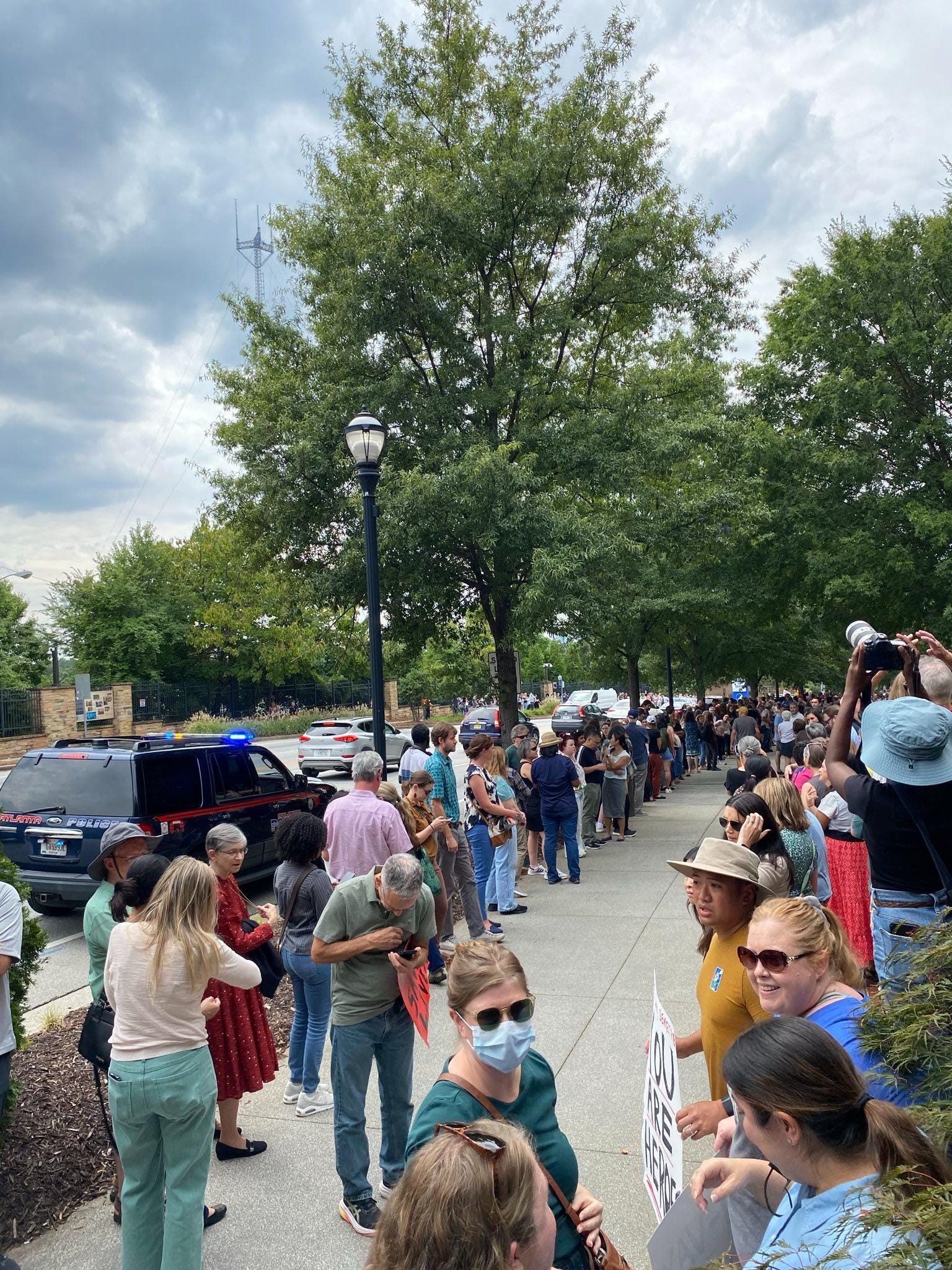
Washington, D.C., and in Atlanta at the CDC headquarters, some health
insurance plans may no longer cover the full cost of vaccines. Some
health insurance providers may require co-pays. Many employers, however,
will continue to cover vaccines since they want their employees to stay
healthy. Health insurance plans should cover the cost of flu vaccines.
When will the newest vaccines be available?
"Some large pharmacies already have the new versions of the COVID-19
and flu vaccines in stock. Others will be getting them any day. Actions
from federal officials have not stopped vaccine manufacturers from
shipping vaccines, Barron said. So, reaching out to your doctor in the
next month or two should be good timing for getting your vaccines if
you’re able to do so.
Which COVID-19 variants are circulating now?
"The dominant variants that are causing COVID-19 infections now all are descendants of the omicron variant, which surfaced back in late 2021, and has been dominant ever since.
"The current dominant variant is called XFG and is also known as the “stratus” variant, also an omicron variant. According to national wastewater monitoring data, the XFG variant is causing the majority of COVID-19 infections in the U.S. now.
Will the new 2025-2026 COVID-19 vaccine fight the newest variants?
"Yes. Vaccine makers have tailored the newest vaccines to fight the
newest variants, Barron said. Health advisors for the U.S. Food and Drug
Administration voted in May to authorize a new formula for the 2025-2026 COVID-19 vaccine.
"Different variants were dominant in the spring and summer of this
year, but all of the variants that have caused infections so far in 2025
are descendents of the omicron variant. So, the newest COVID-19
vaccines should help fight variants that are likely to cause infections
this fall and winter.
Is that also true for flu shots? Do vaccine makers change the shots every year?
"Yes, vaccine makers create new versions of flu shots each year.
Researchers and vaccine makers study flu outbreaks that take place each
year in the southern hemisphere, months before the flu season starts in
the U.S. and elsewhere in the northern hemisphere. Researchers and
vaccine experts then create annual flu shots based on the variants that
they anticipate will become dominant months later.
When does the typical flu season start and end?
"The typical flu season in the U.S. lasts from October through May,
but each year is different. We don’t know yet whether cases of the flu
will begin spiking relatively early in the fall or whether they’ll
increase closer to Thanksgiving or Christmas, Barron said.
"That’s why you shouldn’t worry about the perfect timing for getting
your flu shot. Your immunities will last for several months, and you
want to be protected in case flu infections start to rise early.
"Barron advises people to simply get their vaccines when it’s most convenient.
“There’s no magic in getting it early or getting it late. We can’t
predict the future. So, the best time to get your shots is when it’s
convenient. If you have five minutes, go get your shots. It’s really
about getting it done and getting it off of your to-do list,” Barron
said.
Is there a ‘COVID season’ when infections and hospitalizations typically increase?
"People can get COVID-19 any time of year. During the earliest days of
the pandemic, cases spiked in the spring of 2020 since no one had
protection against the new virus. In subsequent years, it has been
typical for COVID-19 cases to rise during the winter months, much like
flu cases. Each year since 2020, there have also been summer spikes in
COVID-19 cases. And it’s difficult to track exactly how common COVID-19
is now since many people don’t report the illness if they get sick.
"Wastewater data show
that COVID-19 infections are on the rise in parts of the U.S. now, with
cases spiking in places like Texas, Nevada, Utah, Alaska and Hawaii. In
Colorado, wastewater data currently indicate moderate levels of
COVID-19 infections.
What are the common symptoms of a
COVID-19 infection now? Is it more like a cold, or are people getting
severely ill when they get COVID-19 these days?
"A COVID-19 infection still makes people feel really lousy, Barron said.
"A case of COVID-19 feels far worse than a cold.
“The current strain of COVID-19 is causing people to feel terrible,” Barron said.
"Because she’s an infectious disease expert, she sees patients who are
hospitalized with COVID-19. She also hears from friends, family members
and other patients who update her when they get sick.
“People who have COVID now have told me about the terrible headaches,
fatigue and sore throats,” Barron said. “It’s not a walk in the park.
It’s not a cold. We equate a cold with having a runny nose and
coughing.”
"With both COVID-19 and the flu, people can get much sicker, and the symptoms can last for days.
“People get fevers and headaches and a really horrible sore throat.
Somebody described it to me as feeling like they had swallowed razors,”
Barron said. “It could be the flu. It could be COVID, but it’s much more
severe than the common cold.
“Just to be clear, the common cold can be annoying as heck. But colds
typically are limited to the upper airway,” Barron said. “With flu and
COVID, you have more systemic issues. You might have muscle aches and
body aches, and you feel so tired that even walking to the bathroom
seems hard.”
"Barron encourages people to get vaccines so they can stay healthy and
can protect vulnerable friends, family members and co-workers.
“Don’t just do it for yourself. Look at the people in your household
or in your life. If you have individuals in your life who have medical
conditions, which can include your children, not getting COVID-19 and
transmitting it to them is a really good idea.”
Should people still get tested for COVID-19 or flu if they feel sick?
"Yes, there are simple tests, and if you feel lousy, it’s a good idea to figure out if you have COVID-19 or the flu.
“There are home tests for flu and for COVID,” Barron said. “And so
why do you care (which illness you have)? Because there are medications
you still can take that help diminish the symptoms, or if you’re a
high-risk person, the medications are likely to keep you from ending up
in the hospital. So testing is still important. The results just don’t
get reported (to health agencies) like they used to.”
What’s your overall advice to people who are nervous about vaccines?
"Barron encourages people to talk with their medical providers if they’re worried.
"The primary concern for doctors is to keep their patients healthy and safe.
“I understand that there’s a lot of fear and anxiety because there’s
so much information out in the world, and it’s hard to discern what is
real and what is not,” Barron said.
“This is where I put it back on individuals to talk to their
provider. Your provider has no interest in anything other than keeping
you healthy. It’s our job to keep you healthy,” she said.
"Political affiliations and political opinions don’t matter.
“The doctor’s thoughts about the world are completely separate. At
the end of the day, our job is to keep you safe and healthy. We are not
paid by pharmaceutical companies. None of us goes to medical school or
nursing school or physician assistant school with the idea that we are
going to harm someone,” Barron said.
“Get rid of the noise and just ask the person who actually cares for
you and knows about vaccines and has studied the information,” she said.
“We can give you really solid information.”
"Editor’s Note: The Colorado Times Recorder occasionally posts articles, like this one, from UCHealth Today, which
is published by UCHealth, the hospital associated with the University
of Colorado School of Medicine, to provide accurate information about
medical issues that are often poisoned by misinformation, particularly
as discussed on social media and talk radio."









.jpg)