---------------------------------
Covid-19, mosquitos, hand foot and mouth surging, kinder vaccination rates, Vaccine Injury program at risk and more
The Dose (August 4)
"Well, July just flew by. August is here—bringing peak mosquito season, back-to-school bustle with lower vaccination rates, and, unfortunately, Covid-19 and hand, foot, and mouth. Here’s what may impact your health, some communication tips in our recent NEJM article, and, as always, some good news to start your week!
"Let’s dive in.
Disease “weather” report
Covid-19
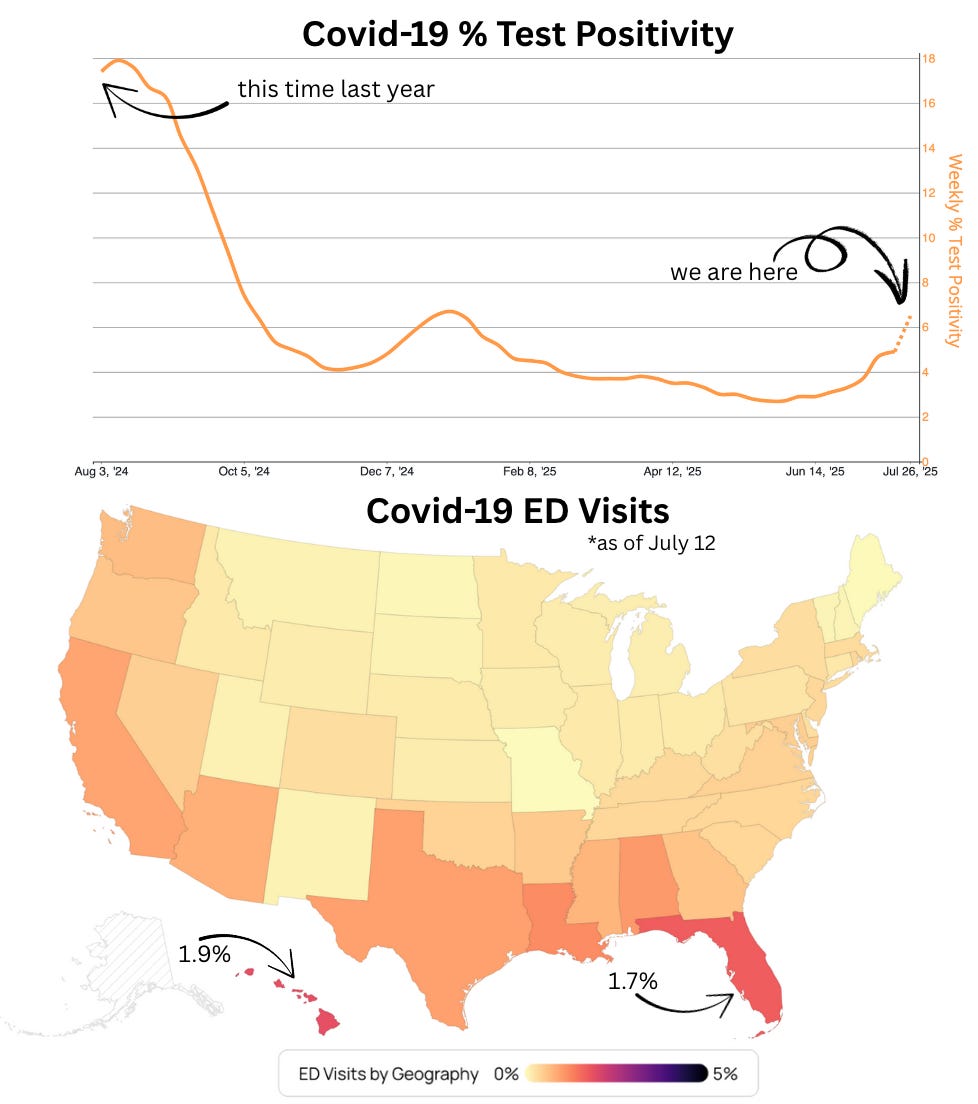
"The summer Covid-19 wave is growing—especially in the South and West—but national levels remain relatively low compared to this time last year. Infants under 6 months old are the most impacted right now, accounting for the highest rate of emergency room visits for Covid-19.
"How high will this wave get? No one knows for sure, but I wouldn’t be surprised if it passes last winter’s peak. That season was mild, and many people haven’t been infected in a while, leaving them more susceptible to infections.
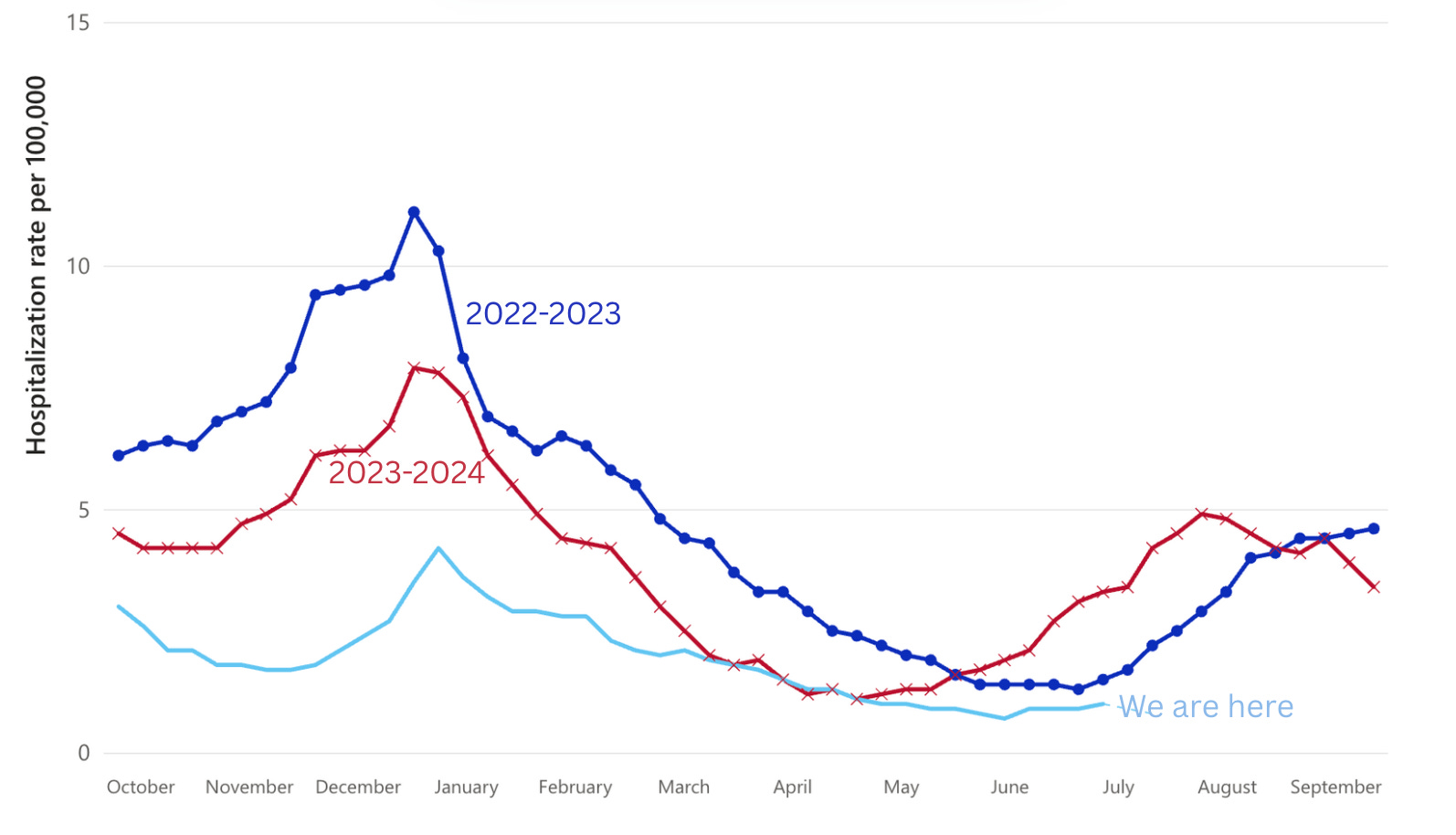
"If you squint, overall hospitalizations are starting to increase, which makes sense given they still lag the early indicators like wastewater. But each year we are getting fewer severe diseases in a step-like fashion. I expect this year to be no different.
Hand, foot, and mouth disease
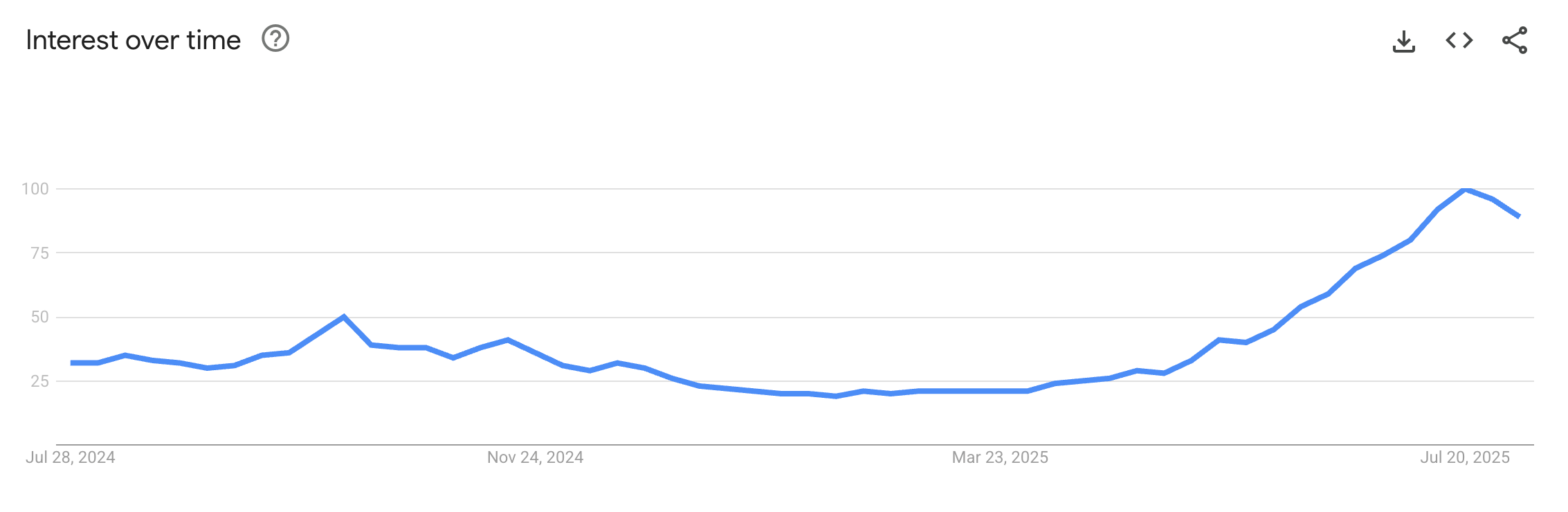
"Pediatricians and parents are anecdotally reporting more cases of hand, foot, and mouth disease than usual for this time of year.
"It’s hard to confirm in the data, as this disease isn’t a “nationally reportable disease” (i.e., clinician and public health department reporting not required). But among the few states that do track, like Maryland, New Jersey, and Virginia, reports are above normal. People are also searching for it on Google more than usual.
Who it affects: Most common in children under 5, but anyone can get it.
Symptoms: Low-grade fever and red rashes on the hands, feet, and mouth, which can turn into painful sores.
How it spreads: It’s very contagious for 7-10 days through saliva, mucus, sneezing, and stool.
What to do:
Wash hands frequently
Disinfect shared surfaces
Keep sick kids home
Watch for dehydration, especially if sores make drinking water painful
Peak mosquito season is here
"August marks the height of mosquito season—and with it, an uptick in local news about city/county spraying and human cases of West Nile virus.
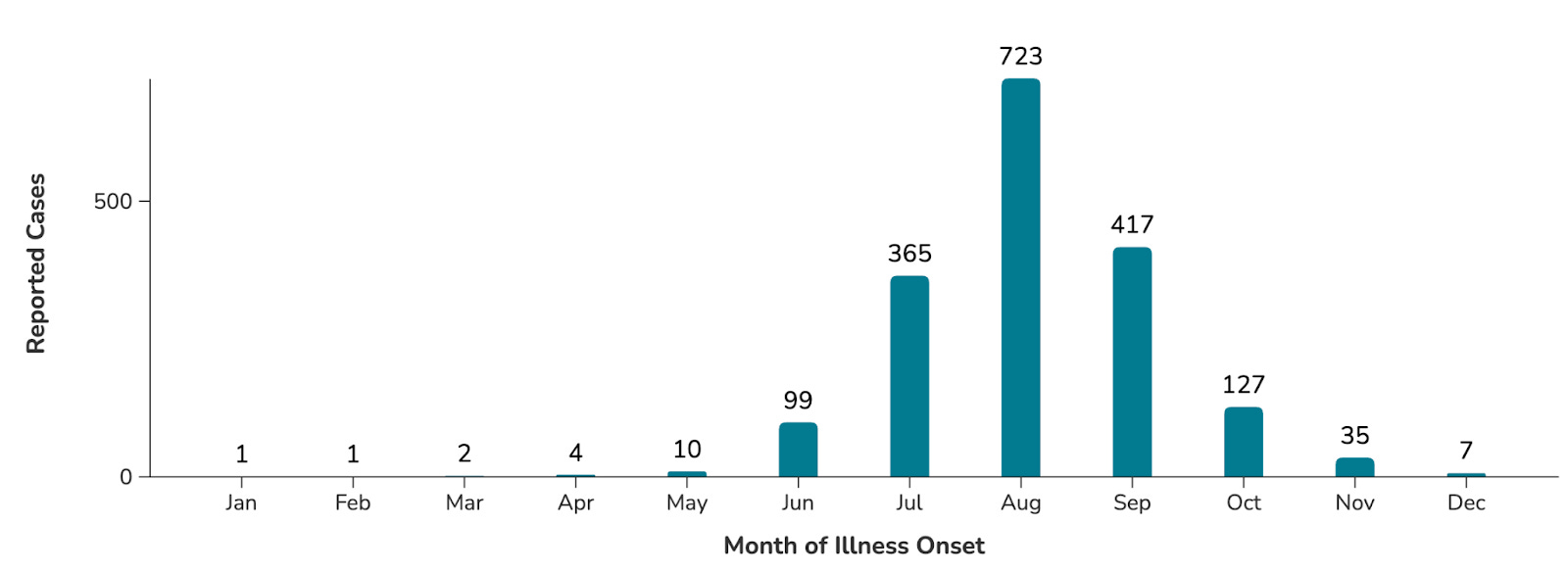
"This is prime time for mosquito-borne diseases because mosquitos are cold-blooded and transmission is a bit like a chemistry experiment. If it’s too cold (below ~16°C, or ~60°F), the mosquito life cycle slows down too much to spread disease. Closer to the “magic temperature” of ~25°C (77°F), mosquitoes are happier—and diseases spread a little more easily from mosquito to human.
"What’s being done: Public health departments around the country are randomly testing mosquitos by collecting them in traps to give a good view of risk. If there are consistent positives, vector control units will then go to these areas and spray mosquito repellent in mass.
"Is climate change making mosquito-borne illnesses worse? It depends. Diseases like Dengue are rising with climate change. But West Nile remains fairly stable. For more, check out our deep dive:
Don’t let mosquitos drain the last of summer fun
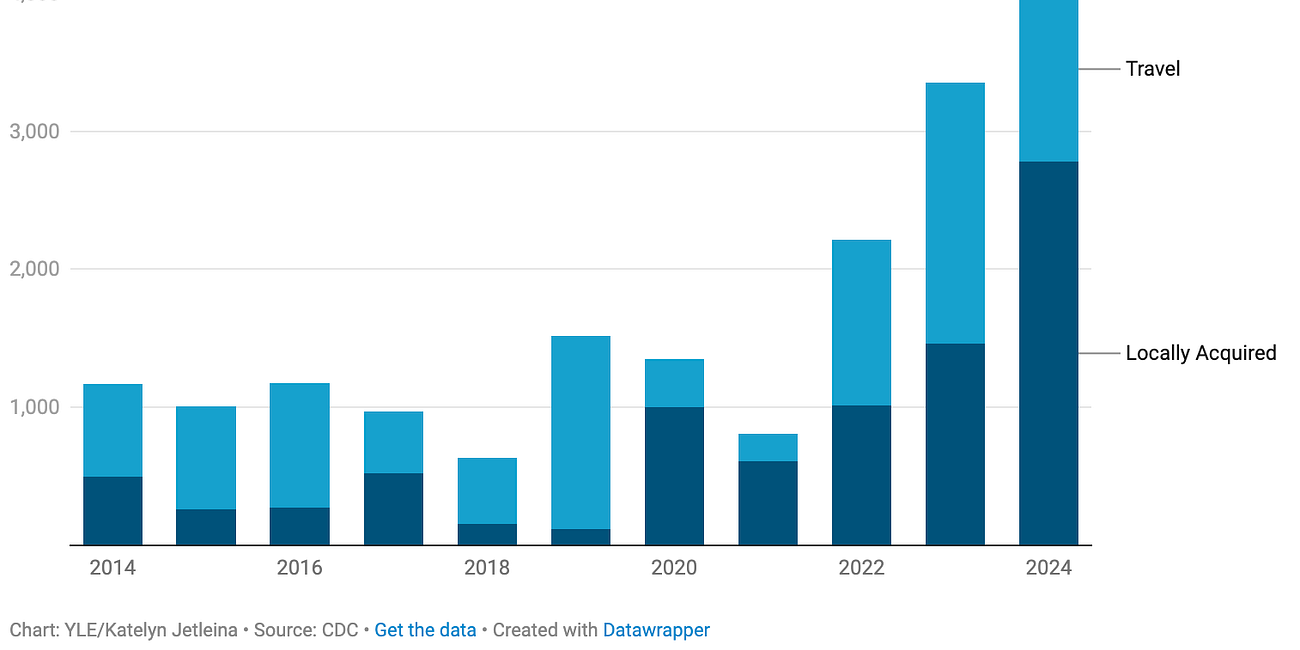
"There is a lot of news about mosquitos and diseases right now:
"How to protect yourself: Risk of disease is low, but that doesn’t make mosquitos any less annoying. While mosquito spraying is safe for humans and pets, it can exacerbate symptoms of asthma or other respiratory conditions. It’s a good idea to try to stay inside during the spraying time. Also, in general, cover up with protective clothing (permethrin-treated is ideal), apply EPA-registered repellents (search tool here), and use screens on windows and doors. Turn on the AC, if you have it.
Vaccine Injury Compensation Program at risk. Let’s remember why we have it in the first place.
"Last week, RFK Jr. announced his plans to “change” the Vaccine Injury Compensation Program (VICP).
"No medical intervention is without risk, and vaccines—while overwhelmingly safe—can rarely cause serious adverse reactions. If that happens, you can’t sue a pharmaceutical company directly. Instead, you must file a claim through the VICP, which was established by the National Childhood Vaccine Injury Act (NCVIA) of 1986. Since its creation, the program has paid over $5.4 billion in awards, which turns out to be ~1 individual compensated for every 1 million doses.
"The VICP has long been a target for vaccine skeptics, who argue that pharmaceutical companies should be held more accountable for alleged harms and that the program should compensate claims even when there’s no clear evidence that a vaccine caused the injury.
"So, what’s the problem? Eliminating this program could backfire. In the 1980s, a wave of lawsuits from parents who believed their children had been harmed by vaccines drove up legal costs and pushed many manufacturers to abandon vaccine production altogether because it didn’t make sense for their bottom line. To ensure vaccines remained available while still providing a path to compensation, Congress created this no-fault system funded by a small excise tax on each vaccine dose.
"The system isn’t perfect, but it strikes a delicate balance: compensating those who are harmed while ensuring continued access to lifesaving vaccines.
"Can it be improved? Absolutely. Bipartisan proposals over the years have included:
Hiring more reviewers and improving efficiency
Raising the maximum compensation amount (unchanged for decades)
Automatically applying the program’s excise tax to new vaccines without requiring congressional approval
"RFK Jr.’s proposals, however, remain vague, and based on his recent actions in the vaccine world, it’s likely he’s looking to dismantle the system altogether.
"What does this mean for you? Nothing yet. But if the VICP were eliminated, the future availability of vaccines could be at risk. We’re watching closely.
Vaccination rates in the past year have decreased in 20 states.
"CDC just released kindergarten data from last year. There’s good and bad news.
"Good news: On a national level, the number of kindergartners vaccinated against diseases, like measles, is still very high: 92.5%. This is slightly lower than last year (92.7%), but I don’t think it warrants the dramatic headlines I’ve seen.
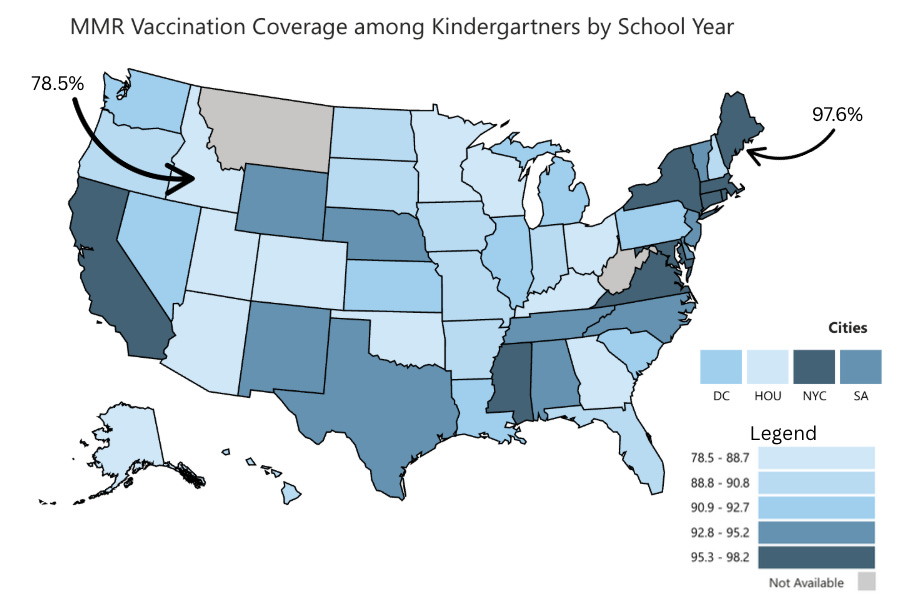
"Bad news: National vaccination rates don’t tell the whole story as outbreaks tend to occur at the hyperlocal level, where local vaccination coverage determines vulnerability. State-level trends show wide variation in coverage, with 20 states seeing declines in the past year. Idaho, for example—which has the lowest MMR rate in the country—has dropped to 78.5% (from 79.6%). (For context: the herd immunity threshold is 95% for measles and 80% for polio.)
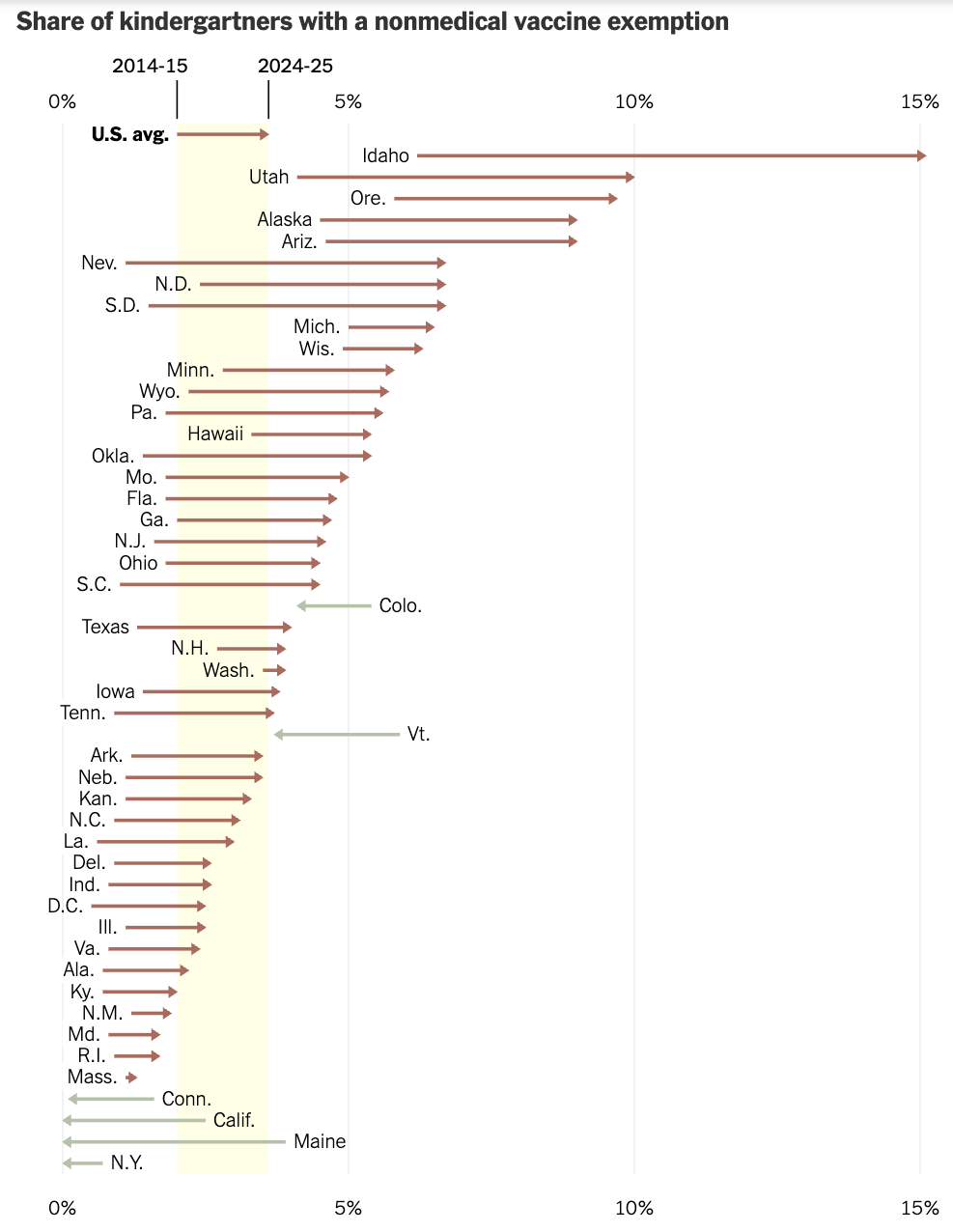
"Multiple factors drive declining vaccination rates, but one is the rise in non-medical exemptions—parents opting out for religious or philosophical reasons. While still relatively low nationally (4.4%), in some states, these exemptions are increasing at an alarming pace with no signs of that trend slowing down. In Idaho, it’s up to 15.4% of parents opting out.
"What does this mean for you? Expect more outbreaks of vaccine-preventable diseases leading to school disruptions, and heightened concern for immunocompromised individuals and parents of children who are too young to be vaccinated. If you’re up to date on your vaccines, you’re well protected. But with public health infrastructure increasingly under strain, response efforts may be slower and less effective.
Training health communicators: need for a new approach
"In a not-so-shameless plug: Kristen Panthagani (YLE contributor), Katelyn Jetelina (YLE) and our co-authors Ted Melnick and Megan Ranney’s perspective piece on training the next generation of health communicators was published in the New England Journal of Medicine.
"The top-down model of health communication is broken—people increasingly turn to informal sources like social media and (ahem) newsletters for their health questions. Yet scientists, doctors, and public health professionals receive little to no training on how to communicate with the masses. We dove into this world at the beginning of the pandemic out of necessity, but largely had to figure it out on our own—with very little support (and zero training) from academic institutions.
"We need more credible voices in informal spaces and that means we need to train them in how to do it. (Katelyn is teaching a course at Yale in Spring 2025!) But in short, training needs to include:
Distinguishing information dissemination from communication.
Communicating scientific uncertainty and managing expectations.
Using empathetic and engaging communication strategies.
Leveraging interactive media for effective listening.
"Read the full piece here, and tune in tomorrow for a chat with lead author Kristen Panthagani on Substack Live.
Good news!
Big reprieve: In a bipartisan win (26-3 vote), the Senate Appropriations Committee rejected the Executive Branch’s proposed massive cuts to NIH and CDC for the FY2026. Instead, it supported a $400M increase for NIH. (Note: This isn’t finalized; it still has to go through the House and be passed by October, but it’s a huge positive sign for scientific discovery and infrastructure.)
Exercise saves lives after colon cancer: In randomized trials across 55 research centers, post-chemo exercise programs for colon cancer patients improved survival by 37% compared to health education alone.
Medicaid ruling: A federal judge blocked cuts to Medicaid funding for Planned Parenthood. The ruling ensures that 600 health centers in 48 states, serving over 2 million patients, can continue providing care.
Trivia
"It’s peak summer, and we are all sweating. I just returned from Houston (who goes to Houston in August?) and it was… hot.
'Scroll down for the answer.
Bottom line
"You’re all set for this week! Have a healthy, beautiful summer day.
"Love, YLE"
Your Local Epidemiologist (YLE) is founded and operated by Dr. Katelyn Jetelina, MPH PhD—an epidemiologist, wife, and mom of two little girls. YLE is a public health newsletter that reaches over 375,000 people in more than 132 countries, with one goal: to translate the ever-evolving public health science so that people are well-equipped to make evidence-based decisions. This newsletter is free to everyone, thanks to the generous support of fellow YLE community members. To support the effort, subscribe or upgrade below:
"Trivia answer: Cold showers can feel good in the moment, but they may actually make you feel hotter afterward by constricting blood vessels and reducing your body’s ability to shed heat. On the other hand, spicy food and hot drinks can trigger sweating by activating TRPV1 receptors—your body’s natural cooling system—especially in dry climates where sweat can evaporate efficiently."





.jpg)
No comments:
Post a Comment