--------------------------------------------
Covid-19 vaccine label change, alpha-gal syndrome, leaked MAHA report, mRNA funding cuts, and... where is bird flu?
The Dose (August 18)
"This week has a few things on deck worth your attention: the FDA is expected to change the Covid-19 vaccine label, cases of alpha-gal syndrome (the “tick that makes you allergic to steak”) are increasing, and Washington is shifting course on both chronic disease strategy and mRNA research. Also, where is bird flu?
"Welcome to another week in public health. Here’s what it means for you.
But first, some announcements
Dear Public Health: Following the silence and indifference from federal leadership after 500 bullets reached CDC, more than 300 of you sent letters, emails, and notes to public health workers. My team compiled them into a PDF, and I had the privilege of delivering it to CDC staff on Friday. Your messages of solidarity, gratitude, and encouragement were deeply felt. If you need some restored faith in humanity—or just a dose of hope—you can read them below. To public health workers everywhere: you are heroes. Your work may not always be visible, but its impact is undeniable.

YLE is hiring: We’re looking for a Managing Editor to help wrangle our growing team. We need a colleague with newsroom experience who knows how to build workflows and systems for news, edit writers, and ensure accuracy for content that is often technical, precise, and scientific. Apply here.
YLE California launched: Dr. Matt Willis kicked off the first issue of YLE California—and it took off with a bang!! Check it out here.
Disease “weather” report
"We’re in the middle of a Covid-19 wave, with all indicators—from wastewater to hospitalizations and deaths—climbing. The pace isn’t as fast as last winter’s surge and levels remain below last summer’s wave, but the trend is clear. Wastewater data show “moderate” Covid activity in the West and South and “low” levels in the Northeast and Midwest, though rates are rising everywhere.
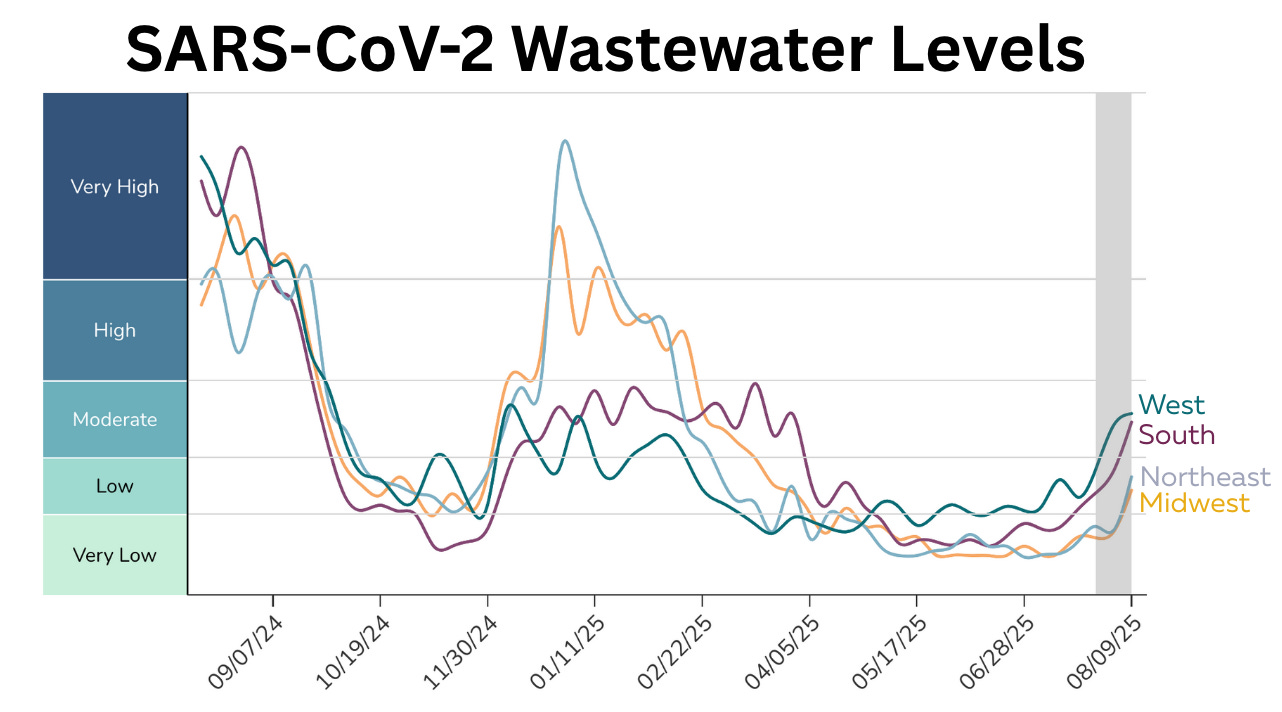
"Other viruses remain quiet for now. But with schools reopening and temperatures cooling, RSV typically starts climbing in September, followed by flu. Current levels are very low.
"What this means for you: If you want to avoid getting sick and/or missing back-to-school events and weddings, it’s time to mask in crowded indoor areas. I started while traveling because I just don’t have the time to get sick.
Spotlight: alpha-gal syndrome
"One health issue drawing increasing attention is alpha-gal syndrome, a tick-related allergy that’s been spiking on Google Trends.
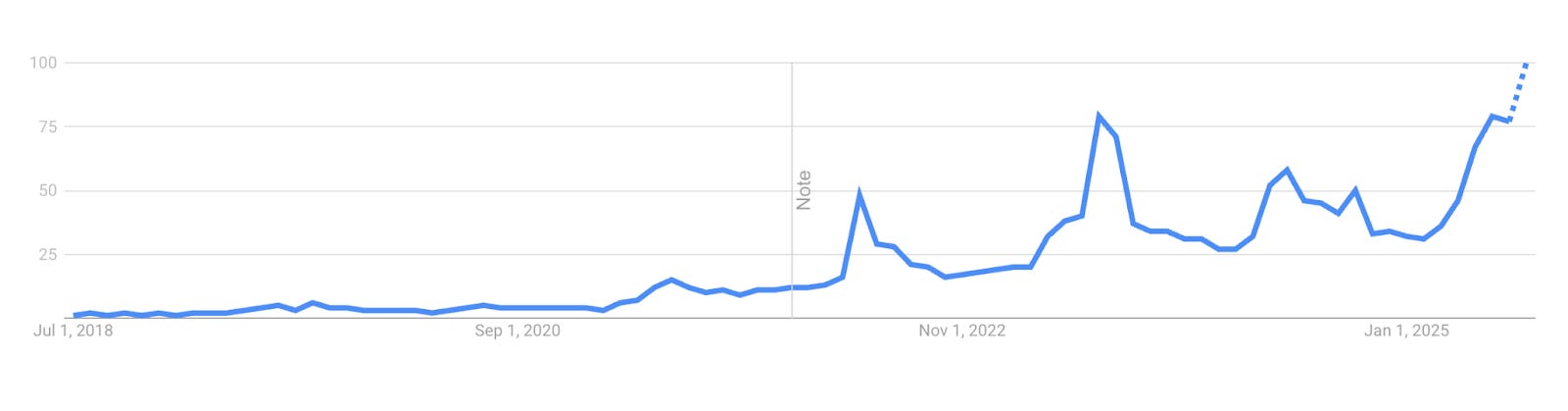
"The main culprit is the Lone Star tick, found mainly in the Southeast but steadily creeping northward as climate change and ecological shifts expand its territory.
"So how does a tick bite turn into a meat allergy? After feeding on mammal blood, the Lone Star tick carries a sugar molecule called alpha-gal in its gut. When it bites a person, trace amounts of that sugar slip into the body through its saliva. Because humans don’t naturally carry alpha-gal, our immune system may treat it as foreign and start making antibodies against it. Later, when that same person eats red meat or other mammal products, the immune system recognizes alpha-gal again—and can trigger an allergic reaction, often several hours after a meal.

"Recent CDC data suggest about 0.15% of Americans have been diagnosed, but that’s likely an underestimate. It’s very challenging to track this disease’s trends in real time because cases are not nationally notifiable. In other words, hospitals, doctors, and public health departments aren’t required to collect data. Local reports suggest cases are climbing fast: for example, Martha’s Vineyard Hospital—somewhere this used to be very rare—conducted 1,254 tests last year, with 523 positive—compared to just 2 positive tests (out of 9) in 2020.
What are the symptoms? Reactions usually occur 3–6 hours after eating red meat or other mammal-derived products. They can range from mild hives to severe, even life-threatening, allergic responses.
Who is at highest risk? Hunters, hikers, farmers, and outdoor workers in regions where Lone Star ticks are common.
How long does it last? It’s considered a chronic disease, persisting indefinitely. For some, sensitivity fades after 1–5 years without new tick bites.
Is there a blood test? Yes. A specific blood test can measure IgE antibodies to alpha-gal. It’s the most reliable diagnostic tool available today.
"The best protection against alpha-gal syndrome is the same as with Lyme disease: prevent tick bites in the first place.
Expect a wave of Covid-19 vaccine news this week
"Flu and RSV vaccines remain business as usual this fall: if you’re eligible, you should be able to get them without issue. Vaccinations should start in September.
"Covid-19 vaccines are another story. Federal policy shifts have left a vacuum, and multiple groups are stepping in to fill it. The key questions remain: Who qualifies? Where will vaccines be available? What’s covered by insurance? What’s not?
"There will be three key developments this week:
Tuesday: The Vaccine Integrity Project—an outside group formed in response to federal vaccine policy changes—will meet tomorrow to review the latest evidence on Covid-19, flu, and RSV vaccine effectiveness and safety. Their findings matter because insurers, physicians, and other groups are seeking third-party validation of scientific evidence after the ACIP committee revealed minimal regard for facts. This meeting will be public HERE. I have been selected to be on the panel, so if you attend, I’ll see you there.
Shortly after: Professional organizations, like the American Academy of Pediatrics, are expected to issue recommendations on who should receive Covid-19 vaccines based on the latest scientific evidence.
Friday (or soon after): The FDA is expected to license the Covid-19 vaccine. Word is that the label will be restricted to adults 65+ and people at high risk.
"Expect discord. The Vaccine Integrity Project and professional organizations will almost certainly not align with RFK Jr.’s FDA license. This rarely happens, so it will cause confusion.
"What this means for you: Prepare for lots of headlines and mixed messages this week. I’ll return next week with a clear breakdown of what it all means for you. In the meantime, if you’re under 65 and not high risk, the window to get a Covid-19 vaccine is right now—before the FDA label changes. Once it happens, access will be limited immediately (if it isn’t already). Go here if you have more questions on why this process is a mess right now. And, as always, talk to your doctor or pharmacist for more guidance.
Initial read of leaked MAHA draft strategy report
"A few months ago, the Trump administration tapped RFK Jr. to develop a strategy to tackle chronic disease among kids in the U.S. Last week, RFK Jr.’s highly anticipated action plan was leaked.
"TL;DR: His plan is disappointing, but unsurprising, as it was more posture than policy to move the needle.
Instead of concrete action items addressing chronic disease causes among children, it offered vague calls for more research and education, voluntary change from industry, and generally less regulation.
It highlighted a need for more research on nutrition, environmental pollutants, and vaccines, as well as community education and nutrition programs. (Note: many of these things already existed or have been reduced by widespread cuts from this administration.)
It changed its tone on pesticide practices—a welcome relief to farmers and agricultural scientists, but a disappointing surprise to the MAHA community.
It changed its tone on ultra-processed foods (UPFs) — unlike the preceding assessment, there was little mention of UPFs beyond efforts to define them and educate the importance of prioritizing whole foods.
New topic areas were introduced, including precision nutrition, supplements, sunscreen, fertility, breastfeeding, and food marketing to children.
"Bottom line: Unless the final report changes substantially, don’t expect transformation. The strategy is minor, performative, and at worst misleading—most notably in doubling down on the false claim that vaccines cause chronic disease. This soft-pedaling reflects growing tensions between MAHA and MAGA, where lobbying interests increasingly shape priorities instead of confronting root causes. Welcome to Washington, MAHA.
In case you missed it: a reversal on mRNA research
"RFK Jr. cut $500 million across 22 ongoing mRNA research grants—funding that was driving clinical trials for infectious disease vaccines, including bird flu. Trials for cancer and allergy treatments appear spared, which is a small win, but the overall loss is profound. This research was our front line for preparing against the next pandemic and seasonal viruses like influenza.
"The rationale? That mRNA vaccines don’t prevent all upper respiratory infections and that the risks outweigh the benefits. This is partially true—no vaccine prevents every single infection, especially against highly mutable viruses. But mRNA vaccines are no different from other vaccines in this regard, and the Covid-19 mRNA vaccines saved more than 3 million American lives during the pandemic.
"This is what makes the cut both fascinating and disappointing: it marks a stunning reversal from President Trump’s Operation Warp Speed—a rare, bipartisan moonshot that fast-tracked mRNA vaccines and stands as one of the most effective public health investments in U.S. history.
"Why it matters:
Platform potential: mRNA is not a single vaccine—it’s a flexible platform adaptable to many viruses. During Covid, it allowed us to pivot to new strains in under 90 days.
Lost progress: Interrupted trials will likely have to restart from scratch, wasting years of work and billions in sunk cost.
Preparedness gap: Cuts leave us more vulnerable to emerging viruses and even bioterror threats.
Abandoned innovation: This decision undermines a model of government-driven science and tech transfer that was actually working.
"What this means for you: These cuts won’t affect existing Covid-19 mRNA vaccines. Those are still being made and will be available to some people this fall. But this will mean fewer options for future threats and stalled progress on next-generation vaccines.
Question grab bag
“Why haven’t I heard about bird flu lately?”
"Because the virus has been relatively quiet. There are a few hypotheses for the lull:
Bird flu activity often slows in the summer and picks up again in the winter
Wild bird migration patterns shift exposure opportunities
The virus may have burned through herds that were most susceptible
Or, frankly, there may be factors we just don’t fully understand yet
"It’s also true that federal testing for humans has been scaled back, but a severe case would be very hard to miss since states and local health departments manage those. The U.S. has recorded only three cases of H5N1 in humans this year—compared with 67 in 2024.
"What we do know: The virus hasn’t disappeared. USDA continues to randomly find bird flu in wild animals, including a rabbit in Arizona last month. Also, Spain reported a large bird culling (6,895 turkeys), a reminder that the virus is still circulating globally. Epidemiologists have also seen cases in South American countries where the birds have migrated. Those birds will come back north, and time will tell what happens.
"The risk to the general public still remains very low.
Bottom line
"Wishing you strength amid this week’s headlines. Dodge the viruses (and ticks), and we’ll be back soon with more clarity.
"Love, YLE"
Your Local Epidemiologist (YLE) is founded and operated by Dr. Katelyn Jetelina, MPH PhD—an epidemiologist, wife, and mom of two little girls. YLE is a public health newsletter that reaches over 380,000 people in more than 132 countries, with one goal: to translate the ever-evolving public health science so that people are well-equipped to make evidence-based decisions.





.jpg)
No comments:
Post a Comment