Cumulative Confirmed COVID-19 Cases

Thursday, January 22, 2026

The Babylon Bee's Take On Female Anti-Ice Agitators

Babylon Bee 1-22-26:

Exhausted White Liberal Women Clock In For Another Long Day Protecting Migrant Sex Offenders

"MINNEAPOLIS, MN — Another long day of work was on the docket, as white liberal women clocked in for another long day of protesting the arrest of migrant sex offenders.

"Progressive women emerged from their homes and headed into work for a full day of yelling at ICE agents and obstructing law enforcement who would be out working to arrest sex offenders and other violent criminals here in the country illegally.

"It's honest work," Amanda Hanks posted on Instagram. "I'm out here every day protecting innocent pedophiles, rapists, and sex offenders, but it's exhausting. I'd love a day off, but these Nazi ICE agents just won't stop arresting these undocumented predators. I just can't sit at home resting while these fascists use their authoritarian mandate to take dangerous people off the streets. Our communities are better when we let criminals roam free."

"Hordes of white liberal women have been out protesting ICE raids in Minneapolis and around the country in an effort they hope will curtail the out-of-control crackdown on criminals who don't belong in the United States.

"Diversity is our strength!" Hanks's Instagram post continued. "ICE agents are domestic terrorists. Illegal immigrants should be free to come here and commit as many crimes as they like in peace without the fear of consequences. Also, can someone explain to me what the word ‘consequence' means? I actually have no idea."

"At publishing time, America's white women took a break from protecting rapists to take their kids to the gender clinic to restock on sterilization pills."

Wednesday, January 21, 2026

Your Local Epidemiologist 1-21-26

Here's the latest helpful newsletter from Katelyn Jetelina, Edward Nirenberg, and Hannah Totte, MPH, 
Jan 21, 2026:

----------------------------------------------

How to strengthen your immune system

We’re in the middle of a rough respiratory season. So naturally, everywhere you turn online, someone is offering advice on how to “boost your immune system.” The problem is that good science and bad advice are all tangled together on social media and podcasts, making it hard to know what actually works.

While vaccines are among our most powerful tools to reduce the risk of infection, and antivirals can slow how fast viruses multiply, most infections don’t have treatments or vaccines. So what else can you do?

Here’s what helps, what doesn’t, and why. And if you’re already feeling crummy, we hope this helps a little.

Mom was right: the basics still matter

It turns out the advice many of us heard growing up still holds up.

Sleep is among the most powerful tools we have for immune support. While you’re asleep, your immune system:

  • Suppresses chronic inflammation that weakens your ability to fight off infections.

  • Helps coordinate where your immune cells go in the body.

  • Trains immune cells to recognize germs.

Sleep especially affects natural killer cells, which are part of your body’s first line of defense against viruses. It also helps B cells and T cells—the immune system’s “memory”—learn what different viruses look like and how to respond faster next time. Sleep has also been shown experimentally to significantly affect the strength of your immune response to vaccines and your susceptibility to certain infections.

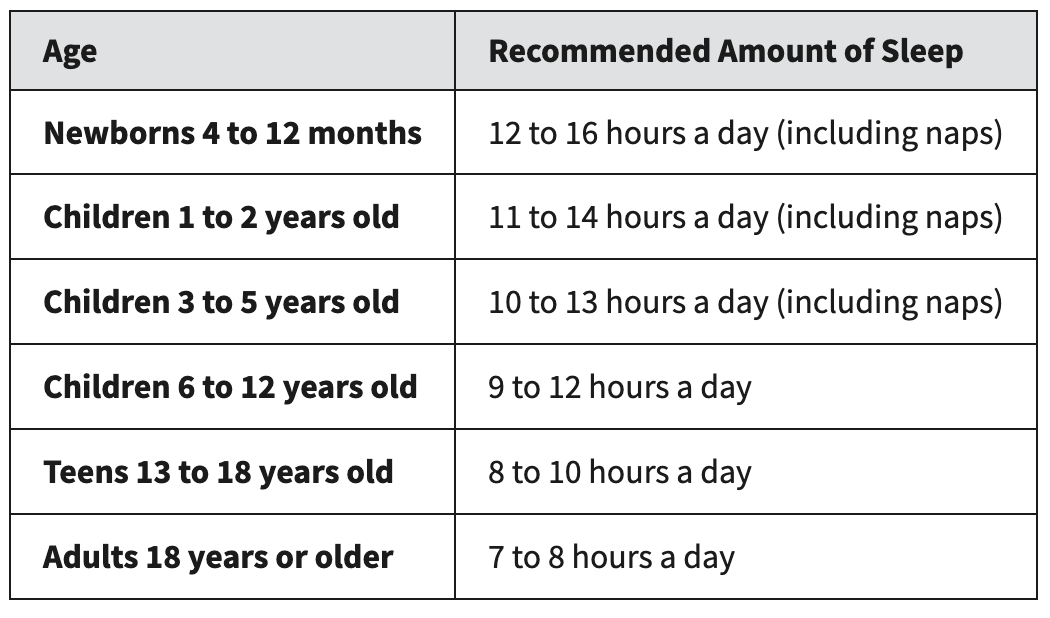
The problem is that about one-third of adults don’t get nearly enough sleep (see sleep recommendations below). When sleep is cut short, the immune system becomes less effective and inflammation rises, which can increase the risk of infections and long-term health problems. It’s best to get at least 7 hours of sleep each night.

How much sleep is enough? Source: American Academy of Sleep Medicine (AASM) recommendations that the American Academy of Pediatrics (AAP) has endorsed

Note: Unfortunately, many medications that aid in sleep disrupt the amount of time you spend in specific stages of sleep, which means that they might not allow you to get the full benefits of sleep for your immune system.

Humidity doesn’t directly strengthen your immune system, but it can make a big difference in how you feel:

The opposite is also true: drier air has been shown to exacerbate respiratory symptoms. One important point: if you are using a humidifier, make sure it stays clean.

A nutrient-rich diet matters too, especially one rich in fruits, vegetables, whole grains, lean proteins, and healthy oils. While most nutrition research focuses on conditions like heart disease and stroke, these dietary patterns are also valuable for the immune system.

The clearest is around fiber. Most adults eat less than half of the recommended daily fiber intake. Fiber feeds your “good” gut bacteria, which work to reduce systemic inflammation. There is one important exceptionsome individuals who have inflammatory bowel disease, like Crohn’s or ulcerative colitis, can have a worsening of their disease if they consume too much fiber.

Homing in on home remedies

Vitamin D gets a lot of attention. It does help immune cells do their jobs and keeps inflammation from getting out of control. Deficiency can increase the risk of infections, BUT true deficiency in the U.S. is much less common than many have been led to believe.

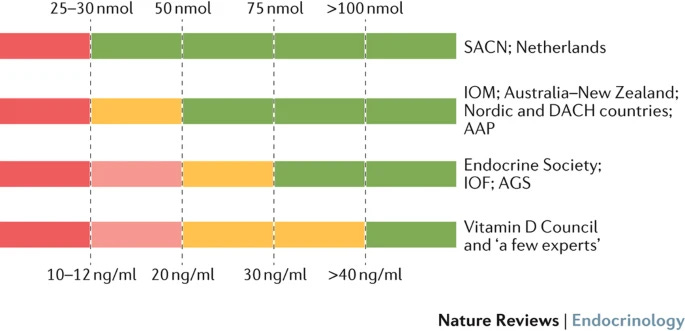
There’s a really complicated history to the guidance on what Vitamin D levels people need. The latest guidelines from the Endocrine Society broadly align with the Institute of Medicine’s previous work, which found that 20 ng/mL is sufficient to meet the needs of 97.5% of the U.S., though lower values may also achieve this. In a recent meta-analysis of randomized controlled trials, vitamin D supplementation did not have a clear benefit for reducing the risk of respiratory infections compared with placebo.

Different recommendations for serum Vitamin D levels. Red=severe deficiency. Source: https://rdcu.be/eX2l1

Zinc is another common remedy. Your body needs zinc to activate certain immune cells, especially T cells. If taken early, zinc may slightly shorten the duration of a cold or reduce symptom severity. But it comes with downsides: nausea, bad taste, and, with nasal sprays, even loss of smell. Zinc does not prevent colds, despite early lab studies that suggested it might.

Vitamin C. A balanced diet can readily obtain the necessary levels to support immune function. There are many misconceptions about megadosing vitamin C for sickness, stemming from a book published in the 1970s and supercharged by claims about its benefits for the common cold. In addition, some animal studies and small but poorly conducted human studies are often cited as proof. But, Vitamin C deficiency is uncommon, and megadosing doesn’t show compelling evidence of preventing colds or accelerating resolution.

Some notes on vitamins:

  • Taking too much of a vitamin (i.e., megadosing) can be toxic. For Vitamin D, this risk is particularly concerning for children (especially babies), people with certain medical conditions, and those taking certain medications. For Vitamin C, the main risk of megadosing is kidney stones.

  • They aren’t regulated for safety or efficacy. This means that even if you’re buying the same exact supplement from the same exact company, there is variability in the quality and formulation.

  • The placebo effect is real. For example, in a randomized control study of multivitamins, the intervention group reported better health despite no apparent differences in health outcomes.

Nasal saline, whether in sprays or neti pots, can be surprisingly helpful when you’re sick. Studies show it can shorten symptom duration and make congestion easier to manage by clearing mucus from the nasal passages. Nasal saline doesn’t prevent infection, but it can make illness more manageable. Just be sure to use distilled or purified water.

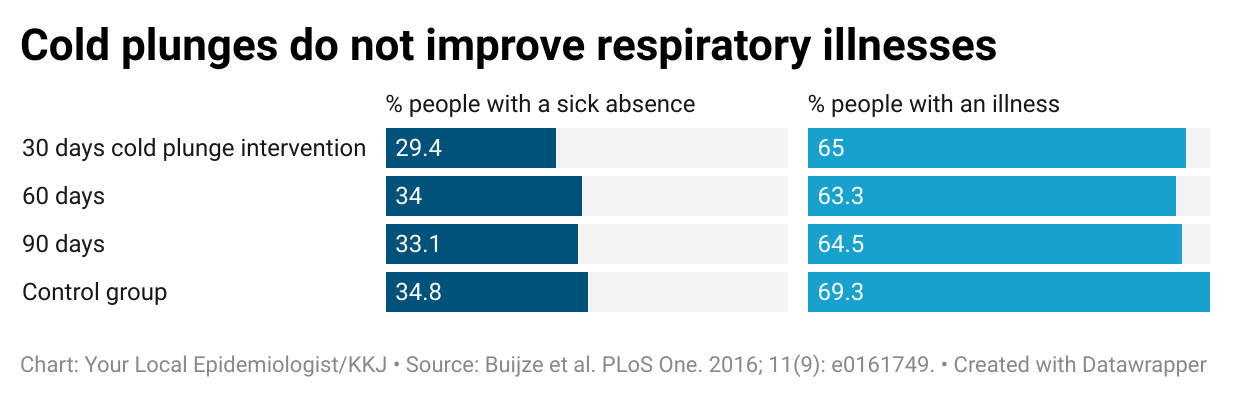
Cold plunges or ice baths are increasingly popular for “boosting” immunity, but there is inconclusive evidence from small, conflicting studies. For example, one study of ten athletes observed a small increase in white blood cell counts after multiple cold plunges in a row (which one could argue may aid immune function), but another study found no effect. One randomized control trial in the Netherlands found cold plunges reduced sickness absences from work by 30%, but not the number of days of feeling crummy.

Bottom line

We have a few tools to help prevent and treat viral illnesses. However, the best tool we have is our immune system. Our body does a great job of keeping that in tip-top shape without fads. Stay healthy out there!

Love, YLE, Ed and Hannah

Monday, January 19, 2026

Martin Luther King Jr. Day. We Could Sure Use Him Now.


What a shame that an assassin's bullet ensured that he didn't live to see Barack Obama elected the first black President.

MInnesota Rioters Show Their True Colors, Invade a Church During Services

This tells you everything you need to know about the inciters protecting illegal alien murderers, rapists, and child predators.

These violent, crazed radicals --  they are not mere "protesters" -- had better not try this at any synagogues, because their worshippers won't be as charitable as these were.

Call out the troops now as a show of force, before something worse happens. 

--------------------------------------------- 

UK Daily Mail, 1-19-26 

Protesters storm church.  Don Lemon joins anti-ICE protesters storming Minnesota church service in chaotic scenes as stunned pastor blasts 'unacceptable' stunt

"A left-wing mob stormed a Minnesota church to protest Immigration and Customs Enforcement (ICE), stopping services and leaving worshippers furious. 

"Protesters interrupted Sunday service at Cities Church in St Paul, angrily demanding 'ICE out' and accusing a senior leader of the church of working with the agency."

Sunday, January 18, 2026

Dr. Ruth's COVID, Flu & Health News, 1/18/26

Here's the latest newsletter by Dr. Ruth Ann Crystal, MD:

---------------------------------------------

COVID, Flu & Health News, 1/18/26

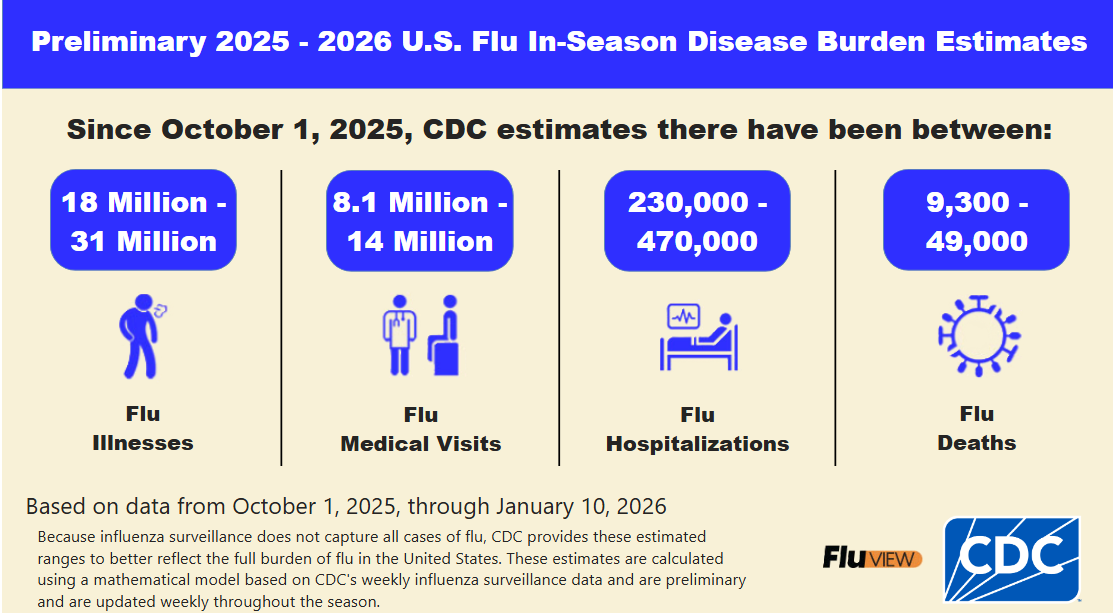
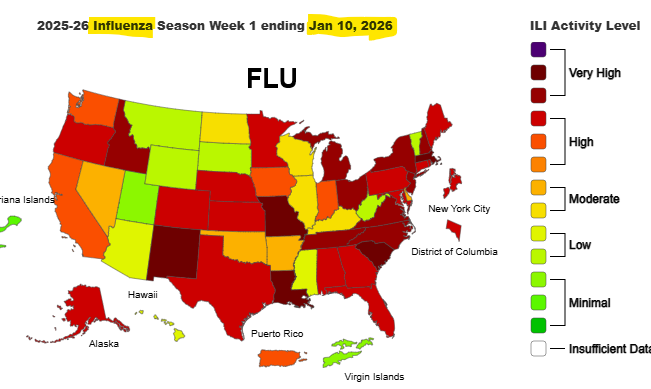
Flu may have peaked in some US locations, but levels are still very high in most places. The CDC estimates that there have been at least 18,000,000 illnesses, 230,000 hospitalizations, and 9,300 deaths from flu so far this season. Sadly, 15 more children died last week from the flu bringing the total pediatric deaths to 32 children. Ninety percent (90%) of reported pediatric deaths this season have occurred in kids who were not vaccinated against Influenza. This year, children have had high severity of influenza illness, while adults have had a moderate severity per the CDC. Flu vaccines are still available for children 6 months and older and for adults.

From: https://www.cdc.gov/flu-burden/php/php/data-vis/2025-2026.html

Share

COVID

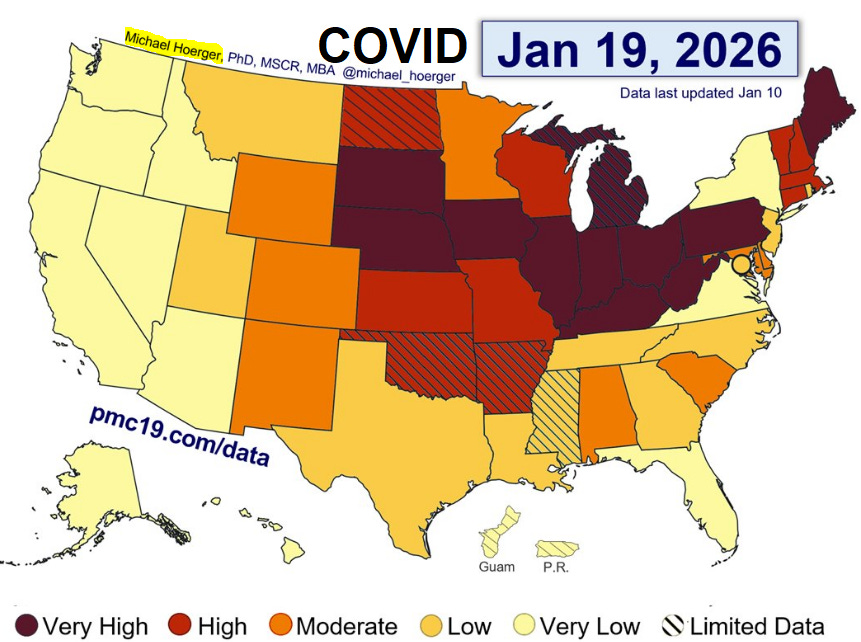
According to Michael Hoerger, as of January 10th, there were 941,000 new COVID infections per day now in the United States, with 1 in 52 actively infectious with COVID. He notes that 11 states have VERY HIGH COVID levels now.

Data through Jan 10th:

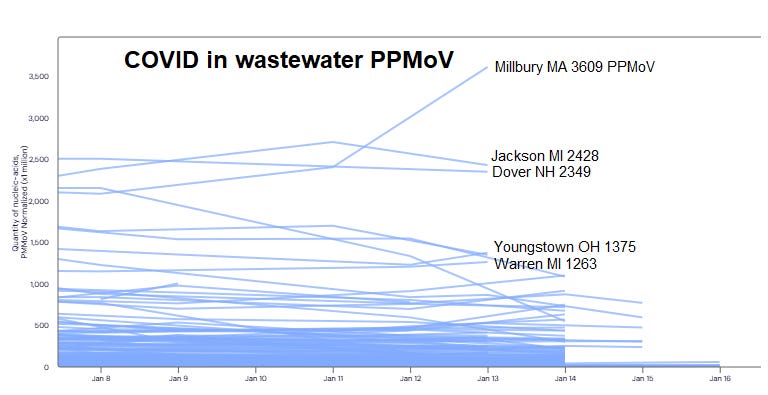
Data through Jan 16 from WastewaterSCAN:

(Note: Anything over 1,000 PPMoV is very high)

Acute COVID infections, General COVID info

Researchers from China found that baseline oral microbiota patterns before COVID infection can help classify the severity of COVID infection with Omicron. Using machine-learning models, they identified specific oral bacterial patterns associated with COVID recovery versus persistent symptoms.

Antiviral treatments

In Japan, a 62-year-old man, who had undergone B cell depleting therapy for follicular lymphoma developed a chronic SARS-CoV-2 infection despite antiviral treatment with molnupiravir and nirmatrelvir/ritonavir and multiple courses of remdesivir and corticosteroids. The patient was then given a Japanese herbal medicine called Mao-to (2.5 g, 3 times daily) for 14 days with subsequent decrease of viral load and improvement of symptoms.

I looked further into Maoto and COVID and found this article from 2022 showing that Maoto was successfully given as pre-exposure prophylaxis (PEP) against SARS-CoV-2 to healthcare workers. Of 42 healthcare workers who took Maoto for 3 days as PEP, only 7% became infected while working on the COVID ward, as compared to 46% of the healthcare workers who did not take Maoto. “The prophylactic effectiveness of Maoto was 84.5%.”

Of note, Maoto contains Ephedra herb, Apricot Kernel, Cinnamon Bark, and Glycyrrhiza and the makers caution possible blood pressure and potassium issues.

Long COVID

Endothelial cells line the blood vessels throughout our bodies. Researchers propose that viral infections, including SARS-CoV-2, can induce endothelial cell senescence (aging) through immune dysregulation and chronic inflammatory signaling. Senescent endothelial cells linger due to a weakened immune system, blocking proper blood flow in microvasculature and fueling chronic inflammation which could lead to post-viral fatigue. Endothelial cell senescence may help explain shared features of ME/CFS and Long COVID, including exercise intolerance, cognitive dysfunction, and multi-system symptoms.

German researchers studying post-COVID immune profiles found that people who developed Long COVID after mild-to-moderate acute COVID infection showed persistent pathogenic changes in monocyte gene expression that were different from people who had Long COVID after severe acute COVID infection. These gene changes in monocytes correlated with fatigue severity in Long COVID after mild infection and were linked to systemic immune dysregulation.

Researchers from China identified activation of the NLRP3 inflammasome as a common pathway linking fatigue and mood symptoms in Long COVID. They suggest that NLRP3 activation may be a drug target for treating Long COVID.

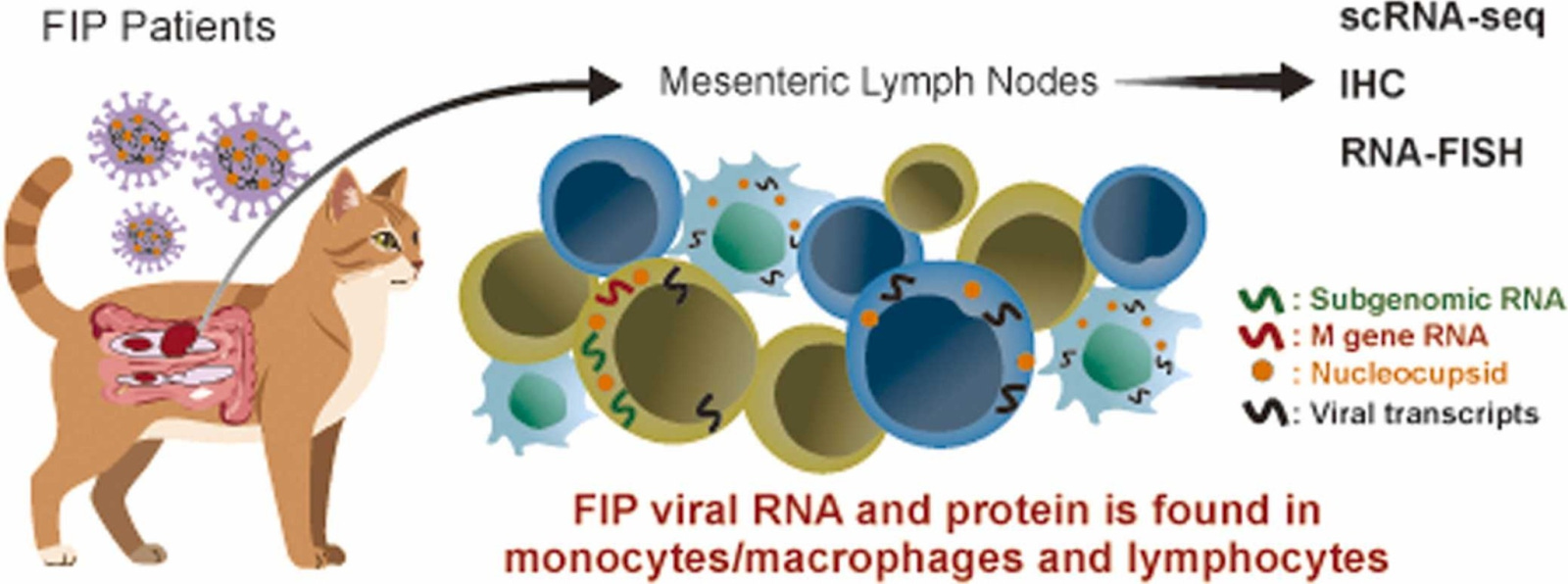
Feline Infectious Peritonitis Virus (FIPV) is a coronavirus that leads to ongoing immune system dysfunction in cats. FIP is considered to be sort of the cat equivalent of Long COVID and may be useful as an animal model. UC Davis researchers looked at lymph nodes in cats and found that a FIPV infects not only macrophages, but also infects T and B lymphocytes. FIPV RNA was found in CD3⁺ T, indicating active viral RNA replication within these lymphocytes even after antiviral therapy. The article explores how similar mechanisms of viral persistence within immune cells may contribute to immune dysfunction in Long COVID.

Even when standard blood tests show no detectable SARS-CoV-2 in people with Long COVID, this does not mean the virus is fully gone. FIPV viral material can persist inside white blood cells in cats, where it is effectively hidden from routine blood testing. These intracellular reservoirs are not captured by typical clinical assays, yet the virus can remain biologically active and continue to drive inflammation or tissue damage. This concept is also reinforced by work from Dr. Morgane Bomsel, whose group has demonstrated SARS-CoV-2 persistence in platelets and megakaryocytes in Long COVID patients.

From: https://www.sciencedirect.com/science/article/pii/S0378113525005000

In a small U.S. randomized trial of adults with Long COVID, REGENECYTE umbilical cord blood cell therapy, administered as repeat infusions from unmatched cord blood donors, showed improvement of Long COVID fatigue with acceptable safety.

Share

Long COVID and the Brain

Scientists at Stony Brook University have followed 227 World Trade Center (WTC) responders over time, analyzing blood samples collected before and after COVID infection. Those who developed Long COVID with persistent brain fog and memory problems showed a 59% increase in pTau-181 which is a protein linked to Alzheimer’s disease. While WTC responders have unique environmental exposures, this longitudinal evidence suggests that even mild COVID infections may trigger brain processes typically seen in neurodegenerative diseases like Alzheimer’s.

A review from Italy combines neuroimaging and pathology studies to show that astrocyte-mediated physical injury to the hippocampus may underlie the dysexecutive syndrome of Long COVID which is marked by fatigue, apathy, low mood, and impaired executive function. “The evidence reviewed indicates that SARS-CoV-2 infection may precipitate hippocampal dysfunction through a convergence of astrocytic infection, microglial activation, blood–brain barrier disruption, and impaired neurogenesis.”

Using advanced MRI, Australian researchers found that people with Long COVID show lasting changes in brain microstructure and neurochemistry compared with recovered individuals and controls. COVID-recovered individuals showed partial normalization, but they still had some abnormalities in the brain. Brain microstructural changes in Long COVID significantly correlated with physical and cognitive function. The authors summarized that “COVID-19 may lead to lasting brain alterations that potentially impact overall brain function even after recovery.

Researchers in the United Kingdom used advanced multimodal brain imaging to study 20 adults with Post-COVID Syndrome and 20 matched controls. They found altered regional cerebral blood flow and oxygen metabolism, particularly in frontal and subcortical regions, patterns consistent with immune-vascular dysfunction rather than structural brain damage. These findings suggest that persistent cognitive symptoms and low mood in Long COVID may be driven by ongoing microvascular or inflammatory processes affecting brain energy use.

In a European preprint study, researchers analyzed brain MRI data from 20 Long COVID patients and 20 healthy controls using network-level and cellular mapping approaches. They identified subtle but widespread structural deviations across brain networks involved in cognition and sensory processing, rather than focal lesions. They postulate that brain “structural alterations could propagate through connected neural networks, although direct evidence of such propagation requires further investigation.”

Northwestern researchers used a mobile app to follow 63 Long COVID patients and found that women and those with loss of smell (anosmia) or taste (dysgeusia) were less likely to recover. In addition, they noted that recovery from Long COVID was not linear, but rather often fluctuated from day to day.

Multiple Sclerosis and Long COVID

This week there were two articles in Cell about Multiple Sclerosis and the HLA-DR15 haplotype. The HLA-DR15 haplotype is a significant genetic risk factor for Multiple Sclerosis (MS), particularly in people of Northern European descent. Prior Epstein-Barr Virus (EBV) infection is also a risk factor for MS. Researchers at the University of Zurich and USTC studied 16 patients with Multiple Sclerosis and found that EBV-infected B cells present myelin peptides on HLA-DR15 which then can trigger autoreactive CD4+ T cells in the blood and brain in MS.

CD4+ T cells are long-lived immune memory cells. Another article shows that in half of people with Multiple Sclerosis, T cells originally trained against an EBV antigen called EBNA1, also recognize a normal human (self) protein called Anoctamin-2 (ANO2) that is expressed in the nervous system. People with HLA-DRB1*15:01 have increased numbers of these cross reactive T cells. Theoretically, it may be possible that viral persistence of SARS-CoV-2 or its fragments in Long COVID may also chronically stimulate B cells to make autoantibodies or T cells to attack self-proteins as we see in Multiple Sclerosis autoimmunity.

Measles

In 2025, the total number of confirmed measles cases in America reached 2242. The CDC reported that as of January 13, 171 confirmed measles cases were reported in the United States in 2026.

In an outbreak that started before the new year, South Carolina Department of Public Health reports that as of January 13, there have already been 434 measles cases in South Carolina.

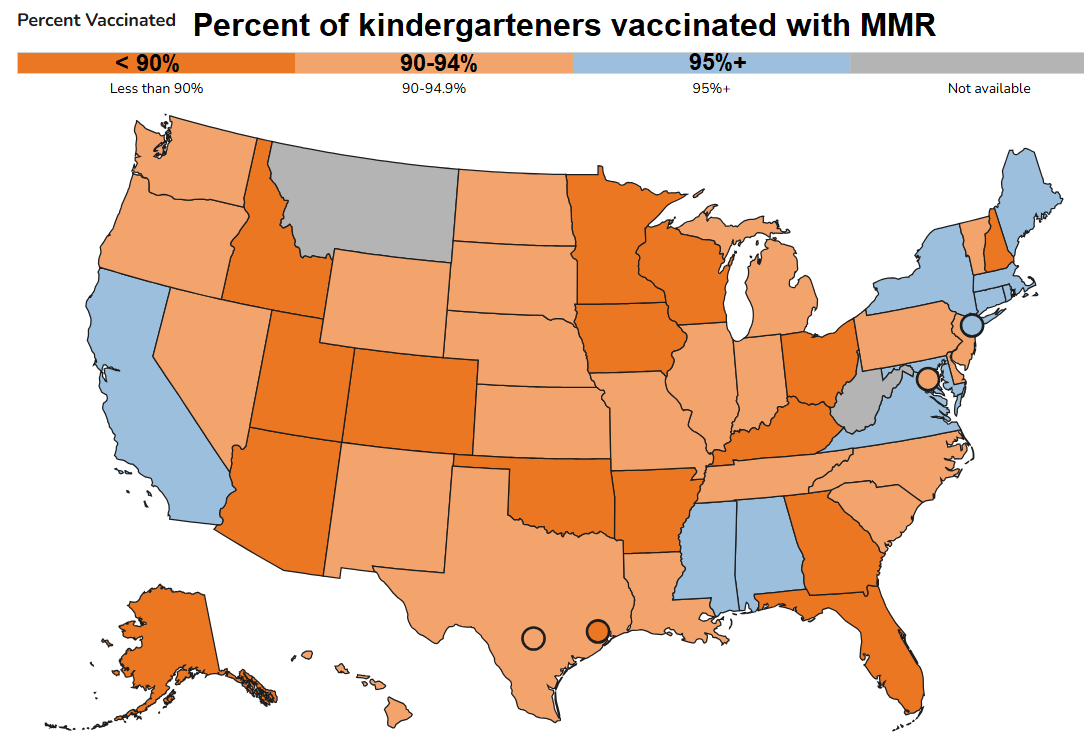
To achieve herd immunity and prevent measles outbreaks, about 95% of people in a community must be vaccinated with the MMR vaccine. We are now seeing outbreaks in the United States because many places are below the 95% threshold. Even in states with more than 95% of people vaccinated, there can be pockets of unvaccinated communities that will be susceptible to measles outbreaks.

From: https://www.cdc.gov/measles/data-research/index.html

Government Health News

Under RFK Jr’s guidance, the CDC changed the Childhood Immunization Schedule to reduce the number of vaccinations recommended for children without new scientific evidence to back the change. At least 19 states announced this week that they will follow the American Academy of Pediatrics’ guidance on immunizations instead.

Other news

A very large review and meta-analysis shows that acetaminophen (Tylenol, paracetamol) use during pregnancy does not increase risk of autism, ADHD, or intellectual disability in children after accounting for familial and genetic factors. High-quality evidence supports continuing Tylenol as a safe option for pain and fever in pregnancy.

“Amid the rise of AI-generated celebrity deepfake scams, [Matthew] McConaughey has been granted eight trademark applications by the US Patent and Trademark Office to ‘prevent misuse’”, including his likeness and his catch phrase ‘Alright, alright, alright’.

In a phase 1b/2 proof-of-concept trial of high-risk Lynch syndrome carriers, a neoantigen vaccine triggered strong cancer-targeting immune responses with good safety. The study suggests preventive cancer vaccination may be feasible for people with inherited cancer risk.

Paws on Parchment“ is a new exhibit at the Walters Art Museum about medieval cats in art and culture that features a 15th-century manuscript with paw prints from a cat who walked across drying ink more than 500 years ago.

Inky paw prints on a manuscript from 1470 https://buff.ly/DtW0MBT

I will be taking next week off from the newsletter.

Take care,

Ruth Ann Crystal MD

COVID On Television

I don't watch "The Pitt", but this is a very powerful opinion piece on what's missing from the TV show when it comes to the COVID pandemic, what horror our hospitals, doctors and nurses actually had to cope with -- and how many deaths could have been prevented.

--------------------------------------

From STAT 1-18-26:

What lingers in ‘The Pitt’ is heartache. What’s missing is outrage
The virus was lethal, but the scale of physicians’ and other health care workers’ despair was built by people

By Jennifer W. Tsai, an emergency medicine physician, writer, and educator in Oakland, California. 

"In “The Pitt,” Robby is the rockstar every emergency doctor wants to be — sharp, fast, instinctive. So it’s shocking when the man who moves like lightning through a resus room buckles to the floor, sobbing, gasping. He’s having a flashback: the ICU, a dying then dead mentor he couldn’t save, the pandemic returning in cruel cinematic shards.

"This is how Covid appears in the show: not as a sequence of policy failures or manufactured crisis, but as personal memories that threaten to pull a good-but-broken doctor out of the room when his patients need him most. There are no scenes of shortages negotiated in back rooms, no elected officials delaying action, no agencies hollowed out before the virus arrived. We see the web, but never the spider.

“The Pitt” is the closest mainstream culture has come to acknowledging the wreckage of frontline medicine during Covid. But by focusing the camera on Robby’s anguish instead of the systems that made it inevitable, it mirrors how the country has chosen to remember the pandemic: as a sad misfortune that happened, rather than a moral failure that was done.

"But Covid was not only a tragedy. It was a betrayal. How we remember matters.

"I trained to be an emergency physician in the crucible of Covid.

"It was unspeakable.

"It was screaming anguish when you told a mother her daughter was dead across a fragile phone call and apologized: No—even though she was outside in the hospital parking lot, she couldn’t come in, would never see her child warm again.

"It was trying to hold the gaze of wide, darting eyes while begging for understanding when we ran out of sedatives to keep plastic-choked patients comfortable on the ventilator.

"It was witnessing entire families collect in the corners of the department, knowing only one in 10 would wake up to face a crushing new loneliness.

"It was sobbing in stairwells trying not to soil your precious mask with snot.

"It was lifeless facedown bodies we had to flip like pancakes twice a day.

"It was no respite, no hope, it was terror at the despair and then the horror of your own numbness as time marched on.

"I know Dr. Robby’s pain. Imagine being built to care for five and handed 20 — then sent home night after night carrying the deaths of 15 as if they were your fault. The grief and guilt annihilated our worth. The deaths we oversaw were so lonely, so terrible and stripped of dignity that the violence of their abandonment demeaned the humanity of everyone left alive. We had few certainties: only that this was killing us, and that we had to show up anyway. We were dying. I don’t know how else to say it. We were dying.

"I used to think the horror — the pain, the exhaustion, the sheer volume of death — was the core injury of Covid. That version of harm survives most easily, and one our culture and “The Pitt” know how to hold.

"But the deeper wound — the one the show can’t quite name — is that the suffering was not inevitable, but tolerated; shaped, stretched, and sanctioned by decisions made far from the bedside.

"The question is not why Robbie is sad. It’s why he was left in a gutted hospital, without PPE, no staff to help turn dying patients, no space to put the bodies or give his mentor the death he deserved. The better question why he — and all of us — were abandoned to this fate.

"The day before the Washington Post warned “Covid-19 hits doctors, nurses, and EMTs, threatening health system,” photos showed Mayor Bill De Blasio hitting a Brooklyn YMCA in defiance of his own city’s lockdown. The Kardashians and other ring-light aristocracy passed around asymptomatic tests like hors d’ouvres for parties while frontline clinicians — going toe-to-toe with the virus and terrified of turning their children into their next patients — were informed there simply weren’t tests to spare. Faced with ventilator shortages numbering in the tens of thousands, we swallowed the bile of becoming allocators of life and death.

"Estimates suggest that if the U.S. had responded with the speed and coordination of East Asian counterparts, more than 400,000 lives could have been saved in the first months alone. If distancing policies had begun just one week earlier — March 8 instead of March 15 — tens of thousands of Americans may have lived.

"The virus was lethal, but the scale of our despair was built.

"By the time Covid arrived, the country had already dismantled its defenses. The White House’s global health security office was gone. Tens of thousands of public health jobs axed. Regulatory gridlock and defective CDC tests stalled surveillance, allowing the contagion to spread unchecked for six crucial weeks. Leaders waited — then waited — to issue basic shelter-in-place orders while bodies stacked up in refrigerated trucks.

"Inside hospitals, years of cost-cutting left wards brittle, supply chains thin, and no margin for surge. “The Pitt”nods to staffing cuts and closed floors, but stops short oftracing the profit-over-patients model to the pandemic body count it produced.

"Outside the hospital, as disinformation metastasized into contempt, my coworkers and I faced accusations of conspiracy, ambulance bay assaults, and derision that we had to hold alongside our exhaustion, our panic, our sick and dying friends. The consequences were not abstract. Excess mortality bloomed in Republican counties and communities saturated with denialist media. Hundreds of thousands of lives were forfeit to vaccine refusal alone.

"To say my colleagues and I were broken by overwork and sorrow is to accept a cover story that erases the decisions that made mass death predictable and prolonged. The terrible verdict of the pandemic was that our flaying was a tolerable inconvenience; that a million sodden, lonely deaths were an acceptable price for power. We were broken by choice, not chance.

"This is the story “The Pitt”stops short of telling. The effect is a cinematic passive voice that feeds our cultural memory. As in post-Vietnam Hollywood, state-engineered catastrophe is repackaged as catharsis — an aesthetic solution that reliably displaces indictment. Covid becomes an unavoidable tragedy that left some people traumatized, rather than a preventable mass death. What lingers in “The Pitt” is heartache. What’s missing is outrage. Instead of accountability, we get anesthesia. Let’s just get Robbie therapy so he can get back to work.

"The spiders that scripted our nightmare benefit from this willful amnesia. And the biggest harm is simple: the machinery that decided who was expendable in the pandemic keeps humming offscreen.  

"The pandemic didn’t just end. It was buried alive.As the story of Covid hardens around “unprecedented times” instead of unprecedented negligence, the same governing philosophy that hollowed us out during Covid — delay, disinvestment, and contempt for collective care — grinds on.

"Hospitals that held the line for the poorest and sickest — pushed past their brink by the pandemic — have closed at disproportionate rates, leaving entire regions with deeper vacuums of care. Medicaid is being eviscerated. Since April 2023, more than 25 million people have lost coverage, losses projected to cause more than 40,000 preventable deaths each year. This is a toll we’ll tally in bodies, wheelchairs, funerals, and empty kitchen tables.

“The Pitt”shows us some of the consequence: ERs are more crowded than ever, flooded with patients boarding in hallways and dying in waiting rooms. We’re running a far less resilient healthcare system with even less slack than we had before.

"In the early onslaught of the pandemic, I paused between patients to sign a petition to urge Trump from cutting CDC funds by 10%. Five years later, leaders proposed slashing the agency’s budget by half. More than half our states passed laws making it harder for health officials to require masks, quarantines, or vaccinations. The result is visible: Core surveillance systems have been eliminated and the U.S. is facing its worst measles outbreak in three decades. This is a spillover of pandemic destruction that’s coming for our kids.

"If Covid was a fire alarm, our response, incredibly, has been to rip out the wiring. Instead of correcting the underbuilt public health systems that allowed thousands to die in the dark, we are choosing to institutionalize blindness. This is not erosion by neglect. It is continuity by design.

"When I finished emergency medicine residency, after the most harrowing months of my life, I found I couldn’t explain or understand what had happened. There was only the sense that something had lodged inside me and refused to move. I had been 26 when I started my training, but felt much older as I drove, crossing the country with a box of used masks I could not bear to throw away.

"I am hungry, so hungry, for some depiction of my life that tells the truth. That what was done to us was not just unbearable, but wrong.

"Covid revealed a system that worked exactly as designed. When care is treated as conditional, preventable death becomes not a failure, but an accepted cost of doing business. What we choose to remember about the pandemic will decide if that logic survives.

“The Pitt” is a television drama, not a public inquiry. But in a country that has offered little else — no national reckoning, no memorials, no shared language sturdy enough to hold what we lived through — its reach carries extra weight. With millions of viewers, it will have tremendous power in deciding if grief is where the story of the pandemic ends. 

"If Season 2 of “The Pitt” dares to use the vaunt of storytelling not to soothe us, but to force a reckoning with what was chosen and who paid for it, it will have done something rare — and necessary.

"We don’t need another tale about the sadness of our wreckage. We need accounts brave enough to name who built it."

Free Hotels For Illegal Aliens, No Hotels For ICE?

I was watching Newsmax when the host interviewed Nick Sortor. He reported that the DoubleTree Hotel is kicking out the ICE agents who are staying there. If this is true, I hope they suffer the same fate at that Hilton Hotel franchise did.

See this X post by Ali Bradley at NewsNation. 

And I just found this article online:

St. Paul DoubleTree by Hilton Cancels ICE Agent Bookings Over Safety Concerns
Government employees were reportedly required to leave the DoubleTree by noon, while other guests were allowed to remain. 

This is inexcusable. It's the rioters who are causing the trouble, not ICE. Are Minnesotans this insanely brainwashed?

Imagine what's going to happen in New York now that 4,000 socialists are being trained to resist ICE there!

Friday, January 16, 2026

More Warnings About The H3N2 Flu

I don't want to get COVID, and I don't want to get this flu, either. You can bet that most people are not following the basic precautions seen in the final section of this article.

--------------------------------------------------------------- 

By Zachary W. Binder, Associate Professor of Pediatrics, UMass Chan Medical School, The Conversation, 1-16-25:

New variant of the flu virus is driving surge of cases across the US and Canada

"After a sharp uptick in flu cases in mid-December 2025, flu activity across the U.S. and Canada remains high.

"Although cases are trending downward in Canada as of Jan. 9, 2026, the season has yet to peak in the U.S., according to data from the Centers for Disease Control and Prevention.

"As an emergency room pediatrician in central Massachusetts, I’m seeing a tremendous amount of flu over the past few weeks. I’m hearing from colleagues in emergency rooms across the country that they are experiencing a similar explosion of flu cases.

"In early January, New York state recorded the highest number of flu cases in a single week on record. Several other states, such as Colorado, are also experiencing record flu levels, and 44 out of 55 states and other jurisdictions are reporting high or very high flu activity, according to the CDC.

"The spike in flu cases – widely referred to in media reports as a “superflu” – is largely driven by a newly identified subtype of the virus called subclade K.

What’s different about the current flu season?

"Flu seasons vary every year. In 2024-2025, influenza cases rose fast beginning in October 2024. In contrast, the 2025-2026 season started out slow, but then it’s as if a switch was flipped in early to mid-December.

"In the last week of December, throughout the United States, over 8% of doctors visits were for flu symptoms – the highest weekly rate since 2005. Emergency department visit rates for flu are spiking throughout the country, most notably in the South and Northeast, where rates exceeded the national average.

"Over this same time period, more than 26% of flu tests taken throughout Canada were positive for influenza.

"As of Jan. 15, the CDC estimates that flu has caused 15 million illnesses, 180,000 hospitalizations and 7,400 deaths this season. One small saving grace is that the flu this season hasn’t come on concurrently with either a respiratory syncytial virus – RSV – or COVID-19 surge, as it often does.

"Traditionally, the flu is most dangerous for people over 65 or those with underlying health conditions, with young children experiencing more mild symptoms. But this year’s strain is hitting kids harder. They are arriving in the emergency room after having had a high fever of more than 104 degrees for 5-7 days, or with flu complications including febrile seizures, croup or severe dehydration.

"An especially high number of children is currently being hospitalized for flu, the CDC reports. As of Jan. 9, the U.S. had seen 17 deaths of children due to flu so far during the 2025-2026 season.

"In 2024-2025, the deadliest year on record for kids, flu caused 289 pediatric deaths.

What is subclade K?

"Every year, the subvariants of the influenza virus that are the most pervasive change slightly.

"This year, the most prevalent variant is subclade K, which is a subtype of influenza H3N2. Subclade K was first detected in Australia in July 2025. It’s driving 91.5% of infections in the U.S. so far this season and is also responsible for the peak in Canada.

"Subclade K has proved itself to be a particularly infectious variant, based on how quickly the volume of flu cases has surged. Its dominance may be driven by mutations that make it different from previous strains. Some scientists speculate that H3 influenza viruses have circulated at relatively low levels the past few years, which may have led to lower levels of immunity in the general population.

"In my emergency department, we’re also seeing particularly high spiking fevers of 104 or 105 degrees, compared with more usual lower grade fevers. That in itself is not dangerous, but for young children it does result in more instances of febrile seizures and dehydration. 

How late is too late to get vaccinated?

"Generally speaking, I recommend people get the flu shot, in line with guidelines by the American Academy of Pediatrics. Getting vaccinated for the flu has proved to decrease the risk of serious illness, hospitalization and death. People who get the vaccine are more likely to have milder cases.

"For people still considering getting the flu shot for this season, I strongly recommend doing so sooner rather than later. Waiting longer would limit the window in which the vaccine is most effective. That’s because it takes a couple of weeks for the flu shot to impart its maximal benefits. Vaccination in mid-January would mean peak protection in late January and early February.

"Flu season generally peaks in December through February in North America.

"One thing to note, however, is that the strains that were chosen to be included in the 2025-2026 flu vaccine weren’t a great match for the predominantly circulating subclave K. Still, evidence suggests that this year’s vaccine does provide protection.

Should you take an at-home flu test?

"In my opinion, in most cases home testing for flu is not especially useful.

"Many people seek out flu tests to determine whether they should get antiviral therapies like Tamiflu. But while those therapies might decrease your symptoms slightly, they aren’t particularly effective, and they come with their own risks, such as upset stomach, vomiting and diarrhea. Most of my colleagues in the emergency department, myself included, rarely recommend them.

"Whether you have the flu or a flu-like illness such as RSV, COVID-19 or rhinovirus, the recommendations for treating and managing the illness at home as well as the point at which I’d suggest someone seek care are no different.

"Because of that, being able to put a label on the disease isn’t all that important. With the high levels of flu circulating now, if you’re feeling unwell and have signs of fever and upper respiratory symptoms, you can almost assume it’s the flu.

"One exception is for people with underlying health conditions such as heart disease or severe asthma. For them, as for people who are hospitalized for flu, antiviral therapy may be recommended and thus testing for the flu can be helpful.

Basic precautions can protect you and your community

"The same precautions apply for all flu-like illnesses, but it’s worth being particularly mindful of just how contagious subclade K seems to be.

"It’s important to protect yourself and your community. Washing your hands frequently can minimize exposure to flu-containing droplets. Even more importantly, people who feel unwell – particularly if they have a fever – should stay home from work, school or activities, if possible, until they are fever-free for 24 hours."

Thursday, January 15, 2026

Don't Forget To Wear An N95 Mask!

This article is aimed at healthcare workers, but the average person should be reading this as well. As usual, I seldom see anyone else wearing a mask, even in the doctors' offices. I'm just glad I wear mine.

----------------------------------------------- 

Experts Call For N95s Over Surgical Masks As Flu, Covid Viruses Spread

By Dr. Judy Stone, Senior Contributor, Forbes

"Nationally, we are seeing very high levels of influenza and, again, a growing wave of COVID-19 infections. A new variant of influenza A H3N2 called subclade K is driving some of this epidemic. Subclade K has already appeared in Japan and Europe and is more severe, especially in the elderly and very young.

"Last week, the Center for Infectious Disease Research and Policy reported 39,945 hospital admissions, up from 33,301 admissions the week before. While numbers have varied some week to week, they have been relatively high. There have been 19 pediatric deaths so far this season. The CDC estimates that there have been at least 15,000,000 illnesses, 180,000 hospitalizations, and 7,400 deaths from flu so far this season.

"COVID-19 levels are increasing, and Respiratory Syncytial Virus and Pertussis are also circulating, causing considerable illness. On January 10, Mike Hoerger, Ph.D., a health analytics expert who runs the Pandemic Mitigation Collaborative, posted, “There is now a 1 in 4 chance of exposure in a room of 15 people. Risk varies considerably by state. We are approaching an average of 5 infections per person since pandemic onset.” This level of exposure has significant implications, given the millions of people infected, the toll of long Covid, and the quickly growing knowledge of long-term damage from infection. Note, too, that there is no curative treatment for long Covid and that 80% of long Covid clinics have closed as of April 2025. At the same time, there are increasing work requirements for Medical Assistance, which many of these patients will simply not be able to meet.

"We have learned a lot about how COVID-19 spreads— the World Health Organization, which was initially resistant to the idea, agrees that transmission is largely airborne. Even the US Environmental Protection Agency begins by saying, “Spread of COVID-19 occurs via airborne particles and droplets.

How can we best protect ourselves?

"It comes down to improving ventilation. The more air exchanges you have in a room, the safer you are. Unfortunately, most businesses, schools, and hospitals don’t publish any data that might indicate how risky a space is. CO2 monitors are a surrogate for how much fresh air is cirulating in your space. The World Health Network has tried to crowdsource this CO2 data. You can get a rough idea yourself by buying (or sharing) a CO2 monitor, which can be pricey (~$200.) Several commercially available CO2 monitors are available to estimate ventilation levels. Aranet is a popular, well-regarded brand; multiple brands are reviewed.

"You can also improve your indoor ventilation with HEPA units or Corsi-Rosenthal boxes. Outside the home, most of us rely on masks or respirators.

Personal respiratory protection

"For everyday use, medical masks, aka procedural or surgical masks, are commonly used. They are disparagingly known as “baggy blues” because they are loosely fitting and allow significant leakage.

"Respirators are more protective and include the Filtering Face Piece, N95, KN95 (Chinese), and KF94 (Korean). They protect the wearer from inhaling dangerous organisms.

"Previously, both NIOSH and OSHA determined that surgical masks provide inadequate protection and “are not designed or certified to prevent the inhalation of small airborne contaminants."

"Despite that, the Healthcare Infection Control Advisory Committee concluded that they were equivalent in November 2024.

"Last week, the WHN sent a letter to the WHO urging them to declare respirators as the default protection for healthcare workers, rather than surgical masks. They said that FFP2/3 respirators or N95s should be the standard.

"This letter was endorsed by 50 experts—including Trisha Greenhalgh, professor of primary care health sciences at the University of Oxford, and Gregg Gonsalves, epidemiology professor at Yale and cofounder of the Defend Public Health advocacy group.

"It concluded that continuing to recommend surgical masks is “scientifically indefensible” and “dangerous,” as it “exposes patients to preventable and potentially even lethal risk.”

"Adam Finkel, ScD, MPP, is a professor of environmental and occupational health and formerly Director of Health Standards Programs at the Occupational Safety and Health Administration, and a WHN spokesman. Finkel stresses the seriousness of Covid infections. Opponents of respirators say there is no good clinical trial showing that they are better than masks. To this, promoted by the Cochrane collaborative, Finkel argues that randomized trials are neither ethical nor necessary. “There are no studies, and I don’t think there could ever be studies that really segregated the respirator-wearing from the non-wearing group.” He added, “It’s like no one has shown a benefit from parachutes or lead aprons. We don’t have to prove that parachutes are a good idea if you fall out of a plane.” Finkel concluded, “It's very clear that "It's very clear that N95s are (roughly) 90% effective, and why wouldn't you want 90% less viruses getting into you?”

Costs:

"Vaccine (and mask-) preventable illnesses are enormously expensive, exceeding $10 billion per year in direct and indirect costs for flu alone. How many masks and improved ventila*tion systems might that buy?

"Finkel noted today’s news that the “EPA is baldly saying they're not going to count death as a as a harm or benefit of regulation.”

"Robert F. Kennedy and his team have drastically cut back on the vaccines recommended for children in general and Covid in particular. Kennedy told CBS News that it may be a "better thing" if fewer children receive the flu vaccine.” He said that even though 289 kids died in the 2024-25 flu season, 90% of whom were not vaccinated. Public health experts warn this likely increase in preventable illness and death will not be a consideration except for any economic impact.

"Even so, the costs of infections, as noted above, and the toll of acute and chronic illness, burnout, and staffing shortages on HCWs, are significant. From an economic perspective alone, the WHN makes a compelling case for respirators as the standard of care for healthcare workers."

Stop Protecting Criminal Illegal Aliens!

 I love how the mainstream media distorts everything.  Last night as I was watching the live TV footage of Minneapolis agitators impeding ICE agents, I saw a news crawler that said something like "ICE shoots man". The fact was,  as the New York Post headline shows, "illegal migrant who ambushed fed agent is shot."  proving again that liberals always omit the facts.

These aren't "migrants". They're illegal aliens and criminals. Maybe Minnesotans don't mind having murderers and child  rapists living among them, but the rest of us do. 

The I.C.E. agents are heroes, risking their own lives to protect Americans, and this is the thanks they get from blue states. 

And the only ones "causing chaos" are the ineffectual so-called sanctuary city leaders, who keep protecting the criminals. Where is the sympathy and the GoFundMe efforts for the families and victims of these criminals? 

Here's the crux of the matter, as seen at Breitbart 1-15-25: "On Wednesday’s “Alex Marlow Show,” Sen. Joni Ernst (R-IA) talked about immigration.  Ernst said, “[Democrats are] going to be called out on the carpet, on the floor of the Senate and the House, and they’re going to have to figure out, do we want to protect our nation or do we stand by convicted rapists, murderers, those that are here illegally?

------------------------------------------------------------------- 

 Mayor Frey accuses ICE of ‘causing chaos’ in Minneapolis after illegal migrant who ambushed fed agent is shot