--------------------------------------------------------------------------------
RSV season is here. Here’s what you need to know. Plus measles, monkeypox, the expiration of SNAP benefits, some good news on mRNA vaccines, peanut allergies, and more
Katelyn Jetelina and Hannah Totte, MPH, Oct 27, 2025
Happy Halloween week! I’ll have a little witch and ghost running around. To all the parents out there: may the force be with you during this chaotic week.
While diseases have been quiet (and oddly, any RFK Jr. drama, but let’s not jinx it), signs point to a ramp up. RSV is on the rise, and SNAP benefits are set to expire November 1, putting millions of families at risk. You may also see headlines about monkeypox, but your risk remains extremely low. And yes, there’s plenty of good news, too.
Here’s what you need to know to stay ahead.
RSV season is here, while other respiratory viruses remain low.
After an unusually quiet October for respiratory viruses, an RSV wave is starting to take hold. Flu remains remarkably low, and Covid-19 transmission is at one of the lowest points we’ve seen in months.
Although CDC data remain paused because of the federal government shutdown, emergency department records compiled by PopHIVE show RSV activity is starting to climb, especially among children under four. This follows a familiar pattern: the virus first hits the youngest children (particularly those under one year) before spreading to adults, often about a month later.
Data pro tip: Don’t rely on wastewater yet to gauge RSV spread—infants wear diapers, so RSV trends appear much later in wastewater data.
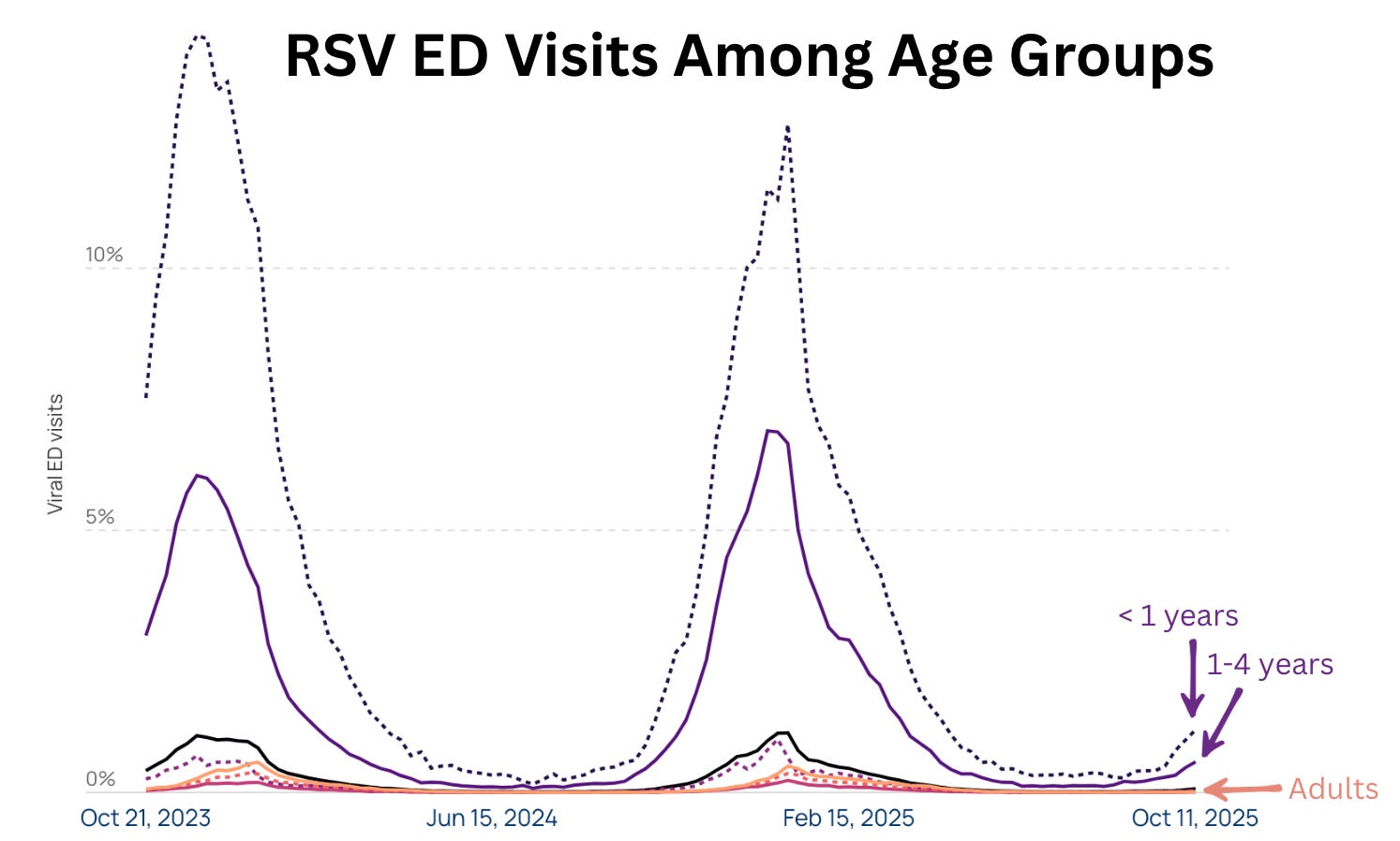
RSV places a massive burden on families and health systems every year. The youngest children are hit hardest—about five in every 1,000 kids under five are hospitalized each year, a rate much higher than for flu or Covid-19. The younger the child, the greater the risk, as tiny airways struggle to move air when inflamed.
RSV burden tends to be less severe for adults, but it can still cause serious illness for those with weakened immune systems or underlying heart or lung conditions.
Each year in the U.S., RSV is responsible for an estimated:
3.6-6.5 million outpatient visits
190,000-350,000 hospitalizations
10,000-23,000 deaths
The great news: we have several effective options for protection, something scientists have been working toward since the 1960s. It’s not too late to get vaccinated. Monoclonal antibodies (for infants) work essentially immediately, and the vaccines take about two weeks to take hold.
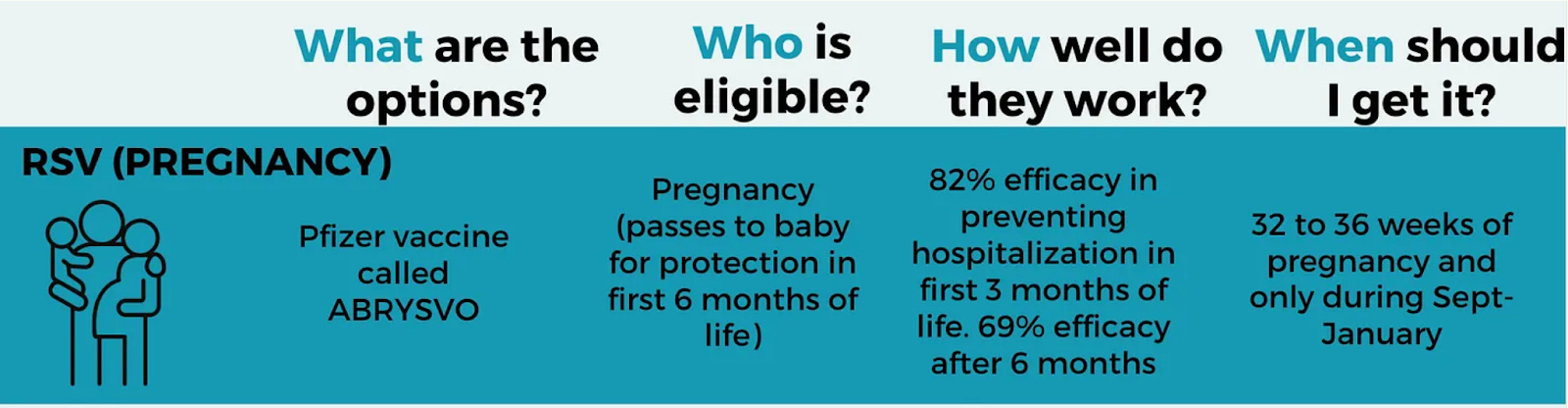
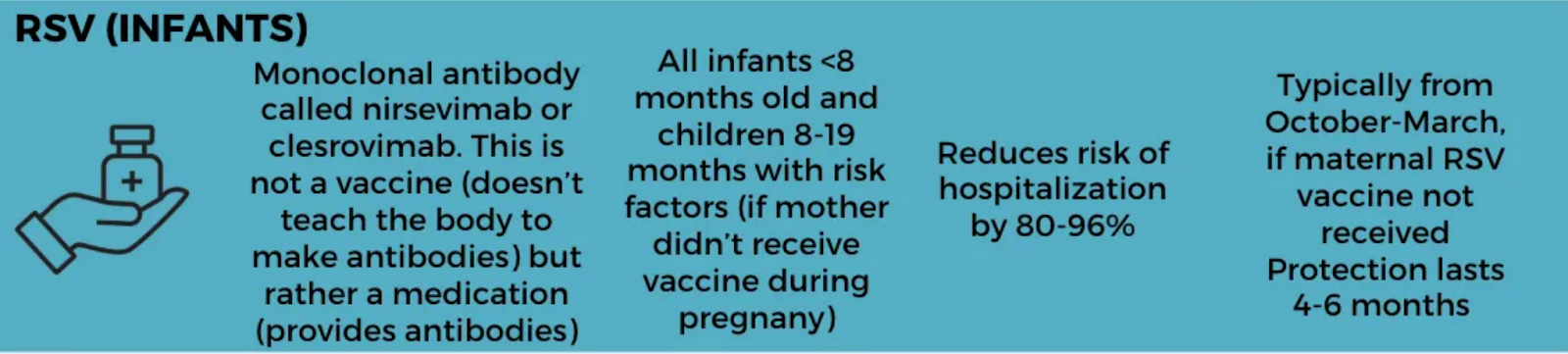
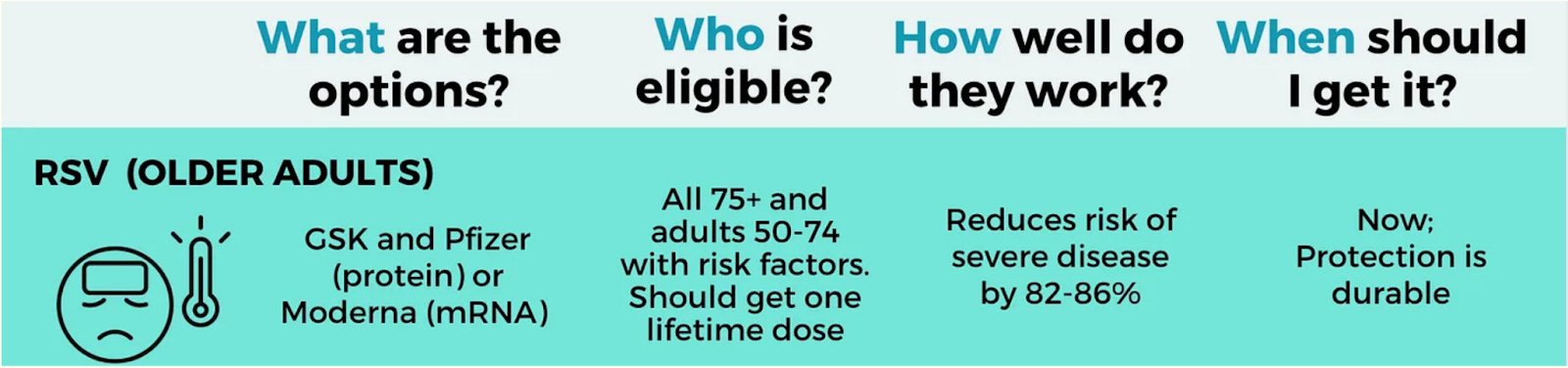
Quick RSV FAQ:
How contagious is RSV? Each infected person spreads RSV to about three others (R₀ ≈ 3). So it’s less contagious than Covid-19, but more than flu.
How is it spread? Mainly through the air via the nose, so masking could help you, but unfortunately, it’s pretty inevitable for infants.
When are people contagious? Usually for about a week. People can be contagious a day or two before they start showing signs.
Is there an RSV test? Yes. There’s also one at-home test that distinguishes between flu, RSV, and Covid-19, though it requires mailing a sample to a lab. The recommendations are generally the same for most respiratory viruses, though: Rest, hydrate, and reach out to your healthcare provider for guidance.
Is there treatment? There’s no specific antiviral medication for RSV. Care focuses on symptom relief, like oxygen therapy in severe cases.
How long is someone protected after infection? Not long. RSV is adept at evading immunity, so reinfections are common, even within a single season. One long-term study found children didn’t experience milder cases until their third RSV infection. In adults, repeat infections tend to be milder until older age.
Should I worry about Guillain-Barré Syndrome from the older adult vaccine? There is a small but real safety signal for Guillain-Barré Syndrome (GBS)—about 10 additional cases per 1 million doses of Pfizer and GSK vaccines. This risk has not been observed with Moderna’s RSV vaccine (mRESVIA). For most, the benefits of vaccination far outweigh the risks, but it’s always worth discussing with your doctor.
Measles continues to do what it does best: find unvaccinated pockets of people. The national counts exceeded 1,600 last week, the highest count in more than 30 years. There are three active outbreaks: Utah/Arizona, South Carolina, and Minnesota. All are among communities with low vaccination levels.
Mpox (or monkeypox). Two years after the U.S. declared the emergency over, you may start seeing headlines again. That’s because three unrelated, severe cases of a different strain—called Clade 1—recently appeared in California. Epidemiologists are paying close attention, as these cases suggest community spread (not linked to travel to Africa), something the U.S. has never seen before. This strain has generally been rare and quiet in Africa, but it’s begun spreading more rapidly. In the U.S., the details of the three cases are surprisingly sparse, but they were adults and are recovering. Your risk remains extremely low.
SNAP benefits expire November 1. How can we help our neighbors?
A major deadline looms this week: Supplemental Nutrition Assistance Program (SNAP) benefits are set to expire on November 1. A default on SNAP has never happened before. The $8 billion needed to keep the program running in November has yet to be secured, and the federal government has already notified states that next month’s benefits cannot be issued.
If the government doesn’t act, the fallout will be a significant public health challenge. More than 40 million low-income Americans (1 in 8 households) would lose funds they rely on to buy food, an average of $190 per person per month. Grocery stores would feel it too, facing both lost sales and frustrated customers.
The impact will go far beyond food, too. A 2015 study found that SNAP benefits create ripple effects across the economy, allowing families to pay rent, keep their cars, and cover other essentials—often the very things people sacrifice when food runs short. SNAP helps people move out of poverty.
Here are some ways to help your community, as outlined by Dr. Liz Marnik:
Donate money to your local food pantry. Every bit adds up.
Organize a food drive at your work, school, or other community location. Be sure to connect to your local pantry to find out what food items they actually need and can accept.
Make a meal and deliver it to a family you know is in need.
Ask your child’s school if you can drop off extra snacks (if they don’t already provide free breakfasts and lunches).
Volunteer to cook for/at a local community meal.
Call your representatives and urge them to act on health care and food access. Here’s our guide to building relationships with your representatives.
Good news
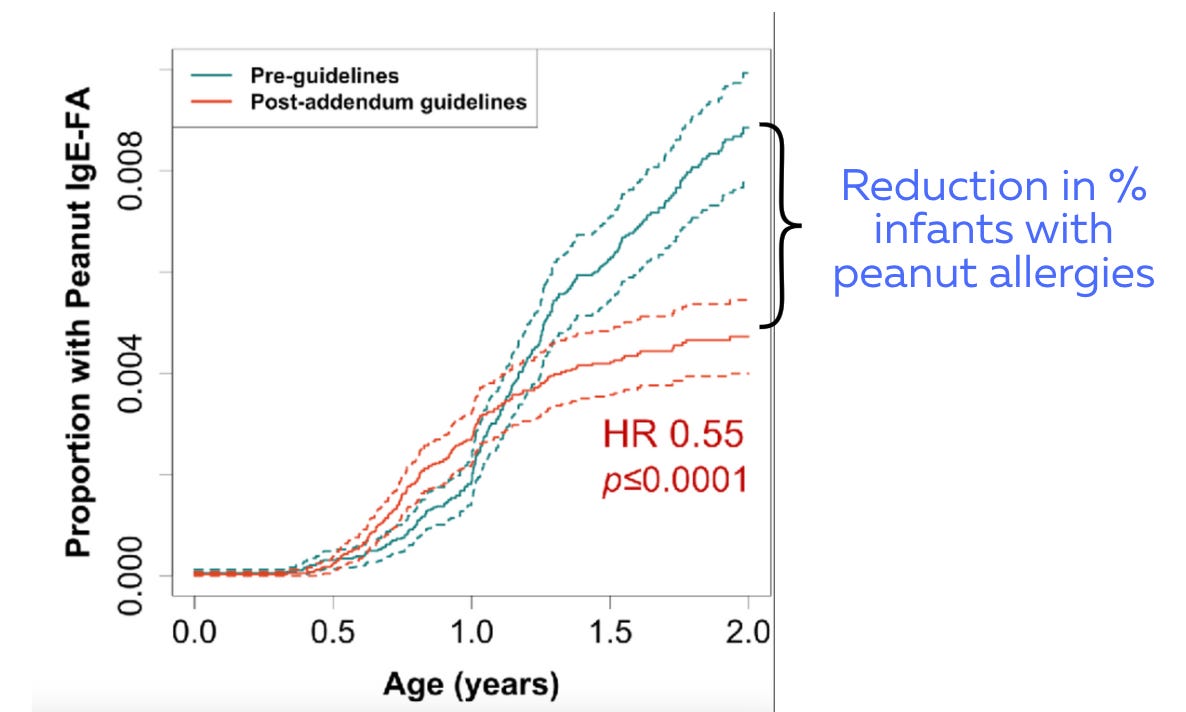
Peanut allergies are on the decline! For years, pediatric guidance advised delaying exposure to common allergens like peanuts until a landmark 2015 study showed that introducing peanut products to babies could reduce their risk of developing an allergy by 80%. By 2017, this approach became official guidance, and it worked! Now, a new study finds food allergy rates have dropped by 36%, primarily driven by a 43% decrease in peanut allergies. Cheers to more kids enjoying PB&Js safely!
Filling in federal holes. A new publication, NEJM Evidence, will start sharing notes from the public health front lines. For decades, CDC’s Morbidity and Mortality Weekly Report (MMWR) has been the nation’s go-to source for data-driven updates on outbreaks and other public health issues. But after recent layoffs (and some rehiring) amid political turmoil, its capacity is uncertain, and trust in the administration is shaky. NEJM Evidence is welcome news for local and state health departments, ensuring critical, uncensored information continues to be shared even as the federal system struggles. Unfortunately, CDC scientists still face restrictions on publishing there; they need administrative clearance.
Scientists discovered how mRNA vaccines help take down tumors. Researchers from multiple academic medical centers have identified a mysterious, potentially life-saving mechanism in cancer treatment: Covid-19 mRNA vaccines. Patients who got one within 100 days of starting cancer immunotherapy survived much longer than those who didn’t (37.3 months with recent vaccine vs. 20.6 months without vaccine). This was even true for those with very advanced cancers with poor prognoses, and after correcting for a bunch of other factors (39!) that could explain the effect. If this holds, we could vastly increase access and reduce the cost of treatment using something that’s been shown to be safe in billions of people.
In case you missed it
YLE New York covered city-owned grocery stores last week and what it means for the NYC election.
YLE California was off last week, but Matt will catch you up this Thursday on a lot happening in the Golden State.
Over the weekend, Joe Rogan claimed that measles was something “everyone got” as kids—you’d feel sick for a few days, then have lifelong immunity—and that people are exaggerating its dangers. I think he’s mixing it up with chicken pox, but either way, here’s a YLE deep dive into the history of measles.
Have a wonderful fall week! I hope it’s filled with a lot of cute ghosts and witches.
Love, YLE





.jpg)
No comments:
Post a Comment